
"Anti-involution" is gaining momentum! Supply clearing + valuation bottoming out: Is spring coming for the chemical sector?
 I'm LongbridgeAI, I can summarize articles.
Within the industry, the "anti-involution" action reshapes supply and demand through coordinated production cuts, promoting price recovery. Externally, Buffett's acquisition of OxyChem is interpreted by the market as a strong signal of optimism for the recovery of the chemical cycle. Brokerage analysts believe that the chemical sector is currently at a historical valuation bottom, featuring both underweight and high elasticity characteristics, and may become an important layout window by the end of the year
Under the resonance of demand recovery expectations and industry self-discipline, the long-silent chemical industry is showing signs of a cyclical reversal.
On Monday, November 10, the phosphorus chemical sector continued its strong performance from last week, with Chengxing Shares achieving three consecutive limit-ups, and stocks like Yuntu Holdings and Qingshuiyuan also rising.
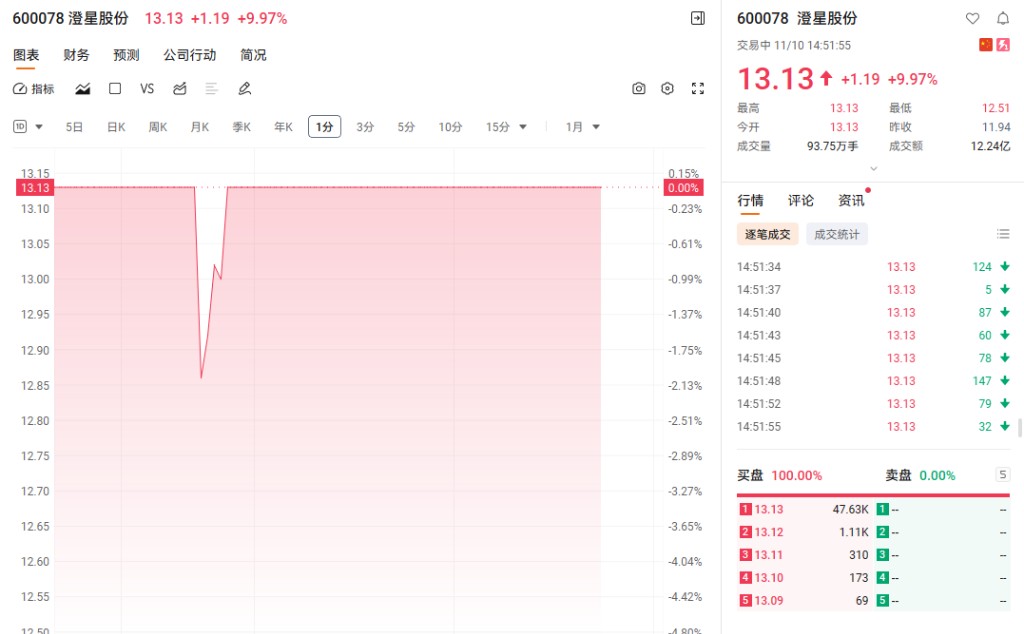
Behind this round of market activity is the recovery of the industrial chain driven by the explosive demand for energy storage, as well as the price recovery expectations brought about by self-discipline production cuts in several sub-industries. Market sentiment is shifting from pessimism to cautious optimism.
At the same time, a recent acquisition case from across the ocean has injected more imagination into the market. Recently, Berkshire Hathaway, led by Warren Buffett, announced the acquisition of Occidental Petroleum's chemical business, OxyChem. According to Dongfang Securities analysis, "this move is seen as a precise cyclical timing investment," betting that the U.S. interest rate cut cycle will drive a recovery in the real estate market, thereby boosting demand for chemical products like PVC.
The internal supply adjustments, external macro signals, and the "Buffett effect" are prompting investors to reassess the value of the chemical sector. According to Huachuang Securities, the chemical industry currently features "bottoming, underweight, and high elasticity," and with the arrival of a performance vacuum period, a new round of layout opportunities may emerge by the end of the year.
The chemical ETF's ROE in 25H1 has rebounded (9%), while the PB has reached a new low since 2012 (1.65). Bottoming + underweight + high elasticity are important considerations for incremental funds choosing chemicals. Once the PPI turns upward year-on-year, combined with low inflation and overseas interest rate cuts, a new round of passive destocking and restocking cycles is expected to begin, and chemicals are particularly sensitive to inventory cycles.
"Anti-involution" continues, industry self-discipline reshapes supply and demand
Against the backdrop of continuous profit decline in the industry for three years, achieving self-rescue through supply-side reform is becoming a consensus among more and more chemical sub-industries. According to a report by CITIC Construction Investment Securities, multiple industries have actively responded to the call for "anti-involution" this year, promoting industry self-discipline in order to reshape supply and demand balance.
The linkage between policies and the industry is particularly noteworthy. According to a report by Huachuang Securities, the Ministry of Industry and Information Technology recently held a symposium on PTA industry development with industry associations and six leading enterprises, aiming to prevent involution-style competition. The PTA industry structure is relatively concentrated, with a combined CR6 market share of 67%, providing a basis for supply coordination. Additionally, the caprolactam industry also held a meeting on November 5, deciding to implement a 20% production cut and raise product prices.
These actions are not isolated cases. The organic silicon industry is expected to have no new production capacity from 2025 to 2026, optimistic about its profit recovery; the coal chemical and polyester filament industries also have a high concentration, with leading enterprises strongly willing to coordinate production cuts. Huachuang Securities analysts pointed out, "With the Central Financial and Economic Commission meeting clearly proposing 'anti-involution' as a marker, the re-upgrading from the supply perspective may become the starting point for this round of chemical reversal," and believe that this "is expected to confirm the arrival of the industry turning point in advance."
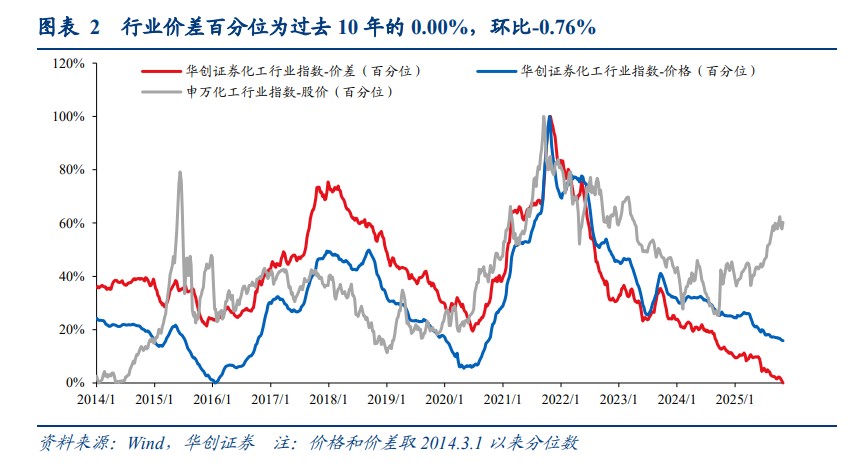
Valuation and Price Spread Bottoming, Layout Window Period May Have Arrived
From multiple indicators, the chemical industry is already at a historically low area. According to Huachuang Securities data, the overall weighted operating rate of the chemical industry is at a historical high, but the price spread remains at an "absolute bottom." Analysts at the institution believe that although a full reversal still requires inventory destocking, some varieties have already begun to show signs of bottom reversal.
Valuation is a key consideration for attracting incremental funds. According to a report by Huachuang Securities, the ROE of the chemical ETF is expected to recover in the first half of 2025 (9%), while its price-to-book ratio (PB) has reached a new low since 2012 (1.65). The characteristics of "bottom + underweight + high elasticity" make the chemical sector a key focus for incremental funds.
Huachuang Securities further pointed out that the third quarter reports have been fully disclosed, and the market will enter a five-month performance window period, providing a time window for investors to layout for next year and style switching. Once the PPI (Producer Price Index) shows an upward turning point year-on-year, a new round of inventory cycle is expected to begin, and the chemical industry is one of the sectors most sensitive to the inventory cycle.
Buffett "Bottom Fishing" OxyChem, MDI and PVC Welcoming Recovery Opportunities?
Buffett's latest moves provide a new perspective for judging the global chemical cycle. Berkshire Hathaway recently announced a cash acquisition of OxyChem, a subsidiary of Occidental Petroleum, for $9.7 billion.
Dongfang Securities analyst Ni Ji analyzed in a report that this move can be seen as a precise timing investment. OxyChem's core business is chlor-alkali chemicals, with its main product PVC highly correlated with the prosperity of the U.S. real estate market. Against the backdrop of widespread expectations that the U.S. will enter a rate-cutting cycle, this acquisition is interpreted as a bet on the recovery of U.S. real estate bringing a rebound in chemical demand.
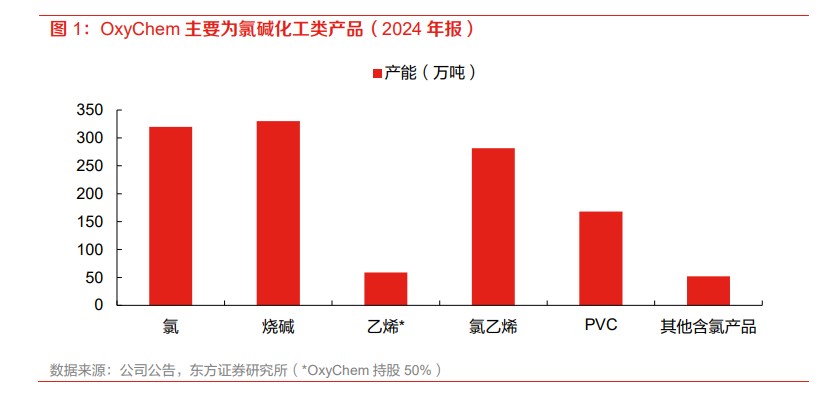
The report further maps this logic to the Chinese market, believing that there are two types of varieties that are likely to benefit first. The first is MDI (polyurethane), whose industry structure has been highly optimized after years of consolidation, with Wanhua Chemical occupying a dominant position, and future new capacity mainly coming from Wanhua, resulting in very little supply elasticity. Once demand in Europe and the U.S. recovers with the improvement of the macro environment, the prosperity of MDI is expected to see significant improvement.
The second is PVC. Dongfang Securities believes that Buffett's investment may also include a longer-term expectation for the chlor-alkali chemical industry. Although the PVC industry has faced dual pressures from declining real estate demand in China and the U.S. and supply expansion in recent years, strong growth in emerging countries (such as India and Vietnam) has absorbed a large amount of redundant supply. Looking ahead, as the expansion cycle of PVC production capacity in China basically comes to an end, and with the long-term pull of demand in emerging markets, high-energy-consuming products like PVC are expected to follow MDI and achieve a recovery in prosperity
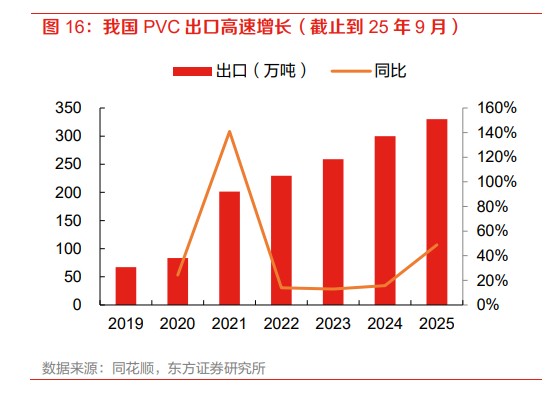
Focusing on Three Main Lines, Expecting Elasticity in Phosphorus, Silicon, and Fluorine Sectors
CITIC Securities believes that the chemical sector is currently trading mainly around three main lines:
Energy storage demand drives the improvement of the industry chain's prosperity, and the supply-demand pattern of upstream lithium battery materials is expected to be reshaped, with a focus on recommending materials related to new energy;
The chemical sector's anti-involution continues to intensify, with multiple industries initiating self-discipline, and chemical product prices are expected to rebound from the bottom;
The chemical product industry itself has high prosperity, and the main business is expected to maintain high growth.
Among many sub-industries, Huachuang Securities particularly emphasizes the valuation elasticity of the fluorine, silicon, and phosphorus industries. The report analyzes that these three industries are insensitive to high oil prices, with low supply increments expected in the next two years, and each has highlights on the demand side:
Organic silicon and glyphosate are expected to welcome an inventory upcycle, while fluorine fine chemicals may encounter opportunities at the capacity cycle level driven by semiconductors and AI materials