
 I'm LongbridgeAI, I can summarize articles.
CICC recommends overweighting Chinese stocks before the significant China-U.S. meeting and adjusting investment style based on policy after the meeting. Growth style may rebound, cyclical value style has room for catch-up, and dividend assets have defensive value. The valuation of the CSI 300 index is close to historical average, and the bull market has not yet ended
The Federal Reserve may cut interest rates again in December, and slow the pace of rate cuts early next year.
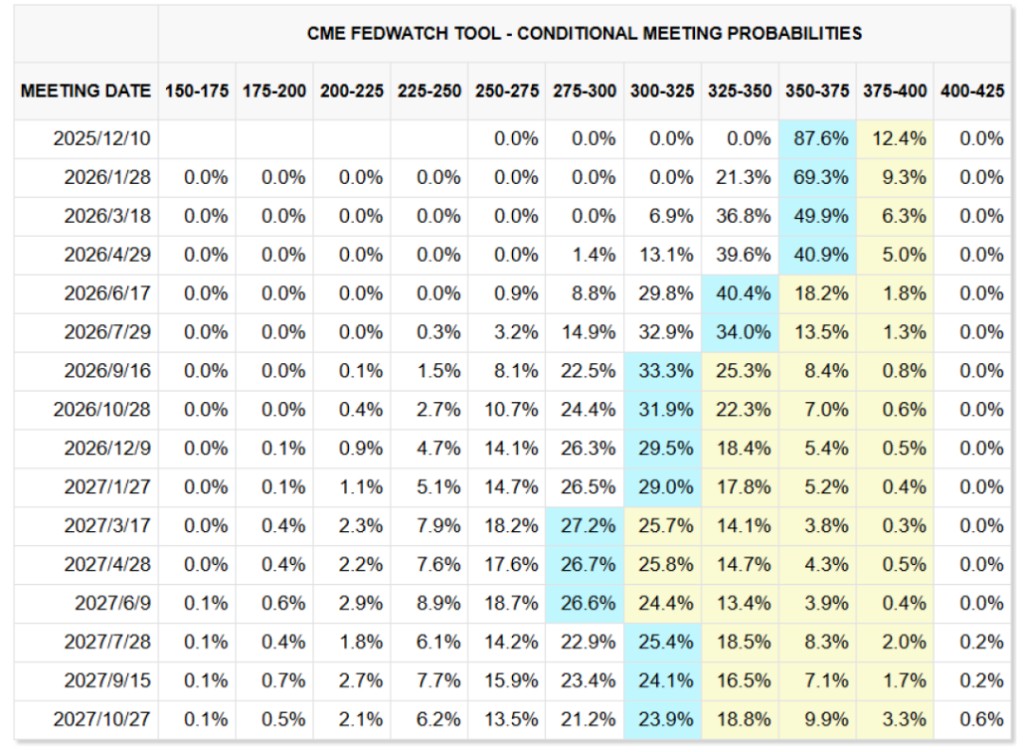
The Federal Reserve FOMC meeting will be held on December 9-10. Due to recent low inflation and growth data in the United States, we predict that the Federal Reserve will cut rates by another 25bp. Currently, the market has priced in an 88% probability of a rate cut in December, with two cuts expected in 2026 (Chart 1).
Chart 1: The current market has priced in an 88% probability of a Federal Reserve rate cut in December
Source: CME Group
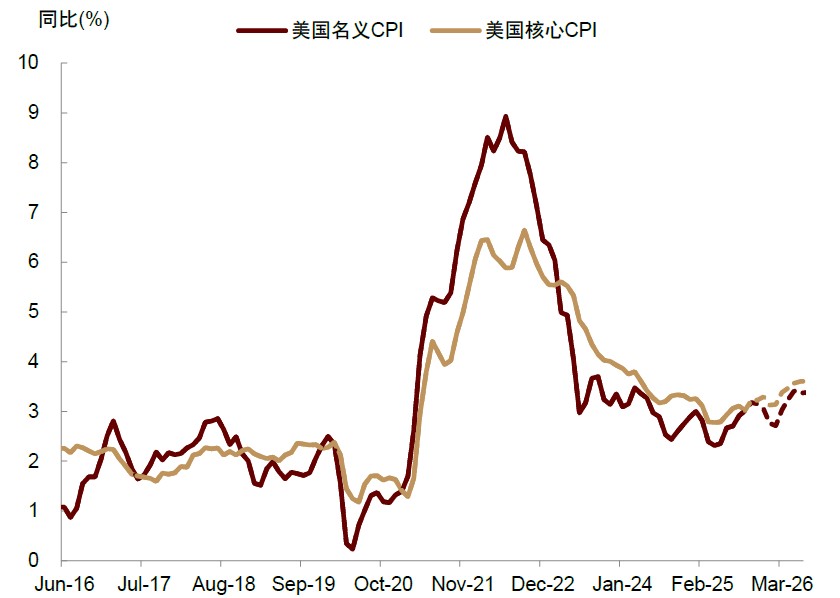
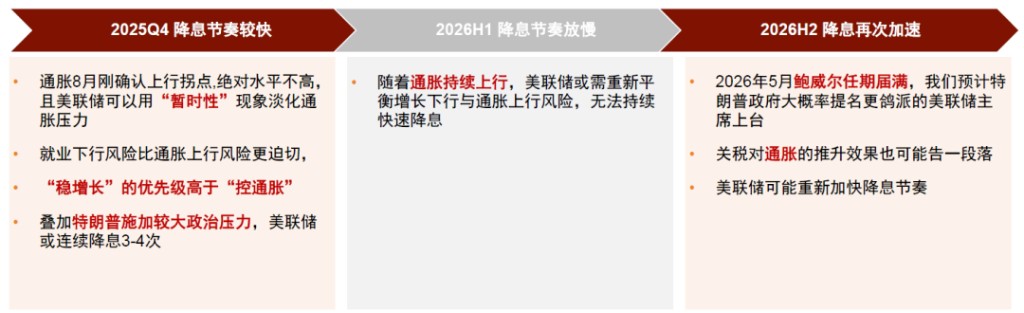
Recently, expectations for a rate hike by the Bank of Japan have risen, causing negative impacts on global asset classes. As the timing of the Federal Reserve meeting approaches, we expect market focus may return to the Federal Reserve's rate cuts, and the performance of global stocks, bonds, commodities, and other assets may improve before the FOMC meeting. Entering 2026, as U.S. inflation rises further (Chart 2), the Federal Reserve may slow the pace of rate cuts, entering the second phase of this easing cycle (October Report on Major Asset Classes: Economic and Market Outlook during the Federal Reserve's Rate Cut Cycle, Chart 3).
Chart 2: U.S. inflation has confirmed an upward turning point and may continue to rise over the next two quarters
Source: Haver, CICC Research Department
Chart 3: The Federal Reserve's easing cycle may be divided into three phases: "fast - slow - fast," currently in the second phase
Source: CICC Research Department
Given that the Federal Reserve tends to guide market expectations in advance, we do not rule out the possibility of releasing hawkish signals at the December FOMC meeting, such as emphasizing that rate cuts may not continue in 2026. According to the analysis in the Outlook for Major Asset Classes in 2026: Riding the Momentum, if the Federal Reserve's policy expectations tighten marginally, it could put pressure on various asset classes and is one of the key risk sources for the global stock and gold bull markets. In fact, due to the hawkish signals released by the Federal Reserve in November, rate cut expectations have been revised down, leading to a round of adjustments in global assets.
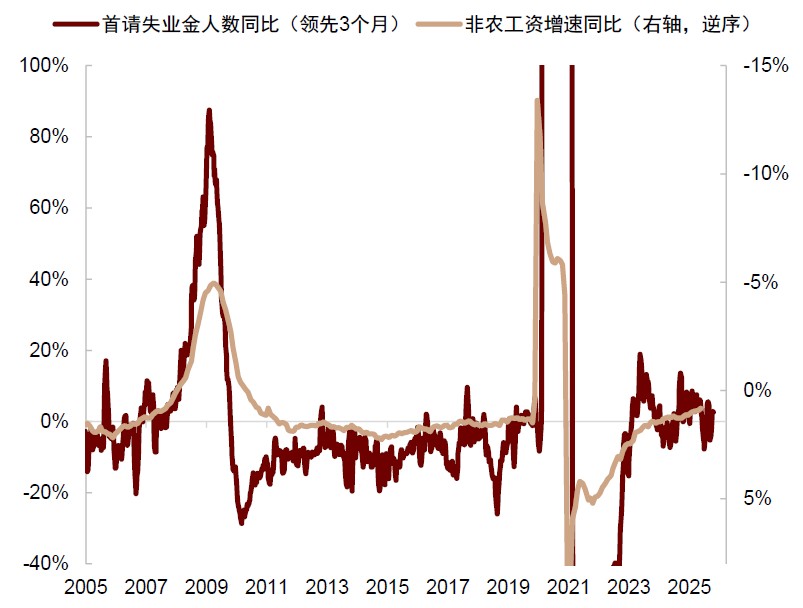
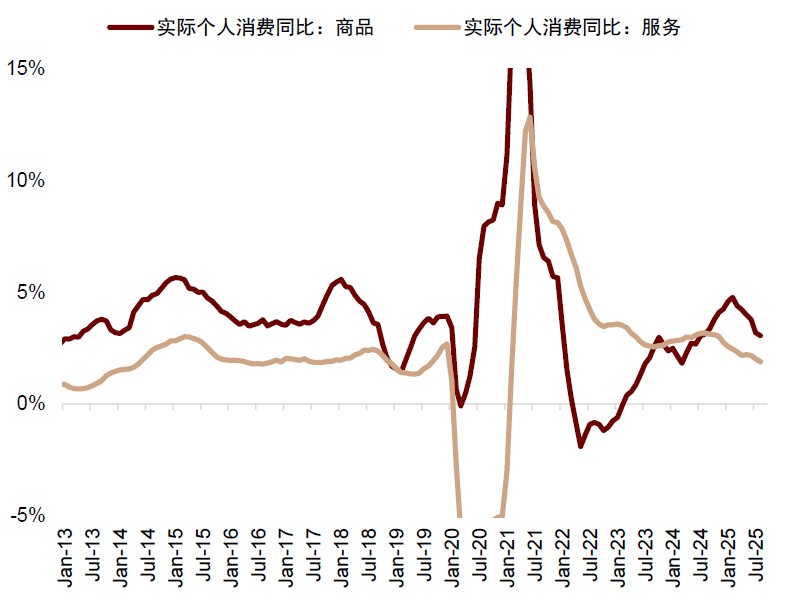
Considering the possibility of a shift in the pace of rate cuts in 2026, we expect that after the December FOMC meeting, the variables in U.S. dollar liquidity and market environment will increase: on one hand, weak U.S. growth and employment data (Chart 4-Chart 5) and speculation about the next Federal Reserve chair may raise rate cut expectations. On the other hand, the current officials' concerns about inflation may suppress rate cut expectations Therefore, we believe that the certainty of loose trading in early December is higher, which is more favorable for the performance of various assets. As we enter mid to late December, although global assets often exhibit a "Christmas rally," where risk assets such as U.S. stocks and commodities strengthen temporarily, we believe that this year carries relatively high uncertainty.
Chart 4: The number of initial jobless claims in the U.S. has risen, indicating a significant cooling of the labor market
Source: Haver, CICC Research Department
Chart 5: The growth rate of U.S. consumption of goods and services has recently declined
Source: Haver, CICC Research Department
Looking ahead to the next six months, with the Trump administration nominating a new Federal Reserve chairman, the current chairman Jerome Powell's term will expire in May 2026. We believe that the Federal Reserve will eventually enter the third phase of the easing cycle, accelerating interest rate cuts again. At that time, U.S. dollar liquidity will tend to loosen, and the certainty of rising major assets such as stocks, bonds, commodities, and gold will increase again.
The Politburo meeting and the Central Economic Work Conference are approaching, and incremental policies may be on the way.
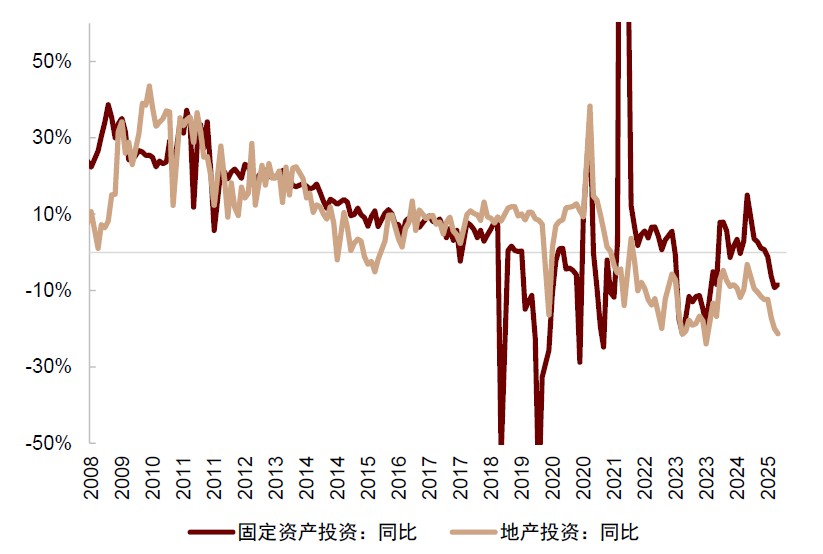
China's significant economic conference will also be held in early to mid-December, setting the tone for future policy directions. Since the third quarter of this year, there have been signs of a slowdown in investment growth in real estate (Chart 6), making it increasingly necessary for policy intervention. Moreover, 2026 marks the beginning of the "14th Five-Year Plan," and we expect counter-cyclical adjustment policies to further strengthen, supporting the continued recovery of the economy, with the possibility of exceeding market expectations.
Chart 6: Recent slowdown in China's real estate and investment growth
Source: Wind, CICC Research Department
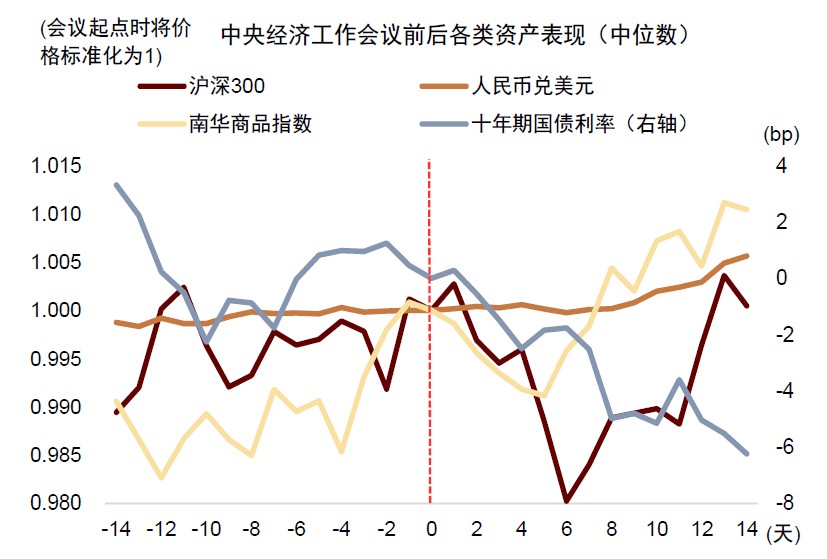
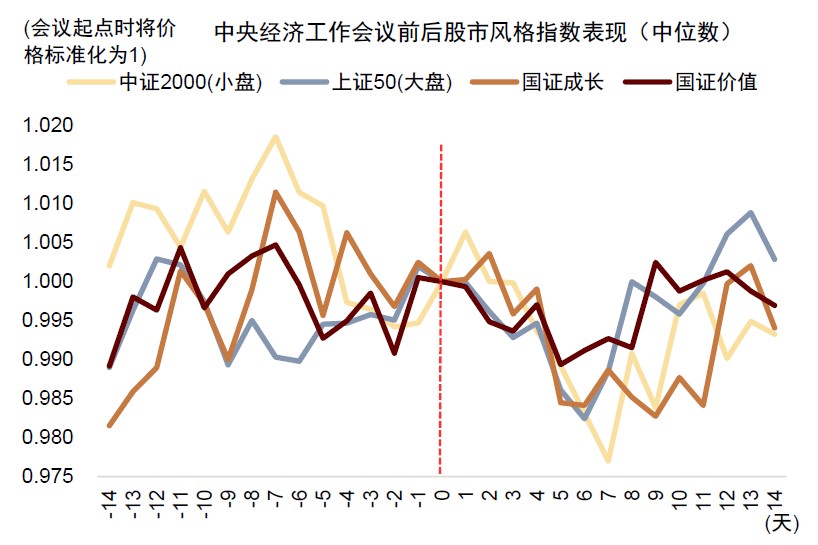
We reviewed the operating patterns of major assets in December since 2010 and found that government bond yields tend to decline while commodities tend to rise (Chart 7). Before the Central Economic Work Conference, stocks will speculate on the direction of policy intervention, with both growth and value having performance opportunities. After the conference, the market's profit-taking mentality becomes evident, with large-cap value stocks relatively outperforming (Charts 8 and 9).
Chart 7: Trends of major assets before and after the Central Economic Work Conference
Source: Wind, CICC Research Department
Note: The statistical period is from 2010 to 2024 Chart 8: Before the meeting, both growth and value have performance opportunities; after the meeting, large-cap value is relatively dominant.
Source: Wind, China International Capital Corporation Research Department
Note: The statistical period is from 2010 to 2024.
Chart 9: Before the meeting, the dividend style shows relative resilience; after the meeting, the growth style of Hong Kong stocks is relatively dominant.
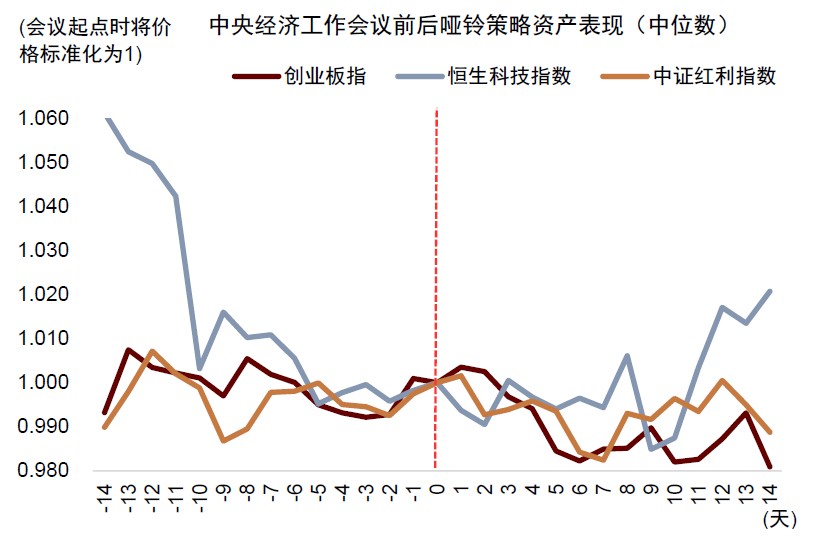
Source: Wind, China International Capital Corporation Research Department
Note: The statistical period is from 2010 to 2024.
Based on the historical patterns mentioned above, we recommend seizing the swing opportunities in bonds and commodities in December, being relatively positive on stocks before the meeting, and flexibly adjusting the allocation direction based on policy guidance after the meeting. If the Central Economic Work Conference expresses a clearly positive stance, risk assets may continue the upward momentum seen before the meeting. For example, in 2018, the Central Economic Work Conference proposed a significant increase in the scale of local government special bonds, and the monetary policy stance shifted from "controlling the total gate of money supply" in 2017 to "maintaining reasonable and ample liquidity," leading to a rapid decline in interest rates and a rise in stocks; at the end of 2020, when the market was generally worried about a shift in policy support after economic recovery, the Central Economic Work Conference proposed that policy operations "do not rush to turn," effectively boosting market confidence, resulting in a phase of simultaneous bull markets in stocks and bonds after the meeting.
Asset Allocation Recommendations: Early to mid-December may be relatively favorable for risk appetite, and late December should flexibly adjust according to policy guidance.
We believe that before the significant meetings between China and the U.S., whether the expectations for U.S. easing continue to ferment or the expectations for incremental policies in China rise, both may support the performance of risk assets. Specifically, we recommend maintaining an overweight position in Chinese stocks before the meeting, with a more balanced style, and selecting style sectors based on policy conditions after the meeting. Currently, the growth style has already experienced a significant correction, which may present rebound opportunities; the cyclical value style has relatively low valuations, leaving room for catch-up; entering late December, dividend assets may also highlight defensive value. Overall, the dynamic price-to-earnings ratio of the CSI 300 index is 12 times, close to the historical average, and there is still ample expansion space compared to previous bull market peaks (Chart 10), indicating that the bull market for Chinese stocks has not yet ended.
Chart 10: The price-to-earnings ratio of the CSI 300 is lower than previous bull market peaks.
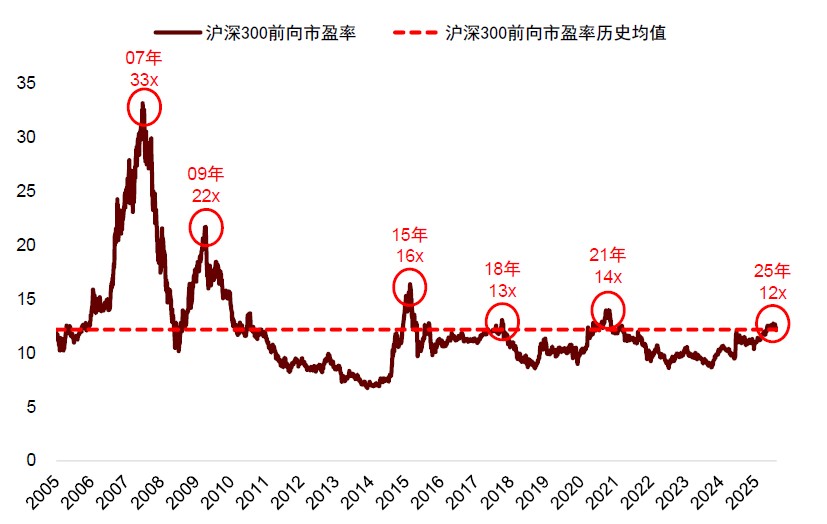
Source: Wind, China International Capital Corporation Research Department
U.S. stocks and A-shares also benefit from liquidity easing and the AI technology cycle, and we are not bearish on U.S. stocks. However, considering that non-U.S. stocks often outperform U.S. stocks during the U.S. easing cycle, and that U.S. stock valuations are at historical highs (Chart 11), we believe that the cost-performance ratio of A-shares and Hong Kong stocks relative to U.S. stocks is higher, and we recommend a standard allocation to U.S. stocks Chart 11: The S&P 500 Index Price-to-Earnings Ratio Approaches Historical Highs
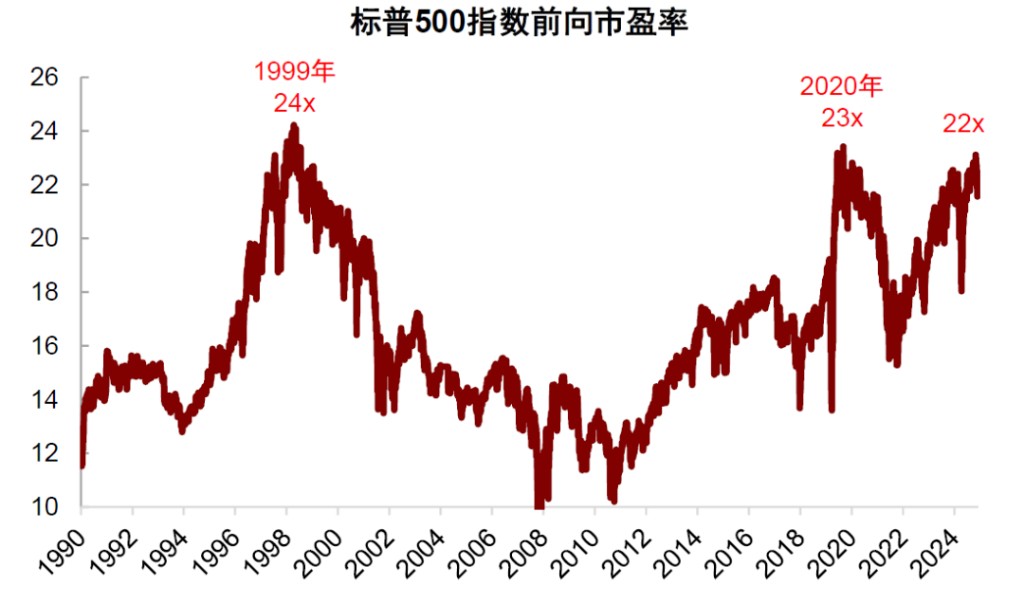
Source: Bloomberg, CICC Research Department
Gold has risen rapidly since the beginning of the year, exceeding levels consistent with fundamentals (Chart 12), which may lead to increased volatility in the future. However, considering that the Federal Reserve is still in a rate-cutting cycle and the credibility of the dollar has been damaged, we believe the gold bull market is not over yet and recommend maintaining an overweight position, adding to it on dips.
Chart 12: Since H1 2025, gold prices have begun to significantly deviate from our calculated valuation center
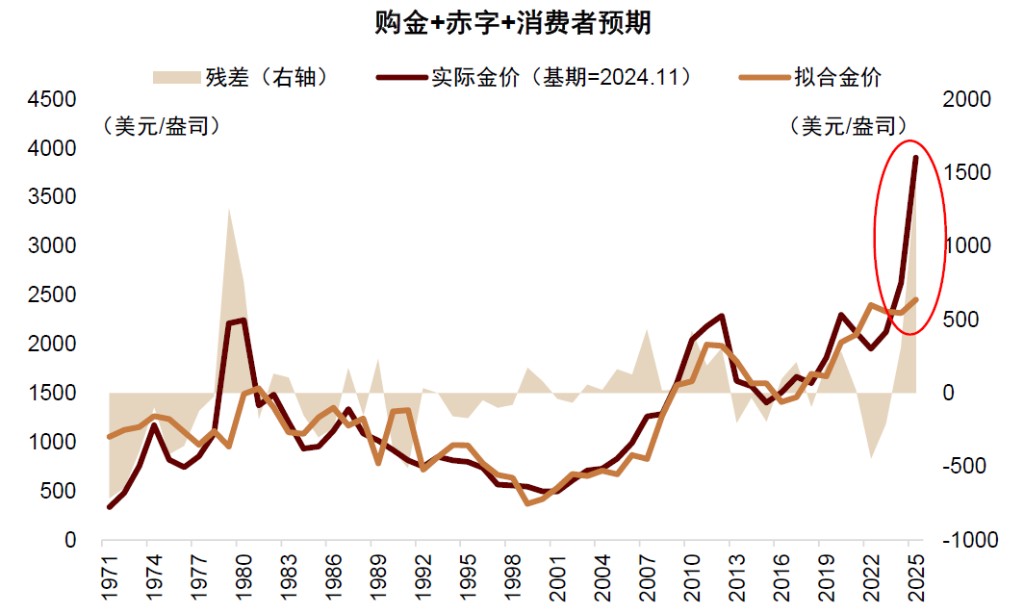
Source: Bloomberg, CICC Research Department
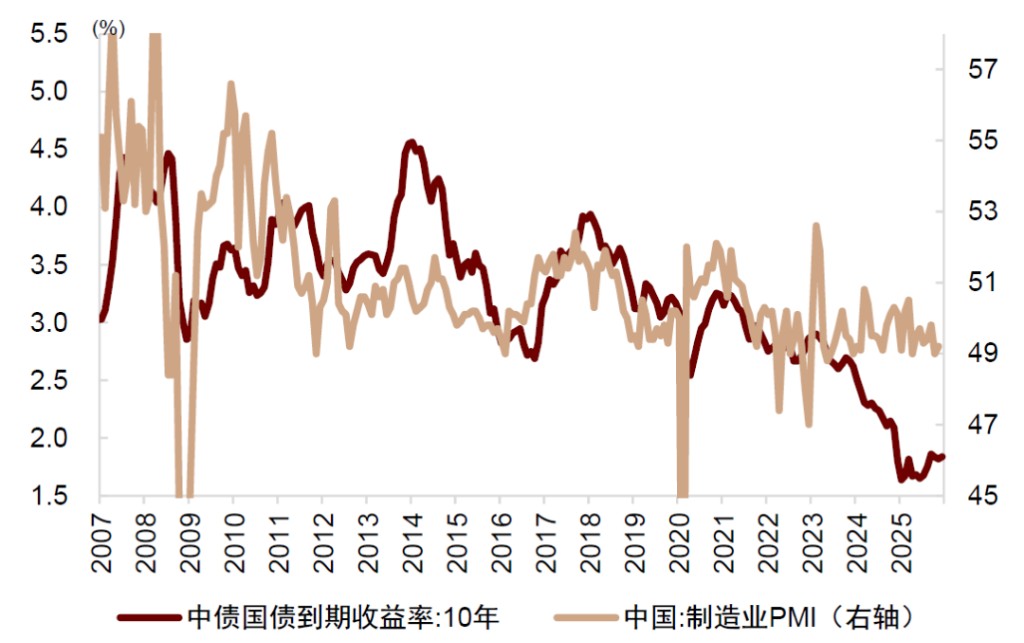
In our annual outlook, we have upgraded commodities to a benchmark position. Considering that commodities performed relatively well in December, we recommend increasing commodity allocation in the short term. Chinese interest rates have fallen too quickly relative to economic fundamentals over the past two years (Chart 13), and valuations remain relatively high.
Chart 13: The speed of bond rate declines over the past two years has been too fast relative to economic fundamentals
Source: Haver, Budget Lab, CICC Research Department
However, in the second half of the credit cycle, with growth and inflation centers moving downward, we believe that the interest rate center may also struggle to rise significantly. Considering both bullish and bearish factors, we believe that the bond market in December will more reflect short-term trading opportunities, and we will maintain an underweight position for the next 3-6 months. Although the Federal Reserve has been cutting rates rapidly since September, with the ten-year U.S. Treasury yield dropping below 4% at one point, inflation risks and the pressure of U.S. Treasury issuance may gradually increase in 1-2 quarters, adding uncertainty to the market. We maintain a benchmark position in U.S. Treasuries.
Risk Warning and Disclaimer
The market has risks, and investment should be cautious. This article does not constitute personal investment advice and does not take into account the specific investment goals, financial situation, or needs of individual users. Users should consider whether any opinions, views, or conclusions in this article are suitable for their specific circumstances. Investment based on this is at one's own risk