
Under the surge in silver prices, battery cell companies will shift from production control and price protection to production suspension and holidays!
 I'm LongbridgeAI, I can summarize articles.
Silver prices have surged, and battery cell companies are facing production halts and holidays. Aiko Solar Chairman Chen Gang warned as early as April 2024 about the risks of rising silver prices, pointing out that the demand for silver in the photovoltaic industry has sharply increased, with silver consumption in photovoltaics growing by over 80% year-on-year in 2023. The current demand for silver is 36,000 tons, with a shortfall of 5,000 tons, and it is expected that the silver consumption for photovoltaics will increase by 40%-60% compared to 2023. The price of slurry has also risen significantly, putting pressure on the photovoltaic manufacturing industry
Two years ago, someone accurately predicted a surge in silver prices!
Among the entrepreneurs interviewed by Gan Tan Hao, there is indeed a highly forward-looking individual, Chen Gang from Aiko Solar.
As early as April 22, 2024, Chen Gang loudly warned in a special interview with Gan Tan Hao titled "Aiko Solar Chairman Chen Gang: How Can Photovoltaics Avoid 'Rolling'?" to be highly vigilant about the rise in silver prices. Looking back now, it is truly sage advice. Here, it is necessary for Gan Tan Hao to revisit some sections of that article:
The large-scale expansion of photovoltaics has led to a sharp increase in the demand for silver paste. Chen Gang, chairman of Aiko Solar, believes that as photovoltaic production capacity continues to expand, the constraints of silver on the photovoltaic industry will become increasingly apparent.
As the best conductive metal, silver plays an indispensable role in the photovoltaic industry, mainly in the front and back silver of solar cells.
The large-scale expansion of photovoltaics has rapidly boosted the industrial demand for silver. According to SMM statistics, China consumed 11,000-12,000 tons of silver in 2023, a year-on-year increase of 20%, of which the silver consumption in photovoltaics was about 5,500 tons, a year-on-year increase of over 80%. Driven by the demand for silver in photovoltaics, the visible silver inventory in the two exchanges continued to decline in 2023, currently only remaining at over 2,400 tons, a 40% decrease from a year ago, at the lowest level since 2019.
The silver consumption in photovoltaics has accounted for more than 15% of global silver production, with global silver production in 2024 expected to be 31,000 tons, including 26,300 tons of primary (mined silver) and 5,800 tons of recycled silver. However, this year's demand for silver is 36,000 tons, resulting in a gap of 5,000 tons.
How will this gap be filled? It will certainly involve continuously drawing from inventory silver. Chen Gang predicts that if this continues, silver prices will soon rise to a level that the photovoltaic manufacturing industry cannot afford.
The silver consumption of TOPCon is inherently higher than that of PERC, and with industry growth, even considering the introduction of 0BB, it can only reduce silver consumption by at most 16%. Chen Gang predicts that this year's silver consumption in photovoltaics will increase by 40%-60% compared to 2023.
In the past year, the price of paste has surged astonishingly, accounting for 35%-40% of the non-silicon costs of N-type TOPCon battery raw materials, and is even approaching the cost of silicon materials. Chen Gang introduced, "Last year, the average price of paste was over 4,000 yuan/kg, and now it has risen to over 7,000 yuan, an increase of more than 40%. It would not be surprising if silver prices double this year. We must solve this 'bottleneck' problem; if we can't, the industry cannot develop."
Currently, the silver consumption for TOPCon is 10-13 mg/W. If silver paste rises to 10,000 yuan/kg, the paste cost for TOPCon modules will reach 0.1-0.13 yuan.
Chen Gang stated that Aiko Solar has invented a low-cost metal coating technology without silver, which can be produced on a large scale while achieving cost reduction.
It seems that the increase in silver consumption and the rise in slurry prices are a constraint for the mainstream technology N-type TOPCon, but for the silver-free ABC components, it has become an important competitive advantage.
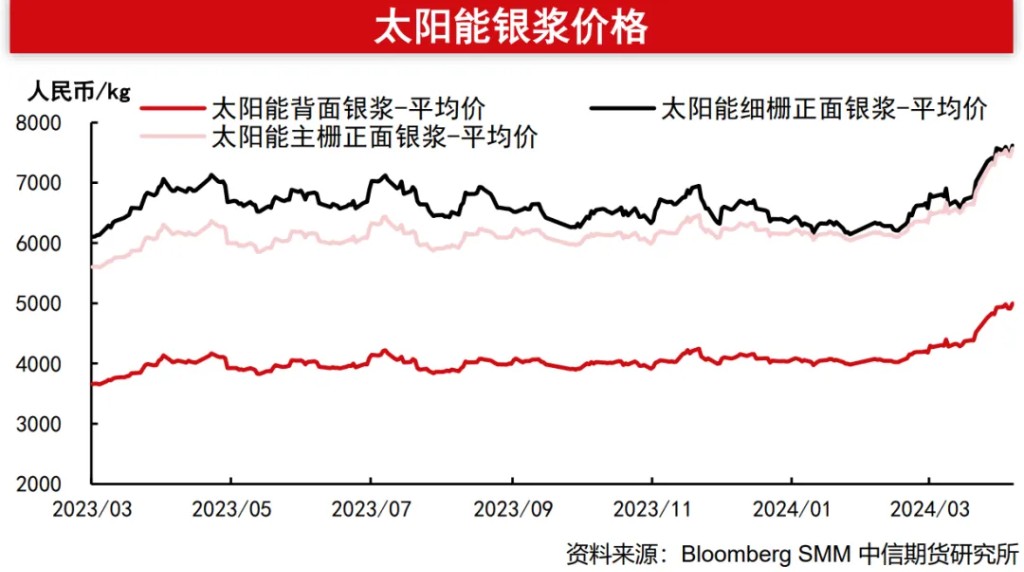
Looking closely at the silver paste prices at that time, although there was an upward trend, it is estimated that no one would have thought it could reach today’s level. Even today, with silver prices experiencing a 6.55% plunge from a high position, as of today’s close, the Shanghai Futures Exchange silver futures have increased by about 157.5% this year, while Shanghai gold futures have risen by about 62.1%, and the Shanghai Composite Index has increased by 18.47%. The leverage ratio for Lu silver futures is 10-14 times!
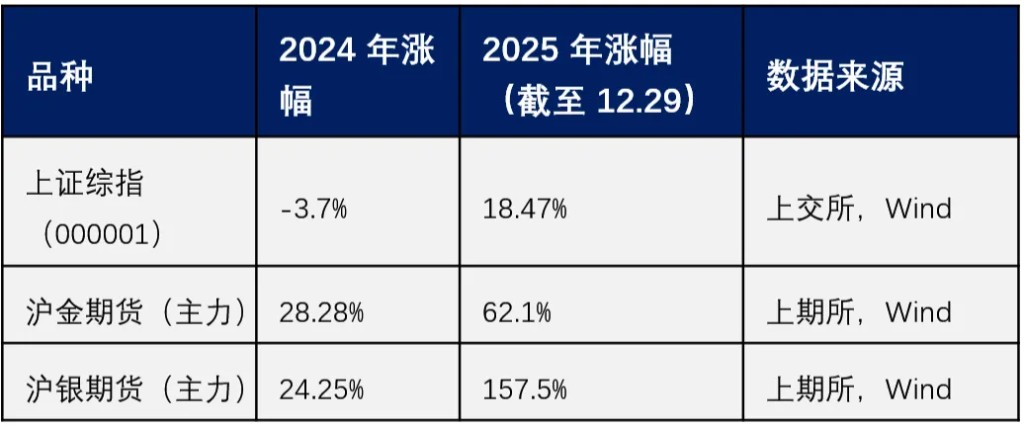
Therefore, for investors, if they had believed Chen Gang's words at that time, they would have truly made a fortune in this epic market. For battery cell companies, if they could have hedged in advance, they would have had the opportunity to avoid the disaster brought about by the skyrocketing silver prices!
Who can survive in this "silver disaster"?
Although different technological routes are promoting their own silver reduction solutions, no large-scale production of significant silver reduction solutions has been achieved yet. Whether it is TOPCon, HJT, or BC, they cannot withstand the currently high silver prices.
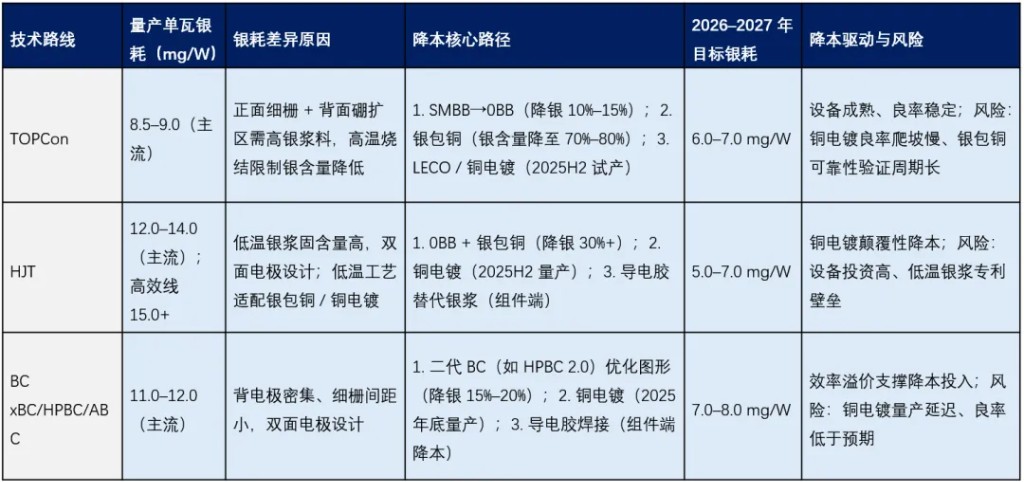
Compared to integrated companies, battery cell companies are clearly under greater pressure. For every 1,000 yuan increase in silver price per kilogram, the cost per watt of battery cells rises by 0.01 yuan. Taking last Friday's extreme short squeeze as an example, battery cell companies were forced to raise their costs by 0.016 yuan in just one day!
Under the dual pressure of rising silver prices and costs, battery cell companies will undergo a gradual decision-making process from "production limit to protect prices" to "suspension of production and holidays." This transition mainly depends on the breakthrough of four key thresholds: breach of cash cost line, depletion of cash flow, disruption of financing channels, and extreme inventory pressure. As long as battery cell companies meet any of the following conditions, they will enter the rational range of "suspension of production and holidays":
- Monthly cash flow gap ≥ 15% of available cash at the end of the period;
- Negative operating cash flow for two consecutive quarters, with deteriorating financing margins.
This is because when the new monthly costs (silver + silicon) > transferable premium + internal cost reduction capability, and continue for ≥1 settlement cycle (usually 4–8 weeks), it becomes more cost-effective to suspend production than to continue. Continuing production will only lead to faster demise, while choosing to suspend production for a period will prolong the time before the company faces risks. Investors interested in battery cells and integrated component companies might want to take a look at their cash flow We assume that the silver price will hover at a high of 18,000 yuan/kg for 2-3 months, estimating that most battery cell companies will halt production; if the silver price hovers at the current level for more than six months, most integrated component companies will cease production! Of course, this premise is that battery cell companies and integrated companies are unable to effectively pass on costs to downstream! Currently, the reason why some battery cell companies are still willing to limit production to maintain prices is that: the cash contribution per watt is still positive, or it is only in the "slight loss/controllable loss" range. However, the skyrocketing silver price has completely shattered this basic premise for battery cells.
Based on the current silver price, Gan Tan Hao has conducted stress tests on some photovoltaic companies. Considering the impact on companies, financial institutions, and the upstream and downstream supply chain, please forgive Gan Tan Hao for anonymizing companies with relatively high production halt risks.
Note: The cash of non-listed companies is based on publicly disclosed/industry estimated ranges, used for judging magnitude rather than precise values.
Here is an example of a company that has already halted production. Yicheng Optoelectronics (600537) is currently in a state of suspension.
Yicheng Optoelectronics' financial situation: Revenue of 375 million yuan (-27.96%), net loss of 61.24 million yuan, operating cash flow of only 61.66 million yuan, cash of 786 million yuan, short-term liabilities > 2.5 billion yuan, cash to short-term debt ratio < 0.32.
Yicheng Optoelectronics' technical route: Changzhou 5GW PERC + Chuzhou 7.5GW TOPCon (silver consumption 9mg/W), silver paste cost accounts for 33%.
The current situation of Yicheng Optoelectronics is that both the Changzhou and Chuzhou bases have fully halted production, becoming the first medium-sized established company in the industry to fall due to the impact of silver prices.
Under the anti-involution trend, whether battery cell companies and integrated component companies can maintain prices and whether they can hold up to a reasonable cost range is the key to whether this round of anti-involution can truly succeed!
The complexity of silver prices, this round of market is different from the past
Currently, there are rumors in the market that Chengtong Group and UBS Group are engaged in a silver long-short showdown, with shorts being pushed into a corner. Although not officially confirmed, market signs indicate that there is indeed intense long-short competition:
After silver broke through $50 in October, shorts lost control over prices; after breaking through $70, short sellers suffered heavy losses, with every $1 increase costing shorts hundreds of millions of dollars;
There are rumors that UBS is facing an additional margin call of $2.3 billion due to short positions and may be forced to liquidate on December 29, which UBS urgently denied;
Several institutions have reported that COMEX silver futures are showing signs of a "short squeeze," with shorts unable to gather enough physical delivery.
Currently, Chinese investors have become the main force in the long position, with Shanghai silver futures positions surging 18.3% in October, and long funds flocking in. The global silver ETF holdings increased from 15,257.92 tons on November 21 to 16,018.29 tons on December 18, an increase of 4.98% The volatility of silver has reached 1.5-2 times that of gold, with quantitative trading amplifying fluctuations and exacerbating the short position dilemma.
Whether the confrontation between Chengtong and UBS is true or not, there is indeed a serious "spot squeeze" in the current market. London silver is rarely at a premium compared to New York silver, the New York-London price spread has historically inverted, and the one-year silver swap interest rate spread has fallen to -7.18%, all indicating extreme tightness in the physical market.
Additionally, industrial demand is the "hardcore support" for silver prices. The most notable feature of this round of silver price increase is that industrial demand has become the core driving force, accounting for about 65% of total demand, in stark contrast to the historically speculative-driven surges:
Photovoltaic industry explosion: accounting for 34% of silver industrial demand, consuming about 196 million ounces (approximately 6,090 tons) by 2025;
AI and electronic revolution: the demand for high-conductivity silver in AI servers and data centers has surged, with each AI server using 500-800 grams of silver; demand in fields such as 5G base stations, new energy vehicles, and medical electronics is growing simultaneously, making silver the "blood of the digital economy";
Structural demand shift: industrial demand is shifting from traditional photography and jewelry to strategic emerging industries, making silver demand more resilient and growth-oriented.
Elon Musk publicly warned: "The volatility of silver prices directly relates to the cost of every electric vehicle and every solar panel," highlighting its strategic industrial position.
China's policies have become the "regulating valve" of the global silver market. China will implement "rare earth-style" strategic controls on silver exports, becoming a key variable affecting the global supply-demand pattern: starting January 1, 2026, China will impose stricter export controls on physical silver stocks to limit resource outflow. As the world's largest silver consumer (accounting for over 25% globally) and an important producer, China's control policies directly impact the global supply chain.
The last point is the international financial environment: the "amplifier" for silver prices, with changes in the global monetary and financial environment providing a "perfect boost" for the rise in silver prices:
The Federal Reserve's policy shift, starting a rate-cutting cycle in September 2025, will lower real interest rates, significantly reducing the opportunity cost of holding silver; the market expects 3-4 rate cuts in 2026, with the dollar index falling below 103, providing support for silver priced in dollars.
Historical data shows that for every 1% decline in the dollar, silver typically rises by 1.5%-2%, forming a "weak dollar, strong silver" linkage effect.
The final point is the most critical: the by-product nature of silver mines determines the "fatal shortcoming" on the supply side, with silver's "by-product" characteristic being the core constraint of this price increase, resulting in almost zero supply elasticity.
About 70-80% of silver is produced as a by-product of major metals such as copper, lead, zinc, and gold, with only 20-30% coming from independent silver mines. Silver production is more strongly correlated with major metals (especially zinc prices), making it difficult for rising silver prices to directly stimulate increased production.
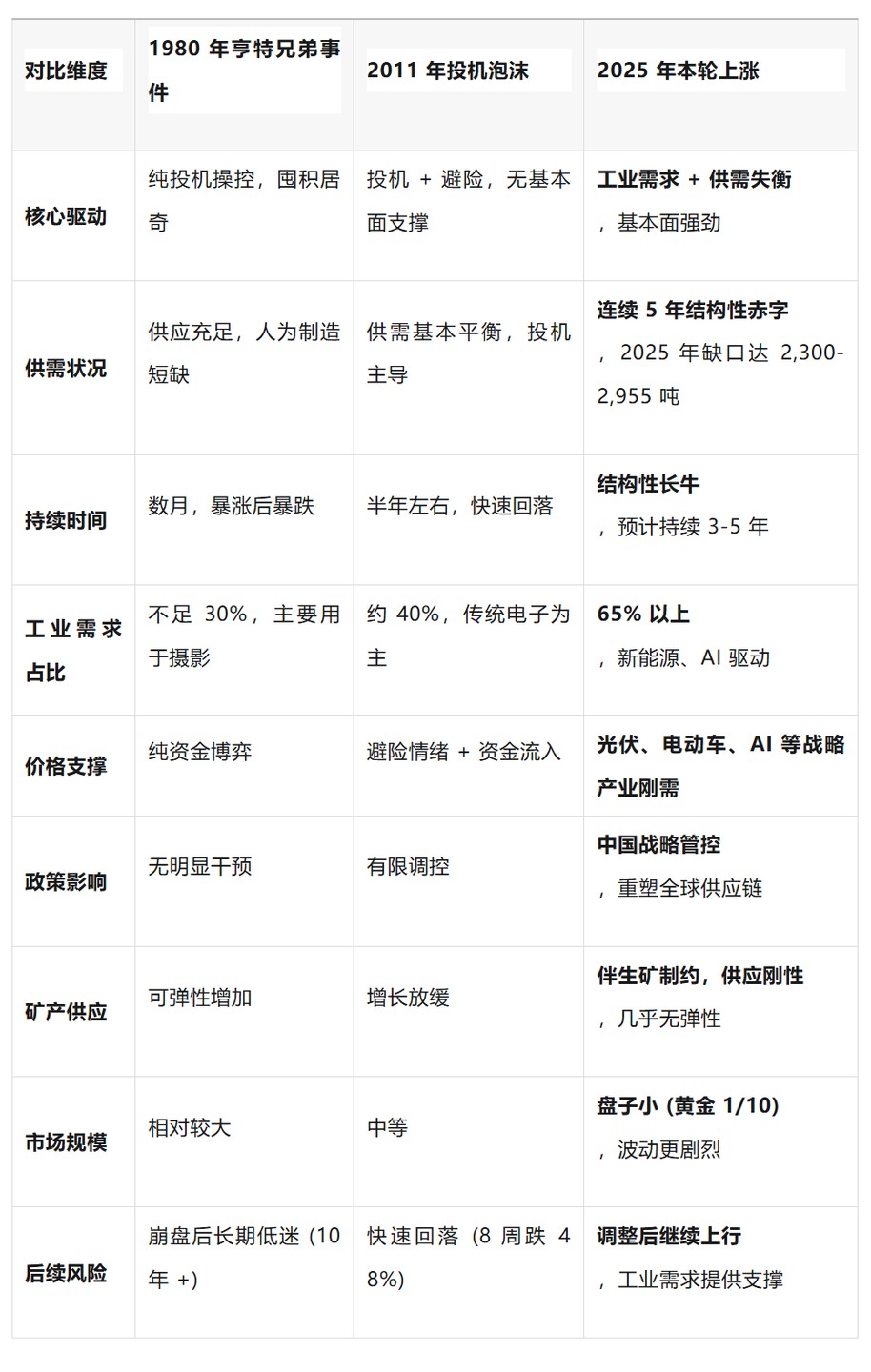
This round of silver price increase fundamentally differs from the surges in 1980 by the Hunt brothers and in 2011:
Carbon Number Technology
Risk Warning and Disclaimer
The market has risks, and investment requires caution. This article does not constitute personal investment advice and does not take into account the specific investment goals, financial situation, or needs of individual users. Users should consider whether any opinions, views, or conclusions in this article are suitable for their specific circumstances. Investment based on this is at one's own risk