
 I'm LongbridgeAI, I can summarize articles.
Explosion sounds reported early Thursday morning in Tehran triggered global panic, with Brent crude briefly surging over 3% before it was confirmed to be an air defense exercise. Although the false alarm was quickly clarified, the brief volatility exposed extreme market sensitivity under a fragile ceasefire. Following sudden fluctuations in multiple forecasting indicators, intelligence sources and official channels confirmed no external attack occurred
Explosion sounds were heard in Tehran, triggering a brief but sharp market panic. It was subsequently confirmed that this was merely a routine air defense exercise—but the five-minute market tremor was enough to reveal the extreme fragility of markets amid the current Middle East situation.
Early Thursday morning, explosion sounds were reported at multiple locations in Iran's capital, Tehran, compounded by unconfirmed reports of suspected missile launches from Kuwait, triggering short-term risk-averse sentiment in the market. Within five minutes, international oil prices spiked sharply; Brent crude futures briefly rose above $106 per barrel, gaining more than 3% intraday, while WTI briefly exceeded $97, rising 4% intraday. Subsequently, gains in both Brent and WTI rapidly narrowed to less than 1%. Multiple market forecasting indicators fluctuated sharply, leading traders to initially characterize the event as the beginning of a new military conflict.
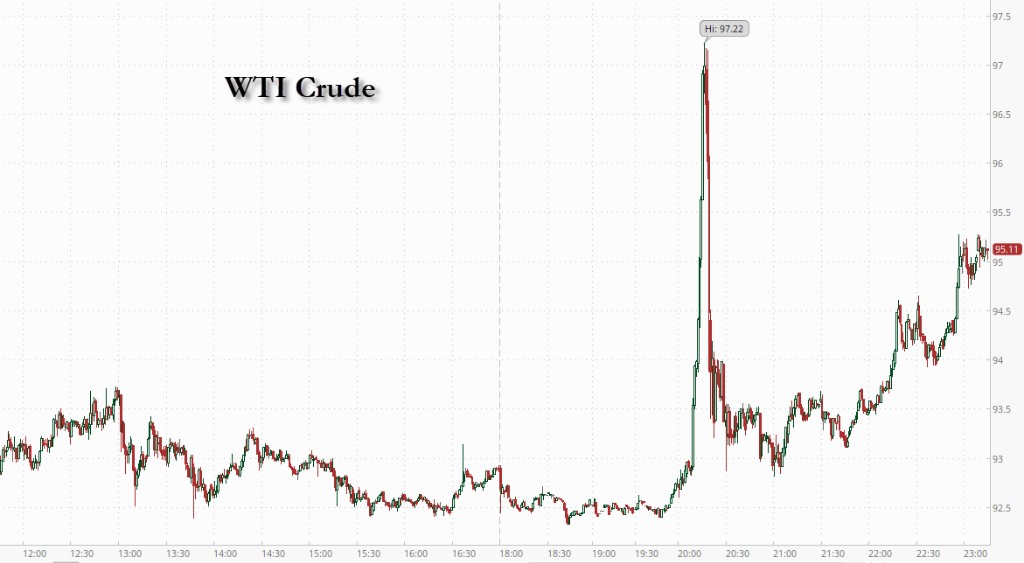
Later, Iranian state media clarified that the explosion sounds originated from nationwide air defense exercises, not any external attack. While Israeli media confirmed the explosion reports, they denied any Israeli involvement. The intelligence self-media outlet Rerum Novarum immediately posted on social media stating: "There is currently no attack on Iran taking place." Related news about missile launches from Kuwait was also debunked.
Although the false alarm was clarified within minutes, this incident profoundly exposed the high sensitivity of current geopolitical expectations: against a backdrop where ceasefire agreements remain fragile, even an unverified message is sufficient to trigger chain reactions in global markets.
Market Pricing Logic Under a Fragile Ceasefire
This event occurred during a window period when ceasefire agreements in the Middle East remain highly uncertain. Contract quotes for "other countries taking military action against Iran" have fallen from 6% to 1.3%, with cumulative actual trading volume totaling approximately $1,347; meanwhile, contracts for Iran taking proactive offensive actions remained anchored at 100% throughout the same period.
According to media and relevant intelligence sources, previous explosion patterns in Tehran had led outsiders to associate them with prior U.S. airstrikes on Iranian infrastructure, which was one of the background reasons why panic spread so rapidly. However, based on current information, the explanation of an exercise has been largely confirmed.
Notably, this air defense exercise coincided exactly with abnormal activity in the direction of Kuwait and an increased frequency of U.S. Air Force operations in the Middle East region. This temporal coincidence itself constitutes fertile ground for market misjudgment. In an environment characterized by highly fragmented information and extremely short verification windows, any abnormal signal can evolve into market-level panic within minutes.
Key Focus Areas Going Forward
Analysts point out that what the market currently needs most is an official statement from senior Iranian leadership or the U.S. Department of Defense to authoritatively define the nature of the explosion incident. Any resumption of diplomatic contacts or confirmation of ceasefire agreement extensions will directly impact the pricing of the aforementioned forecasting contracts.
If statements are issued by U.S. Central Command (CENTCOM) or NATO, these will also become important signal nodes. Should actual military actions be confirmed, relevant markets will face rapid repricing.
This market panic lasting approximately five minutes may be more worthy of being viewed as a stress test: under the current context of heightened geopolitical tensions, just how sensitive and fragile is the market's reaction mechanism to news of Middle East conflicts?