
India Sharply Raises Gold and Silver Import Tariffs to 15% to Curb Imports and Boost the Rupee
 I'm LongbridgeAI, I can summarize articles.
India announced an increase in gold and silver import tariffs from 6% to 15%. Prime Minister Modi urged citizens to avoid buying gold for a year to help alleviate the trade deficit and protect foreign exchange reserves. As the world's second-largest consumer of precious metals, India is expected to see a further decline in compliant import volumes following the significant tariff hike, directly suppressing demand for physical gold
India has sharply raised import tariffs on gold and silver from 6% to 15%. This move aims to narrow the trade deficit and bolster the rupee, but industry warnings suggest it may suppress compliant demand while reigniting smuggling activities in precious metals.
According to Reuters, the Indian government issued an order on Wednesday imposing a 10% basic customs duty and a 5% Agriculture Infrastructure and Development Cess (AIDC) on gold and silver imports, raising the effective tax rate from 6% to 15%.
This marks the most aggressive step in India's recent series of measures to tighten precious metal imports. Previously, India began levying a 3% Integrated Goods and Services Tax (IGST) on gold and silver imports, leading several banks to suspend imports for over a month, with import volumes falling to near 30-year lows in April.
The tariff hike could have a significant impact on the global precious metals market. As the world's second-largest consumer of precious metals, India relies almost entirely on imports for its gold consumption. Industry insiders expect compliant import volumes to decline again after the substantial tariff increase, directly suppressing demand for physical gold.
Surendra Mehta, National Secretary of the India Bullion and Jewellers Association, stated:
"The tariff hike aligns with market expectations, as the government intends to reduce the current account deficit. However, against the backdrop of already high gold and silver prices, this move may further suppress demand."
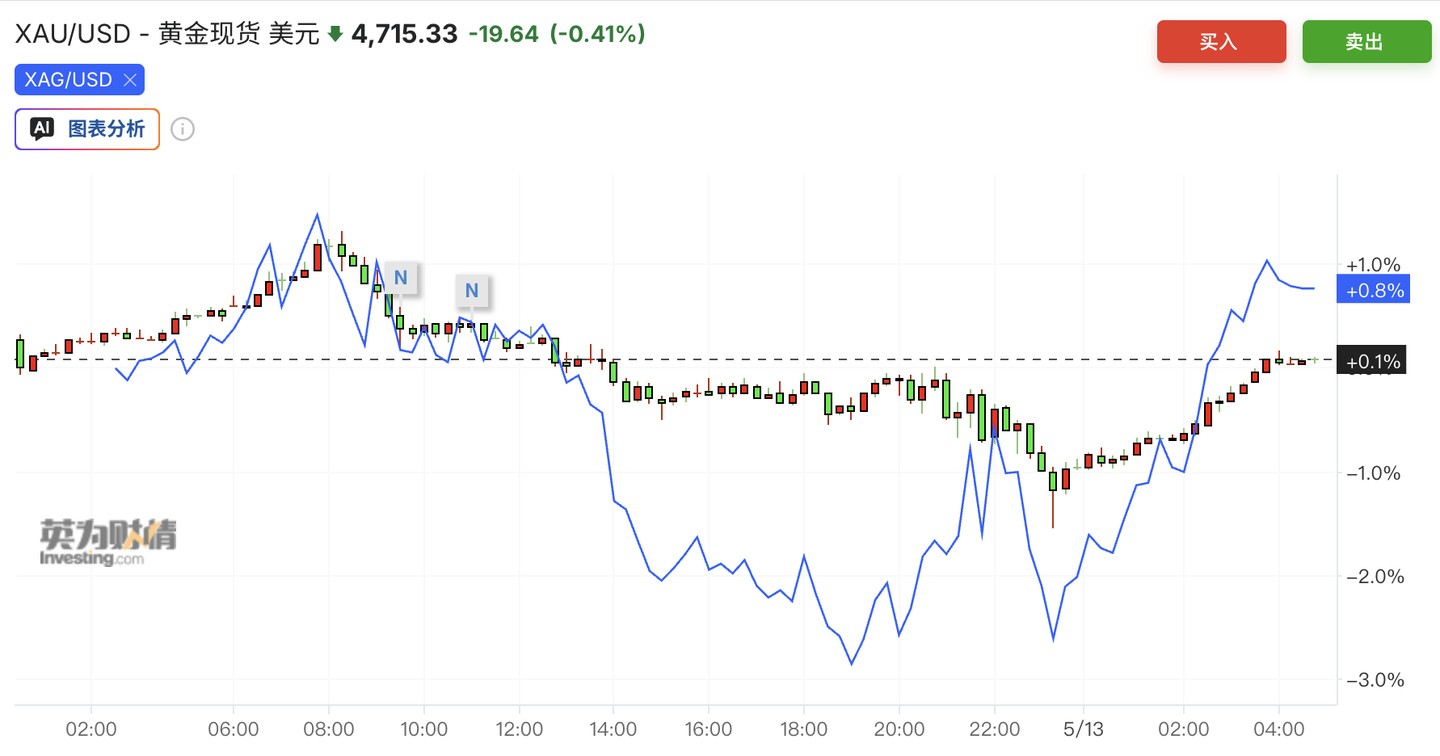
At the time of writing, spot gold against the US dollar fell 0.41%, while spot silver against the US dollar rose 0.54%. The event has not yet caused a significant shock to the precious metals market.
Policy Aims to Boost Rupee, Industry Worries About Rising Smuggling Risks
The tariff increase comes amid pressure on India's foreign exchange reserves and a continuing weakening of the rupee. The rupee is one of the worst-performing currencies in Asia, and massive gold imports have exacerbated foreign exchange depletion and the trade deficit.
Indian Prime Minister Modi publicly urged citizens last Sunday to avoid buying gold for a year to help protect foreign exchange reserves. This rare statement highlights the authorities' high regard for the foreign exchange situation.
Investment demand for gold in India has recently warmed up significantly. Data from the World Gold Council last month showed that net inflows into Indian gold ETFs surged 186% year-on-year in the first quarter of this year, reaching a record 20 metric tons. This was driven by safe-haven and investment demand stemming from continuously rising gold prices and negative returns in the Indian stock market over the past year.
Industry insiders are concerned that India's hike in precious metal tariffs may bring back the risk of smuggling. Smuggling activities had somewhat subsided after India lowered gold tariffs in mid-2024.
The sharp rebound in tariffs may once again open up profit margins for illegal channels. A Mumbai-based private bank precious metals trader, who wished to remain anonymous, told Reuters: "The gray market is likely to become active again. At current gold price levels, smugglers can make considerable profits."