
NVIDIA bets on OpenAI co-founder’s new AI lab to expand its computing power layout
 Complete. Here is the key summary
NVIDIA has established a long-term partnership with the artificial intelligence laboratory founded by Ilya Sutskever, former chief scientist of OpenAI. This startup will receive substantial computational power support from NVIDIA's flagship GPUs, achieving a significant increase in computational scale, which previously relied mainly on Google TPUs. This move aims to help NVIDIA counter industry competitors and expand its computational power layout
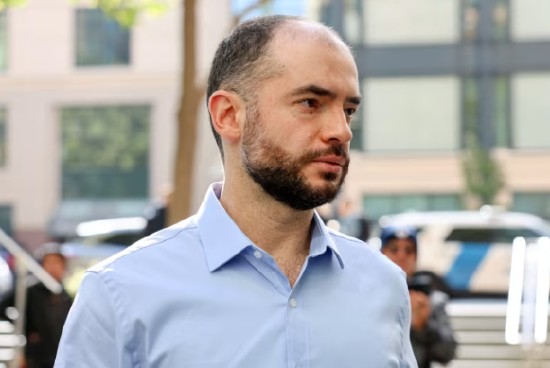
NVIDIA is investing in a low-profile artificial intelligence laboratory operated by former OpenAI chief scientist Ilya Sutskever, with both parties reaching a long-term cooperation agreement. This collaboration will allow the startup to access more computing resources and help the chip giant compete against industry rivals.
The two companies disclosed on Monday that NVIDIA completed a significant investment after gaining rare insights into the startup's research progress; the specific financial terms of the deal have not been disclosed.
The agreement stipulates that the Safe Superintelligence (SSI) company founded by Sutskever can use NVIDIA's flagship graphics processing unit (GPU) hardware in large quantities, achieving a significant scale-up in computing power. Sources revealed that the company previously relied primarily on tensor processing units (TPUs) developed by Google's parent company Alphabet for its computations.
Amid the AI boom in the United States, major chip manufacturers are locking in top AI clients through various collaboration strategies, and this partnership is a typical example.
In March of this year, NVIDIA completed another similar investment, also involving a former OpenAI veteran: former OpenAI chief technology officer Mira Murati. Murati founded the artificial intelligence laboratory Thinking Machines Lab last year, and earlier this month, the lab released its first AI model, which was trained entirely using NVIDIA hardware.
Sutskever is a milestone researcher driving the AI wave, with many groundbreaking achievements leading the AI revolution. He co-founded the Safe Superintelligence company in 2024. The startup's goal is highly focused: to rapidly tackle and achieve what he describes as safe superintelligence—defined by the industry as general artificial intelligence that possesses all human capabilities without posing a threat to humanity.
Top venture capital firms such as Sequoia Capital and Andreessen Horowitz quickly injected about $2 billion in funding; the company's research and development process is highly confidential. Media reports previously indicated that, based on Sutskever's top reputation in the industry, the company's valuation reached approximately $30 billion last year.
In a statement, Sutskever noted that the company's research focuses on previously overlooked areas of study regarding the mechanisms of human brain function.
Sutskever was born in the former Soviet Union and grew up in Israel, showing mathematical talent from a young age. While pursuing graduate studies in Canada, he studied under Nobel laureate and AI pioneer Geoffrey Hinton, which helped him gain recognition in the industry. In 2012, he co-authored a landmark paper on computer vision with Hinton, demonstrating that deep learning neural networks could significantly enhance model intelligence by leveraging vast amounts of data and computing power, directly igniting the global modern AI arms race.
Afterward, Sutskever joined Google, leaving in 2015 to co-found OpenAI. During his tenure at OpenAI, his technical insights contributed to the birth of ChatGPT; He has long believed that as long as the amount of data and computing power for AI training continues to expand, the goal of achieving Artificial General Intelligence (AGI) set at the founding of OpenAI can be realized.
Subsequently, he had a fierce falling out with OpenAI CEO Sam Altman: Sutskever participated in the vote to remove Altman; months after Altman's reinstatement, he himself also left OpenAI. After leaving, Sutskever rarely spoke publicly but has expressed doubts several times, stating that simply relying on the existing technological path of stacking computing power and data may not be sufficient to achieve the ultimate AI goal