
 I'm LongbridgeAI, I can summarize articles.
The KOSPI has plunged nearly 35% from its June highs, with SK Hynix and Samsung Electronics breaking below key support levels, while the 3x leveraged Korea ETF has crashed by over 70%. As one of the most crowded trades in the AI sector, South Korea is seeing capital flee first, with its decline outpacing the Philadelphia Semiconductor Index. The technical correction is not yet complete, and leveraged funds are amplifying the downturn. Market participants worry this could mark the beginning of a repricing for globally overvalued AI assets, warranting caution as adjustments may spread to other markets
In the era of coal mining, canaries were used to detect dangerous gases early, and their collapse often signaled that greater risks were approaching. Today, the South Korean stock market appears to be becoming that "canary" as the AI frenzy recedes.
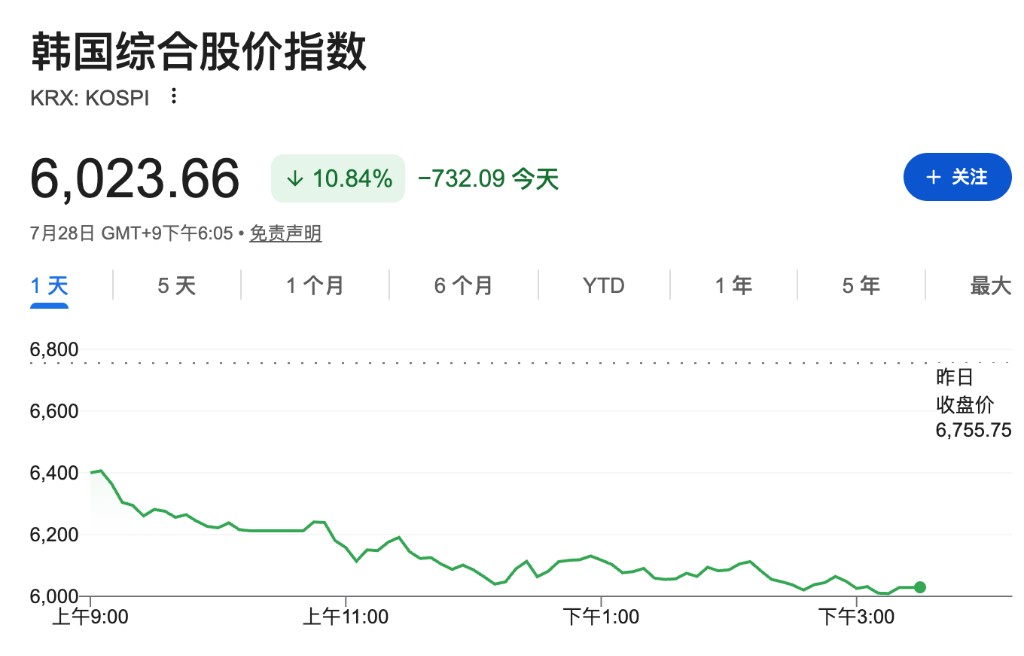
As one of the most crowded trades in this round of AI investing, the South Korean semiconductor sector has been the first to face intense selling pressure. On July 28, the KOSPI plummeted nearly 11% in a single day. SK Hynix, Samsung Electronics, and Japanese memory chip giant Kioxia all broke below key technical support levels. The Direxion Daily Korea Bull 3x Shares ETF (KORU) fell from around $64 at its June high to near $17, representing a cumulative drop of over 70%.
Previously, the South Korean market was one of the biggest beneficiaries of the global AI boom, with assets related to memory chips, HBM, and AI infrastructure receiving concentrated capital inflows. But now, these same highly crowded, high-expectation assets are the first to be sold off. Market concerns are growing that this may not just be a correction in the South Korean stock market, but an early signal that the AI trade is beginning to unwind.
Of particular note is that the KOSPI had previously outperformed the Philadelphia Semiconductor Index (SOX) during this AI rally, and is now leading the decline. After the fall of this "canary," global investors are beginning to re-examine a key question: Are the high valuations and high expectations of AI assets entering a phase of repricing?
AI Frenzy Recedes, South Korea Becomes the First Domino to Fall
Since its peak in June, the KOSPI has accumulated a loss of nearly 35%, with the latest round of selling further exacerbating market panic.
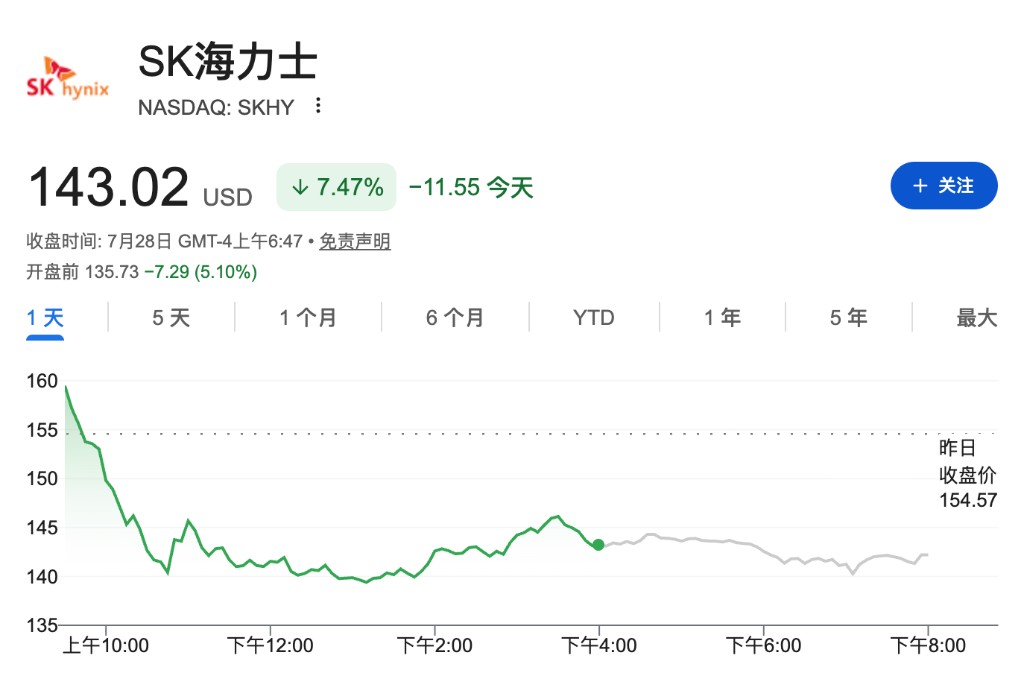
During the previous surge in AI infrastructure investment, South Korean semiconductor companies were among the biggest beneficiaries. SK Hynix became a market favorite driven by exploding demand for High Bandwidth Memory (HBM), while Samsung Electronics was boosted by expectations of expansion in the AI server supply chain.
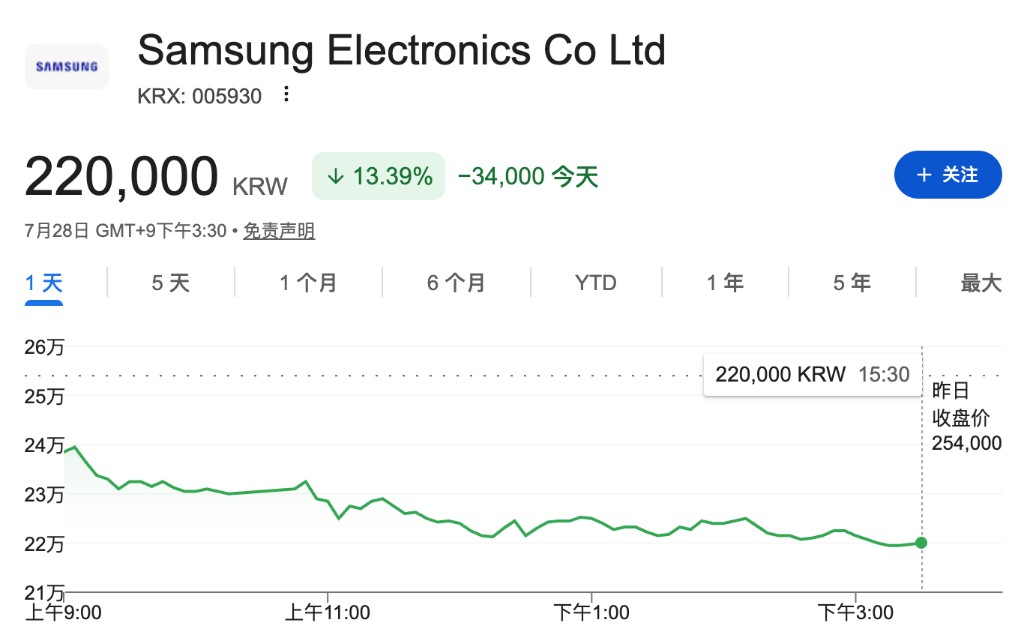
However, as market risk appetite cooled rapidly, capital began to withdraw. SK Hynix's stock price fell with heavy volume, breaking below its important 100-day moving average since May 2025; Samsung Electronics plunged 14% in a single day, simultaneously losing both its 100-day moving average and long-term trend line.
What the market fears is that this may not be an isolated market adjustment, but the beginning of the AI supply chain trade spreading from core assets to peripheral ones.
Deteriorating Technicals, Market Has Not Yet Seen True "Capitulation"
From a technical indicator perspective, the KOSPI's adjustment does not yet show clear signs of ending.
The index has broken below the 50-day moving average and is approaching the 200-day moving average as well as the long-term trend line that supported this upward cycle. Although the RSI indicator has dropped to its lowest level since April 2025, indicating the market has entered oversold territory, historical experience shows that being oversold does not mean an immediate bottom.
True market bottoms are usually accompanied by more intense panic, surging trading volumes, and a comprehensive spike in volatility. Currently, the reaction of the KOSPI volatility index remains relatively limited, implying that the market structure may not have undergone sufficient clearing.
In other words, while prices have seen a significant correction, there is still uncertainty as to whether the "final drop" in sentiment has been completed.
The Leveraged Fund Dilemma: KORU's Plunge Reveals AI Trade Risks
Leveraged funds are amplifying the downward pressure on the South Korean market.
The 3x leveraged Korea ETF, KORU, touched around $64 in early June this year and has recently fallen to near $17, a drop of over 73%. For investors holding such products, the greatest risk is not simply the decline of the index, but the long-term erosion caused by the daily rebalancing mechanism of leveraged ETFs.
These products track daily return multiples, not long-term cumulative returns. When the market continues to oscillate and decline, the compounding effect constantly erodes net asset value. Even if the index returns to its previous highs in the future, the leveraged ETF may not recover in sync.
The leveraged capital that flooded into the AI trade is now becoming passive selling pressure during the market's decline.
South Korea's "Canary" Warning: The Beginning of Global AI Asset Repricing?
The most pressing concern for the market currently is whether the collapse of South Korean semiconductor stocks will further transmit to global chip assets.
Data shows that the KOSPI's gains previously exceeded those of the Philadelphia Semiconductor Index (SOX), making it one of the most aggressive representatives of the AI trade. Now, as the KOSPI falls back to current levels, the SOX remains about 20% higher, creating a significant divergence. If historical correlations come back into play, the global semiconductor index may still face pressure to make up for the decline.
Of course, the South Korean market does not necessarily represent the entire AI industry cycle. AI capital expenditure by major US tech companies, cloud computing demand, and orders for advanced chips remain the core factors determining industry fundamentals. However, from the perspective of capital flows, South Korea is becoming an important window for observing whether the AI trade is overheated.
If the AI boom can still digest valuations through the realization of corporate earnings, then this is merely a healthy adjustment; but if capital begins to reassess the ROI cycle of AI investments, then today's violent volatility in the South Korean market may only be the beginning of a global repricing of AI assets.
The "canary" has fallen. What the market must now observe is whether this represents localized oxygen deprivation, or if the entire mine is losing air.