
Xiaomi's Lei Jun cites Li Auto's new L6 to defend EREV timing
 I'm LongbridgeAI, I can summarize articles.
Xiaomi CEO Lei Jun defended the timing of its entry into the extended-range electric vehicle (EREV) market, citing strong sales of Li Auto's new L6 as evidence of robust consumer demand. Ahead of the Sky Nomad technology launch, Lei argued that EREVs offer necessary range and flexibility for large SUVs, countering claims of market saturation despite recent industry-wide sales declines.
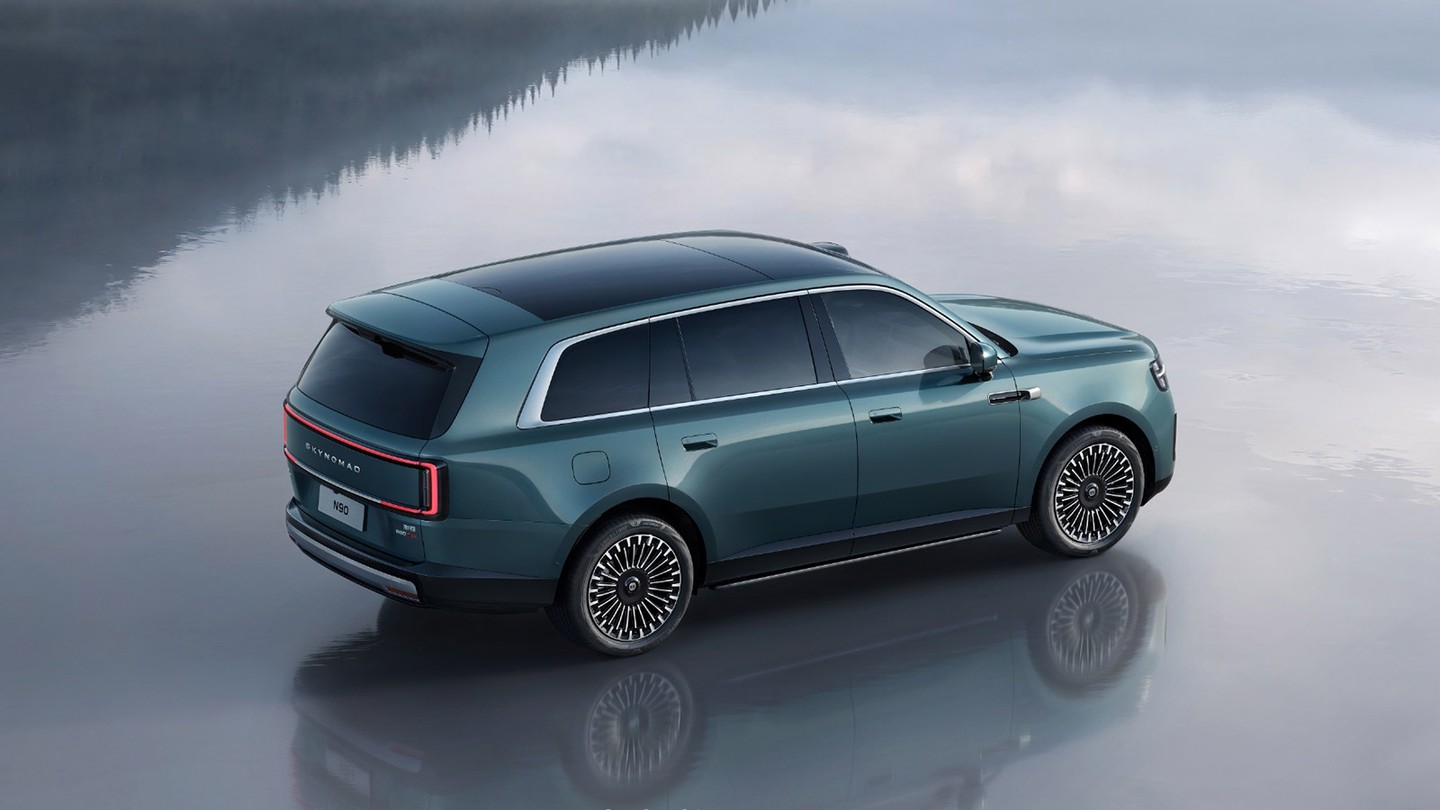
- The Xiaomi founder pointed to strong demand for Li Auto's new-generation Li L6 as evidence that demand for EREVs is real and robust.
- Lei's comments came 1 day before Xiaomi's Sky Nomad technology launch event.
Xiaomi (HKEX: 1810) founder, chairman and CEO Lei Jun said the company is not too late to introduce extended-range electric vehicles (EREVs), pointing to the sales performance of Li Auto's (NASDAQ: LI) new-generation Li L6 as evidence.
Lei published a lengthy post on Weibo on Wednesday, responding to the 2 questions most frequently raised about Xiaomi's Sky Nomad series: why the company is developing EREVs and whether it is entering the market too late.
"Contrary to many widely held views, the EREV market is far from saturated and instead still offers enormous potential," he wrote.
Join us on Telegram or Google News
Lei said sales of Li Auto's new-generation Li L6 have continued to rise since its launch, while having "absolutely no impact" on the company's battery electric Li i6.
"This shows that demand for EREVs is real and robust, and that consumers are willing to pay for excellent EREV products," Lei said.
Li Auto launched the new-generation Li L6 on July 16 and began deliveries on July 20. The model is priced at 249,800 yuan ($36,790) and its predecessor was once one of the company's best-selling vehicles.
Li L6 monthly deliveries
2024 2025 2026
Lei's comments came 1 day before Xiaomi's Sky Nomad technology launch event, which is scheduled for Thursday evening. The N90 Max and N70 Max EREV SUVs will make their first official appearances at the event.
This marks the first time Xiaomi has expanded its vehicle lineup beyond battery electric vehicles into extended-range electric vehicles.
Lei said the choice between EREVs and BEVs "has never been a battle between technology paths," but rather a matter of product definition.
The SU7 and YU7 are positioned as "cars for drivers," with an emphasis on power response and handling, making battery electric technology "the simplest and purest answer," he said.
The Sky Nomad series, by contrast, is positioned as a lineup of intelligent SUVs with flexible, spacious interiors, requiring a balance among range, space and refueling flexibility.
Lei also cited physical constraints. Large SUVs typically have boxy shapes that create significant aerodynamic drag, while their full-size bodies are relatively heavy.
Making such vehicles fully electric would require extremely large battery packs, which would add further weight and in turn reduce driving range, he said.
Lei said EREV systems are undergoing a "generational leap" and are no longer comparable with earlier versions of the technology.
Sky Nomad models will offer a maximum CLTC battery-only range of 505 kilometers, allowing owners to charge once a week for typical urban commuting and use them much like BEVs, he said.
When the battery is depleted, the N70 series has fuel consumption as low as 5.7 liters per 100 kilometers, while the all-wheel-drive N90 series consumes 6.26 liters per 100 kilometers.
The range extender can use all major gasoline grades available in China, including 92, 95 and 98 octane. After the first service, maintenance is required every 3 years or every 30,000 kilometers of range-extender operation, Lei said.
However, industry data show that China's EREV segment has recently come under pressure.
Retail sales of EREVs in China fell 29.31% year-on-year to 82,000 units in June, according to data from the China Passenger Car Association (CPCA).
Retail sales in the first half fell 15.09% year-on-year to 450,000 units, while EREVs' share of overall NEV retail sales declined to 8.14% from 10.44% in June last year, according to data compiled by CnEVPost.
China EREV monthly sales
2024 2025 2026
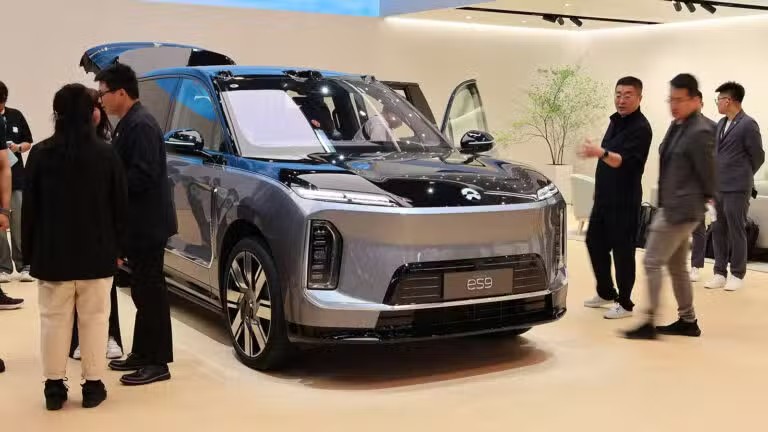
Nio, Li Auto clash over future of extended-range EVs
Li Auto founder said extended-range and battery electric models serve different needs, urging respect for user preferences.
($1 = 6.7899 yuan)