World Gold Council: Central Bank Gold Purchases Rise 62% YoY to 289 Tonnes, Hitting Four-Year High; Jewelry Demand Remains Under Pressure
 Complete. Here is the key summary
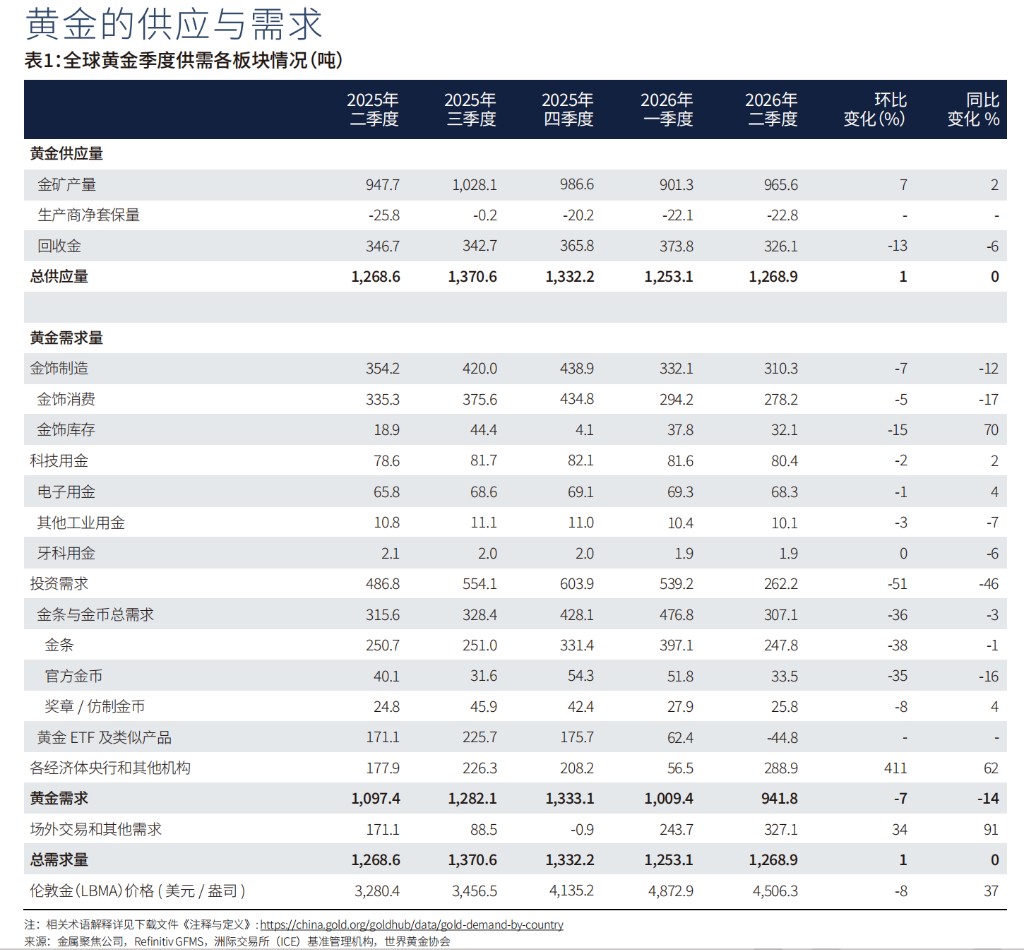
In Q2 2026, global total gold demand remained flat year-on-year at 1,269 tonnes. Global central banks were net buyers of 289 tonnes, with the People's Bank of China increasing its reserves for 20 consecutive months, setting a new record. In the first half of the year, demand for gold bars and coins in China reached 314 tonnes, a historical high. Dragged down by gold price volatility and expectations of high interest rates, gold ETFs saw a net outflow of 45 tonnes in Q2. Global jewelry demand fell to 278 tonnes, marking the lowest quarterly level since the pandemic
The latest report from the World Gold Council shows that as gold prices retreated from historical highs, the global gold market demonstrated overall resilience in Q2 2026—total demand remained flat year-on-year, while the total value of demand in the first half of the year refreshed historical records. Meanwhile, the demand structure continued to diverge: central bank gold purchases rebounded strongly, while jewelry consumption fell to lows not seen since the pandemic.
The "Global Gold Demand Trends Report" for Q2 2026, released by the World Gold Council on July 30, showed that global total gold demand (including over-the-counter transactions) in Q2 remained flat year-on-year at 1,269 tonnes. Cumulative demand in the first half reached 2,522 tonnes, a 2% year-on-year increase, with the total value of demand reaching $380 billion, a historical high. Global central banks were net buyers of 289 tonnes in Q2, a 62% year-on-year increase, marking the highest quarterly purchase volume in nearly four years.
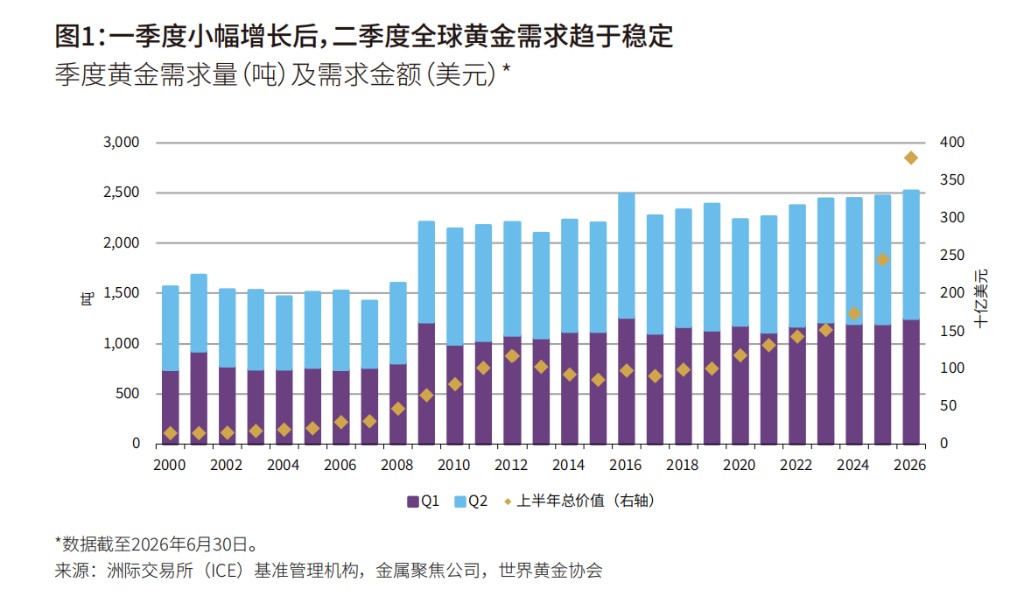
In terms of demand structure, weaker gold prices led to a net outflow of 45 tonnes from gold ETFs in Q2, becoming the main drag on investment demand; however, robust over-the-counter investment performance and continuous reserve accumulation by central banks jointly supported overall demand. Jewelry demand faced dual pressures—global jewelry demand in Q2 fell to 278 tonnes, the lowest quarterly level since the pandemic.
Looking ahead to the second half of the year, the World Gold Council believes investment demand is expected to become the main driver, but the demand structure may continue to tilt towards Asian markets and over-the-counter transactions.
Strong Return of Central Bank Gold Purchases; People's Bank of China Sets Record with Continuous Reserve Increases
Gold purchases by global central banks rebounded significantly in Q2, becoming the most prominent highlight on the demand side this quarter. After gold purchase demand slowed markedly in Q1, global central banks were net buyers of 289 tonnes in Q2, a 62% year-on-year increase. Gold buying activities by central banks in multiple countries picked up, with the scale of purchases rising to levels not seen in the past four years.
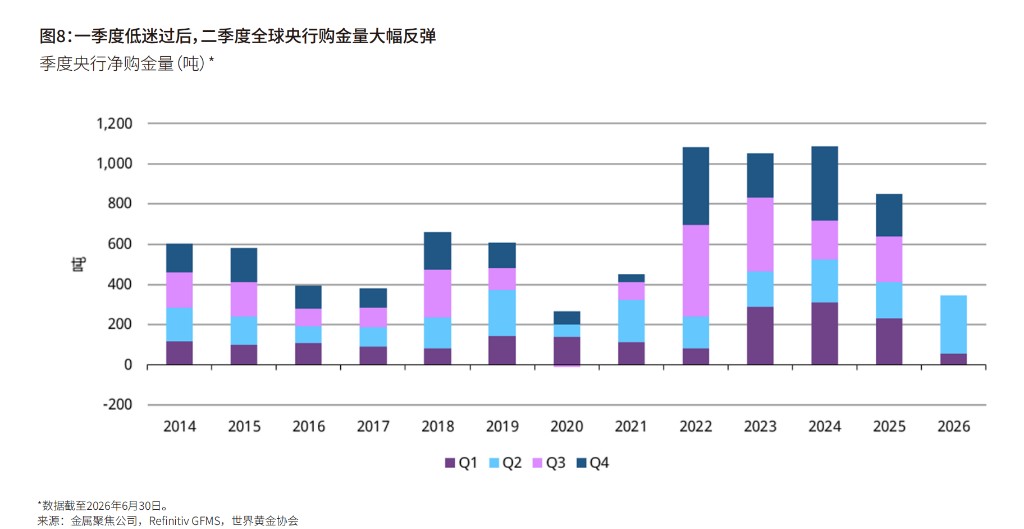
The People's Bank of China was one of the most active buyers. After adding 7 tonnes in Q1, the People's Bank of China significantly accelerated its gold purchasing pace in Q2, accumulating an increase of 33 tonnes. This marked the largest single-quarter purchase volume since Q4 2023 and extended its streak of monthly purchases to 20 consecutive months, setting a historical record for the longest continuous reserve accumulation cycle. By the end of June, China's official gold reserves reached 2,346 tonnes, accounting for 8% of its total foreign exchange reserves.
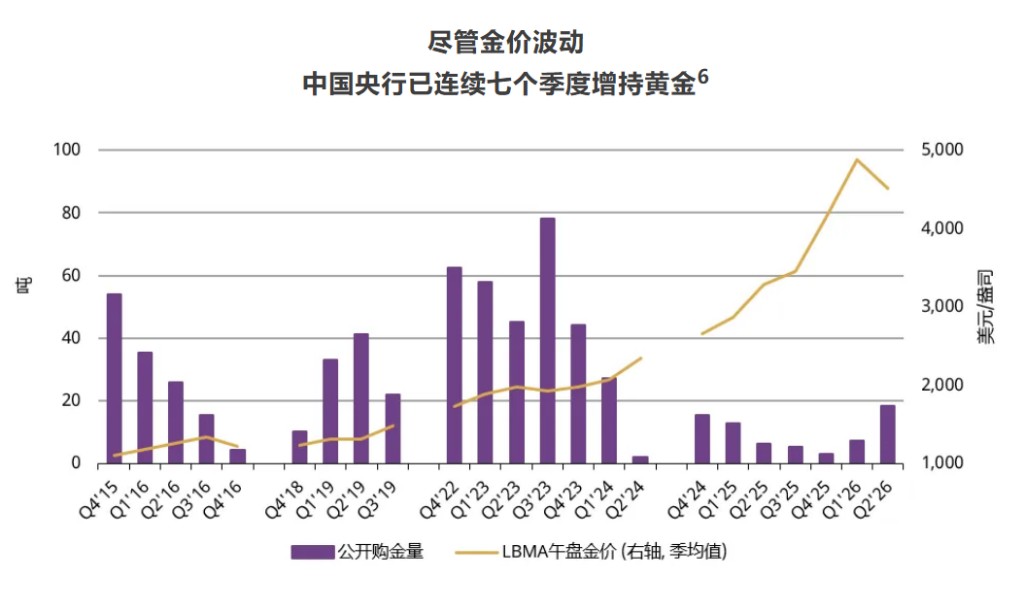
Surveys by the World Gold Council also show that 45% of responding central banks expect to increase their gold reserves in the coming year.
However, dragged down by Q1 data, the total volume of central bank gold purchases in the first half of the year remained slightly below recent highs. Looking ahead to the second half, the World Gold Council expects global central banks to remain important gold buyers, though the pace of purchases may be slightly slower than in the past four years.
ETF Flows Fluctuate with Gold Prices; Over-the-Counter Trading and Asian Markets Provide Support
Gold ETFs faced significant pressure in Q2. Global gold ETFs saw a net outflow of 45 tonnes in Q2, becoming the primary cause of the decline in investment demand. North America led the outflows—investors raised their inflation and interest rate expectations, coupled with a stronger US dollar, exacerbating net outflows from ETFs in the region. Despite this, global gold ETFs still recorded a slight net inflow of 18 tonnes in the first half of the year.
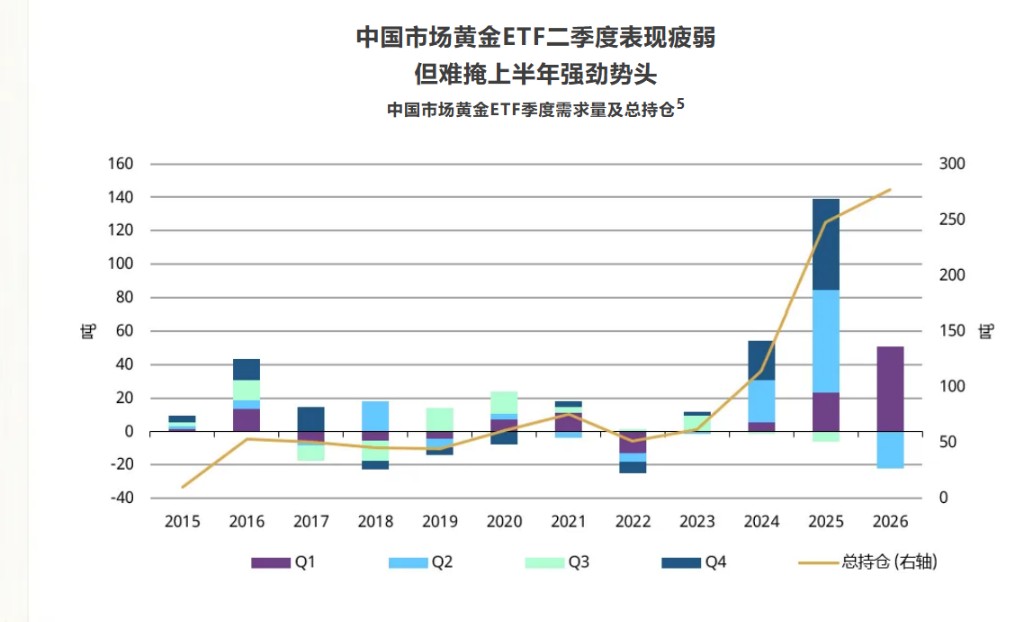
The trend of ETFs in the Chinese market was broadly consistent with the global trend. Following record-breaking strong performance in Q1, Chinese gold ETFs saw significant net outflows in Q2, equivalent to approximately RMB 20 billion (about $2.9 billion). The combination of fund outflows and lower gold prices drove a 20% decrease in the assets under management of Chinese gold ETFs in Q2 to RMB 243.1 billion, with total holdings decreasing by 22 tonnes to 277 tonnes. Behind the capital outflows, the strong performance of the domestic stock market—especially technology stocks—attracted investor attention, while weakening momentum in gold prices reduced the allocation willingness of domestic investors.
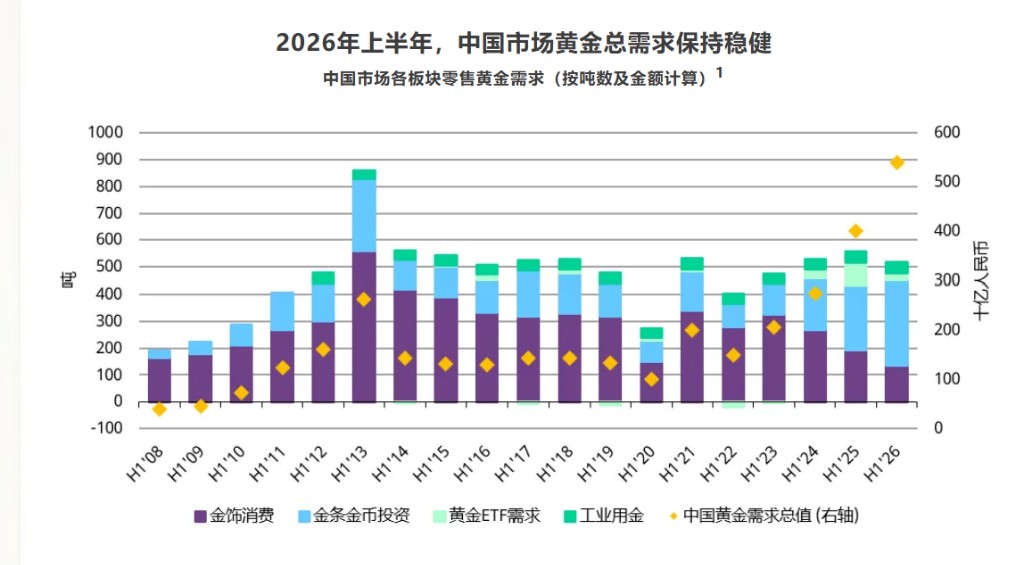
In contrast, over-the-counter investment performance was robust. Driven by the Asian region, over-the-counter investment reached 327 tonnes in Q2, totaling 571 tonnes in the first half. Global demand for gold bars and coins remained basically flat year-on-year at 307 tonnes. Supported by strong performance in Q1, the total demand for gold bars and coins in the first half was 21% higher than the same period last year.
Looking ahead to the second half, the World Gold Council believes that interest in gold ETFs in Western markets will be more closely related to real yields on US Treasury bonds, expectations for US monetary policy, and the trend of the US dollar, while over-the-counter trading activities and Asian investment demand are expected to play an increasingly significant role.
China's Gold Bar and Coin Demand Hits Historical High in First Half; Investment Logic Remains Solid
Investment in gold bars and coins in the Chinese market continued to show structural strength this quarter. Demand for gold bars and coins in China in Q2 reached 107 tonnes, a slight 7% year-on-year decrease, but still significantly higher than the 10-year average of 60 tonnes. In terms of monthly rhythm, April continued the previous strong trend, May saw some investors pause purchases due to violent fluctuations in gold prices, and June saw a recovery in bargain hunting as gold prices corrected from highs.

In the first half of the year, demand for gold bars and coins in China surged 31% year-on-year to 314 tonnes, setting the strongest semi-annual performance in history. The core logic supporting demand includes: high investment enthusiasm driven by gold prices hitting new highs at the beginning of the year, persistent geopolitical and economic uncertainties, declining yields on domestic government bonds, and the signaling effect of the People's Bank of China's continuous gold purchases.
In addition, the VAT policy adjustment in November last year had basically no negative impact on the investment sector, as most investment-oriented gold products still enjoy VAT exemption. Some consumers who previously purchased jewelry for investment purposes are increasingly switching to physical gold products. The World Gold Council expects that gold investment demand in China will remain relatively strong in the second half of the year, supporting fundamentals that will remain largely unchanged for the rest of the year, although phased gold price volatility may lead to short-term fluctuations in purchase volumes.
Jewelry Demand Hits Recent Lows; Consumer Spending Amounts Remain Resilient
In the jewelry sector, global jewelry demand in Q2 fell to 278 tonnes, the lowest quarterly level since the pandemic, a 17% year-on-year decline; in value terms, global jewelry consumption increased 14% year-on-year to $40 billion.
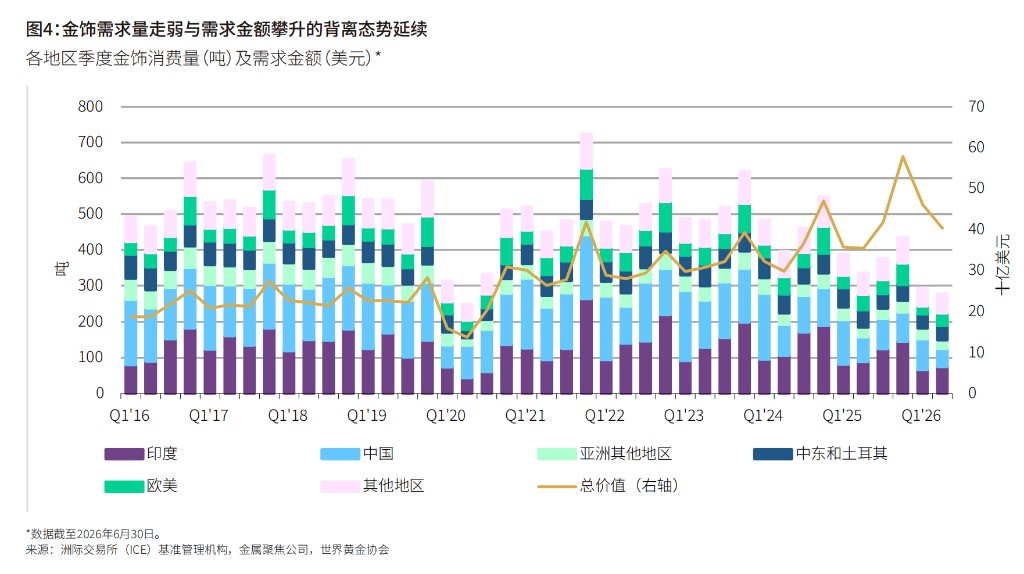
Jewelry demand in China in Q2 was 50 tonnes, a 28% year-on-year decrease, marking the weakest Q2 performance since 2005, and a sharp 41% quarter-on-quarter drop. Jewelry demand in China in the first half fell 30% year-on-year to 136 tonnes, 52% lower than the 10-year average for the first half. High and volatile gold prices further prompted consumers to delay purchase decisions or choose trade-ins, while investment-oriented demand continued to shift towards gold bars and coins.
However, resilience remains in terms of spending amounts. Jewelry consumption in China in Q2 amounted to RMB 4.96 billion, a mere 7% year-on-year decrease, which is 10% higher than the 10-year average of RMB 4.49 billion. Total jewelry consumption in China in the first half reached RMB 14.19 billion, a 2% year-on-year increase, marking the second-strongest first-half level on record. Market divergence intensified, with lightweight hard pure gold products and high-end ancient method gold series continuing to lead, and industry integration extending upstream to the manufacturing end.
The World Gold Council believes that jewelry demand in the second half is expected to receive seasonal support from the wedding peak season and holiday consumption, but sluggish consumer confidence and high jewelry costs will continue to exert pressure. The current contraction of jewelry stores and structural integration of manufacturing capacity are unlikely to end in the short term.
Slight Growth in Technology Gold Use; Diverging Trends in Mine Production and Recycled Gold on Supply Side
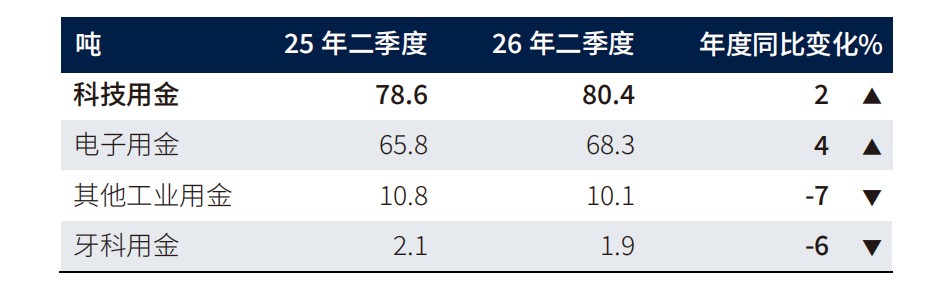
In the technology sector, driven by AI-related demand, global technology gold usage in Q2 slightly increased to 80 tonnes, successfully offsetting the drag from the weak consumer electronics market.
On the supply side, total global gold supply in Q2 remained flat year-on-year at 1,269 tonnes, but the internal structure diverged. Supported by new production in Canada and Chile, mine supply increased by about 2% year-on-year to 966 tonnes; on the other hand, despite continuously rising gold prices, recycled gold supply decreased by 6% year-on-year, confirming market behavior where consumers prefer to hold rather than sell their gold. The World Gold Council expects this trend to continue in the second half, with little sign of growth in recycled gold supply.