
The Fed Holds Rates Steady: Why Are US Treasuries Not Buying It?
 Complete. Here is the key summary
At its July meeting, the Federal Reserve decided to keep interest rates unchanged, exhibiting characteristics of a "hawkish pause," with three voting members supporting a rate hike. Following the meeting, US stocks, the US dollar, and US Treasuries declined, while the 10-Year Treasury Yield climbed close to 4.7%, reflecting market concerns about the Fed's ability to combat inflation and the return of "bond vigilante" logic. Although expectations for further rate hikes have cooled, the market still prices in additional hikes within the year. In the short term, technology stocks may face adjustments; however, in the medium term, layout opportunities supported by industrial trends remain promising
Event: At 2:00 AM Beijing time on July 30, the Federal Reserve announced the resolution of its July monetary policy meeting. The decision kept the benchmark interest rate unchanged at 3.50%-3.75%, in line with market expectations. The rate decision was passed with a vote of 9-3.
Core Conclusion: The July monetary policy meeting can be described as a "hawkish pause." Divergence within the Federal Reserve regarding policy direction has become more apparent, with three voting members supporting an immediate 25bps rate hike, indicating that some officials remain concerned about the sustainability of the decline in inflation. Meanwhile, Walsh continued his "ambiguous" communication style at the press conference, showing no clear hawkish or dovish bias and expressing caution regarding data dependence. After the meeting, US stocks, the US dollar, and US Treasuries fell, while gold strengthened slightly. Expectations for rate hikes cooled marginally, but interest rate futures still price in a 100% probability of a hike within the year. For the bond market, Walsh's ambiguous communication style undoubtedly increased distrust in the Fed's ability to fight inflation. The 10-Year Treasury Yield rose again after three consecutive days of decline, approaching 4.7%. To some extent, the bond market is constraining policy expectations through higher long-end yields, reflecting the logic of "bond vigilantes." We continue to highlight: In the short term, given "strong constraints" such as rate hikes in major developed countries and market sentiment disturbances, growth assets like technology stocks may face a "real adjustment." In the medium term, this round of the technology rally has strong support from industrial trends and earnings performance. Coupled with the fact that Fed rate hikes face significant obstacles, the adjustment in technology stocks should present another opportunity for positioning.
-
The meeting statement remained largely unchanged. Three voting members from regional Federal Reserve Banks supported a 25bps rate hike in July: Logan from the Dallas Fed, Hammack from the Cleveland Fed, and Kashkari from the Minneapolis Fed. At the press conference, Walsh's style remained "ambiguous."
-
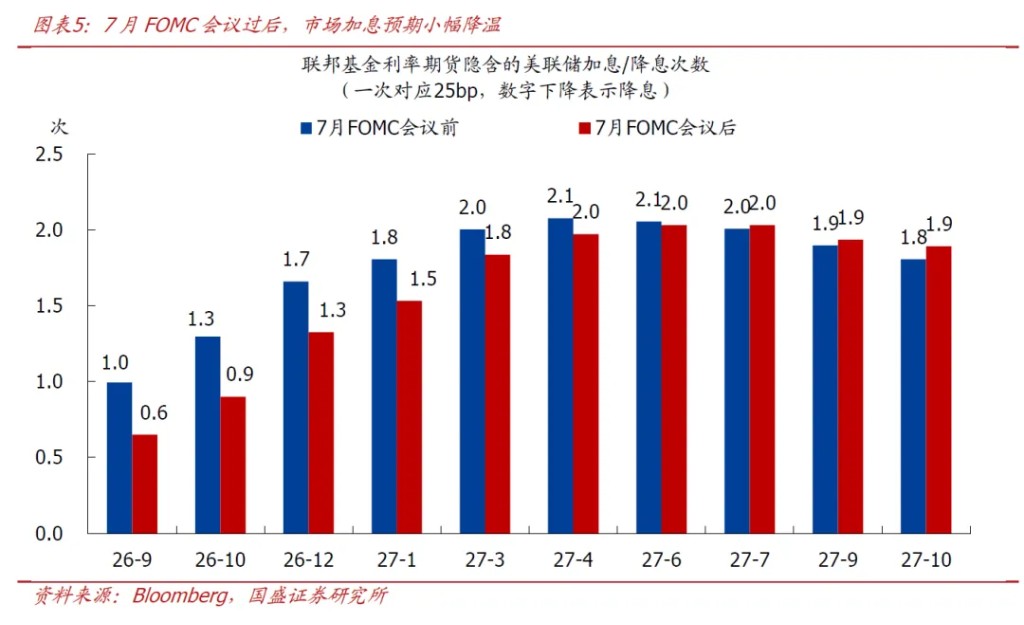
After the meeting, the implied probability of a September rate hike derived from interest rate futures dropped from 99.3% to 64.9%, and the expected number of hikes for the full year decreased from 1.7 to 1.3. However, the market still prices in a 100% probability of a hike within the year.
-
Looking ahead, we tend to maintain our previous judgment: The US is likely to neither raise nor cut interest rates within the year. The current US economic environment is neither suitable for rate hikes (weakening employment, declining inflation, K-shaped economy, weak real estate, falling central oil prices, and tight financial conditions) nor supportive of rate cuts (strong economic resilience and inflation still above target). The main risk point lies in the fluctuating US-Iran situation, requiring close monitoring of central oil prices. Additionally, before the September monetary policy meeting, the Fed will receive two non-farm payroll reports and two CPI data releases, so attention should be paid to the potential trends in employment and inflation.
-
Focus on three key points in the short term: 1) Latest developments in the US-Iran situation; 2) US fundamental data, including US Q2 GDP (July 30), July non-farm payrolls (August 7), and July CPI (August 12); 3) The Jackson Hole Global Central Bank Annual Meeting (August 27-29), where Walsh may provide new insights on the monetary policy framework and the progress of the five working groups.
Full text follows:
1. Statement largely unchanged, three voting members support a hike, Walsh's press conference style remains "ambiguous."
Statement: The Federal Reserve kept the benchmark interest rate unchanged at 3.50%-3.75%, in line with market expectations. The content of the statement basically continued the concise framework of June, with no forward guidance. It emphasized that economic activity continues to grow robustly, productivity growth and capital investment are strong, job growth is keeping pace with labor force growth, the unemployment rate is stable, and the inflation rate remains above target. Three voting members from regional Federal Reserve Banks supported a 25bps rate hike in July: Logan from the Dallas Fed, Hammack from the Cleveland Fed, and Kashkari from the Minneapolis Fed.
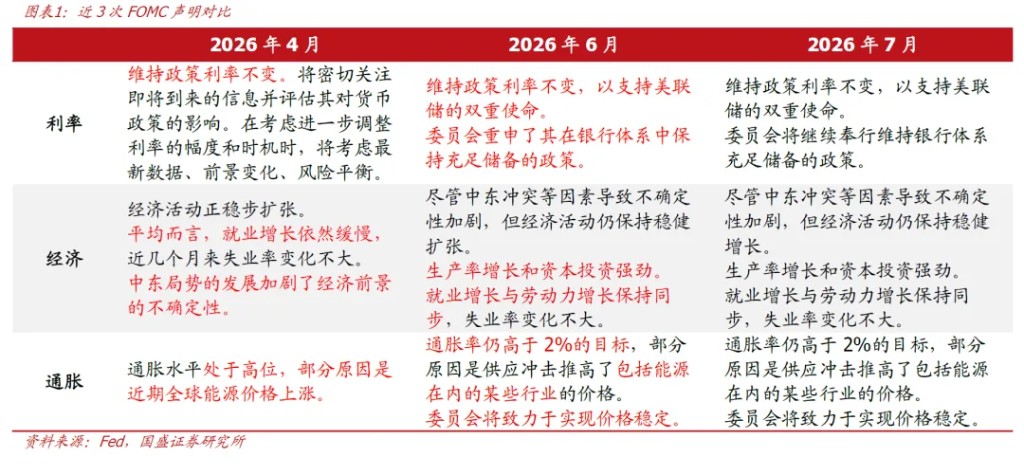
Press Conference: At the press conference, Walsh described the July FOMC meeting as a "good family fight" and emphasized that this meeting was not a simple "pause." Regarding interest rates, Walsh stated that if inflation remains persistently above target, rate hikes could be part of the solution. The removal of forward guidance requires a certain transition period. Furthermore, Walsh hinted that although the policy rate remained unchanged, the bond market had already helped the Fed complete part of the tightening work ("the markets have done quite a bit"). Regarding inflation, Walsh said that the decline in June inflation had little impact on decision-making, and he was more concerned about the trend of inflation. The Fed does not have a soft inflation target; 2% is the only clear metric. He stated the need to observe a broader set of inflation data, not limited to PCE and CPI, and hinted that new inflation metrics might be published in January next year. Regarding the economy, Walsh highlighted two important recent changes: first, both nominal and real yields on Treasury bonds have risen significantly; second, AI capital expenditure has laid the foundation for future growth. Regarding the trade-off between employment and inflation, Walsh stated that he does not believe price stability and full employment are mutually exclusive goals, weakening the short-term trade-off between inflation and employment under the traditional Phillips curve framework.
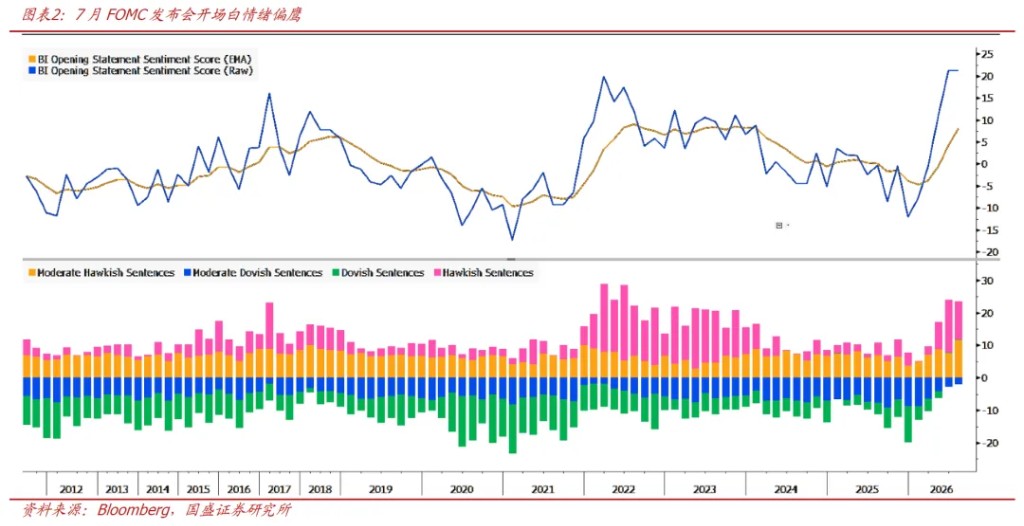
2. After the meeting, US stocks, the US dollar, and US Treasuries fell, gold strengthened, and rate hike expectations cooled slightly.
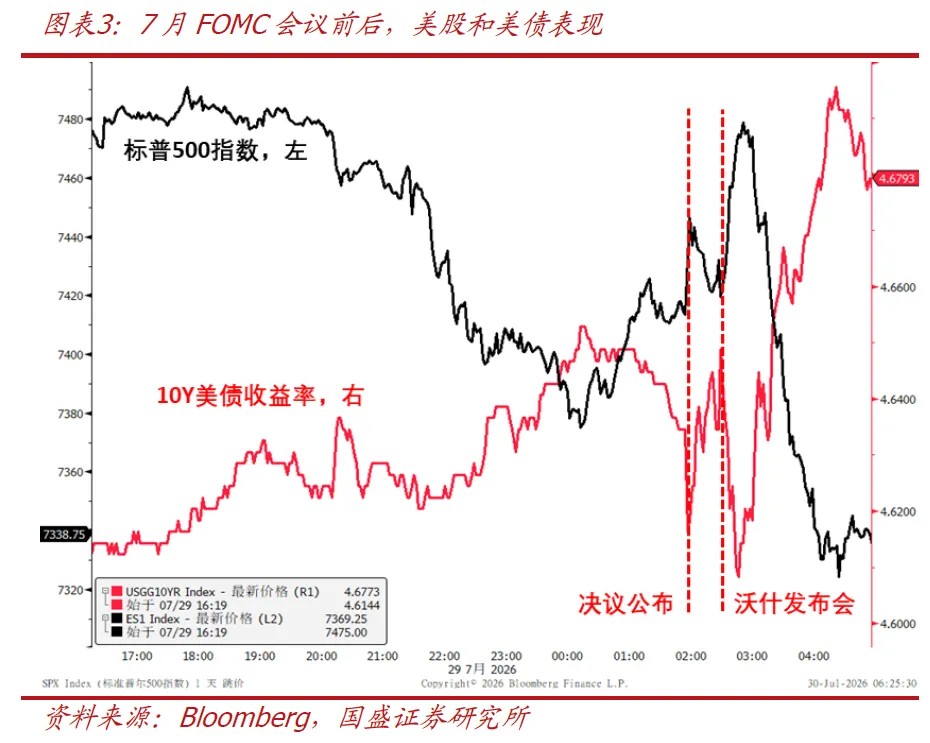
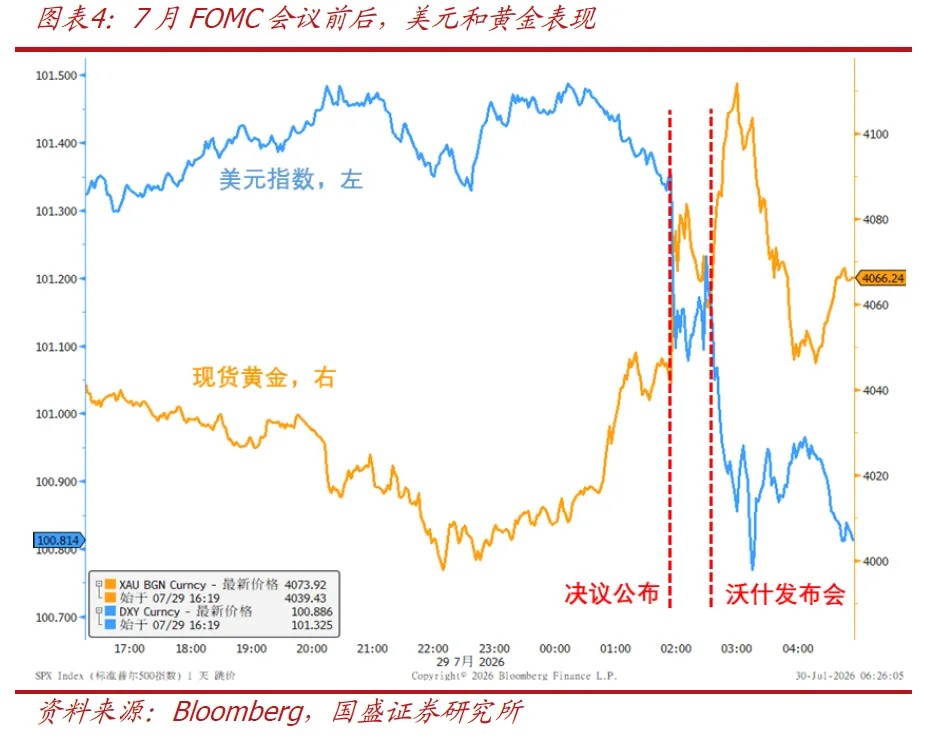
Asset Price Performance: After the meeting, US stocks, the US dollar, and US Treasuries fell, while gold strengthened. As of the close on June 29, the S&P 500, Nasdaq, and Dow Jones Industrial Average fell by 1.52%, 1.74%, and 2.19%, respectively. The 10-Year Treasury Yield rose by 6.9bp to 4.67%, the US Dollar Index fell by 0.59% to 100.82, and spot gold rose by 0.97% to $4,067.58 per ounce.
Changes in Rate Hike Expectations: After the meeting, market expectations for Fed rate hikes cooled slightly. As of the close on June 29, the implied probability of a September rate hike derived from interest rate futures dropped from 99.3% to 64.9%, and the expected number of hikes for the full year decreased from 1.7 to 1.3. The market still prices in a 100% probability of a hike within the year.
3. The US is likely to neither raise nor cut interest rates within the year; focus on three key points in the short term.
Signals from this meeting: The July monetary policy meeting can be described as a "hawkish pause." Divergence within the Federal Reserve regarding policy direction has become more apparent, with three voting members supporting an immediate 25bps rate hike: Logan from the Dallas Fed, Hammack from the Cleveland Fed, and Kashkari from the Minneapolis Fed. This indicates that some officials remain concerned about the sustainability of the decline in inflation. Meanwhile, Walsh's press conference further continued his "ambiguous" communication style. He did not show a clear hawkish or dovish bias, merely expressing caution regarding data dependence. For the bond market, Walsh's ambiguous communication style undoubtedly increased distrust in the Fed's ability to fight inflation. The 10-Year Treasury Yield rose again after three consecutive days of decline, approaching 4.7%. To some extent, the US Treasury market is constraining policy expectations through higher long-end yields, reflecting the so-called "bond vigilante" logic.
Interest Rate Outlook: We maintain our previous judgment: The US is likely to neither raise nor cut interest rates within the year. Specifically, the current US economic environment is neither suitable for rate hikes (weakening employment, declining inflation, K-shaped economy, weak real estate, falling central oil prices, and tight financial conditions) nor supportive of rate cuts (strong economic resilience and inflation still above target). In the short term, the probability of Fed rate hikes will continue to change, and the market will trade repeatedly, but ultimately, the Fed is likely to neither raise nor cut rates within the year. In the short term, the main risk point lies in the fluctuating US-Iran situation, requiring close monitoring of central oil prices. Additionally, before the September monetary policy meeting, the Fed will receive two non-farm payroll reports and two inflation data releases, so attention should be paid to the potential trends in employment and inflation. We continue to highlight: In the short term, given "strong constraints" such as rate hikes in major developed countries and market sentiment disturbances, growth assets like technology stocks may face a "real adjustment." In the medium term, this round of the technology rally has strong support from industrial trends and earnings performance. Coupled with the fact that Fed rate hikes face significant obstacles, the adjustment in technology stocks should present another opportunity for positioning. Focus on three key points in the short term: Latest developments in the US-Iran situation; US fundamental data, including US Q2 GDP (July 30), July non-farm payrolls (August 7), and July CPI (August 12); and the Jackson Hole Meeting (August 27-29), where Walsh may provide new insights on the monetary policy framework and the progress of the five working groups.
Risk Warning and Disclaimer
The market carries risks, and investment requires caution. This article does not constitute personal investment advice, nor does it take into account the specific investment objectives, financial status, or needs of individual users. Users should consider whether any opinions, views, or conclusions in this article align with their specific circumstances. Investment based on this content is at the user's own risk.