
 I'm LongbridgeAI, I can summarize articles.
Situational Awareness, an AI hedge fund founded by a former OpenAI researcher, collapsed after generating over 2000% returns through highly leveraged bets on AI stocks, leading to the liquidation of its public equity positions. Analysts suggest that the clearance of these "blood-stained chips" marks the exit of forced sellers, quickly triggering "relief buying" and driving a significant rebound in AI stocks. However, strategists warn that relying on a single liquidation event to determine a market turning point is unreliable
A hedge fund founded by a twenty-something AI "prodigy" has collapsed after generating over 2000% returns, unexpectedly becoming the latest signal for Wall Street to bet that AI trading has hit bottom.
According to The Wall Street Journal, Situational Awareness, the hedge fund founded by former OpenAI researcher Leopold Aschenbrenner, has liquidated most of its public equity portfolio after suffering heavy losses in recent weeks. The buyer was reportedly Citadel, owned by billionaire Ken Griffin.
Following the news, market sentiment reversed rapidly—AI-related stocks, which were already rising, accelerated their gains, with several heavily pressured holdings recording significant single-day rebounds.
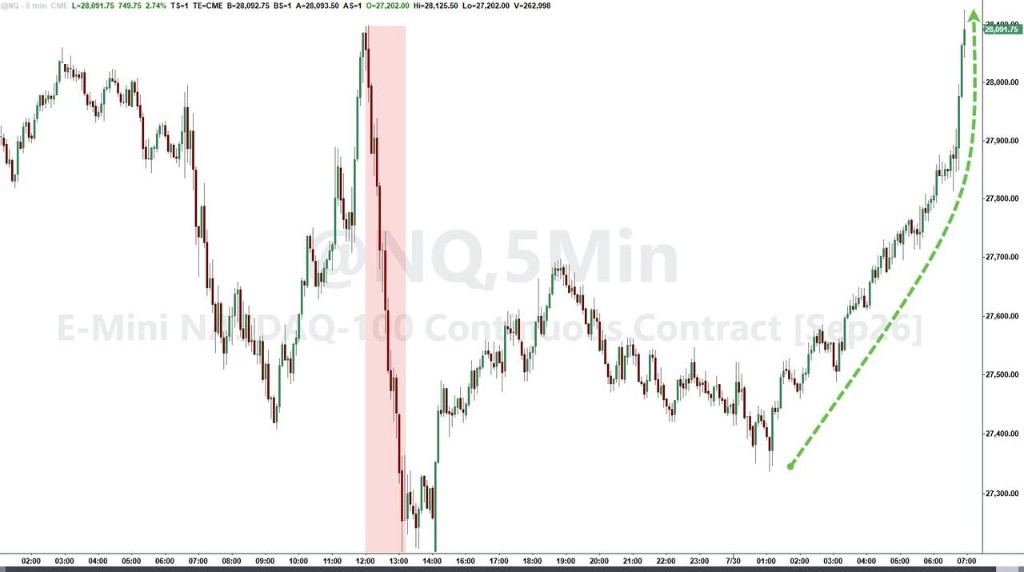
The core logic behind this compulsory liquidation is that once potential forced sellers exit the market, "buy-the-dip" orders flood in. Michael O'Rourke, Chief Market Strategist at Jones Trading, stated, "When you know a potential seller has exited, that is the moment when all buy-the-dip investors swarm in." However, several strategists also warned that using a single fund's liquidation as a basis for judging a market turning point has historically been unreliable.
From 2000% Returns to Liquidation: The Rapid Fall of Situational Awareness
Situational Awareness was established in September 2024 and created staggering returns in just a few months by leveraging high bets on AI-related stocks. Reports indicate that the fund's cumulative return since inception exceeded 2000%.
According to the Financial Times, the fund disclosed in a letter to investors in early July that its portfolio return for the first half of 2026 reached 439%. Additionally, CNBC reported that the fund's assets under management briefly climbed to $45 billion in early July.
However, high leverage is a double-edged sword in this feast. Reports state that during its heyday, Situational Awareness amplified its position leverage to four times its underlying capital. As AI momentum stocks faced a sharp correction in July, the fund's holdings came under pressure, ultimately resulting in the sale of its entire public equity portfolio via a block trade.
Notably, besides its public equity holdings, Situational Awareness held several derivative positions and reportedly possessed a significant stake in the private AI company Anthropic, the disposal status of which remains unclear.
Leopold Aschenbrenner previously garnered significant attention on social media and in financial media circles due to his age, background, and a widely circulated long essay titled "Situational Awareness" in 2024. He wrote in the article:
"Soon, the world will awaken. But right now, perhaps only a few hundred people—mostly in San Francisco and major AI labs—possess this 'situational awareness.' Through some strange twist of fate, I find myself among them."
This firm belief in the future of AI translated into highly concentrated, highly leveraged bets at the fund level. This gamble paid off for a considerable time but ultimately ended in a classic case of leveraged compulsory liquidation—once again confirming an old market lesson: leverage can amplify gains, but it can also accelerate the path to zero.
Liquidation News Triggers "Relief Buying," AI Stocks Rebound Sharply in a Single Day
After CNBC first reported the news of Situational Awareness's liquidation on Thursday, the market reaction was almost immediate. AI-related stocks, which were already rising, jumped further. According to Dow Jones Market Data, many of the long positions disclosed by the fund in its latest 13-F filing recorded significant gains on the day.
O'Rourke described this phenomenon as "relief buying"—for the entire previous week, rumors had circulated that Situational Awareness might be under pressure, leading to continuous selling of several stocks in its portfolio. "When potential sellers are confirmed to have exited, buy-the-dip orders will swarm in," he said.
From a broader macro perspective, the July momentum stock crash was one of the most severe in recent years. A widely followed high-beta momentum long-short basket tracked by Goldman Sachs fell nearly 40% for the month as of Wednesday's close. The exit of Situational Awareness was viewed by some investors as a significant outlet for this round of selling pressure.
O'Rourke stated, "Clearly, judging by the performance of many stocks, everyone is acting as if the bottom has arrived." However, he added, "Whether the bottom has truly arrived—I am not convinced."
Mark Hackett, Chief Market Strategist at Nationwide, offered a more historical perspective of caution. He stated, "Almost every major turning point is accompanied by such stories, but few of these stories actually trigger major turning points."
In other words, a fund liquidation can be a concomitant phenomenon of a market turning point, but it is not necessarily a sufficient condition.