
Optimism Grows Over US-Iran Talks, Oil Prices Plunge, US Stock Futures Rise, and Japanese and South Korean Markets Open Lower
 I'm LongbridgeAI, I can summarize articles.
Trump announced that the US and Iran will restart negotiations on Monday, stating that an agreement regarding the Strait of Hormuz is already in place. Global markets reacted sharply: Brent crude oil plummeted more than 7% in a single day, touching $81.55 per barrel; US stock futures strengthened simultaneously, with Nasdaq futures rising 0.76%. Meanwhile, pressure from OPEC+ production increases 叠加 d, and bearish momentum in oil prices continues to accumulate. The yen's movement also keeps investors on edge, with warnings of joint US-Japan intervention unresolved as the market holds its breath
International oil prices fell sharply in early Asian trading on Monday, while US stock index futures rose simultaneously. This followed Trump's announcement that the US and Iran would restart negotiations on Monday, significantly boosting market expectations for the reopening of the Strait of Hormuz.
According to CCTV News, on August 2 local time, US President Trump, when discussing Iran, stated that an agreement regarding the Strait of Hormuz was already in place, and that an agreement on denuclearization would also be reached. Trump indicated that the US would hold negotiations with Iran on the 3rd. He had previously stated that, persuaded by Middle Eastern allies such as Saudi Arabia, he had decided to abandon large-scale military strikes against Iran and instead seek a negotiated solution.
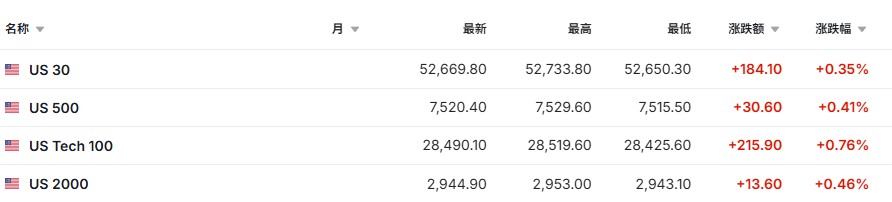
The October Brent crude oil futures contract fell as much as 7.3% to $81.55 per barrel, marking one of the largest single-day declines recently. Meanwhile, S&P 500 index futures rose 0.4%, and Nasdaq 100 index futures rose 0.76%.
Japanese and South Korean stock markets opened lower. The Nikkei 225 Index opened 1% lower, and the Seoul Composite Index opened 3.6% lower, dropping more than 4% at one point during the session.

This easing of tensions has provided breathing room for global markets, which had previously experienced severe volatility. Over the past week, markets were hit by the dual shocks of concerns over AI trade prospects and fears of resurging inflation, putting significant pressure on both stock and bond markets. Kyle Rodda, a senior analyst at Capital.com, wrote in a client report: "Last week, the only drag on the market was the escalating geopolitical risk."
Oil Prices Under Pressure: Negotiation Expectations Combined with OPEC+ Production Increases
The decline in oil prices was driven by two main factors. First, news of the restart of US-Iran negotiations directly boosted expectations for the restoration of navigation in the Strait of Hormuz; second, major OPEC+ member countries slightly raised their production quotas again, further exacerbating supply-side pressure.
WTI crude oil futures fell 4.5% to $80.78 per barrel. Iranian Foreign Minister Abbas Araghchi stated on Telegram on Sunday that negotiations between Iran and Oman had entered the final stage, with both sides discussing new transit routes for the Strait of Hormuz. However, Iranian Foreign Ministry spokesperson Esmail Baghaei added in an interview with Iranian state television that the relevant negotiations did not involve the issue of opening or closing the strait.

Trump told reporters on Air Force One on Sunday: "That would have been the largest strike since World War II. We are now just seeing if we can reach an agreement." He also stated that he would continue to push for the end of Iran's nuclear program.
Previously, the ongoing US-Iran conflict, lasting about six months, triggered supply tightness, pushed up global fuel costs, exacerbated inflation concerns, and caused widespread impacts on stock, bond, and currency markets.
US Stock Futures Rise as Risk Appetite Returns
The phased easing of geopolitical risks has led to a marked improvement in market risk appetite. S&P 500 index futures rose 0.4%, and Nasdaq 100 index futures rose 0.76%. The Australian dollar, which is sensitive to risk sentiment, rose 0.3% against the US dollar to 0.7043, leading gains among major currencies.
The Bloomberg Dollar Spot Index fell 0.2%, while the euro rose slightly by 0.1% to $1.1544. Spot gold rose 0.6% to $4,071.38 per ounce. The cryptocurrency market remained generally stable, with Bitcoin at $63,416.77 and Ethereum at $1,880.23, showing limited changes. As the US and Iran prepare to restart negotiations, US Treasury yields fell across the board.
Yen Movement: Market Highly Alert to Joint Intervention
Another focus in Asian markets is the yen. The yen softened slightly on Monday to 157.66 per US dollar, but the market remains highly alert to the possibility of further joint intervention by the US and Japan.
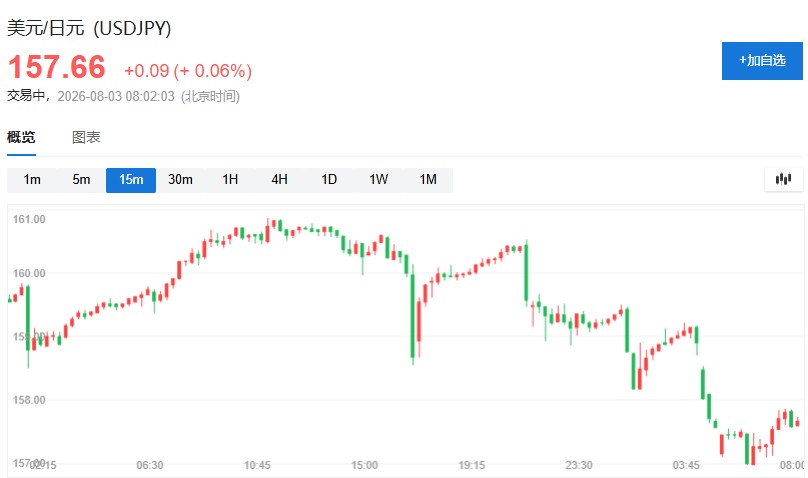
Last week, the US and Japan implemented coordinated intervention in the Tokyo and New York markets, triggering a sharp rebound in the yen. The Japanese Ministry of Finance stated that it had coordinated with the US Treasury Department to implement intervention on July 31 US time, and indicated that it would not hesitate to take further joint action. Trump told reporters on Sunday that this intervention was a "signal of friendship."
US Treasury Secretary Bessent stated that the US involvement was to address the "disorderly" fluctuations of the yen and that it was prepared to continue assisting Japan.
Elias Haddad, Global Market Strategist at Brown Brothers Harriman, wrote in a client report: "History shows that joint foreign exchange intervention is effective. Investors should align with official operations rather than fight against them. Since 1998, all three US-coordinated foreign exchange interventions have been successful."
Continuously updating