
 I'm LongbridgeAI, I can summarize articles.
Driven by global traders stockpiling in anticipation of expected U.S. tariff hikes and a contraction in copper mine supply, copper prices have surged to $14,117 per tonne. LME inventories have dropped to 94,000 tonnes, while inventories at the Shanghai Futures Exchange have also decreased significantly. Meanwhile, copper concentrate treatment charges have fallen into negative territory, reflecting a shortage of raw materials, with declining output in major producing countries like Chile further exacerbating the supply tightness
Do you know how much "readily available copper" is left globally?
94,000 tonnes.
How long would that last for the entire world? A little over a day.
This figure was just released by the London Metal Exchange on August 4. On the same day, copper prices surged 1.9%, hitting $14,117 per tonne, which translates to over RMB 100,000 per tonne, just a step away from the historical high recorded in May this year.
Why the sharp rise? First, because the U.S. is buying frantically.
For the past two years, the U.S. has been considering imposing tariffs on imported copper. Having already taxed steel and aluminum, copper is likely next in line. The market consensus expects a 15% tariff starting in 2027, rising to 30% in 2028.
Although the tariffs have not yet been implemented, the mere expectation of "imminent tariffs" has already started to ferment.
Imagine a supermarket posting a notice saying, "Milk prices will rise next week." Even if prices haven't actually gone up yet, you would probably rush to stock up on a couple of cases, right?
Global traders are those people rushing into the supermarket. In July this year, over 200,000 tonnes of copper arrived in the U.S., setting a new monthly record since records began in 2014. Copper piles in U.S. warehouses are growing, reportedly exceeding 1 million tonnes for the first time in a century.
Consequently, copper from around the world is moving to the U.S. Inventories in Europe and Asia are being gradually drained. Readily deliverable copper in London warehouses has fallen steadily from early-year highs to 94,000 tonnes, while inventories at the Shanghai Futures Exchange dropped from over 400,000 tonnes in March to around 70,000 tonnes in July.
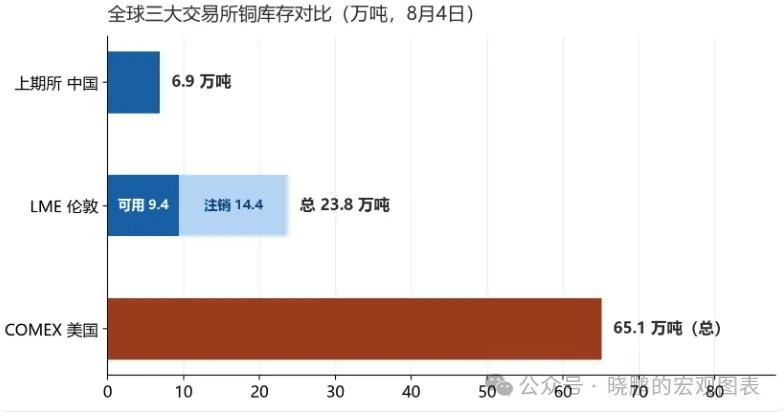
(Data as of August 4, 2026; Sources: LME, Shanghai Metals Market, SHFE)
Why are traders so active? Because copper prices are higher in the U.S. The price difference between the two regions exceeds $350 per tonne, leaving room for profit even after deducting shipping costs.
If it were merely a matter of moving copper from east to west, it would be manageable. The real headache is that global copper mine production is contracting.
The most striking indicator is the copper concentrate treatment charge (TC). This fee, originally the "processing reward" collected by smelters, has now plummeted to -$159.8 per dry tonne. What does this mean? For every tonne of copper processed, smelters not only make zero profit but must actually pay out of pocket to secure raw materials. This figure clearly illustrates the extreme tightness at the mining end.
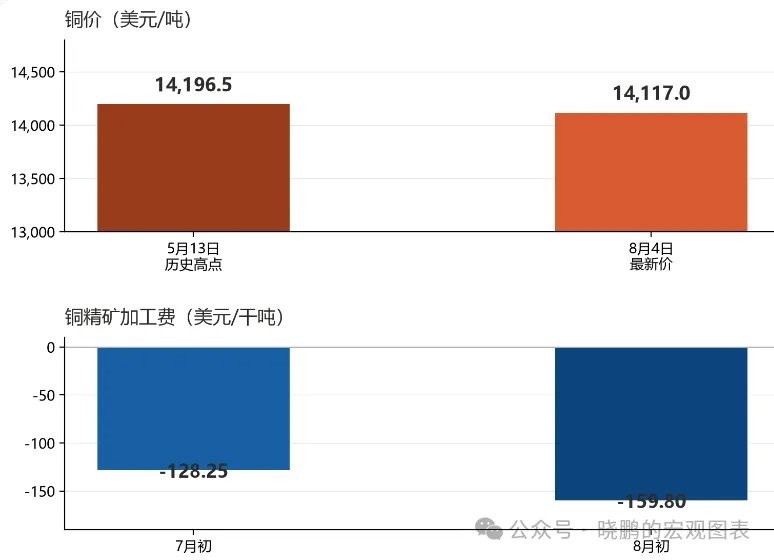
( Copper prices remain at high levels above $14,000/tonne, while copper concentrate treatment charges have plunged into deep negative territory )
Looking at the supply side, Chile, the world's largest copper producer, saw its output in the second quarter of this year hit the lowest level since 2007. Guosheng Securities provided more detailed statistics: in May, Codelco's production fell 18.3% year-on-year, and Escondida's declined by 17.6%; recently, some mines halted production temporarily due to storms. The resumption of operations at Indonesia's world-class Grasberg mine has been fraught with difficulties, leading Freeport Mcmoran to lower its full-year sales guidance by 136,000 tonnes. In Peru, the third-largest copper producer globally, a natural gas pipeline explosion disrupted supply. With about 40% of the country's electricity relying on natural gas, power shortages have left mines without sufficient electricity.
At the beginning of the year, the market expected global copper mine production to grow by 1% this year. Now, this forecast has been revised down to "negative growth instead of increase."
With supply contracting and the U.S. stockpiling, copper prices are being pushed to high levels. However, during the traditional off-season for consumption, operating rates for downstream sectors such as copper rods and cables continue to weaken, indicating that demand-side concerns persist.
Regarding future trends, views among investment banks are beginning to clash.

Morgan Stanley ranks copper as the top commodity, setting a year-end target price of $14,250 per tonne. Their rationale is that "both sides of the Pacific are grabbing copper"—the U.S. is stockpiling, and China is also buying (refined copper imports in June rose 10% year-on-year). Squeezed from both ends, the amount of freely tradable copper globally is shrinking.
Citigroup is more aggressive, forecasting $15,000 by year-end, stating that tangible signs of tightening have already appeared in China's spot market.
JPMorgan Chase has also joined the fray, predicting that the U.S. will design tariffs to "both protect itself and maintain import attractiveness," paving the way for copper prices to rise to $15,000.
However, on the other side, some institutions are pouring cold water on the rally.
Goldman Sachs has directly reversed its stance: earlier in the year, it spoke of a deficit, but recently warned that copper "outside the U.S." might face a surplus of 490,000 to 3 million tonnes. Prices above $13,000 are driven by tariff-induced stockpiling and speculative capital, detached from fundamentals. It slashed its Q4 target price to $11,200 and warned that stockpiled copper will eventually flow back into the market, creating a "dammed lake" effect.
Macquarie turned bearish earlier, publishing a report titled "Copper Correction Ahead," stating that copper will be in surplus in 2026 and that market sentiment has run ahead of fundamentals.
Who is right and who is wrong? No one knows; we must wait for time to verify.
But one thing is certain: Copper's fundamentals are among the strongest in the industrial metals sector. However, whether prices can hold steady depends not just on breaking through resistance, but on whether inventories truly decline and whether demand can sustain the levels.
As for investment, institutional attitudes are clear: they prefer companies with sufficient upstream resource reserves, growing production, and cost advantages, rather than indiscriminately buying across the entire industry chain.
From a timing perspective, keep an eye on the following:
- The Federal Reserve's interest rate meeting in September: The peak of hiking expectations may have passed. No rate hike would be bullish for copper.
- U.S. tariff decisions: If tariffs are imposed, panic buying will continue, potentially pushing copper prices to new highs; if not, the stockpiling frenzy will end, leading to a price correction.
- "Golden September, Silver October": The traditional peak season for manufacturing starts. If demand materializes, copper prices could climb another level.
Risk Warning and Disclaimer
The market carries risks; invest with caution. This article does not constitute personal investment advice, nor does it consider the specific investment objectives, financial status, or needs of individual users. Users should consider whether any opinions, views, or conclusions in this article align with their specific circumstances. Investment decisions made based on this content are the sole responsibility of the investor.