
Goldman Sachs Korea Trader on the 'Memory Long/Short Debate': Market Expectations for Fundamentals Are 'Excessively Pessimistic'
 Complete. Here is the key summary
Justin Park, a trader at Goldman Sachs Korea, believes that the recent plunge in the South Korean KOSPI was driven by leveraged funds amplifying cyclical concerns, rather than a deterioration in fundamentals. Current valuations are overly pessimistic about the memory industry. Driven by AI computing power demand, DRAM supply shortages may persist until 2030, supporting strong profitability. Goldman Sachs maintains its overweight stance on the KOSPI, with an unchanged 12-Month Price Target of 12,000 points
Goldman Sachs believes that the recent sharp volatility in the South Korean stock market has pushed expectations for the basic factors of the memory chip industry to an excessively pessimistic level. Current valuations do not reflect the true strength and sustainability of this cycle.
According to Zhuifeng Trading Desk, Justin Park, a trader at Goldman Sachs Asia (Seoul branch), pointed out in a report released on August 7 that the degree of fundamental pessimism implied by current market pricing "exceeds the actual situation," and that the strength and duration of the memory cycle may both surpass previous cycles.
Goldman Sachs' positive stance is based on the judgment of a structural imbalance between supply and demand—driven by the accelerated expansion of AI computing power demand, DRAM supply shortages may continue until 2030, thereby supporting strong pricing power and profitability. Meanwhile, technical aspects have improved significantly: the scale of leveraged ETFs has contracted, margin exposure has declined, regulations have tightened, and hedge fund positions have retreated, making the market's chip structure cleaner.
Goldman Sachs maintains its overweight stance on the South Korean market and keeps its 12-Month Price Target for the KOSPI index unchanged at 12,000 points. The South Korean KOSPI plummeted by 39% after its high on June 22, then surged 17.9% in a single day on July 31, marking the largest single-day gain in history.
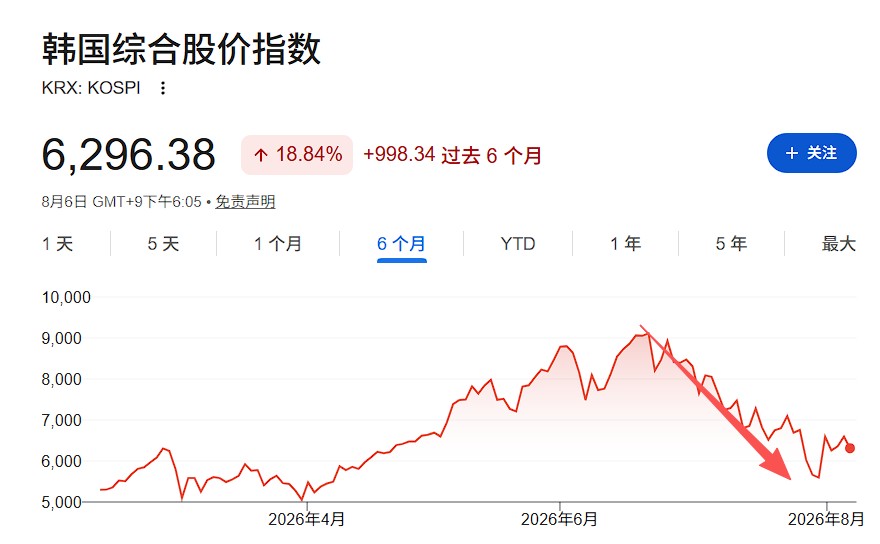
Root Cause of the KOSPI Plunge: Leveraged Funds Amplified Cyclical Concerns
Goldman Sachs pointed out that this sharp drop in the KOSPI was not caused by a substantial deterioration in fundamentals, but was triggered by concerns over the sustainability of the memory cycle. It was significantly amplified by passive selling from leveraged ETFs and follow-up selling by short-term momentum investors.
From a technical perspective, as the assets under management of leveraged ETFs decreased, margin exposure contracted, regulatory policies tightened, and hedge fund positions moderately retreated, the market's chip structure has improved substantially. Goldman Sachs believes this lays the foundation for subsequent market recovery.
Goldman Sachs "Refutes" Three Core Bearish Concerns
Concern 1: Nvidia Downgrades HBM Specification Configuration
According to tech media The Information, Nvidia is evaluating the adoption of lower-specification HBM configurations for its next-generation AI chip, "Rubin Ultra." TrendForce further disclosed that Nvidia is considering replacing the originally planned 12-layer HBM4e baseline design with 8-layer stacked HBM4e, 12-layer HBM4, or 8-layer HBM4, primarily to ensure mass production stability amid tight HBM supply.
Goldman Sachs' interpretation is diametrically opposed to market pessimism: The HBM supply shortage itself precisely confirms the structural characteristics of supply-demand imbalance. If Rubin Ultra ultimately adopts a lower-specification configuration, customers will have to deploy more GPUs when running AI workloads such as large language models, which could instead further boost overall computing power demand.
Concern 2: Opportunity Cost of SK Hynix's Long-Term Agreement Strategy
To secure stable shipment volumes and support previous large-scale capital expenditures, SK Hynix signed numerous long-term agreements (LTAs) with customers. However, this has also resulted in a significant portion of capacity being tied to older HBM3E production lines, limiting its ability to flexibly switch to regular DRAM demand and new-generation HBM4 opportunities for clients such as AMD, Meta, and Google.
This capacity locking effect is already reflected in market share data: SK Hynix's DRAM market share fell to 26% in the second quarter, while Samsung Electronics regained the top spot with its share rising to 39%. The gap between Micron and SK Hynix also narrowed to just 1 percentage point. Goldman Sachs believes that SK Hynix's competitiveness in the next phase will depend on its ability to quickly and dynamically complete production line switches.
Concern 3: The NAND Narrative of "Better Than Expected but Below Market Hopes"
SanDisk (formerly Western Digital's NAND business) reported fourth-quarter revenue of $89.7 billion, higher than the market consensus expectation range of $83 billion to $85 billion. However, its first-quarter revenue guidance of $10.3 billion to $10.8 billion was slightly below the highly optimistic market expectation of $10.82 billion, triggering profit-taking. Additionally, consumer and edge computing (smartphones, PCs) business revenue fell sharply by 32% quarter-on-quarter, with management expecting no substantive recovery in these markets until 2027.
Goldman Sachs' structural judgment on this is: NAND can expand capacity by increasing stacking layers (expected to reach 500 to 600 layers within the next two to three years), but the process shrinkage space for DRAM is nearing saturation—1c DRAM is effectively at the 11nm node, and 10nm may be the last achievable node. As processes advance towards 1c/1d/0a, yields will decline, and capital expenditures required for EUV equipment purchases and cleanroom expansions will rise sharply, structurally supporting Goldman Sachs' positive view on the memory cycle.
Demand Side: Two Positive Signals
Wall Street Insight previously wrote that CXMT has rejected Apple's price reduction requests, citing strong demand from domestic tech giants such as Huawei and Xiaomi. Goldman Sachs believes that CXMT's quotes are comparable to those of Samsung Electronics and SK Hynix, and this tough pricing stance reflects the explosive growth of domestic memory demand in China.
Additionally, AI startup DeepSeek is planning to implement a "significant" price increase for its API services, marking the end of the era of ultra-low-price subsidized AI inference.
Goldman Sachs believes that behind this shift is DeepSeek's huge capital needs for preparing for a potential IPO between late 2026 and 2027, and for building a 1GW data center in Inner Mongolia. Its strategic focus is shifting from aggressively seizing market share to sustainable profitability.