Silver Surges 8.3% in a Week; Goldman Sachs Warns Systematic Short Position Covering May Have Begun
 Complete. Here is the key summary
Silver surged 8.3% from July 28 to August 5, with a weaker U.S. dollar as the core trigger. Quinn, a futures trader at Goldman Sachs, pointed out that long position building by managed money was the main driver, with open interest increasing by $2.4 billion. More critically, short-term momentum signals reversed on August 5, officially triggering systematic short position covering by CTAs. However, Goldman Sachs also cautioned that the physical market has not tightened and does not expect the U.S. dollar to continue weakening
A precious metals rebound triggered by a weaker U.S. dollar is cornering silver short positions.
Silver surged 8.3% in just one week. The rally was driven by a combination of the Federal Reserve's dovish stance, intervention in the yen, and falling oil prices, all of which pressured the U.S. dollar lower. Goldman Sachs warns that the rapid price recovery has triggered a systematic short position covering mechanism, and a new round of passive liquidation may be underway.
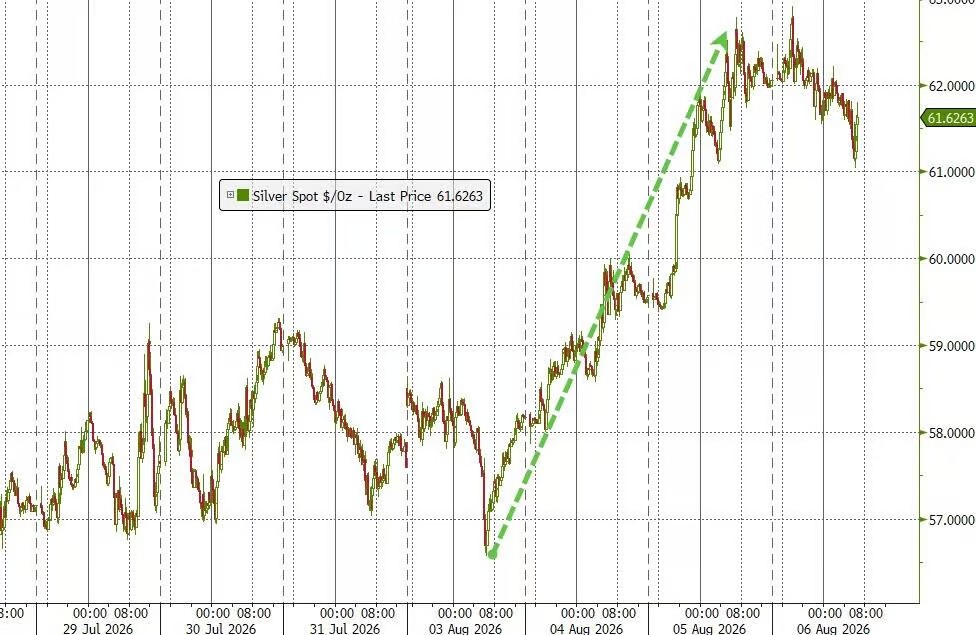
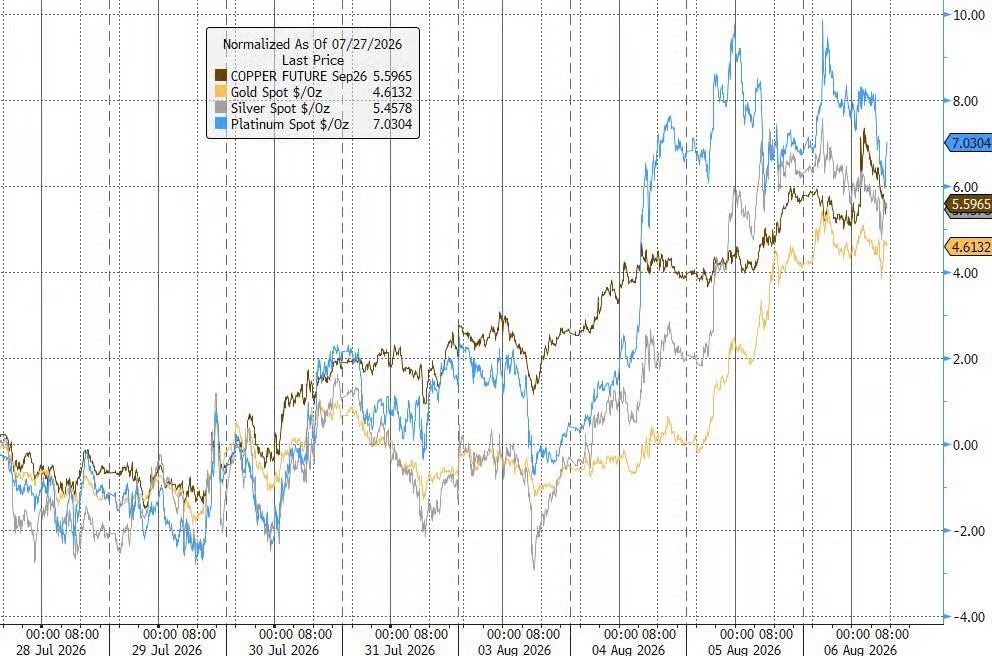
From July 28 to August 5, the U.S. Dollar Index (DXY) fell 1.7%. COMEX precious metals strengthened across the board: silver rose 8.3%, gold rose 5%, while platinum and palladium each gained 7.6%.
Long Position Building is the Main Driver
Before this rebound began, institutional holdings in silver had been compressed to extremely low levels.
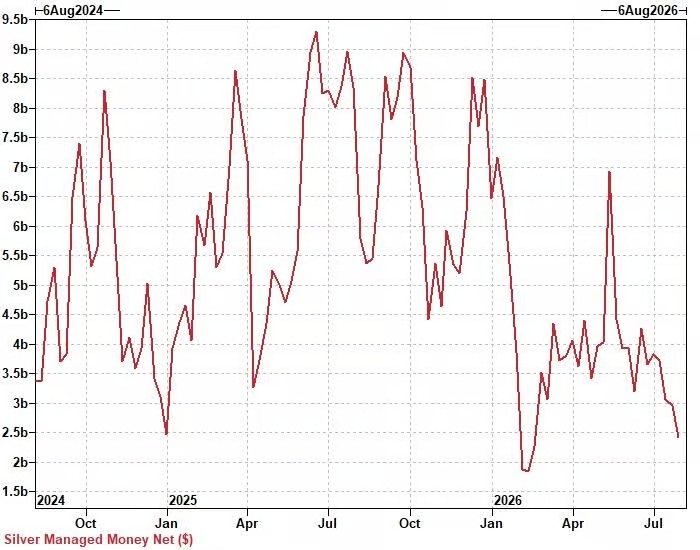
According to the Commitments of Traders (COT) report from the Commodity Futures Trading Commission (CFTC), the net long position of managed money on July 28 was only at the 3rd percentile of nominal scale rankings over the past two years—meaning institutions were nearly at their lightest positioning in almost two years.
Robert Quinn, a top futures trader at Goldman Sachs, stated that the total long position of managed money "is likely the key driver of this rally." Data supports this judgment: the total open interest in silver increased by $2.4 billion, with the largest single-day increase occurring when prices were near phase highs—a typical characteristic of chasing rallies to build positions.
Over the past six months, changes in the total long position of managed money have been negatively correlated with the U.S. Dollar Index. The recent weakening of the dollar directly opened a window for longs to add to their positions.
The options market simultaneously reflected bullish sentiment: three-month implied volatility rose, and the 25-delta call-put skew flattened, indicating that the market's pricing of upside risk is increasing.
CTA Momentum Signals Reverse, Short Position Covering May Be Forced
The rapid price rebound is triggering another type of passive buying—the unwinding of short positions by systematic strategy funds (CTAs).
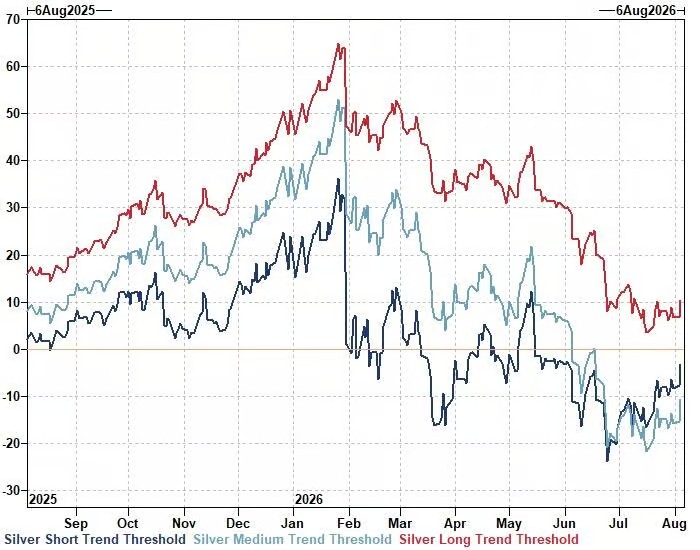
Quinn pointed out that according to Goldman Sachs' futures strategists' framework, short-term momentum signals reversed at the close on August 5, and "CTA short position unwinding has already begun."
The logic of CTA funds is mechanical: when prices break through specific momentum thresholds, programs automatically trigger liquidation orders, regardless of fundamentals. This means that even without new positive news, rising prices themselves can create more buying pressure—forming a self-reinforcing short-term cycle.
However, Quinn also clearly cautioned that "the medium-term momentum threshold has not yet been breached and requires further recovery." In other words, only short-term signals have been triggered so far, and the scale and sustainability of systematic buying remain limited.
Physical Market Not Tightening, Risk of Dollar Rebound Remains
Despite the sharp price increase, there are no signs of supply tightness in the physical silver market.
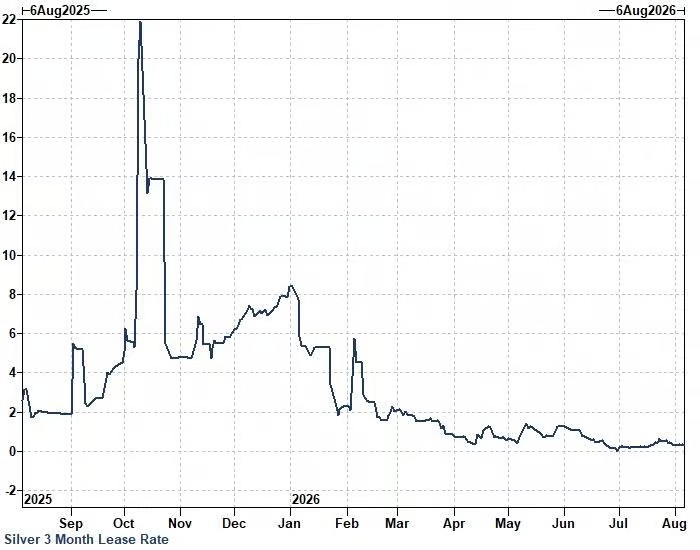
Goldman Sachs data shows that the three-month lease rate for silver actually declined during this price rally. The lease rate is an indicator measuring the cost of borrowing physical silver; a lower rate implies that physical demand has not kept pace with price movements, and market supply remains ample.
This is an important divergence signal: prices have risen, but the physical side has not cooperated.
Meanwhile, Goldman Sachs FX strategists explicitly stated that "without clear signals from inflation data, we do not expect a sustained downward trend for the U.S. dollar." Whether the core driver of this silver rebound—weaker U.S. dollar—can persist remains uncertain.