
Iran and Oman Clarify General Framework of Agreement; Iran Considers Banning US and Israeli Vessels, While Trump Claims Negotiations Are 'Making Progress'
 Complete. Here is the key summary
US officials recently stated that the United States will lift its blockade on Iranian ports once an agreement to restore unhindered commercial shipping is announced. A senior Iranian official warned that if Gulf states fail to persuade Trump to halt military actions against Iran and instead resolve the conflict through negotiations, Iran will strike key infrastructure in those countries, including oil, electricity, and water supplies
The controversy over the control agreement for the Strait of Hormuz continues within Iran, while Trump stated that negotiations are making progress. Whether the agreement can be implemented still faces multiple uncertainties.
On the US side, according to CCTV News, on August 6 (local time), US President Trump stated that while it "cannot yet be said that an agreement has been formally reached" regarding the reopening of the Strait of Hormuz, the strait is currently "open to some extent." The US is participating in relevant negotiations, and overall progress is good.
On August 7, US officials stated that Oman and Iran have made progress on the issue of the Strait of Hormuz, and an agreement is expected to be reached soon. Once an agreement to restore unhindered commercial shipping is announced, the US will lift its blockade on Iranian ports. Iran and Oman have not yet responded to these remarks.
On the Iranian side, according to CCTV News, on August 7, Hassan Kashkavi, spokesperson for the National Security and Foreign Policy Committee of the Iranian Parliament, stated that Iran and Oman have clarified the general framework of the memorandum of understanding related to shipping in the Strait of Hormuz, with the final text and specific details to be released to the public in the near future.
On August 6, Iran publicly released preliminary details of the proposed strategic management plan for the Strait of Hormuz, including provisions banning hostile parties from passing through the strait, with violators subject to fines of up to 20% of the cargo value.
On August 7, a senior Iranian official stated that Iran had recently engaged in intensive diplomatic contacts with Gulf countries and warned that if these countries fail to persuade Trump to stop military actions against Iran and instead resolve the conflict through negotiations, Iran will strike key infrastructure in those countries, including oil, electricity, and water supplies.
According to Fars News Agency, some Iranian politicians are pushing for clauses in the agreement that ban US and Israeli vessels from passing through the Strait of Hormuz, which directly contradicts Washington's stance on freedom of navigation.
Meanwhile, according to US media reports, Arab mediators involved in the mediation are concerned that Iranian diplomats may not be able to ensure the effective implementation of the agreement. Tehran's negotiators are under pressure from hardline officials to secure clearer terms.
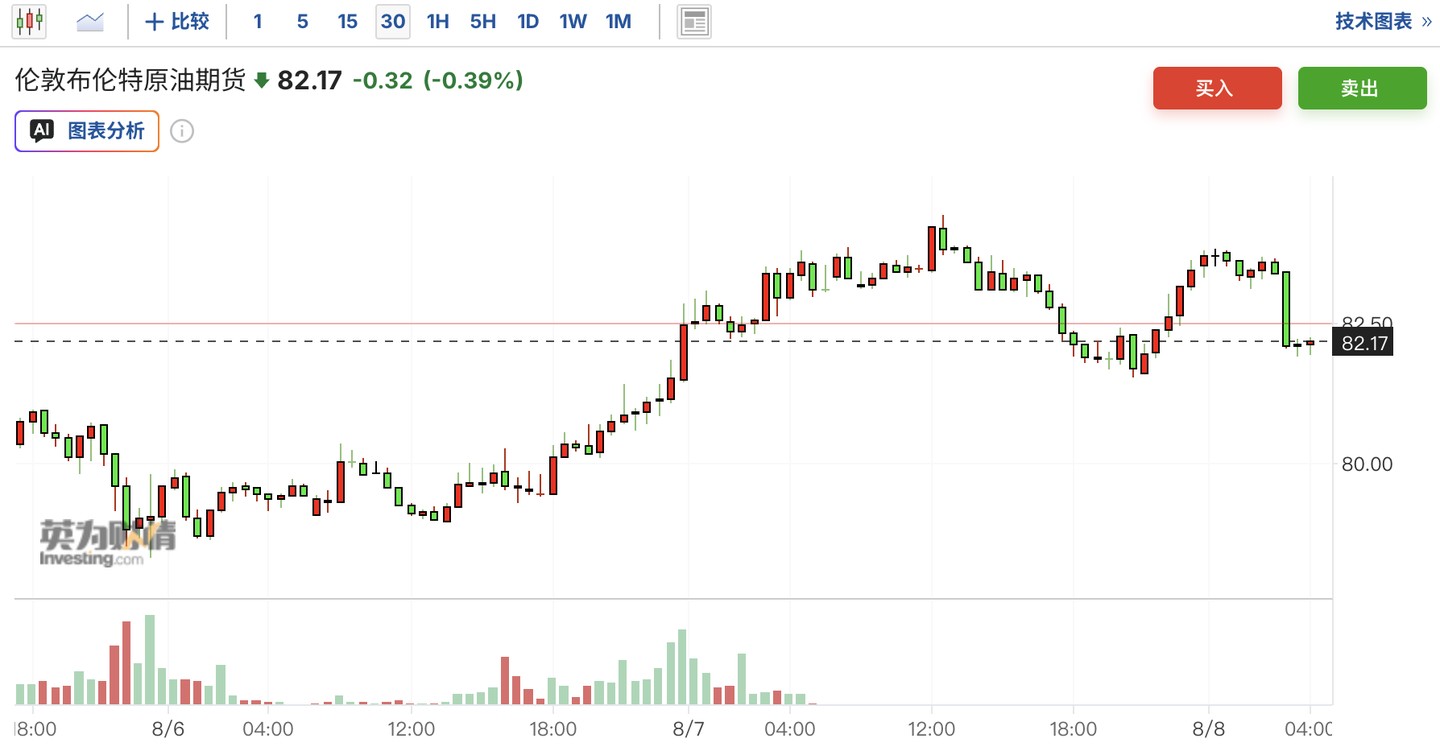
Brent crude oil prices are currently holding at around $82 per barrel, having accumulated a nearly 4% rise in the previous trading session.
Significant Disagreements on Agreement Terms; Iranian Supreme Leader's Stance Remains Unclear
According to Fars News Agency, proposed amendments to the agreement being discussed within Iran cover several sensitive areas: in addition to demanding a ban on US and Israeli vessels, they include clauses demanding compensation from "hostile countries," imposing fees on goods involving Israel, and charging for services such as insurance and environmental costs.
Regarding the specific arrangements of the agreement, Fars News Agency cited informed sources at the Iranian Ministry of Foreign Affairs as stating that the draft envisions Iran leading the control of vessels entering the Strait of Hormuz, while exports would be jointly supervised by Iran and Oman.
The agreement also envisages opening a "central corridor" for vessel passage, with the other two lanes, currently of limited use, to be suspended "within a specific period."
However, a key variable remains unresolved regarding whether the agreement can take shape: it is unclear whether the Iranian Supreme Leader has approved the plan, which is a necessary prerequisite for its advancement. Iranian officials stated that communication with the Supreme Leader takes time.
Fundamental Divergence Between US and Iranian Positions; US Insists on Non-Negotiable Principle of Freedom of Navigation
Trump has continued to exert pressure for months, insisting that the Strait of Hormuz must resume navigation and threatening to launch new strikes against Iran if it refuses to reopen the waterway. Responding to the latest negotiation proposals on Thursday, a US official stated that any temporary transit arrangements through the strait must not include conditions such as approvals, permits, tolls, or other fees.
Tehran insists that the premise for fully reopening the strait is the US lifting its naval blockade, a matter on which Washington has yet to take a position. On Thursday, Trump stated that the US was participating in relevant negotiations but refused to disclose whether an agreement had been reached. "We control it there, but they could launch an attack at any time," he said.
Iran's chief negotiator with the US, Mohammad Bagher Ghalibaf, mocked the White House on Thursday for "repeatedly threatening and then repeatedly backing down," describing it as "theatrical diplomacy performed in cycles," reflecting the dissatisfaction of Tehran's hardliners with the negotiation process.
The Houthi movement and the Saudi-led coalition have maintained a ceasefire since 2022, but recent conflicts have reignited multiple times, including confrontations in the Red Sea—since the closure of the Strait of Hormuz, a large volume of Saudi oil exports has been rerouted through the Red Sea.
Currently, visible transit traffic in the Strait of Hormuz remains extremely limited, with only a small amount of cargo from Middle Eastern oil-producing countries passing through with US military assistance and using vessels with disabled transponders. Previous claims that an agreement was imminent have failed to materialize, and it remains to be seen whether current negotiations will truly promote the resumption of navigation.