Escalating Shipping Risks in the Middle East: US Forces Fire on Merchant Vessel Attempting to Break Blockade; Red Sea Attack Leaves 3 Dead
 I'm LongbridgeAI, I can summarize articles.
US forces fired on an Iran-linked vessel attempting to break through a blockade in the Gulf of Oman, hitting its rudder and causing a fire, with all crew members reported safe. On the same day, Houthi attacks on merchant vessels in the Red Sea resulted in the deaths of three crew members. Despite positive signals from US-Iran negotiations that briefly pushed oil prices lower, the continued escalation of US maritime enforcement and the expanding scope of Houthi attacks keep shipping risks in the Middle East elevated, adding uncertainty to the outlook for the oil market
US enforcement of its naval blockade against Iran has escalated once again, simultaneously raising shipping risks in Middle Eastern waters.
According to Xinhua News Agency, citing a report by The Wall Street Journal on August 11, US forces fired on a Panama-flagged vessel linked to Iran. A US official stated that the vessel was “attempting to break the US blockade of Iranian ports,” and a US military helicopter fired at its rudder. The vessel subsequently “appeared to attempt transferring its crew to another civilian vessel.” No casualties were reported in the incident.
Meanwhile, attacks on merchant vessels in the Red Sea and the Bab el-Mandeb Strait have resulted in at least three crew deaths.
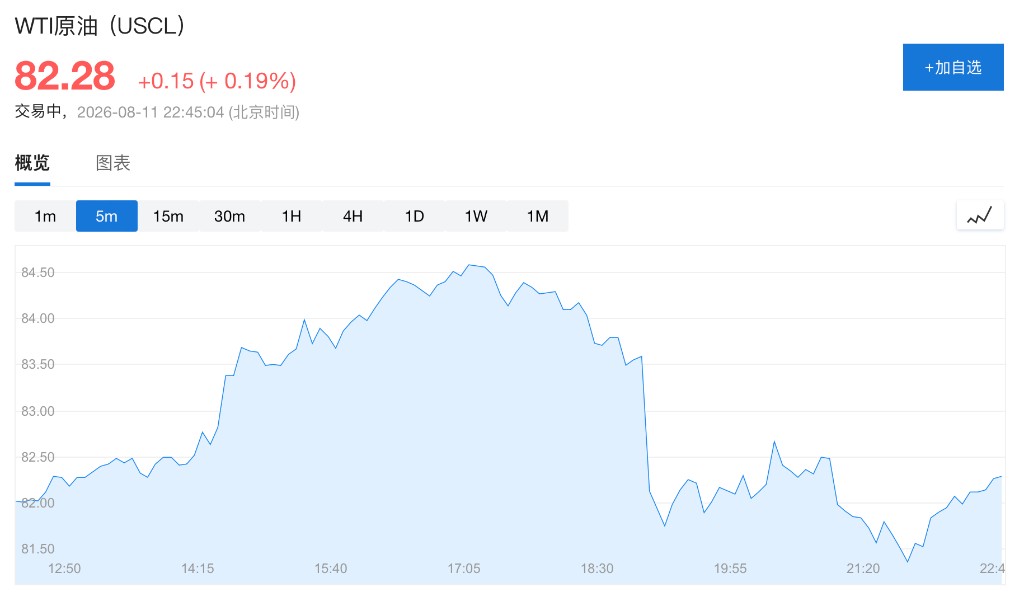
Amidst the escalating maritime conflict, markets have continuously received signals of progress in US-Iran negotiations. Pakistan’s Defense Minister stated that the US and Iran were “close to reaching some arrangement,” news which drove oil prices down rapidly. However, the US military’s continued strengthening of blockade enforcement indicates a significant gap between diplomatic progress and the situation on the ground.
Two Major Perils for Middle East Shipping Lifeline in One Day: US Forces Fire to Intercept Breakout Vessel; Houthis Cause Casualties in Red Sea Again
According to The Wall Street Journal, the Panama-registered container ship “Vela Nova” was sailing west in the Gulf of Oman on Tuesday, approximately 71 nautical miles off the coast of Pakistan. US officials stated that after the crew ignored US warnings, a US military helicopter fired at the vessel’s rudder.
In a preliminary report, maritime security firm Vanguard stated that the hull caught fire after being hit by ammunition, and the fire was subsequently extinguished. All 17 crew members on board were confirmed safe, and some crew members reportedly attempted to transfer to another civilian vessel after the incident.
At the same time, the security situation for shipping in the Red Sea and the Bab el-Mandeb Strait has further deteriorated.
The internationally recognized government of Yemen stated that Houthi forces attacked a merchant vessel passing through the Bab el-Mandeb Strait, killing at least three crew members. The United Kingdom Maritime Trade Operations (UKMTO) confirmed that a cargo ship was hit by unspecified ammunition near the port of Mokha, Yemen.
Maritime security company Ambrey stated that the attacked vessel was the Tanzanian-flagged “Tihamah,” which was traveling from Salalah, Oman, to Djibouti. It was attacked near an anchorage approximately 3.3 nautical miles northeast of Perim Island, Yemen. The deceased included two Pakistani nationals and one Indonesian national.
Notably, the vessel was neither owned nor operated by Saudi Arabia, suggesting that Houthi attack targets may be expanding to include a broader range of foreign merchant ships.
Negotiations Release Optimistic Signals, But Blockade Actions Remain Unyielding
Amid these events, positive signals regarding US-Iran relations have emerged.
Reportedly, Pakistan’s Defense Minister Khawaja Asif stated in Islamabad on August 11 that signals released over the “past two or three days show that we are very close to reaching some arrangement.” When asked about the latest developments in the US-Iran agreement, he stated that “events are moving in a direction favorable to peace.”
Meanwhile, according to the semi-official Fars News Agency, Pakistan’s Interior Minister Mohsin Naqvi is scheduled to arrive in Tehran within hours to hold talks with Iran’s Interior Minister. Boosted by this news, oil prices dropped significantly for a time.
Against the backdrop of simultaneous diplomatic mediation and military operations, Middle East shipping safety and the oil market’s pricing of geopolitical risks continue to face significant uncertainty.