
Google Unveils Pixel 11 Series: Price Hikes and Stale Design Raise Questions on Challenging Apple and Samsung
 I'm LongbridgeAI, I can summarize articles.
The Google Pixel 11 series has been officially launched, with a $100 price increase across the lineup. Flagship RAM has been reduced from 16GB to 12GB, which the company attributes to an "unprecedented supplier-driven RAM shortage." Camera and AI capabilities have received targeted upgrades, and the dust and water resistance ratings surpass those of Samsung's recent releases. The exterior design remains unchanged for the third consecutive year, with the foldable model sticking to a tall and narrow form factor, while Samsung and Apple have shifted toward more buzzworthy passport-style designs
The starting prices for the entire Google Pixel 11 series have increased by $100, passing on the costs of tight memory supply to consumers; new feature highlights are limited, and the foldable design may lag behind competitors.
Alphabet's Google unveiled the new Pixel 11 series on Tuesday, opting for a steady product strategy at a critical moment when Apple and Samsung are vying for the holiday season market with newer foldable designs.
Impacted by a shortage in memory supply, the starting prices for the entire Pixel 11 lineup have been raised by $100 compared to the previous generation. The flagship Pixel 11 Pro XL starts at $1,299, the standard Pixel 11 at $899, and the foldable Pixel 11 Pro Fold at $1,899.
Google has simultaneously reduced the RAM configuration for the base models of the Pixel 11 Pro and Pro XL, cutting it from 16GB in the previous generation to 12GB, while increasing base storage from 128GB to 256GB. Pre-orders for the entire lineup will open on Wednesday. Google stated:
"The tech industry is facing a severe supplier-driven RAM shortage. We will need to adjust the pricing and RAM configuration of the Pixel 11 to provide maximum value to our customers in this context."
Google said it is actively addressing these challenges through engineering efforts.
In addition, Google also launched the Pixel Watch 5 (adding blood pressure trend tracking features) and the Pixel Tag, a tracking accessory similar to Apple's AirTag.
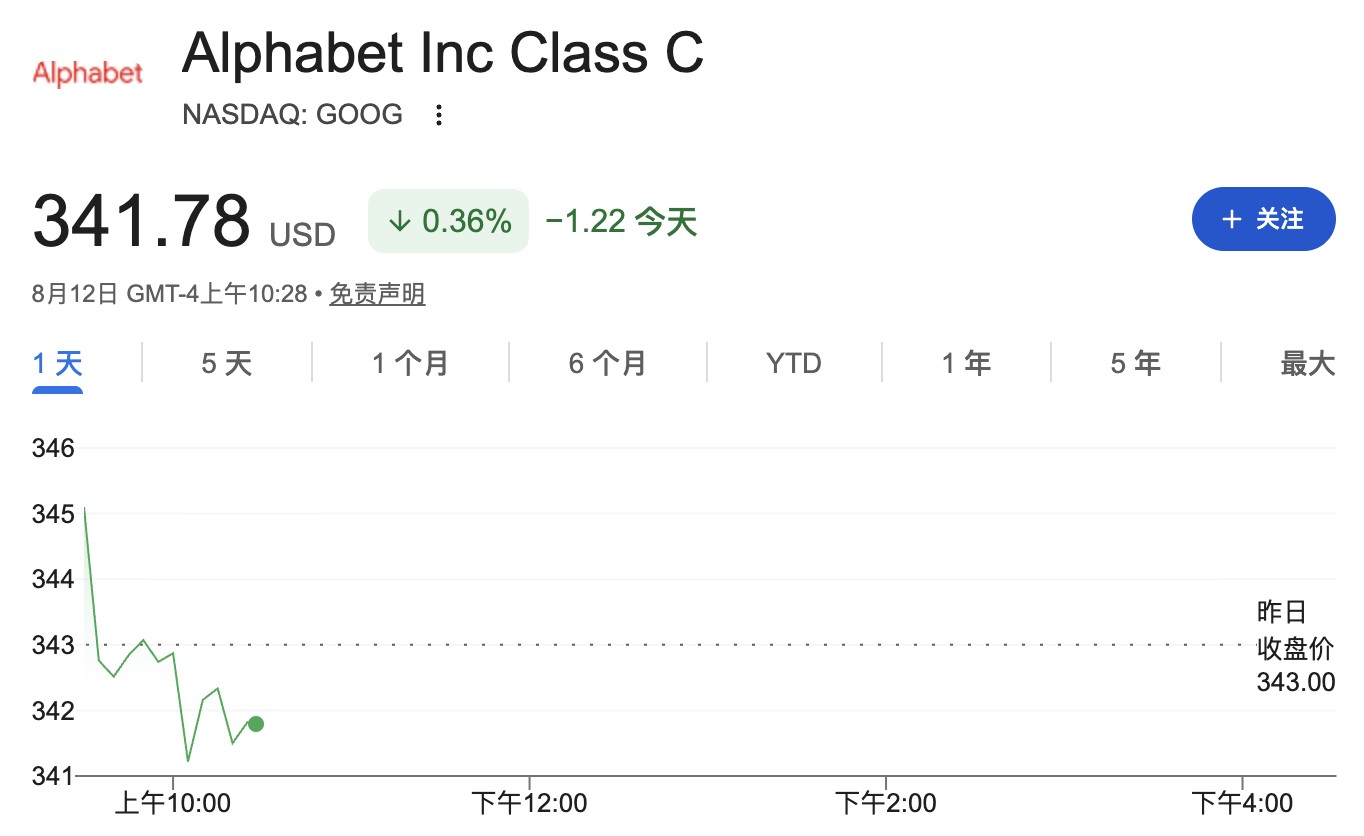
Google's stock opened higher but fell during trading on Wednesday, down 0.36% at the time of writing.
Exterior Design Unchanged for Three Years as Competitors Challenge with Novel Forms
In terms of product form, Google's high-end models have used nearly identical exterior designs for the third consecutive year, with no fundamental changes to the horizontal glass camera bar or the overall outline. This decision faces significant pressure in the increasingly competitive autumn market.
Apple's Pro series iPhones underwent a major exterior redesign only last year, and the upcoming iPhone 18 series will visually remain the second generation of that design, appearing relatively fresh to consumers.
The Samsung Galaxy S26 Ultra features a unique privacy screen function that effectively prevents others from peeking at the screen.
In the foldable sector, the Samsung Galaxy Z Fold 8 adopts a passport-style wide-screen form factor, and Apple's upcoming foldable iPhone is expected to use a similar design. In contrast, the Pixel 11 Pro Fold sticks to the traditional tall and narrow foldable form, losing some topical heat in current market discussions.
Targeted Upgrades to Camera and AI Features
On the hardware front, the Pixel 11 Pro and Pro XL are equipped with a new 50-megapixel main sensor, capable of capturing more detail than the Pixel 10 Pro, while the telephoto lens sees a 32% increase in light intake.
Furthermore, while Google touts "120x zoom" capability, the company admits this feature relies heavily on digital enhancement and AI processing rather than optical zoom.
The standard Pixel 11 features a 48-megapixel main camera with a 56% improvement in light sensitivity. Its 6.3-inch 120Hz screen reaches a peak brightness of 3,000 nits, and battery life is claimed to last up to 30 hours.
The Pro series screens see peak brightness increase from 3,300 nits to 3,600 nits, and the scratch resistance of the cover glass has doubled.
Regarding AI features, the Google Gemini assistant can now automatically execute tasks such as ordering food, hailing rides, and buying tickets across apps, and can even make phone calls on behalf of users. The new "Rambler" speech-to-text feature automatically removes filler words and organizes linguistic logic. The "Magic Capture" mode allows simultaneous video recording and saving of multiple photos with a single tap.
Practicality of HiLight Feature Remains to Be Tested by the Market
The "HiLight" feature, exclusive to the Pixel 11 Pro series, transforms the camera flash area into an ambient LED notification indicator. It lights up in different colors for calls from specific contacts and displays AI status with a pulsing effect during Gemini voice interactions.
This design concept is not entirely new—brands like Nothing Technology have long implemented similar LED functions on their phones, often with larger sizes and higher recognizability.
In comparison, HiLight is merely a small circle next to the flash, and whether it is clearly visible in actual usage scenarios remains to be verified through testing.
Foldable Version Seeks Differentiation Through Thinness and Durability
The Pixel 11 Pro Fold is 1mm thinner and nearly 10% lighter than its predecessor. Both the inner and outer screens have seen a 20% increase in brightness, and it maintains an IP68 dust and water resistance rating.
This protection specification is significantly superior to Samsung's recently released Galaxy Z Fold 8 Ultra, giving it a substantial advantage in outdoor usage scenarios.
However, in terms of foldable form factor choices, Google is drifting away from the mainstream market trend. Google experimented with a passport-style wide-screen design on the first-generation Pixel Fold before shifting to a tall and narrow form. Now, however, both Samsung and Apple are moving toward passport-style designs, garnering more consumer attention and social media discussion.