
 I'm LongbridgeAI, I can summarize articles.
Meta (META) faced a major lawsuit on Tuesday in a California court in Oakland, brought by attorneys general from multiple states, accusing it of violating child safety and consumer protection laws by harming minors' mental health through addictive features and collecting data. Executives including Mark Zuckerberg are set to testify. Meta denies all allegations, arguing that the claim amount of up to $1.4 trillion is unreasonable
Why Meta shareholders should remain vigilant at this moment
Meta (META) will face off against several state attorneys general in court on Tuesday in Oakland, California. This significant lawsuit accuses Meta of violating laws related to child safety and consumer protection, harming the mental health of minors.
The trial will begin on Tuesday, presided over by Judge Yvonne Gonzalez Rogers of the U.S. District Court for the Northern District of California. The case stems from a class-action lawsuit initiated by 29 states in 2023, and the outcome will serve as an important benchmark for similar cases in the future.
California, Colorado, Kentucky, and New Jersey are participating in this trial, and it is expected that Meta CEO Mark Zuckerberg and Instagram head Adam Mosseri will testify.
The plaintiffs claim in their lawsuit that Meta developed and continuously optimized a series of psychologically manipulative platform features aimed at maximizing the time spent by teenage users, including infinite scrolling, autoplay, and like mechanisms.
The state prosecutors also accuse Meta of being aware that its applications could harm users, inducing anxiety, depression, and even suicidal tendencies, while publicly claiming product safety and deliberately misleading the public.
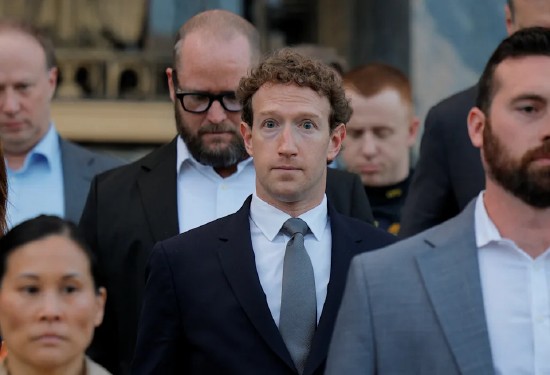 On February 18, 2026, in Los Angeles, California, Meta CEO Zuckerberg leaves the courtroom after testifying in a key demonstration lawsuit. This lawsuit accuses Meta and Google YouTube of using addictive platforms to harm the mental health of teenagers.
The plaintiffs further point out that Meta violated the Children's Online Privacy Protection Act (COPPA): the platform knowingly allowed a large number of children under 13 to register and collected data from minors without parental consent.
Meta denies all allegations and argues that the potential compensation amount is unreasonable. According to the company's estimates, the maximum claim in this case could reach $1.4 trillion, while Meta's current market value is about $1.5 trillion.
A Meta spokesperson issued a statement: "The state attorneys general claim this case is landmark, but their demands lack factual basis, and the compensation amount is severely imbalanced. The state prosecutors cannot prove that residents of their states were misled, and even claim that adding an Instagram account, a routine feature, harms public interests, while attempting to penalize Meta for age verification, a challenge faced by the entire industry. The states have not grounded their claims in facts and law, but are solely pursuing exorbitant compensation. We remain committed to building a comprehensive protection mechanism for teenagers and look forward to fully presenting our views in court."
In the United States, Meta and major social media companies are facing thousands of lawsuits accusing their platforms of harming user rights.
Earlier this month, a federal district court in New Mexico ruled that Meta must pay $567 million to improve the mental health of teenagers in the state; At the same time, a civil fine of $375 million will be paid.
In March of this year, a jury in a lawsuit ruled that Meta and YouTube were negligent. The plaintiff had been using the two major platforms since the age of 10, ultimately developing a heavy reliance on them, accompanied by anxiety, depression, self-harm, and body dysmorphic disorder. The court ordered the two companies to pay a total of $6 million in punitive and compensatory damages.
Social media platforms are also facing increasing regulatory pressure globally, with countries such as Australia and Turkey successively introducing legislation to restrict minors' use of social media applications