
Treasury Intervention Shifts Costs to FX Market; Goldman Sachs: USD May Become Pressure Relief Valve for US Fiscal Strain
 I'm LongbridgeAI, I can summarize articles.
Goldman Sachs and Deutsche Bank believe that the US Treasury's intervention in the bond market to suppress long-term interest rates could put pressure on the US dollar, turning it into a "pressure relief valve," and recommend going long on gold and the Swiss franc. However, technical indicators show that the US Dollar Index remains in a stagnant market pattern, with limited significance attached to its break below the 200-day moving average, casting doubt on the sustainability of the trend
USD bears have found new arguments. As the US Treasury is perceived to be inclined to suppress long-term interest rates, market pressure may shift to the foreign exchange market—making the US dollar a potential "pressure relief valve."
Goldman Sachs' FX research team believes that the Treasury's interventionist stance in the bond market is counterproductive, potentially weighing on the USD, and thus maintains a bullish outlook on gold and the Swiss franc. Deutsche Bank characterizes the Treasury's buyback operations as "soft financial repression," arguing that this is structurally bearish for the USD.
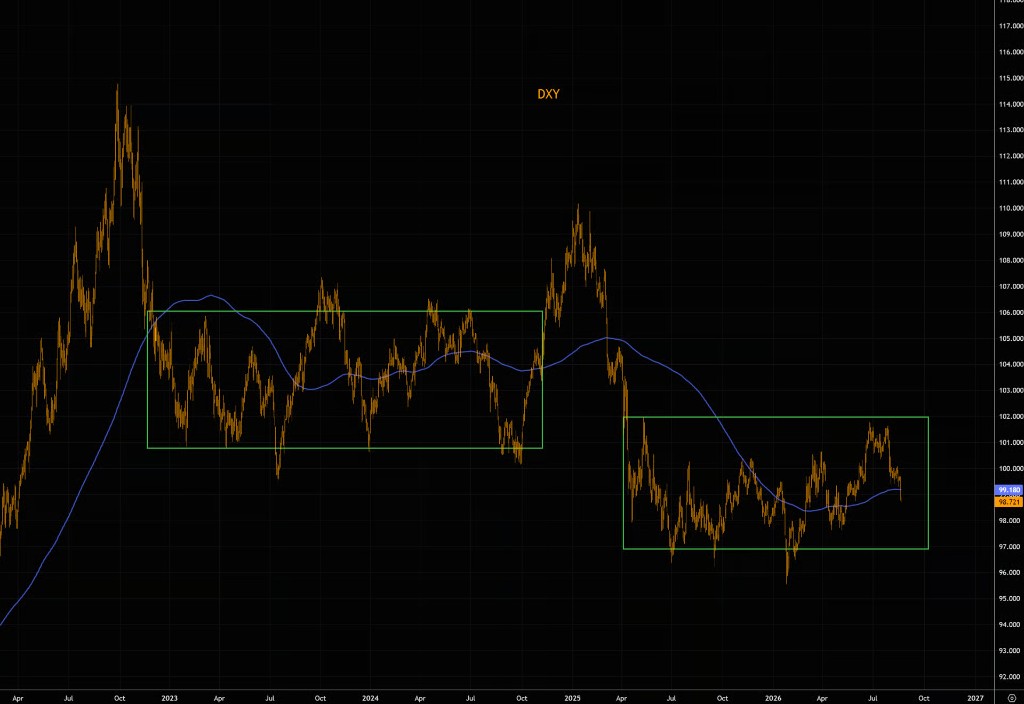
However, from a technical perspective, the US Dollar Index (DXY) remains trapped in a large-scale stagnant market pattern. The recent break below the 200-day moving average carries limited signaling value, and FX volatility does not yet indicate a trend reversal.
Extreme market positioning and the drive from CTA trend-following strategies may have amplified the recent directional volatility of the USD, but whether the trend can sustain remains uncertain.
Fiscal Intervention Turns FX Market into a "Pressure Relief Valve"
Goldman Sachs' FX research team argues that if the Treasury continues to demonstrate its willingness to protect the bond market, a bond-issuing country that excessively coddles its domestic bond market should logically bear a higher risk premium. Once the risk premium on the bond side is suppressed, that premium must find an outlet, and the foreign exchange market becomes the most direct avenue for pressure.
Deutsche Bank's George Saravelos echoes this logic. He characterizes the Treasury's bond buyback operations as substantively "soft financial repression," aimed at suppressing long-term yields.
His core argument is that if Treasury prices are not "allowed" to adjust downward, the adjustment must occur elsewhere—for overseas holders, this outlet is the exchange rate, manifested as a weaker USD.
Regarding specific trading directions, Goldman Sachs' FX trading team believes that current allocations favor gold the most, followed by the Swiss franc; if long-term yields experience a more sustained decline, emerging market carry trades may also benefit.
Technical Indicators for the USD
Despite the evolving narrative, the USD remains an asset with strong mean-reversion characteristics. The DXY has currently reverted to the middle of its large range—a zone analysts view as the "no-advantage zone" where determining direction is most difficult.
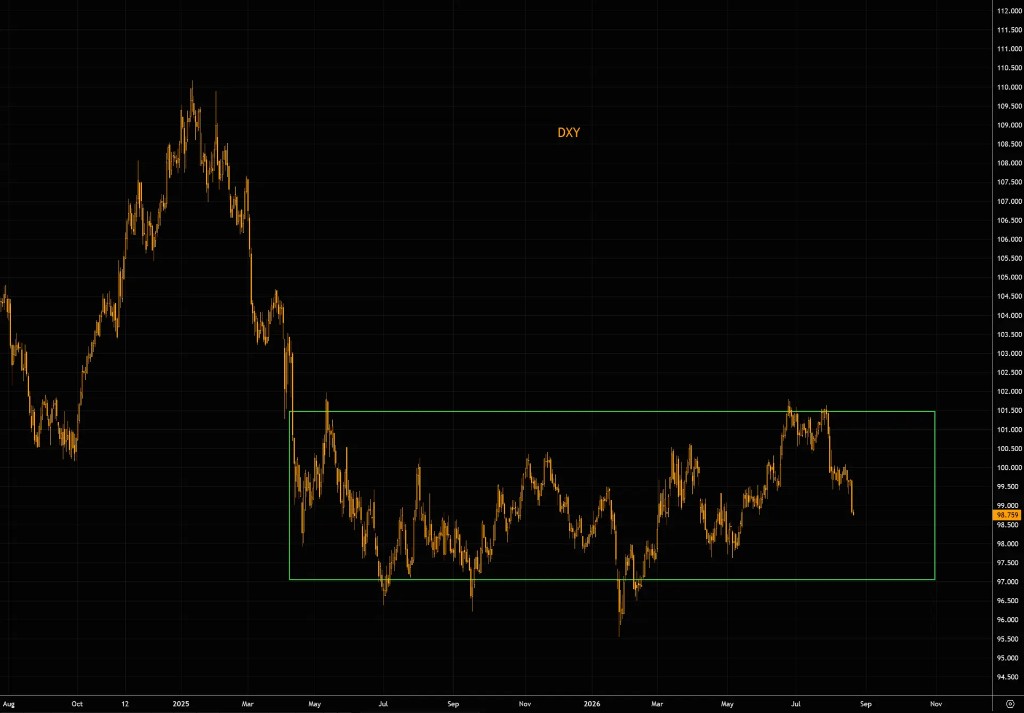
The DXY recently broke below its 200-day moving average, attracting widespread attention. However, the actual significance of this technical signal is questionable: the 200-day moving average is currently essentially flat, and the USD has been seesawing around this long-term average for years, greatly diminishing the reference value of this signal.
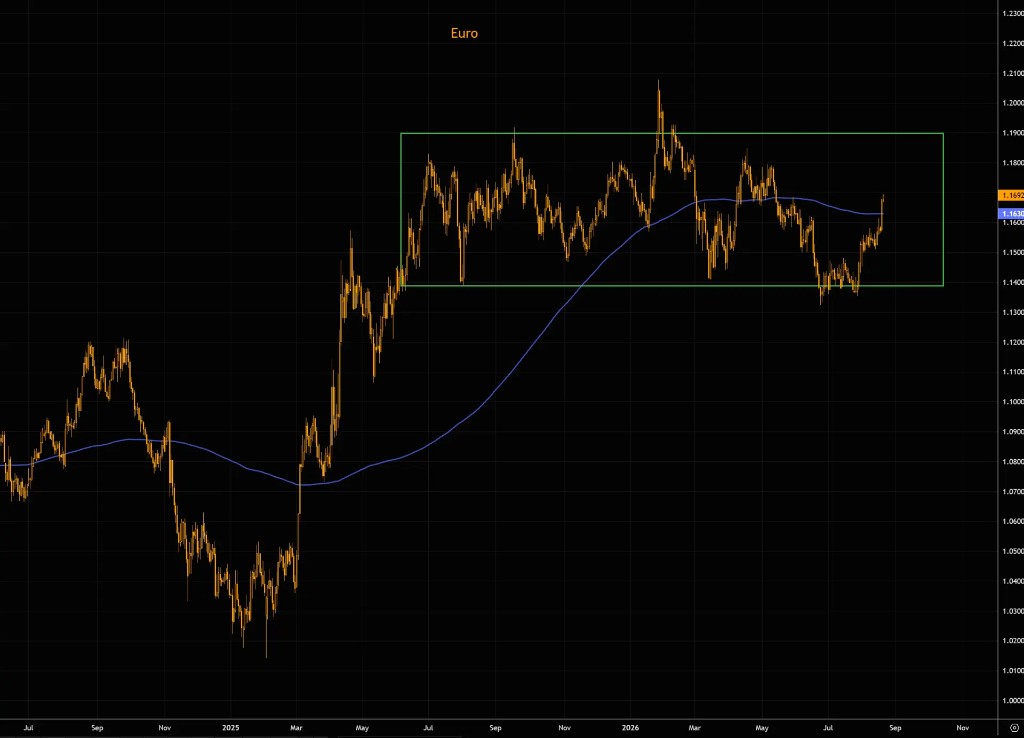
The Euro's movement mirrors the DXY—although it has climbed back above the 200-day moving average, its overall pattern also exhibits characteristics of a large-scale stagnant market, not yet constituting a valid signal for a trend breakout.
Before the recent selling wave hit, USD long positions were already significantly elevated; meanwhile, Euro short positions were similarly overly short before the Euro's sharp jump. These extreme positions likely amplified the market move.
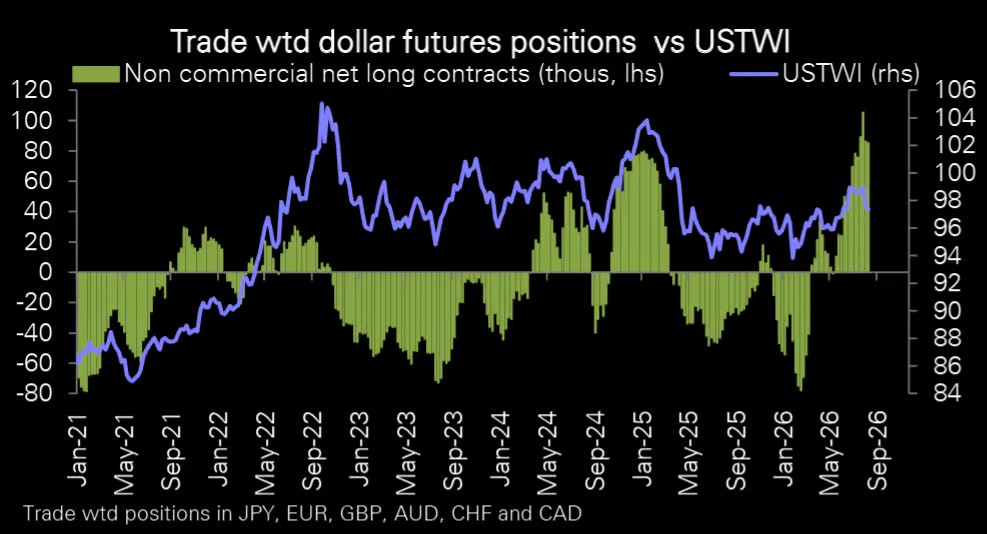
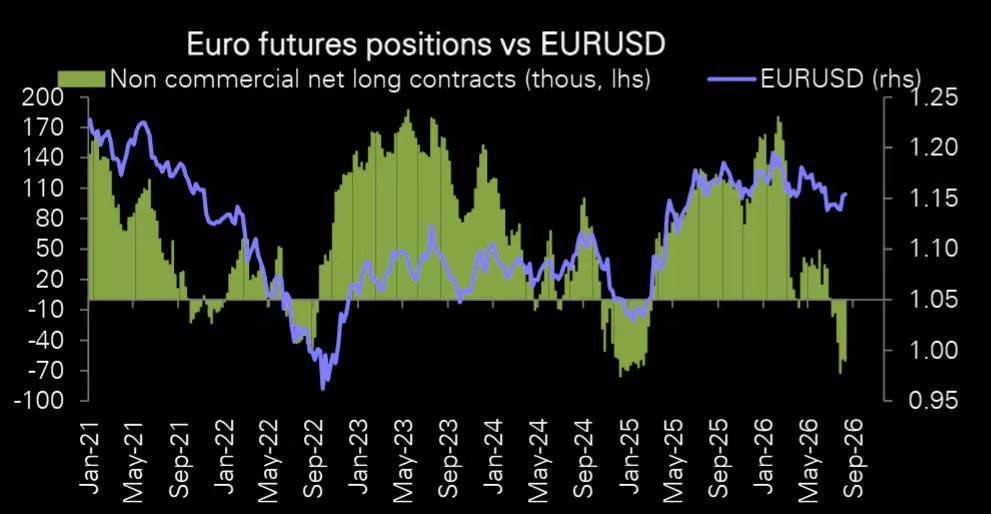
Mechanical selling from trend-following CTA strategies further exacerbated the USD's decline. In assets within a stagnant market range, momentum strategies often act as short-term "amplifiers"—chasing volatility but ultimately failing to form a sustained trend.
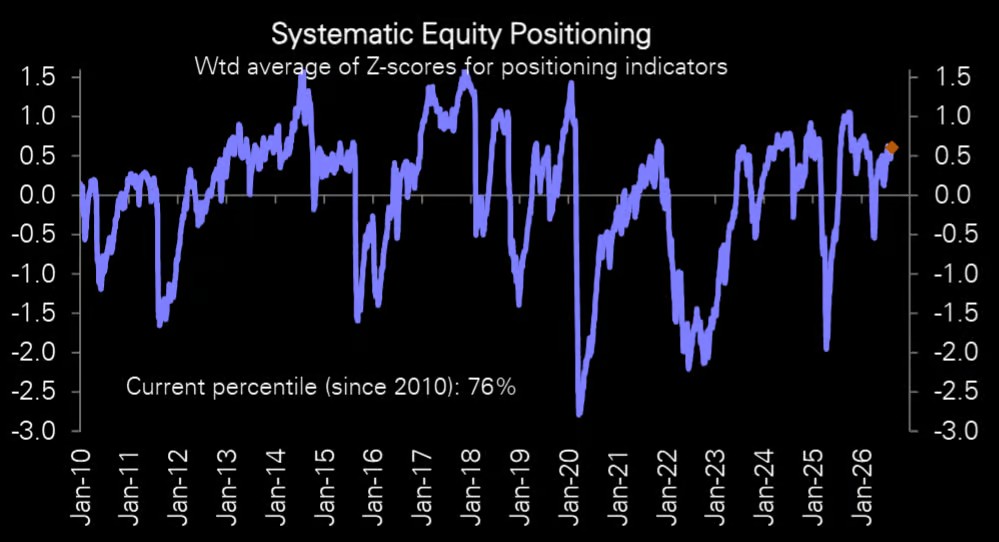
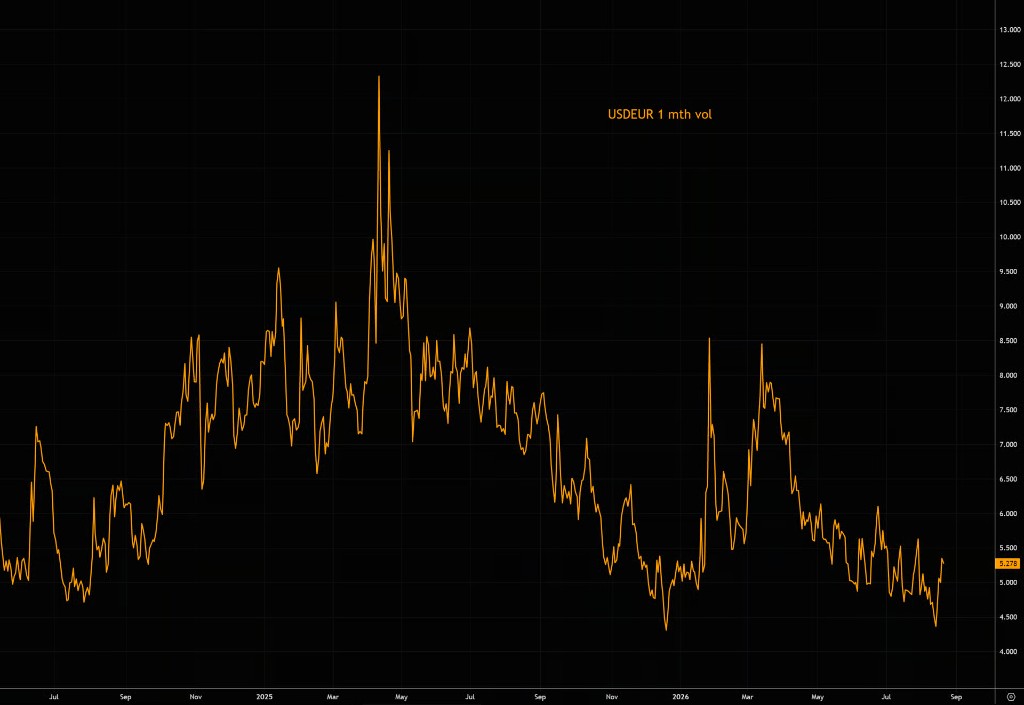
Beyond the various narratives surrounding the USD's trajectory, the performance of implied FX volatility is intriguing—it does not reflect market acceptance of an institutional shift. Before the range is effectively broken out, seeking trading opportunities from extreme positions rather than betting on the narrative direction remains the more prudent strategic choice.
Risk Warning and Disclaimer
Investing involves risks; please proceed with caution. This article does not constitute personal investment advice, nor does it take into account the specific investment objectives, financial status, or needs of individual users. Users should consider whether any opinions, views, or conclusions in this article align with their specific circumstances. Investors bear full responsibility for their own decisions.