
Former Goldman Sachs Commodities Chief Jeff Currie: "Navy for Dollars" Pact Fracturing as Commodity Supercycle Enters New Phase of "Bottleneck Rotation"
 I'm LongbridgeAI, I can summarize articles.
Jeff Currie, former head of commodities at Goldman Sachs, points out that the commodity supercycle has entered a new phase of "bottleneck rotation." Supply bottlenecks, currency devaluation, and policy interventions are driving up asset prices, with a weaker U.S. dollar providing additional support. He recommends allocating to hard assets such as gold and silver, arguing that we are in an era where "atoms and bits overlap," and market volatility will intensify in the future
The commodities market stands at a new historical juncture. Jeff Currie, former head of commodities research at Goldman Sachs, has issued a clear signal: the commodity supercycle, driven by structural underinvestment and deglobalization, has entered a more intense new phase, with supply bottlenecks and currency devaluation simultaneously pushing up asset prices from both ends.
In a recent media interview, Currie warned that the convergence of physical market supply bottlenecks, currency devaluation, and policy intervention is a typical feature of a structural commodity bull market. Market signals are densely packed: diesel crack spreads have broken through $100 per barrel for the first time, London copper prices have surged past $14,000 per ton, gold has risen to $4,510 with a 4% single-day gain, silver is up 5%, the Bloomberg Agriculture Spot Index continues to climb, and the Quantix Commodities Index has hit a record high. Meanwhile, a significant softening of the U.S. dollar is providing an additional tailwind for commodities.
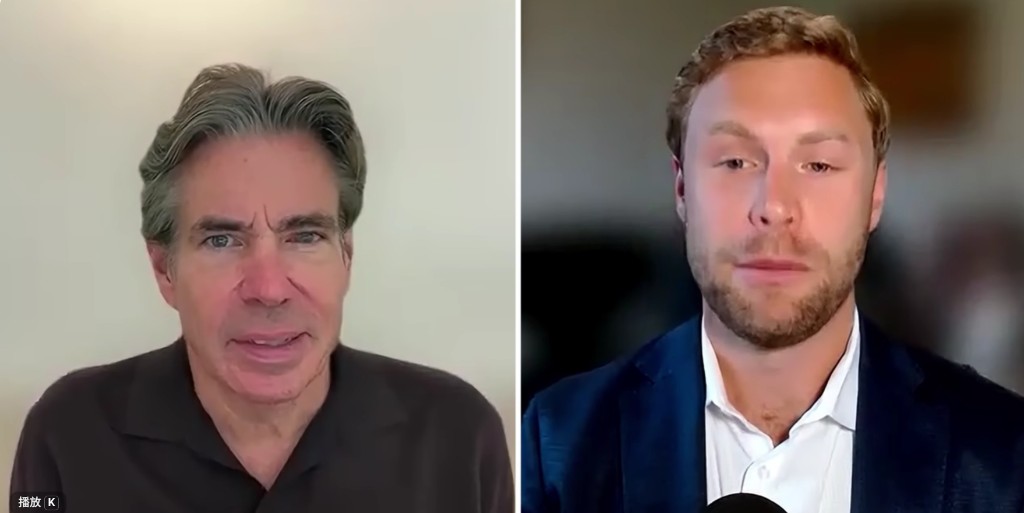
Regarding asset allocation, Currie stated that he has directly established positions in gold, silver, and agricultural products, defining "Hard Assets and Local Operations" (HALO) as the most certain direction for current asset allocation. He concluded with a straightforward message: "Go long and fasten your seatbelts: the next phase of the market will exhibit higher volatility and higher highs across more markets."
Supercycle Enters New Phase of "Overlapping Atoms and Bits"
Currie characterizes the current commodities market as a supercycle distinct from previous ones. The 2000s were an "Atoms Supercycle" driven by China's urbanization, the 2010s were a "Bits Supercycle" spurred by the tech boom, and the present is an era where the two overlap—tech companies are massively investing in physical infrastructure, and the value of traditional hard assets is being reassessed.
The logic of "Old Economy Strikes Back," which he proposed in 2002, is once again applicable. In the 1990s, capital flowed heavily into the new economy and technology sectors, leading to long-term underinvestment in traditional industries. Today, the same dynamic is playing out again, but the drivers have shifted to deglobalization: military buildup, restructuring of supply chain redundancies, global electrification, and redistribution policies that lead to currency devaluation.
Currie emphasizes that the current shortage in commodities is not merely due to demand expansion but rather a "bottleneck rotation" on the supply side. "Last week it was copper, this week it might be gold, and previously it was refined products." He stated that extreme capital scarcity causes bottlenecks to continuously switch between different sectors, which is the core logic investors need to capture.
Diesel Crack Spreads Break $100, Physical Bottlenecks Fully Emerge
Currie views the diesel market as a core indicator for understanding this commodity bull market. The diesel crack spread has settled at $102.20 per barrel, breaking through $100 for the first time in history. This is four to six times the normal range, and records were refreshed five times in the past six trading sessions.
The root of this situation lies in the continuous contraction of global refining capacity—persistent Ukrainian strikes on Russian refineries, Iranian attacks on Middle Eastern facilities, and long-term underinvestment have collectively caused global refining runs to drop by approximately 5 million barrels per day.
Currie pointed out that diesel is the price floor for the entire commodities system: "Every commodity is dirt plus diesel." Container shipping, agricultural machinery, railway locomotives, mining trucks, and fertilizer production all rely on diesel. This energy input cost sets a price floor for almost all commodities, including metals and grains.
He warned that the transmission to trucking, food, and producer prices "has only just begun." This also explains why the Quantix Commodities Index was able to hit a record high even while crude oil prices remained $30 below their peak.
Fiscal Intervention Cuts Off Market Self-Correction Mechanisms
Currie characterizes the macro background of this commodity rally as a systemic failure.
He noted that just one day after the yield on the 30-year U.S. Treasury bond touched its highest point since 2007 at 5.32%, U.S. Treasury Secretary Bessent announced a doubling of the long-term bond buyback scale, only two weeks after the last quarterly plan release.
This is merely the latest in a series of interventions—preceded by the use of the Strategic Petroleum Reserve (stocks falling below 300 million barrels), providing U.S. dollar support for foreign holders, and foreign exchange interventions in the euro and yen for the first time since 1998.
Currie believes that these interventions have severed the normal self-correction mechanisms of the commodities market. Under normal circumstances, soaring prices would push up yields, thereby suppressing demand and achieving self-correction; however, current financial repression has "cut the brake lines"—scarcity pushes up inflation, suppression policies prevent the market's normal reaction, and the lack of reaction further amplifies the scarcity premium. He summarized this logic as: "Scarcity is repricing the numerator, while repression is devaluing the denominator."
Geopolitical Structural Shifts Threaten the Bretton Woods System
Currie believes that the current shift in the geopolitical landscape is structural and far-reaching. He traces it back to the core mechanism established at the 1945 Bretton Woods Conference: the U.S. military deployed its navy to patrol global sea lanes and guarantee free trade, and in exchange, the world used the U.S. dollar for settlement.
If the United States loses absolute control over key sea lanes such as the Strait of Hormuz, it means that this "Navy for Dollars" mechanism is fracturing, thereby shaking the dominance of the U.S. dollar, directly pushing up financing costs for the United States, which faces a 7% fiscal deficit, and reshaping the global inflation landscape.
Currie also pointed to structural pressures in the U.S. Treasury market: foreign holders reduced their holdings of U.S. Treasuries in June, with Japan and the UK leading the decline; the fiscal deficit reached $432 billion in July, interest expenditures touched $1.1 trillion, and the total size of U.S. national debt is approaching $40 trillion; bond issuances for massive AI capital expenditures are competing with Treasuries for the same pool of savings. He characterized the Treasury's buyback operation as "a managed, failed auction," believing that the bond market will gradually discover what the physical market already knows within the next six months.
Supply Nodes Tightening Across the Board, System Has No Redundancy
Currie listed a series of synchronously tightening global supply nodes, arguing that these bottlenecks exceed the response capabilities of any policy tools in Washington.
In terms of energy, restrictions in the Strait of Hormuz have lasted for six months, Red Sea routes still require detours, Russian refining capacity continues to suffer strikes, all three ports in Novorossiysk on the Black Sea are closed, and export capacity from the Azov Sea-Black Sea region is 97% offline during the peak season.
In agriculture, Rhine River water levels have dropped to historic lows due to heatwaves, the allowable draft depth in the Panama Canal has dropped to 47.5 feet, the USDA has lowered its estimate for U.S. corn yield per acre to 180.7 bushels, ending stocks have been cut by 15%, and corn prices have risen 10% in a single week. Currie also noted that the NOAA predicts an 81% probability of a strong El Niño phenomenon before the end of the year, which will further exacerbate supply pressure through drought in Panama, weakened Asian monsoons, and a narrowed planting window in Brazil.
He concluded: "The system has no redundancy left."
Going Long on Gold, Silver, and Agricultural Products
Regarding specific asset allocation, Currie's stance is clear. He stated that he would buy gold immediately after the interview, believing that gold has the potential to sprint toward higher targets as concerns over interest rate hikes fade. Silver, possessing both industrial and financial attributes, may see explosive catch-up gains as a laggard. In agricultural products, the continued disruption of Black Sea supplies due to the situation in Ukraine, fertilizer supply chain issues, and extreme weather have collectively made the supply and demand dynamics extremely tight.
On a broader asset allocation logic, Currie summarizes the structural shift in capital flows with "HALO" (Hard Assets, Local Operations)—the market is shifting from tech-oriented online assets to traditional physical assets with high free cash flow yields and short-term dividend capabilities. He recently co-founded 1947 Oil & Gas Company, focusing on shallow-water oil and gas assets, as a direct practitioner of the HALO logic.
Currie believes that in an environment where the dual logics of scarcity and devaluation run in parallel, commodities are the only asset class that can benefit from both ends simultaneously: the refined products market, grains, and freight rates correspond to the scarcity logic, while gold corresponds to the devaluation logic.
Risk Warning and Disclaimer
The market involves risks, and investment requires caution. This article does not constitute personal investment advice, nor does it take into account the specific investment objectives, financial status, or needs of individual users. Users should consider whether any opinions, views, or conclusions in this article align with their specific circumstances. Investors bear full responsibility for their own decisions.