
NVIDIA and six Wall Street institutions are establishing a financing platform for AI computing power exceeding $500 billion, with the financial report on August 26 serving as a testing point
 I'm LongbridgeAI, I can summarize articles.
NVIDIA announced that it has signed a memorandum with six Wall Street institutions, including Apollo Global and BlackRock, to establish an independent computing financing platform, planning to mobilize over $500 billion in third-party capital for AI infrastructure. This figure represents a funding cap rather than current revenue, and the agreement is yet to be finalized. The market will focus on guidance regarding demand and financing details in the earnings report on August 26
On August 10, NVIDIA announced that it has signed memorandums of understanding with Apollo Global, BlackRock, Blackstone, Brookfield, Goldman Sachs, and KKR to establish independent computing power financing platforms, planning to mobilize over $500 billion in third-party capital for artificial intelligence infrastructure in the future. The company emphasized that this figure represents the total upper limit of funds that each platform can mobilize, not NVIDIA's current revenue, nor a commitment from a single fund. The agreement is still pending the final text. The market will observe demand, guidance, and more details on financing arrangements in NVIDIA's second-quarter results for fiscal year 2027, which will be announced after U.S. stock market hours on August 26.
How the Financing Structure is Designed
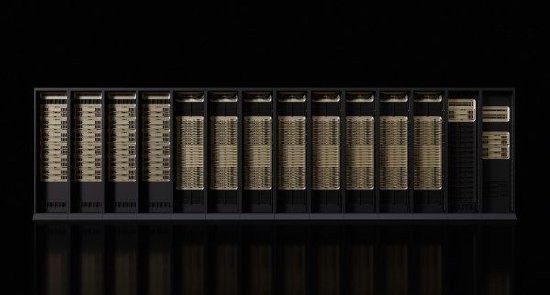
According to official statements, the six institutions will each establish their own funding pools, independently assessing clients, utilization rates, cash flows, and residual values by project, providing long-term, competitively priced funding to frontier labs, enterprises, and cloud vendors for the procurement and deployment of NVIDIA's full-stack computing power. NVIDIA will provide the "AI Factory" platform, while financial institutions will provide long-term capital and underwriting capabilities.
Jensen Huang added on the same day on his personal account that the company can provide residual value support of no more than 25% of the opportunity size per project, which is a limited, case-by-case assessed credit enhancement and does not replace independent due diligence. PitchBook estimates that if calculated at the 25% cap, the potential or contingent exposure could be as high as $125 billion, but no funds have been actually raised yet, and the legal form is also undecided.
Goldman Sachs CEO David Solomon stated that this move aims to "establish a market for credit secured by NVIDIA's computing power." BlackRock's Larry Fink emphasized connecting long-term capital to critical infrastructure. Huang's statement is that the company has shifted from chip manufacturing to making the "AI Factory" an investable productive asset; in his logic, computing power itself generates revenue, and the CUDA ecosystem allows devices to transfer across customers and extend economic life.
Relationship with Earnings Report Window
NVIDIA will announce its quarterly results for the period ending July 26 on August 26. The company previously provided revenue guidance of $91 billion, with a fluctuation of 2%, and a non-GAAP gross margin of about 75%. Wall Street consensus estimates revenue of about $92 billion and earnings per share of about $2.08. Last quarter's revenue was $81.6 billion, with the data center business accounting for about $75.2 billion. Some sell-side analysts expect this quarter's revenue to reach $94 billion to $95 billion and have provided higher figures for the next quarter.
The Vera Rubin platform has entered mass production, and sell-side analysts are focusing on its share of revenue in the third and fourth quarters, as well as whether the transition to Blackwell is smooth. The company has previously stated confidence in a combined revenue of about $1 trillion from Blackwell and Rubin for the calendar years 2025 to 2027. If the financing platform can reduce clients' one-time capital expenditure pressure, it theoretically helps convert orders into recognized revenue, but the call on the 26th is more likely to first address orders, capacity, and gross margins, rather than disclosing the progress of the memorandums item by item On the day the news was announced, NVIDIA's stock price fell by about 1% to 3%. The market's concerns at that time mainly revolved around whether the $500 billion was an intended scale or already locked-in funds; whether residual value support would expand the company's liabilities; and whether this constituted refinancing of its own demand.
Controversy Focus: Asset Securitization or Revolving Financing
Supporters argue that treating GPU clusters as rent-generating infrastructure helps attract private equity and insurance funds into data center construction, alleviating the balance sheet pressure on large-scale cloud vendors and emerging cloud companies. The leasing prices of products like the H100 have risen during certain periods, which is used to illustrate that residual value does not solely decline.
Skeptics point to cross-shareholding, prepayments, and long-term underwriting within the ecosystem: suppliers inject capital or provide guarantees to customers, who then use the funds to purchase their chips, potentially exaggerating the independence of end-user demand. The $500 billion platform has been viewed by some commentators as an institutionalized version of this pathway. The key variable is whether third-party investors truly lend based on utilization rates and cash flows, and what proportion of NVIDIA's residual value commitments are actually utilized.
A memorandum is not a contract. Whether funds are in place as planned, whether pricing is "attractive," and how residual values are shared when bad projects arise will need to be verified once the first batch of projects is implemented