
Shareholder Return Plan 'Disappointing,' Samsung Plunges 7%, South Korean and Japanese Markets Both Decline
 I'm LongbridgeAI, I can summarize articles.
Samsung Electronics' shareholder return plan, which emphasized dividends over share repurchases, greatly disappointed the market, causing its stock price to plummet more than 6.5% in a single day. The South Korean Kospi index fell 1.4%, and the Asia-Pacific technology sector faced broad pressure. JPMorgan bluntly stated that the plan offered "no surprises," with many details postponed until January next year. This uncertainty, combined with multiple headwinds such as NVIDIA's price hikes and the breakdown of US-Canada trade relations, has led to continued weakening sentiment in the Asia-Pacific market
Samsung Electronics' shareholder return plan, which focused on dividends and lacked share repurchase arrangements, greatly disappointed the market, dragging down South Korean and Japanese stocks and putting pressure on the Asia-Pacific technology sector.
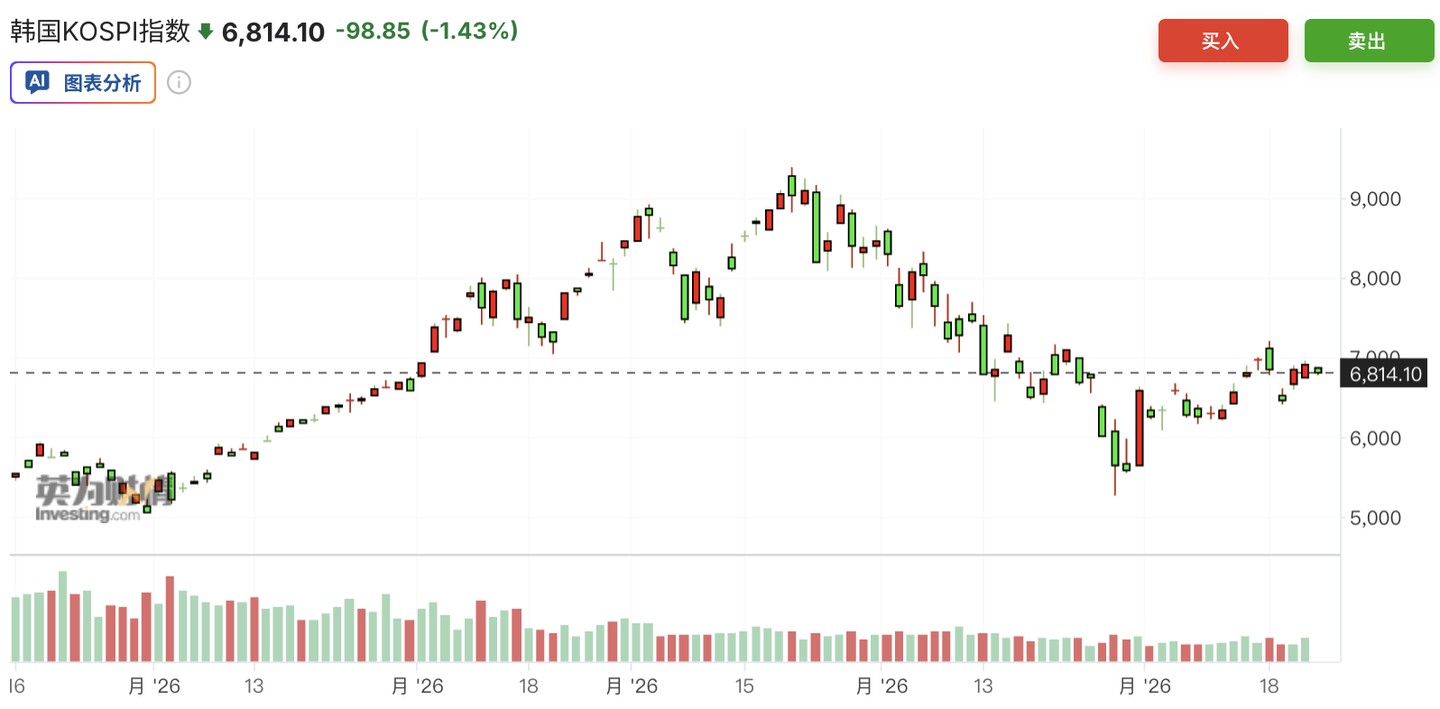
On Monday, Samsung Electronics' stock price plunged as much as 7.1% after the company announced a shareholder return plan that prioritized cash dividends over share repurchases, failing to meet investor expectations. At the latest quote, Samsung Electronics' decline narrowed to 6.57%, while the drop in the Seoul Composite Index (Kospi) widened to 1.4%, and the Nikkei 225 Index also fell 0.4%.
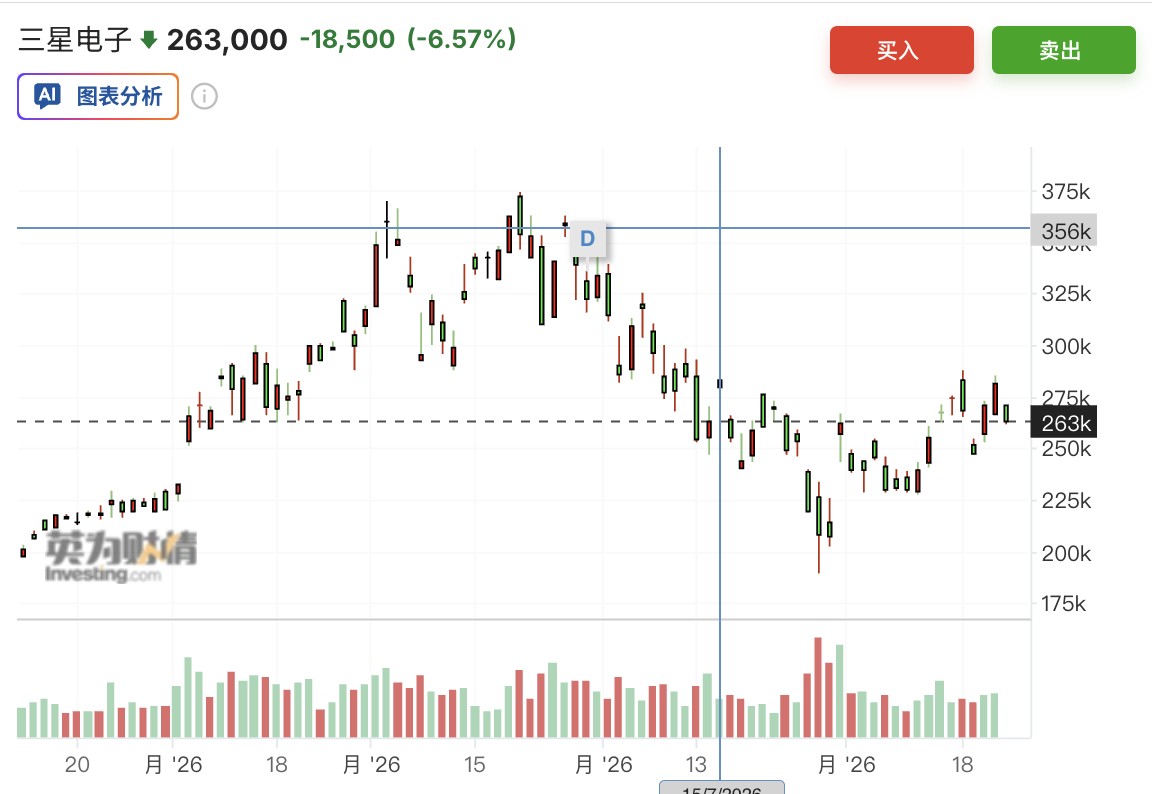
Samsung Electronics announced on Friday that it plans to return up to 110 trillion won (approximately $80 billion) to investors this year, with 30 trillion won to be distributed as cash dividends in the third quarter. The remaining arrangements will be finalized at the board meeting in January next year. Jay Kwon, an analyst at JPMorgan, stated bluntly in a research report that the plan "failed to deliver positive surprises," disappointing the market.
The sharp drop in Samsung's stock further dragged down the overall performance of the Asia-Pacific technology sector. The MSCI Asia Pacific Index slipped 0.2%, led by declines in technology stocks. As a key bellwether for artificial intelligence investment, the Kospi saw a particularly pronounced drop.
Dividends Prioritized, Repurchases Absent: Core of Plan Questioned
Jay Kwon listed three specific aspects of the report that disappointed the market: the amount of returns committed for the third quarter, the absence of any share repurchase plan, and the maintenance of the shareholder return ratio at 50% of cumulative free cash flow.
Kwon stated, "It remains unclear why Samsung's management chose dividends over repurchases, as we believe many investors prefer repurchases, viewing them as a more effective way to return capital." Against the backdrop of widespread market expectations that Samsung would introduce more robust capital return measures, the conservative nature of this plan caught investors off guard.
Furthermore, the postponement of many details in the plan until January next year has increased market uncertainty and weakened investor confidence in the company's willingness to allocate capital.
Multiple Pressures Weigh on Asia-Pacific Market, Technology Stocks Under Strain
Samsung dragged the Asia-Pacific market lower, with the Seoul Composite Index (Kospi) dropping 1.4%. Market focus this week is heavily concentrated on the artificial intelligence sector. NVIDIA's earnings report and Federal Reserve Chair Walsh's speech at the Jackson Hole Annual Meeting in Wyoming will serve as key signals for investors to judge whether the AI rally can continue.
Meanwhile, NVIDIA has notified customers of price increases for its flagship Vera Rubin and Grace Blackwell chip systems. The price hikes will take effect when shipments begin early next year, with specific amounts depending on chip generation and memory configuration. This news has further exacerbated market concerns about rising AI hardware costs and pressured corporate investment returns.
Alibaba announced the issuance of 710 million new shares at HK$112.7 per share, raising approximately HK$80 billion (about $10.2 billion), at a discount of about 3.6%, to compete for global AI leadership. These developments continue to attract market attention.
Oil Prices Fall, Gold Maintains Upward Trend
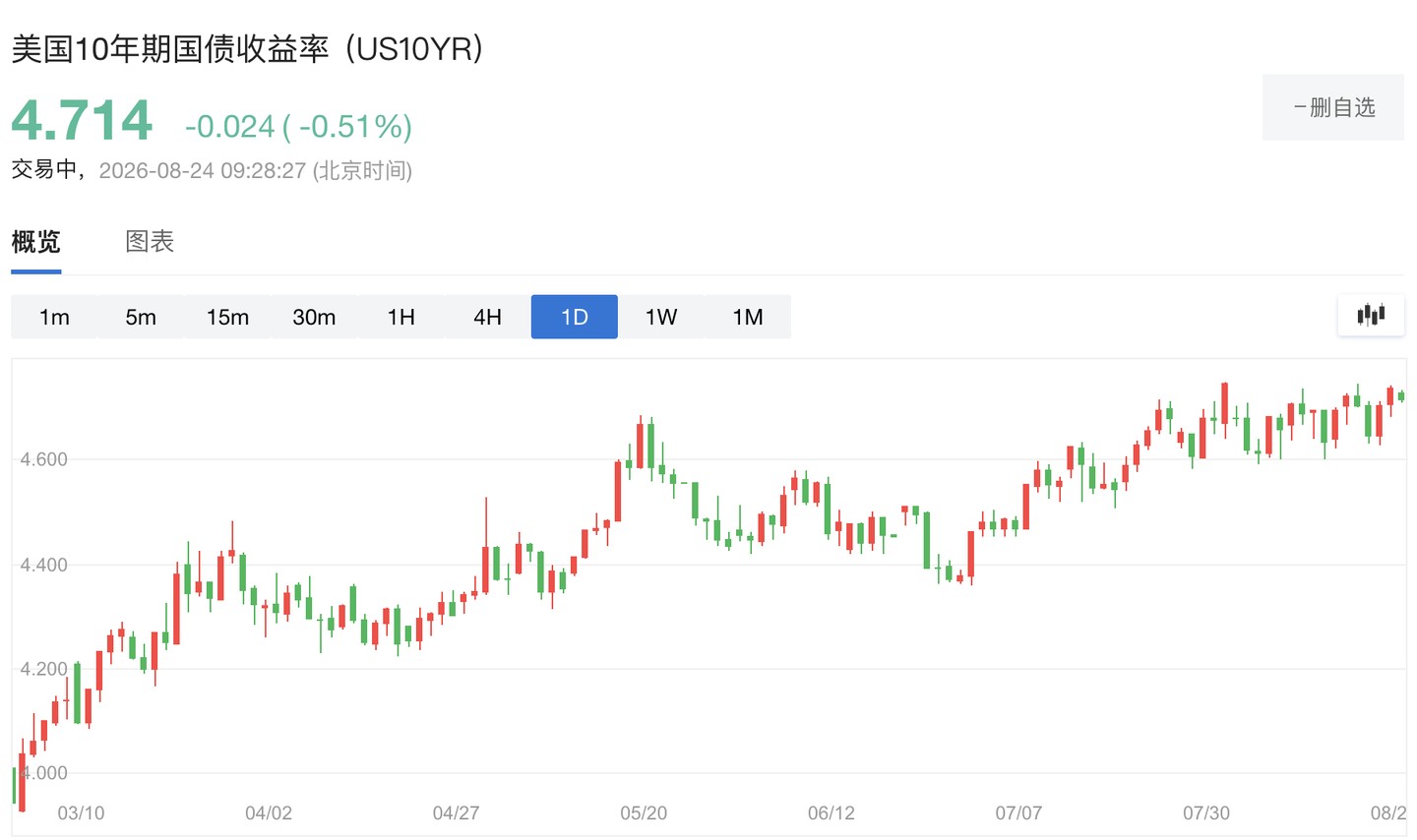
On the broader macroeconomic front, Brent crude oil fell 1.5% to $93 per barrel on Monday. US Treasury Secretary Bessent is scheduled to hold a press conference to detail plans for the economic isolation of Iran. US Treasury yields edged lower, with the 10-year yield falling 2 basis points to 4.71%.
The Canadian dollar weakened due to the sudden breakdown of US-Canada trade negotiations. Last Friday, the United States imposed a 50% tariff on approximately $20 billion worth of Canadian goods. Canadian Prime Minister Mark Carney stated that retaliatory tariffs on $20 billion worth of US goods would be implemented on September 8.
Gold maintained last week's upward trend, with spot gold prices trading near $4,605 per ounce.