
 I'm LongbridgeAI, I can summarize articles.
Tesla officially launched the Cybercab, a steering-wheel-free autonomous vehicle, signaling a major step in its self-driving ambitions. Investors should note that robotaxi growth is already priced into Tesla's high valuation, trading at 13 times sales. While Tesla's vertical integration offers cost advantages over competitors, Elon Musk's historical optimism regarding regulatory approvals and deployment timelines has often been overly optimistic. Actual scaling depends on external regulatory forces rather than just internal readiness.
Tesla (TSLA +5.42%) is on a roll when it comes to market-moving announcements.
Last month, the EV maker announced the sale of 500 Tesla Semis to Swedish transportation company Einride AB (ENRD -2.24%), essentially tripling the truck's lifetime volumes. The move signaled strength not only for Tesla's emerging trucking platform, but also for its autonomous driving technology, which has the potential to address a growing labor shortage for trucking companies.
On Sept. 3, an even bigger catalyst for Tesla's self-driving ambitions was revealed: the official launch of the company's long-awaited Cybercab.
The vehicle's design may be surprising to some. There is no steering wheel and no pedal. The vehicle is expected to navigate itself exclusively using cameras and artificial intelligence.
Tesla stock surged in value in the hours leading up to the event. How should investors be viewing the Cybercab launch? There are two factors to keep in mind.

NASDAQ: TSLA
Tesla
Premium Feature
Moneyball Superscore
65/100
Today's Change
(5.42%) $19.36
Current Price
$376.37
Key Data Points
Market Cap
$1.4TMarket cap calculated using publicly traded shares outstanding only. Does not include unlisted, private, or dual-class non-traded shares. Implied market cap may vary.
Day's Range
$365.82 - $384.04
52wk Range
$297.38 - $498.83
Volume
63.6M
Avg Vol
41.4M
Gross Margin
18.85%
1. Robotaxis are already a big part of Tesla's valuation
Cathie Wood -- the CEO of Ark Invest, a major Tesla shareholder for nearly a decade -- has been telling investors about the growth potential of Tesla's robotaxi division for years. Her firm began purchasing Tesla stock in 2016 at just $13 per share. Ark Invest now owns more than $1 billion of Tesla stock.
"We think $8 trillion to $10 trillion for the entire autonomous taxi opportunity throughout the world, from almost nothing," Wood predicted over a year ago, referring to how large the robotaxi market could eventually become. "That's how quickly AI is going to cause these things to happen," she stressed.
Looking at Tesla's valuation, it's clear that the market is already pricing in plenty of growth potential. While Tesla's car sales have stabilized, volumes fell year-over-year in both 2024 and 2025. Trading at 13 times sales -- a healthy premium to every other EV stock -- investors aren't necessarily buying into something the market doesn't already know about.
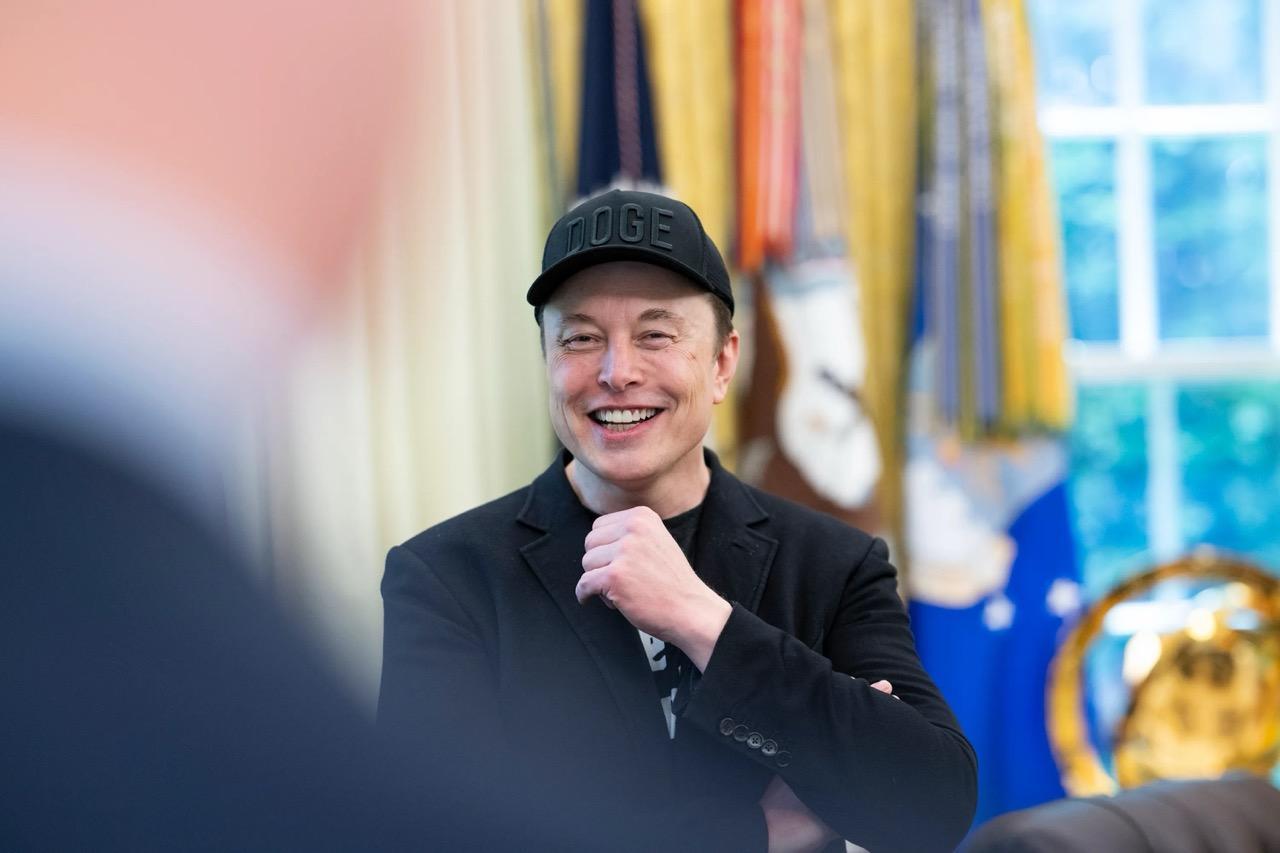
Image source: The White House
2. Robotaxi growth could be lower than Elon Musk's projections
Regardless of the stock's current valuation, I am a big fan of Tesla's ability to compete aggressively in the nascent robotaxi industry.
The company's biggest advantage is its vertical integration. Some analysts believe Tesla will be able to produce Cybercabs at an all-in cost of $18,000. Competing services, meanwhile, are paying more than $100,000 per vehicle. As one industry insider concluded, "For the same capital outlay, Tesla could deploy nearly seven times as many vehicles."
Tesla CEO Elon Musk is telling investors to expect big things. But his predictions have typically proven overly optimistic.
"I think we'll probably have autonomous ride hailing in probably half the population of the U.S. by the end of the year. That's at least our goal subject to regulatory approvals," Musk said in 2025. That goal was never reached. A few months later, Musk predicted to Tesla's robotaxis would have "no safety driver by end of year." That, too, never came to pass.
To be clear, Tesla perhaps has an unrivaled ability to scale its robotaxi network given how vertically integrated its business is. The company added 45 Cybercabs to its Austin, Texas, network before its latest Cybercab event in a show of force.
But Tesla doesn't completely control its growth trajectory. Regulators will ultimately dictate how quickly the service can scale publicly. So while Tesla may be ready to scale from an internal perspective, investors should remember that growth rates will be determined by many exogenous forces, not just Musk's private opinions.