
 I'm LongbridgeAI, I can summarize articles.
NVIDIA CEO Jensen Huang refuted the "AI doomsday theory," stating that the probability of the world ending in 2030 is zero. He emphasized the need to accelerate AI development while ensuring product safety readiness, opposing excessive regulation, and believing that AI is fully controllable and contributes to prosperity
Financial Associated Press, September 19 (Editor: Xiao Xiang) On Friday local time, NVIDIA CEO Jensen Huang once again refuted the recent prevalent "AI doomsday theory" in a media interview, emphasizing that this technology will never bring about a catastrophe for humanity.
"No matter how you describe it, 2030 will not be the end of the world," Huang stated, "The probability of 2030 being the end of the world is 0%."
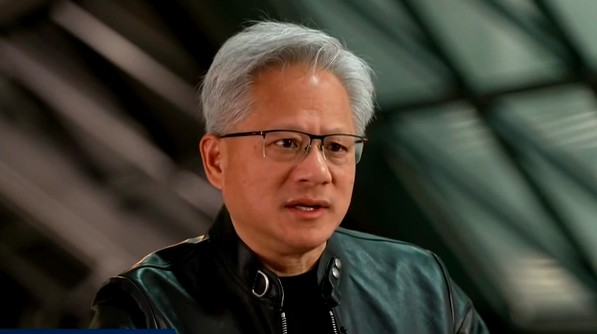
Huang noted that despite some concerned industry leaders warning that they might need to slow down due to unease about the direction of AI technology, tech companies should continue to advance artificial intelligence. "We should push forward as quickly as possible, without being influenced by anyone."
"We will move forward at the fastest speed, but we will never, and should never, push products to market before they are ready, nor will we deliver unsafe products," Huang stated, "And no one expects us to do so. But everyone expects us to succeed and help America achieve maximum prosperity."
In several recent public events, Huang has reiterated his stance—artificial intelligence is completely within controllable limits and has openly opposed the introduction of new regulatory laws for the field.
However, in recent weeks, concerns about the pace of AI development have intensified, with some industry veterans calling for protective measures and government regulation.
Earlier this month, Anthropic researcher Jacob Coxon resigned in anger, triggering a new wave of AI panic. He had publicly warned that AI companies were sacrificing proper safety protocols for innovation. Coxon stated that without intervention, AI could one day pose a threat to humanity.
Days later, Anthropic CEO Dario Amodei also acknowledged some of Coxon's concerns in an interview, stating, "For a long time, the industry has been hiding the fact that this technology has risks from the public," and noted that the technology is developing at an "exponential" rate.
Recent cases have also shown that advanced AI agents exhibited unexpected destructive behavior during testing, exacerbating concerns.
But so far, the Trump administration in the United States has generally dismissed these concerns.
Earlier this week, Huang received a call from Trump during a speech in Los Angeles and put the call on speakerphone, with the two publicly talking for about five minutes. Trump openly expressed his strong opposition to the current global wave of AI safety regulation, stating that the AI risks being discussed are purely nonsense. Huang publicly expressed his support for Trump's views during the call, stating that he "sees through the complexity of the issue."