
 I'm LongbridgeAI, I can summarize articles.
Following setbacks in New Mexico, Oracle's 1.3GW data center in Wisconsin faces delays in full-power supply until 2028 or 2029 due to the restart of transmission approval processes, with project costs surging by 75%. Grid bottlenecks are delaying nearly RMB 900 million in monthly revenue realization, exposing systemic delays and financial risks in AI infrastructure construction amid low credit ratings and high margin pressures
The crisis surrounding Oracle's data center construction continues to spread. Following the declaration of force majeure for the Jupiter project in New Mexico, the 1.3GW ultra-large data center "Project Lighthouse" in Wisconsin is again in emergency mode—not due to site selection or funding issues, but because it cannot connect to the power grid.
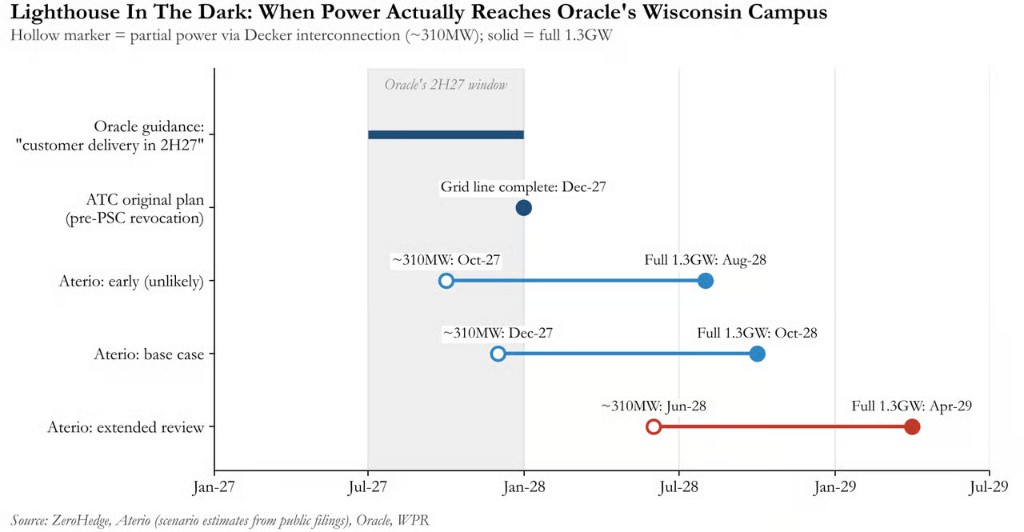
According to the latest report from data center research firm Aterio, the transmission approval process for the Lighthouse project has been rejected by the Wisconsin Public Service Commission (PSC), resetting the statutory review clock to zero. This means Oracle's previous commitment to "deliver to customers in the second half of 2027" is highly unlikely to be met. In the base case scenario, full-power supply will be delayed until October 2028, and in the pessimistic scenario, it will be delayed until spring 2029. Affected by this news, Oracle's stock price fell 1.8% on the day, and the company made no public response.
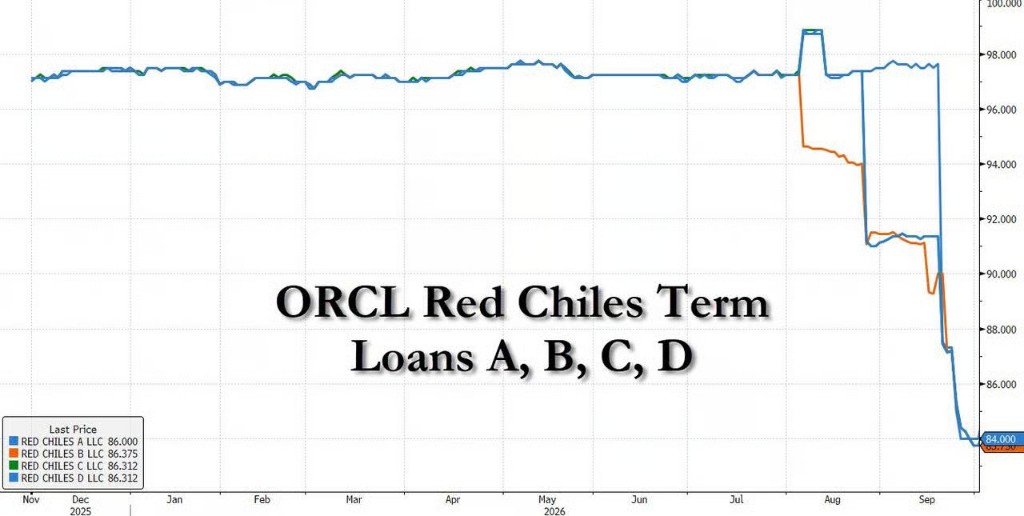
This is the second project among Oracle's five core data center campuses explicitly marked with delay risk. Just two weeks ago, Barclays credit strategist Andrew Keches told clients that the issues in New Mexico would have "no spillover effect on other projects"—but reality is proving this judgment wrong one by one.
Approval Restart: Over 500 Documents, Back to Square One
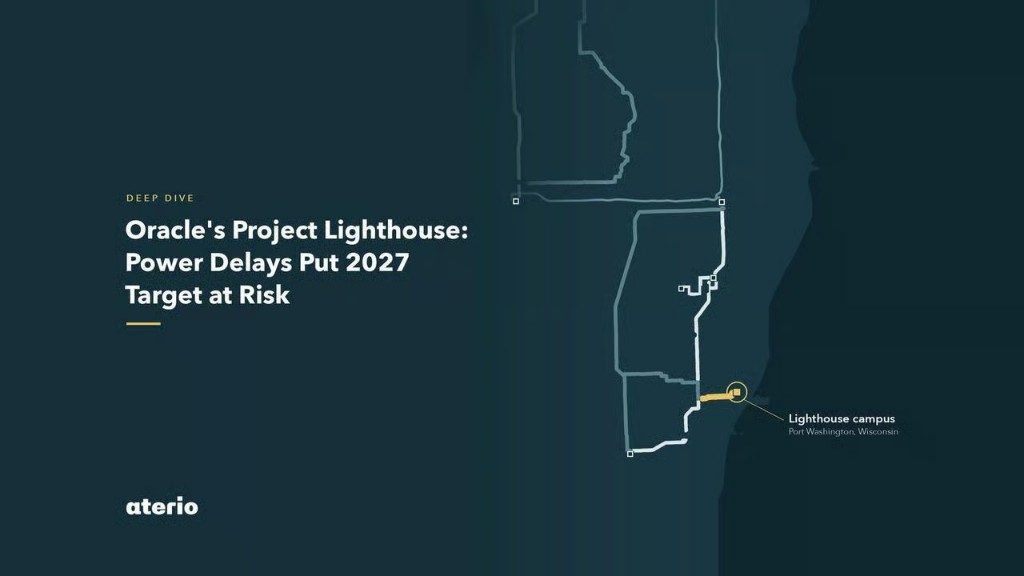
The Lighthouse project is located in Port Washington, Wisconsin. Developed by Vantage Data Centers with Oracle as the tenant, it is part of OpenAI's Stargate construction plan, with a total power demand of 1.3GW and key IT load of approximately 902MW.
The power bottleneck for the project lies in the fact that the campus power supply depends on American Transmission Company (ATC) building a new high-voltage transmission line, and ATC must obtain PSC approval before construction can begin.
The procedure had originally progressed to a critical node. ATC's application was deemed a "complete application" in December 2025, but the company subsequently supplemented or resubmitted 564 documents, adding new line proposals and temporary bypass lines. On August 7 this year, the PSC committee unanimously revoked the previous "completeness determination"—reportedly the first time in the committee's history in recent decades, and possibly the first time ever.
PSC Chair Summer Strand stated that "the scale and number of application changes... created obstacles for participation by all parties and the public." Commissioner Marcus Hawkins was more direct: "We have a strict timeline, but the premise is that the application must be complete."
An administrative law judge subsequently determined that ATC failed to comply with orders regarding listing changes, and the PSC closed the case on September 10 without ruling on the substantive content. ATC resubmitted its application on September 18, and the statutory review clock restarted from zero.
ATC initially planned to start construction in December 2026 and complete it by the end of 2027, aligning with Oracle's delivery schedule. This plan has now officially fallen through.
Timeline: Earliest 2028, Likely 2029
Under Wisconsin law, the PSC must rule on application completeness within 30 days (the next deadline is October 19), followed by 180 days to make a substantive decision, which can be extended by another 180 days. Additionally, six months' notice is required before construction can begin.
Aterio calculated three scenarios based on this:
- Optimistic scenario (lower probability): Partial power supply achieved in October 2027, full 1.3GW power supply achieved in August 2028;
- Base case scenario: Partial power supply achieved in December 2027, full power supply achieved in October 2028, with effective load ramp-up starting in Q1 2028;
- Delay scenario: Partial power supply achieved in June 2028, full power supply achieved in April 2029.
Aterio pointed out that historically, the PSC has initiated delayed reviews in all similar large transmission cases it has examined. For 345kV projects, the actual time from completeness determination to decision ranged from 355 to 358 days, rather than the theoretical 180 days. In other words, the delay scenario is the baseline supported by historical evidence.
Javier Reyes, Head of Data Center Research at Aterio, stated, "Construction in Port Washington is progressing steadily, but power availability depends on a regulatory process that has already restarted." Currently, two buildings in the campus have topped out, but without grid access, the chips inside will have nowhere to plug in.
The Bill: Costs Surge 75%, Debt Pressure Accumulates
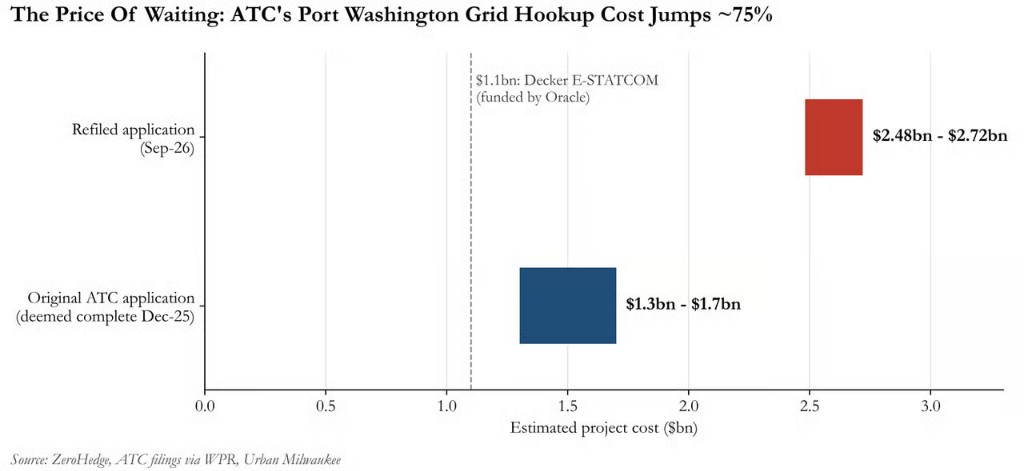
In addition to the timeline, project costs have also expanded significantly. The estimated cost for the "Ozaukee County Distribution Interconnection Project" resubmitted by ATC has risen to $2.48–2.72 billion, an increase of about 75% from the original application of $1.3–1.7 billion, potentially making it the most expensive single transmission project in Wisconsin's history. Approximately $1.1 billion of this is for the Decker grid stability system (E-STATCOM), a cost Oracle has committed to covering.
Tom Content of the Citizens Utility Board cited data indicating that the largest electricity customer in Wisconsin currently consumes less than 100 megawatts, while the peak consumption of this campus could reach as high as 3,500 megawatts.
Pressure at the financing level is also not to be ignored. According to Barclays data, the construction funds for the Wisconsin campus come from $15 billion of a $38 billion loan package for Vantage, which reportedly faces difficulties in syndicated sales. Furthermore, since Wisconsin's tariff requirements for large electricity users mandate that applicants have a credit rating of no less than A-, and Oracle's current rating is BBB-, the company faces margin call pressures. Oracle itself disclosed that related letter of credit guarantee requirements could exceed $100 million annually, with total guaranteed amounts reportedly exceeding $7 billion. And all of this points to a campus where full-power supply may not be realized until 2029.
Goldman Sachs TMT analyst Sean Johnstone warned in a research note the day after the force majeure declaration in New Mexico that "permit approvals, power scheme redesigns, community opposition, and local infrastructure constraints are threatening construction schedules and financing assumptions." The situation in Wisconsin has caused substantial impact with just one of these factors.
The Cost of Delays: Nearly RMB 900 Million in Monthly Revenue Deferred
Goldman Sachs Equity Research estimates that hyperscale cloud providers need approximately $11.6 billion in annual AI revenue per GW of computing power to achieve a 15% return on investment in AI computing expenditures between 2026 and 2027. Based on Lighthouse's IT capacity of approximately 0.9GW, each month of delay corresponds to a revenue deferral of about $850–900 million. Bloom Energy stated in its Q2 earnings call that for a 1GW data center, powering up one month early could bring revenue value of approximately $1–2 billion.
Meanwhile, capital expenditure pressure does not ease due to delays. Oracle's "hell-or-high-water" lease signed for the Jupiter project means the company must still bear holding costs even if the campus fails to go online. Barclays pointed out that hardware capital expenditures are typically incurred 2–3 months before assets go online; what is delayed is revenue, not cost. Oracle's FY27 capital expenditure guidance is as high as $95 billion, far exceeding FY26's $55.7 billion, further compressing financial flexibility.
This dilemma is not unique to Oracle. According to Goldman Sachs' latest "Carbon Economics" report, the scale of new high-voltage transmission lines built in the US has shrunk significantly from an annual average of 1,700 miles between 2010 and 2014 to 350 miles between 2020 and 2023. The median time from interconnection application to commercial operation has approached five years. Engine manufacturer INNIO told Goldman Sachs that the grid access cycle has extended from historically about 2 years to over 7 years today.
Port Washington is a real-world microcosm of these statistics: 1.3GW of power demand awaits new high-voltage lines, up to five new substations, and a regulator that has already lost patience. This is also the background for Goldman Sachs' expectation that by 2030, 28% of US data center power demand will be supplied by behind-the-meter natural gas and fuel cells—while in 2025, this proportion was "virtually zero."
Crisis Contagion: From "Isolated Incident" to Systemic Concern
Barclays' Andrew Keches asserted in a flash note after the New Mexico project declared force majeure: "The headline is big, but the actual impact is small... no spillover to other projects, and credit should not fluctuate because of this."
However, the fact is that Oracle's credit default swaps (CDS) soared to a record 237 basis points the next day, and the judgment of "no spillover" appears increasingly fragile with the exposure of the Wisconsin project.
It is worth noting that the reasons for delays in Oracle's various projects differ: New Mexico is stuck on pipeline and air permit issues, while Wisconsin is hindered by grid regulatory approval. As Aterio pointed out, when each project has its "own unique reason for delay," the defense logic of "isolation" no longer holds.
Barclays considers the Saline project in Michigan relatively safe, reportedly having secured power supply and permits, describing it as "one of the most de-risked assets in Oracle's pipeline," with initial delivery expected before the end of the year, less than three months away. As the original text stated, historical experience suggests that the next problem often arises in the asset considered safest.
As Goldman Sachs' Johnstone said, "For lenders and data center investors, this is a reminder—third-party developed AI infrastructure is not always as stable and reliable as it appears." The construction boom supported by tens of billions in debt relies on the logical premise that assets come online on schedule. But the reality is, they are not coming online on schedule.