
 I'm LongbridgeAI, I can summarize articles.
The bill plans to invalidate multiple general licenses previously issued by the U.S. Treasury Department related to Russian diesel sales, imports, and other energy activities, prohibit the future issuance of such exemptions, expand sanctions on the Russian energy sector, and strengthen congressional oversight over the executive branch's relaxation of sanctions on Russia. Earlier this week, senators exerted pressure twice against Russian diesel transactions, with several Republicans defecting, drawing significant attention
President Donald Trump's decision to relax restrictions on Russian diesel exports has faced collective resistance from bipartisan members of Congress.
On Friday, the 16th (U.S. Eastern Time), Gregory Meeks, the top Democrat on the House Foreign Affairs Committee, introduced a bipartisan bill supported by members of both parties. The legislation aims to revoke relevant licenses already issued by the U.S. Treasury Department, prohibit the future issuance of exemptions, and require the government to impose sanctions on the Russian energy sector. This means that Trump's policy, which seeks to alleviate energy price pressures and promote Russia-Ukraine negotiations by restoring Russian diesel supplies, is facing continuous opposition in Congress, ranging from the Senate to the House of Representatives.
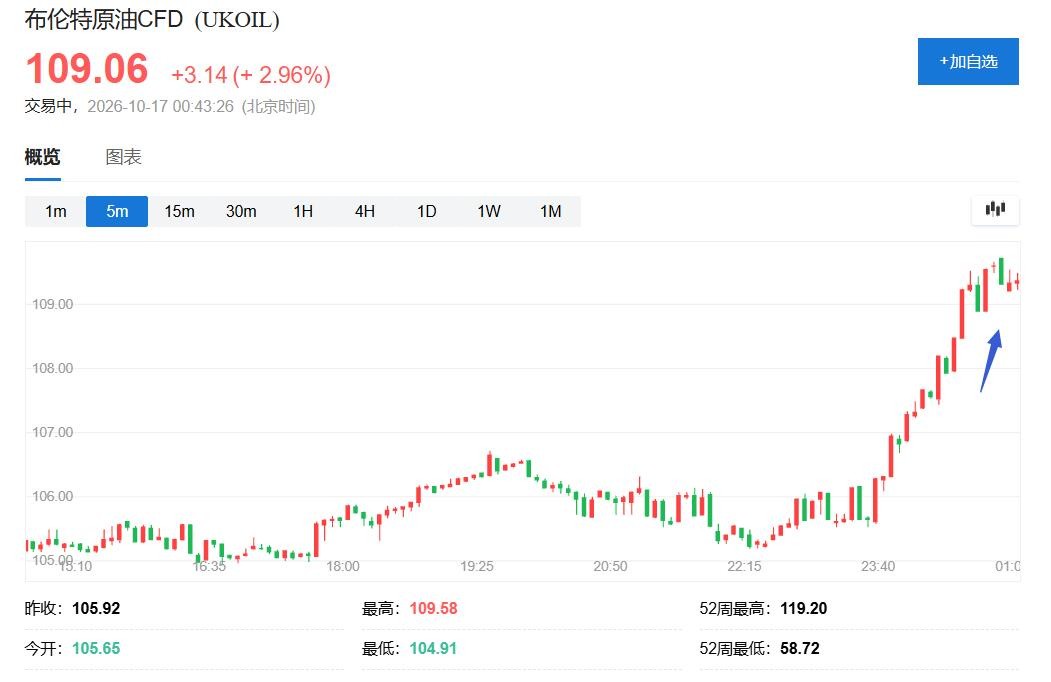
Following the announcement of the bill, international crude oil futures rose during the late morning session of U.S. stocks. At the beginning of the afternoon session, WTI crude oil futures briefly approached $100.90 per barrel, rising nearly 3% for the day; Brent crude oil futures neared $109.60 per barrel, gaining nearly 3.5% intraday. The market needs to reassess expectations for increased Russian diesel supplies and the risk of tightened U.S. sanctions policy against Russia. However, oil price movements are also influenced by factors such as supply risks in the Middle East, so the intraday rise cannot be entirely attributed to this bill.
Bill Aims to Revoke Diesel Import Licenses, Closing Loophole for Trump Administration Exemptions
The bill proposed by Meeks on Friday is titled the "Prohibit Corrupt Russia Oil Deals Act." According to the announcement and text released by the House Foreign Affairs Committee, the bill not only targets the current Russian diesel transactions under the Trump administration but also attempts to limit the space for the U.S. to relax sanctions on Russian energy through general licenses in the future.
The main measures of the bill include three aspects:
-
Revocation of existing licenses. The bill aims to invalidate multiple general licenses related to Russian energy previously issued by the Office of Foreign Assets Control (OFAC) of the U.S. Treasury Department. These include General License No. 135, which directly involves the sale, delivery, unloading, and import of Russian diesel, as well as other licenses concerning Russian crude oil and petroleum products.
-
Prohibition on future issuance of related exemptions. The bill seeks to prohibit the Treasury Department from continuing to issue relevant general licenses or authorizing other activities that are otherwise prohibited by law and are typically necessary for transactions involving Russian crude oil, petroleum products, diesel, and natural gas.
-
Expansion of sanctions on Russian energy. The bill requires the President to impose sanctions within 30 days of the enactment of the law on Russian entities involved in the exploration, refining, or production of Russian oil and gas, as well as the maritime transportation of oil and natural gas. Measures include asset freezes and entry restrictions. The bill also aims to restrict the participation of the U.S. International Development Finance Corporation (DFC) in investments or financial arrangements involving Russian energy assets.
Furthermore, the bill aims to expand congressional oversight over the executive branch's measures to relax sanctions on Russia. According to the proposal text, relevant measures to relax energy sanctions will be subject to stricter congressional supervision until the U.S. Secretary of State, in conjunction with the Secretary of the Treasury, the Secretary of Defense, and the Director of National Intelligence, certifies to Congress that Russia has ended the war against Ukraine and has credibly committed to achieving a just peace agreement, including compensation for Ukraine's war losses.
This means that the proposal attempts to limit not only the current batch of diesel transactions but also the policy space for the Trump administration to restore Russian energy trade through administrative licenses in the future.
In the announcement, Meeks stated that the deal reached between Trump and Russian President Vladimir Putin would not lower the cost of living for the American people but would provide funds to Russia, enabling it to continue launching attacks on Ukrainian civilians. He called on Congress to take action to block the relevant agreements.
The bill has been co-sponsored by several Democratic representatives, including Republican Representative Don Bacon, reflecting a bipartisan stance against Russian diesel transactions. However, the joint introduction of the bill by members of both parties does not mean that Congress has secured enough votes, nor does it guarantee the bill's passage.
Senate Exerts Pressure Twice This Week; Defection by Several Republicans Draws Attention
The latest move in the House is not an isolated incident. Over the past week, the Russian diesel deal reached by Trump has triggered continuous opposition in the Senate, with the opposing camp including several senior Republican senators.
On Monday, some bipartisan senators publicly questioned the legality of the Trump administration's relaxation of restrictions on Russian diesel exports, arguing that the U.S. should not resume relevant energy imports while Russia continues its war against Ukraine. They demanded that the government withdraw the decision and emphasized that the sanctions on Russian energy previously established by Congress cannot be bypassed by a presidential transaction arrangement.
On Tuesday, the opposition expanded further. Reportedly, 12 senators—including six Republicans—sent a letter to Trump demanding the revocation of the agreement. They argued that relaxing restrictions would allow Russia to sell diesel more freely to the global market, funding the Putin government's continuation of the war, while harming the security interests of the U.S. and its allies.
These 12 senators included Republicans Mitch McConnell, Thom Tillis, Susan Collins, Alan Armstrong, Lisa Murkowski, and John Cornyn, along with six Democrats. Some Republican senators had previously joined Democrats in issuing statements calling on Trump to change his policy direction.
Notably, Trump faces not only political criticism from Congress regarding the diesel agreement. Reuters previously reported that, under a sanctions law against Russia signed last month, Trump must decide by October 18 whether to impose broader sanctions on Russian energy or grant an exemption based on national interest.
Therefore, the timing of the new bill introduced in the House on Friday is particularly sensitive: on one hand, congressional opponents are attempting to limit the executive branch's exemption authority through legislation; on the other hand, the Trump administration is approaching the deadline for sanction decisions mandated by existing law.
If Congress proceeds with legislation, the White House's policy options on Russian energy issues will face greater constraints. However, before the bill is formally passed, whether the Trump administration can continue to rely on existing administrative authority to execute diesel transactions remains a key issue to watch.
From Lowering Energy Costs to Sanctions on Russia, Trump Faces a Dilemma
Trump's Russian diesel deal was originally positioned as an arrangement balancing energy prices and diplomatic negotiations: alleviating pressure on the fuel market by restoring part of the Russian diesel supply, while sending a signal of cooperation to Moscow to push Russia and Ukraine back to the negotiating table.
However, developments over the past week show that the political cost of this policy is rising. Bipartisan senators have successively demanded the revocation of the agreement, and the House has introduced a bill aiming to legally revoke relevant licenses, limit future exemptions, and expand sanctions on the Russian energy sector.
For the Trump administration, continuing to push the agreement could exacerbate partisan divisions within the U.S. and trigger controversies over the enforcement of current sanctions laws; withdrawing the agreement could weaken the White House's policy vision of alleviating supply pressures and gaining negotiating space through energy trade.
Market attention is no longer focused solely on how much additional diesel Russia can export, but rather on whether the U.S. government can fulfill its previous supply commitments and whether Congress will change the execution conditions of the transaction through new legal measures.
Friday's House proposal has not yet become law, but it has further evolved Trump's Russian diesel transaction from a controversial administrative decision into a policy conflict that Congress is attempting to block through legislation. As the October 18 deadline for decisions on sanctions against Russia approaches, how the White House handles Russian energy issues will simultaneously impact U.S. domestic politics, Russia-Ukraine negotiations, and the international crude oil market.