

Japan, South Korea Stocks Close Higher After Volatile Trading as Samsung Electronics, SoftBank Lead; Kioxia Falls Against Trend
 I'm LongbridgeAI, I can summarize articles.
Japanese and South Korean stock markets closed higher on August 26, driven by overnight US equity gains, cooling Treasury yields, and a tech sector rebound. The KOSPI rose 0.97% to 6,808.21, led by Samsung Electronics' 1.75% surge. The Nikkei 225 gained 0.62% to 66,261.94, with SoftBank rising 1.49%. Despite early volatility and caution ahead of Nvidia's earnings, strong buying in memory chip stocks helped reverse losses.
TradingKey - Japanese and South Korean stock markets both closed higher, with the KOSPI reclaiming the 6,800-point mark, the Nikkei returning to the 66,000 threshold, and Samsung surging nearly 2%.
During the Asian trading session on August 26, Japanese and South Korean stock markets were supported by factors including overnight gains in US equities, cooling US Treasury yields, and a rebound in tech stocks. In morning trading, Japanese and South Korean stocks pulled back after an initial rebound, but strengthened again after the mid-day break, ultimately displaying a volatile upward trend and both closing higher.
The KOSPI Index closed up 0.97%, reclaiming the 6,800 level to close at 6,808.21 points. Both major heavyweight stocks advanced, but Samsung Electronics performed stronger, rising 1.75% to close above the 260,000 level at 261,500 KRW; SK Hynix gained 0.6% to close at 1,688,000 KRW.
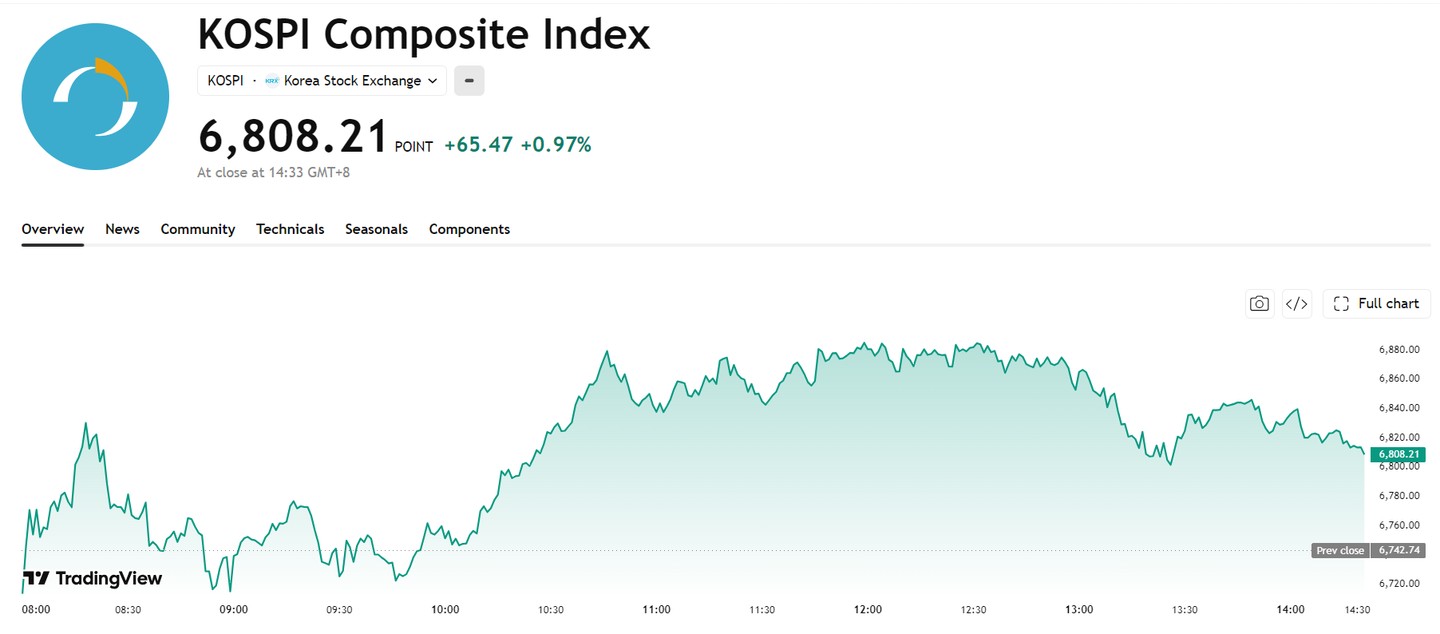 KOSPI Index chart, Source: TradingView
The Nikkei 225 was less volatile than the KOSPI Index, ascending steadily to close up 0.62%, returning to the 66,000 level at 66,261.94 points. Kioxia fell 2.46%, closing right at 50,000 JPY, while SoftBank rose 1.49% to close at 5,163 JPY.
The three major US stock indexes all rose overnight, but as the market closely awaited Nvidia's (NVDA) upcoming earnings report, some capital in the semiconductor supply chain remained relatively cautious at the open. As intraday buying stepped in, the South Korean tech sector, particularly memory chip stocks, performed strongly, driving the broader Japanese and South Korean markets to reverse their early losses.
Find out more