

SES Trims Capex Before 2026 Satellite Surge
 I'm LongbridgeAI, I can summarize articles.
SES, the European satellite giant, is reducing its capital expenditure by 100 million euros to 700 million euros ahead of a significant launch surge in 2026. The company reported a revenue of 2.63 billion euros and an adjusted EBITDA of 1.2 billion euros for 2025. Despite fluctuations in share prices, SES secured 1.8 billion euros in new contracts and has a backlog exceeding 6.6 billion euros. Analysts praised its Q4 earnings but noted potential cash-flow risks due to delayed EU validations. SES aims for a mid-single-digit EBITDA increase by 2028, leveraging synergies from its recent Intelsat acquisition.
Going forward The European satellite giant SES is tightening its belt before a huge 2026 launch spree heralds wise expense management in high stakes space race.
Strong 2025 Finish
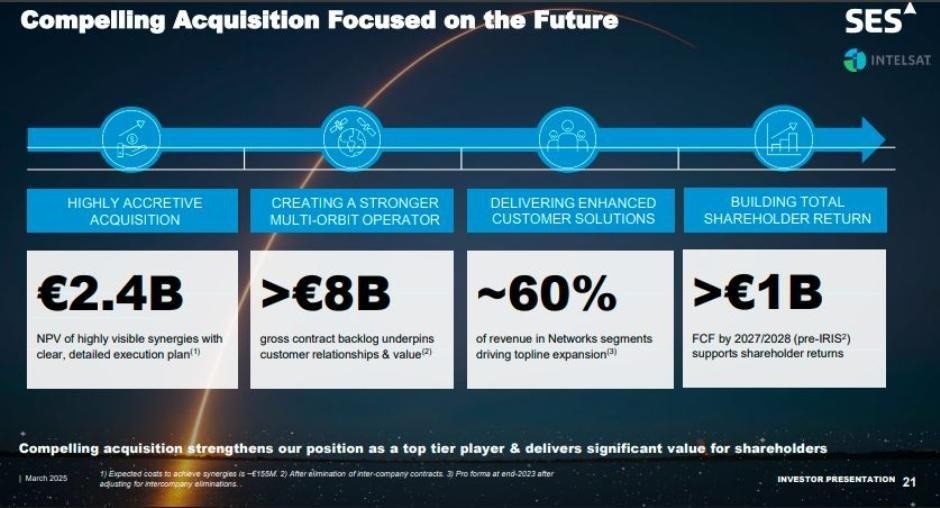
At the end of 2025, SES achieved analyst predictions. It recorded a total revenue of 2.63 billion euros ($3.09 billion) and an adjusted EBITDA of 1.2 billion euros. The Luxembourg-based company just finalized a 3.1 billion purchase of the Intelsat company. It has also secured 1.8 billion euros in new contracts, and its gross backlog is now above 6.6 billion euros.
This represents a 37% growth, which is due to clear demand. Europe’s desire for secure communications helped minimize the effects of the U.S. government shutdown and DOGE-related spending cuts. This highlights the diversified saving grace of SES. Fluctuations affected Paris shares.
They dropped by 7 per cent in the morning session and then recovered by 3.7% by 0945 am GMT. Analysts from ING praised the Q4 earnings as a beat but noted there was no guidance after 2026.
They mentioned second-half launch delays, indicating gradual revenue realization.
Strategic Capex Trim
SES cut its 2026 capital expenditure by 100 million euros, taking the total to 700 million euros. It offset investment in its O3b fleet of medium-orbit satellites and the IRIS2 of the EU fleet of low-orbit challengers against Starlink.
In late 2017, it is expected that those in power will place up to 13 satellites in orbit. This move will solidify space dominance through multi-orbital deployments. This strategic stance enables SES to take sovereign contracts as it overcomes capex stresses, which are increasing. Analyst Clara Voss of KeplerCheuvre notes this trend.
Future Edge
The estimated revenue and earnings projected for 2026 are similar to those of previous years. Discussion of IRIS 2 is ongoing within the European Commission. SES has a backlog that is more than 2.5 times its annual revenue, which acts as a buffer to delays.
The company can beat competitors in the Starlink-monopolized market. However, there is a risk of cash-flow limitation in the short term if EU validations are delayed, especially after the second-half launch. Over the long run, SES aims for a mid-single-digit increase in EBITDA value to over 40,000 in 2028.
It will use Intelsat’s synergies to grow the network by 20,000. In this congested space atmosphere, this is a calculated ambition, not a wanton waste.