
Investment opportunity or value trap? The price-to-earnings ratio of Korean stocks is only 6.35 times? Less than one-thi…
 I'm LongbridgeAI, I can summarize articles.
The price-to-earnings ratio of the South Korean stock market has dropped to 6.35 times. Although stock prices have reached new highs, valuations have decreased instead of rising. This is mainly due to the significant upward revision of profit expectations for Samsung and SK Hynix, leading to a surge in estimated EPS by 170%. The market debates whether Korean stocks are an undervalued investment opportunity or a value trap, with the long-standing "Korean discount" and high industry concentration being the main reasons
July 13, 2026 (You Analysis / Industry Data Center Report) — Does the market really believe that the memory industry should be revalued in the long term, or is this just a one-time economic cycle? The price-to-earnings ratio of the South Korean stock market may reveal some clues.
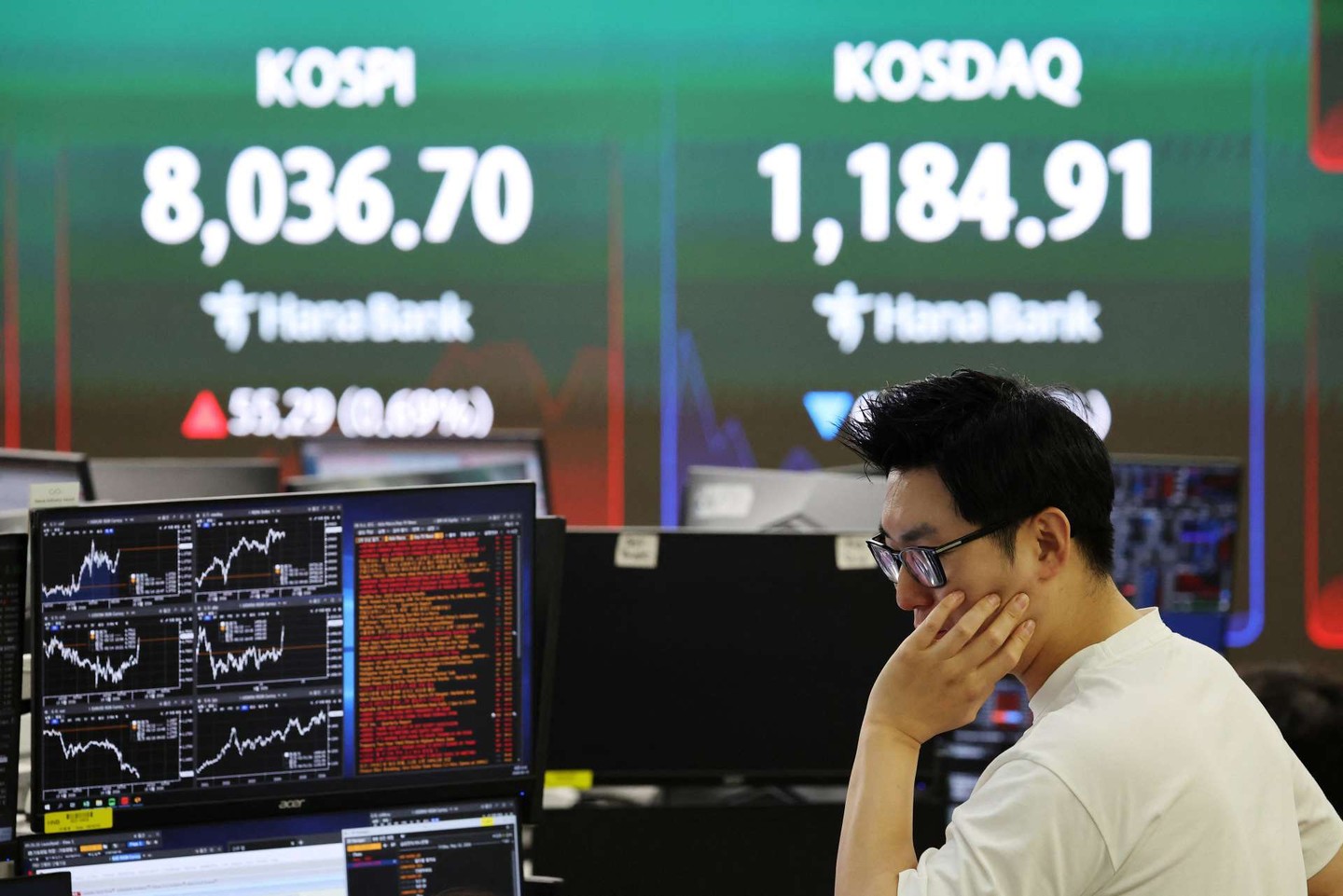
The South Korean stock market has frequently hit historical highs this year, but its price-to-earnings ratio has decreased instead of increased. According to Bloomberg data as of July 9, the estimated price-to-earnings ratio of KOSPI for the next 12 months is only 6.35 times, even lower than the peak of 6.82 times during the 2008 financial crisis, and nearly halved from last October's 52-week high of 11.98 times. This phenomenon of "rising prices without rising valuations" has led the market to debate whether Korean stocks are an undervalued opportunity or a value trap with hidden risks.
Earnings soar outpacing stock prices, valuations decline instead of rise
KOSPI has risen about 80% this year, mainly driven by the profit improvement of Samsung Electronics and SK Hynix, and has repeatedly set historical highs. However, this surge is not due to investors willing to assign higher valuations, but rather because the upward revision of corporate profit expectations has outpaced the increase in stock prices.
Since the beginning of this year, the estimated earnings per share (EPS) for KOSPI for the next 12 months has been revised up by about 170%, marking the largest annual increase since 2006; the profit estimates for South Korean companies have been revised up for 17 consecutive months, the longest duration in nearly nine years. The driving force behind this is the continuous investment by large global technology companies in AI infrastructure, which has driven up both the demand and prices for memory chips.
Samsung and Hynix support half the market, "Korea Discount" still exists
Even with strong profit growth, KOSPI's current price-to-earnings ratio is still only about one-third of that of Taiwan's weighted stock index, which is also semiconductor-focused.
Bloomberg has pointed out that the long-term price-to-earnings ratio of Korean stocks is inherently low, referred to in the market as the "Korea Discount." This is due to issues with family business governance and profits being overly concentrated in highly cyclical stocks like Samsung Electronics and SK Hynix — the two companies together account for more than half of KOSPI's total market value, and any slight fluctuation in the memory industry's economy will have a significant impact on the overall market.
Cannot only look at the price-to-earnings ratio: signals revealed by price-to-book ratio and PEG ratio
When a country's stock market is primarily composed of cyclical stocks, the calculated price-to-earnings ratio will be low (which is the aforementioned Korea Discount), which is actually a reasonable phenomenon. Since the profits of the memory industry are inherently volatile, it is necessary to consider not only the price-to-earnings ratio but also to interpret it in conjunction with the price-to-book ratio (P/B) and the PEG ratio (price-to-earnings ratio divided by profit growth rate) The KOSPI net asset value has first broken 2 times this year; if measured by the PEG ratio, Samsung Electronics and SK Hynix are actually not considered very cheap targets.
Therefore, the low price-to-earnings ratio of the Korean stock market compared to Taiwan actually reflects the different structures of the stock markets.
As long as memory prices continue to rise and AI infrastructure investment remains strong, corporate profit growth will continue to drive earnings, keeping the price-to-earnings ratio low even as stock prices rise, creating what the market commonly refers to as the phenomenon of "getting cheaper as it rises."
However, this also means that the Korean stock market is increasingly tied to a few cyclical stocks and a single industry cycle. Once memory prices weaken or tech giants shift to cut capital expenditures, the momentum for profit upgrades may reverse, and the illusion of "cheapness" could quickly disappear.
※ This article is authorized for reprint by "You Analyze," original source: Original Link
※ Disclaimer: The individual stocks, funds, and futures products mentioned in this article are for reference only and do not constitute investment advice. Investors should make independent judgments and carefully assess risks