

Memory Stocks Are Plummetting. Jensen Huang Says the Bears Have It Wrong.
 I'm LongbridgeAI, I can summarize articles.
Memory stocks have plummeted due to fears over debt and cyclical oversupply, despite strong financial results. Nvidia CEO Jensen Huang defends the sector, predicting no oversupply until after 2029 and emphasizing growing demand for AI applications. Analysts note record-high margins at Micron but suggest valuations are attractive given future profit potential from robotics and autonomous vehicles, recommending a long-term buy.
The AI trade has looked awfully shaky over the last couple of weeks.
CoreWeave, the neocloud company that may have more leveraged exposure to AI than any other company due to its massive debt burden, has plunged in recent weeks on fears over its rising debt yields.
Memory stocks, which include Micron(MU +2.46%), SK Hynix (SKHY +4.05%), Samsung, and Sandisk (SNDK -1.82%), are also seen as some of the riskier AI stocks due to the cyclical nature of memory.
Historically, memory chips have swung from gluts to shortages, with shortages lasting only two to three years on average. SK Hynix just pulled the planned IPO of its flash storage unit in the face of weak stock performance and investor interest, and Micron and its peers are trading down by roughly a third from their peak last July. That sell-off has come even as memory stocks have continued to report blockbuster results, and there's no evidence that the shortage is easing. The jitters seemed to reach a fever pitch earlier this month on fears that new products from China's leading memory chip company would compete with the established giants above.
Nvidia (NVDA -0.59%) CEO Jensen Huang has stepped in to defend the AI sector many times, and now he's doing it with memory. At Nvidia's GTC Berlin conference, Huang said he doesn't expect an oversupply of memory until sometime after 2029, and explained about the supply-demand dynamic, "One of the things that's really great about memory is that you can always use more of it." He added that his company will continue to develop new ways to use memory to accelerate and improve performance.
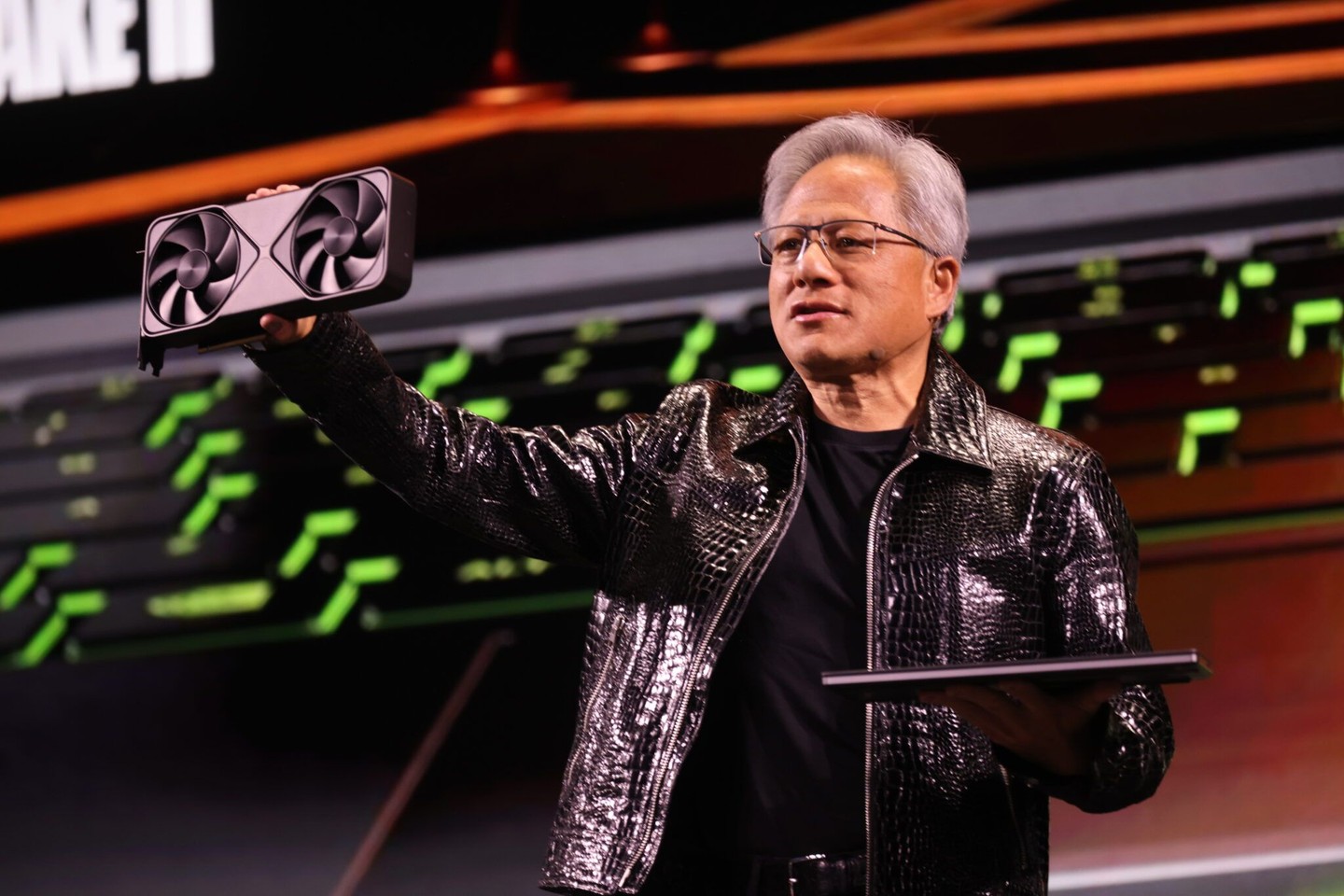
Jensen Huang. Image source: Nvidia.
Is Jensen Huang right?
The value of a stock is supposed to represent the discounted value of future cash flows. In reality, it doesn't often work like that, as it's difficult to accurately predict future cash flows, and investor sentiment often makes stocks swing wildly, as is happening now.
No one knows what the shape of the memory cycle looks like or for how long the shortage will endure. However, it does seem that margins, and therefore prices, are near their peak, which may be a sell signal to some.
Micron reported a gross margin of 86.8% in its most recent quarter, and an operating margin of 80.7%, showing it kept more than four out of every five dollars it brought in in pre-tax profits. Few companies have ever reported an operating margin that high, which gives a sense of how extreme the pricing is in the memory market. For its next quarter, Micron called for a modest decline in gross margin to 85.95%. Realistically, there's probably little room for margins to go higher, and at a certain point, supply is as tight as it's going to get.
The question now is how long the memory market will stay that way, and no one knows the answer.
Is it time to buy memory stocks?
Using Micron as an example, I think memory stocks have gotten too cheap given their future profit potential, and the risk/reward profile leans toward long-term demand for memory growing as physical AI products like robotics and self-driving cars come to market.
Micron now trades at a forward P/E of just 5. If it can sustain that level of profits for at least three years, then the valuation seems justified, especially with the potential to spend that cash on share buybacks.
The long-term picture remains uncertain, but if the company can capitalize on the current windfall and approach paying back its valuation in just five years, then the stock is a buy no matter what happens in the 2030s.