
C
Aug 25 at 06:09 AM
One Patient, One Dose: Inside the Cancer Vaccine That Sent Moderna Up 177% in a Day
 I'm LongbridgeAI, I can summarize articles.
On 19 August 2026, Moderna rose 176.96% in a single day, going straight from the previous close of $62.96 to $174.38. Over the following trading days it gave back about 20%, settling near $140. What set off the move, in between the surge and the retreat, was a joint announcement with Merck: the personalised cancer vaccine the two are developing together had cleared Phase III. That's the last large-scale human trial before a new drug can go to market.
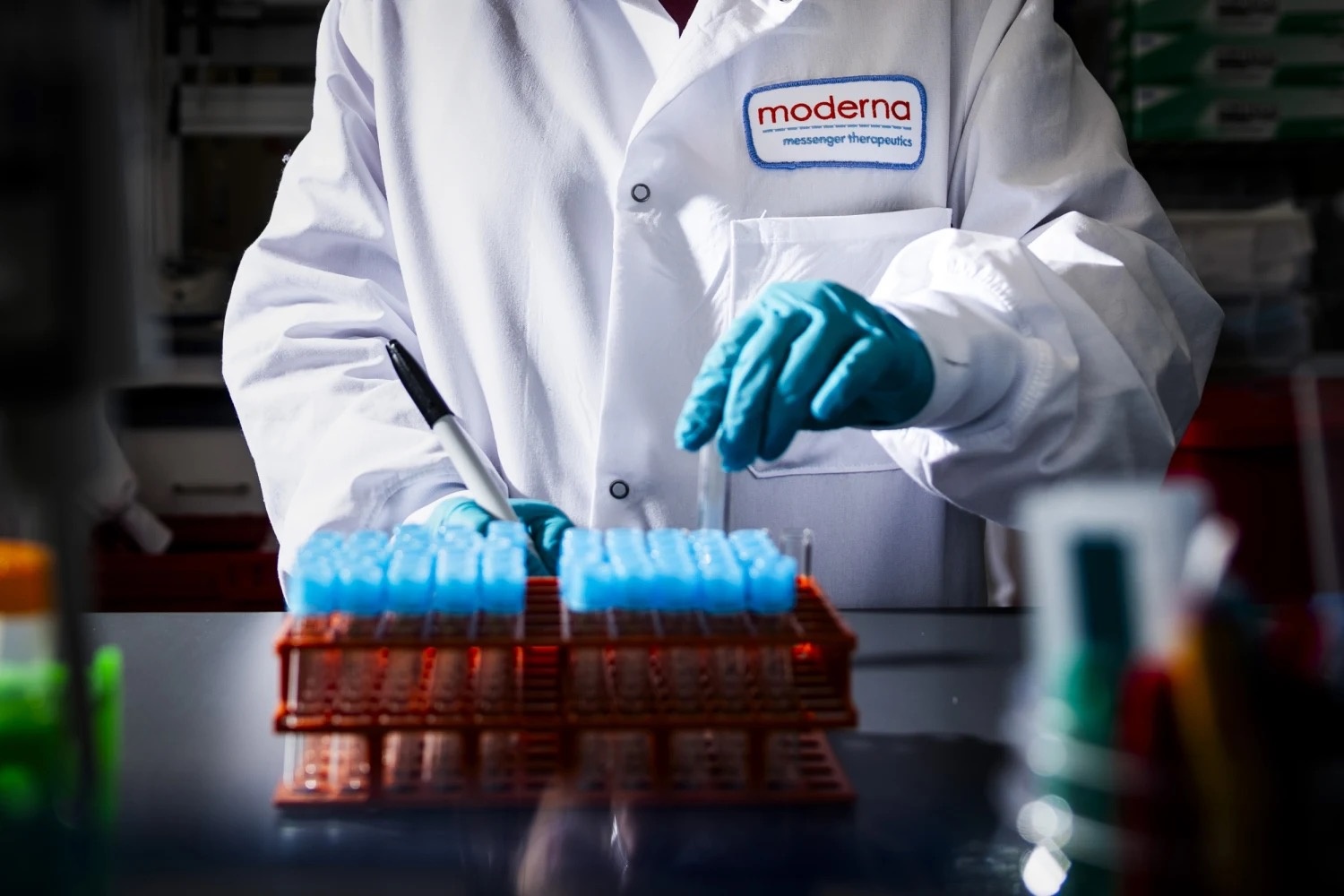
What is it about the trial results for a melanoma vaccine that lets a company's share price rise nearly 1.8x overnight? To understand this, you first have to reduce mRNA technology to an everyday object — a printing press.
A Printing Press That Never Changes Its Plates
Traditional drug development is like printing books from carved woodblocks. Each new drug is a brand-new chemical molecule; the pharma company screens one out of tens of thousands of candidates, then builds a dedicated manufacturing process for it — one set of blocks carved per book, routinely taking a decade and billions of dollars. Once the blocks are carved, the book might sell well, but that set of blocks can't print any other book.
mRNA takes a different approach. To understand it, you first need to know that your cells read a molecule called messenger RNA every day, following the genetic instructions on it to assemble amino acids into all kinds of proteins. This is the underlying process shared by all life.

What an mRNA vaccine does is slip its own order into that assembly line. Scientists write the genetic code for a target protein into a strand of artificial mRNA, wrap it in a lipid shell — like sealing it in an envelope for delivery — and inject it into the body. The cell receives the envelope, opens it, and produces the target protein to order. The protein itself doesn't cause disease, but the immune system recognises it as foreign and builds the corresponding antibodies and memory cells. So when the real virus shows up carrying that same protein, the body has already run its drills.
The key difference is where the protein gets produced. A traditional vaccine has to grow the virus in a facility, inactivate it, purify it — the antigen used for the drills is manufactured in a factory and then injected into you, and switching to a different pathogen means tearing down the whole process and starting over. An mRNA vaccine outsources that step to your own cells; all the pharma company has to do is rewrite that stretch of genetic code, leaving the lipid envelope and the entire manufacturing process untouched.
That's what the printing press means. After the COVID genome was made public in January 2020, it took Moderna just two days to finish designing its vaccine sequence. What it printed was the page for the virus's spike protein — and that same page was copied a few hundred million times worldwide.
This technical difference feeds directly into how you do the valuation maths. A single-product pharma company sells a book; a platform company sells the printing press. A book's value decays as readers finish it — once demand recedes, revenue follows it down. A machine's value depends on how many more new books it can still print. This is also why capital markets are willing to pay up for the latter: a new book doesn't have to start from zero, and the R&D, production lines and regulatory experience can all be reused.
A Few Hundred Million People, One Page; One Person, a Whole Book
So how did cancer vaccines end up as "one drug per person"? The reason lies with tumours themselves. The COVID virus wears the same face for everyone, so one page can be printed everywhere. A tumour, though, is accumulated from a patient's own cells going wrong — your mutations differ from everyone else's, and so do the proteins that can serve as targets.
So the surgeon first removes the tumour, sequences the tumour tissue and normal tissue separately, and compares the two to find the mutated proteins that exist only on the tumour cells — the technical term is neoantigens. An algorithm then picks out up to 34 targets worth attacking, writes them into a single strand of mRNA, and a dose is manufactured for this one patient alone.
Only one copy of this book gets printed in the whole world, and it's completely useless for anyone else.
The vaccine also needs a partner. The vaccine issues the wanted poster to the immune system; Merck's Keytruda unlocks the handcuffs the tumour has put on the immune system. Only with both in place does the manhunt actually work.
The Phase III trial that did the heavy lifting is called INTerpath-001. All 1,137 patients enrolled had just undergone melanoma resection surgery, putting them in a group with relatively high recurrence risk. After randomisation, two out of every three received the vaccine plus Keytruda, while the other received placebo plus Keytruda. The 19 August announcement showed that recurrence came later in the vaccine group and fewer patients saw the cancer spread to distant sites, with a gap too large to be explained by luck — and the trial's two pre-specified key endpoints were both met. An earlier Phase 2b study followed patients for five years, and at this year's ASCO annual meeting the two companies gave a figure: a 49% reduction in the risk of recurrence or death.
Melanoma is also only the first order this machine has taken. The same process is being moved into trials for lung, kidney and bladder cancer — as of August, you can count 12 clinical trials running in public registry filings.
Where Did the Scrap-Metal Price Come From?
Turn the clock back five years. On 9 August 2021, Moderna closed at an all-time high of $484.47, and that year it did $18.47 billion in revenue off COVID vaccines. As the pandemic receded, full-year 2024 revenue shrank to $3.24 billion, and by Q2 2026 quarterly revenue was down to just $145 million, with a net loss of $782 million. On 18 August this year, the share price closed at $62.96 — down nearly 90% over five years.
Falling to this level wasn't because the market didn't know it had a printing press. The platform story had been told for years, but the evidence that the machine could print a second book kept failing to appear, so the market would only pay for the book it could see. As the old book sold less and less, the company got priced like a publishing house past its prime, with the printing press valued at roughly scrap metal.
So the surge on 19 August wasn't fundamentally a rally on a news item — it was a switch to a different pricing logic. The Phase III data turned the "second book" from a story into evidence, and a machine priced as scrap metal had to be re-valued as a machine, overnight.
A Printing Press Isn't a Money Printer
Things aren't quite that simple, though — there are places where this analogy doesn't hold.
A printing press's real power lies in scale: print the same page a few hundred million times and the cost per copy trends toward zero. One drug per person actually inverts that advantage. Every patient needs fresh sequencing, fresh target selection, and then the entire manufacturing process run through for them alone. The more patients there are, the busier the factory — and costs don't necessarily come down.
There are two more headaches with no precedent. For a drug where every dose has different contents, what standard should regulators approve it against? By what logic do public health systems and insurers pay for it? Right now there are no mature answers to copy for either question. And this announcement only said "significant" — the specific magnitude of improvement and the overall survival data haven't been released yet.
It took Moderna one day to go up. The 20% given back over the following days is the sound of the market starting to do the maths seriously: genuinely pricing this machine is going to take a lot longer than that.
Only one thing was proven on 19 August: this printing press can print a second book. The COVID book proved the machine can make money, and it also proved that kind of money doesn't stick around. As for whether custom, one-copy-per-person books count as a good business, Moderna is nowhere near the point of being able to answer that.


The copyright of this article belongs to the original author/organization.
The views expressed herein are solely those of the author and do not reflect the stance of the platform. The content is intended for investment reference purposes only and shall not be considered as investment advice. Please contact us if you have any questions or suggestions regarding the content services provided by the platform.