

🍜💰 Options Puppy Beginner Guide: Sell a TIGR Cash-Secured Put, Scalp the Premium, Then Queue Again
 I'm LongbridgeAI, I can summarize articles.
.
🍜💰 Options Puppy Beginner Guide: Sell a TIGR Cash-Secured Put, Scalp the Premium, Then Queue Again
💵 My Simple Idea: Let the Option Pay for My Meal
I like to keep my options strategy simple.
I don’t always want to buy 100 shares of a company and wait for the stock price to move higher. Sometimes, I would rather get paid while waiting for a price where I am comfortable owning the shares.
That is where my cash-secured put strategy comes in.
My TIGR trade is a good example.
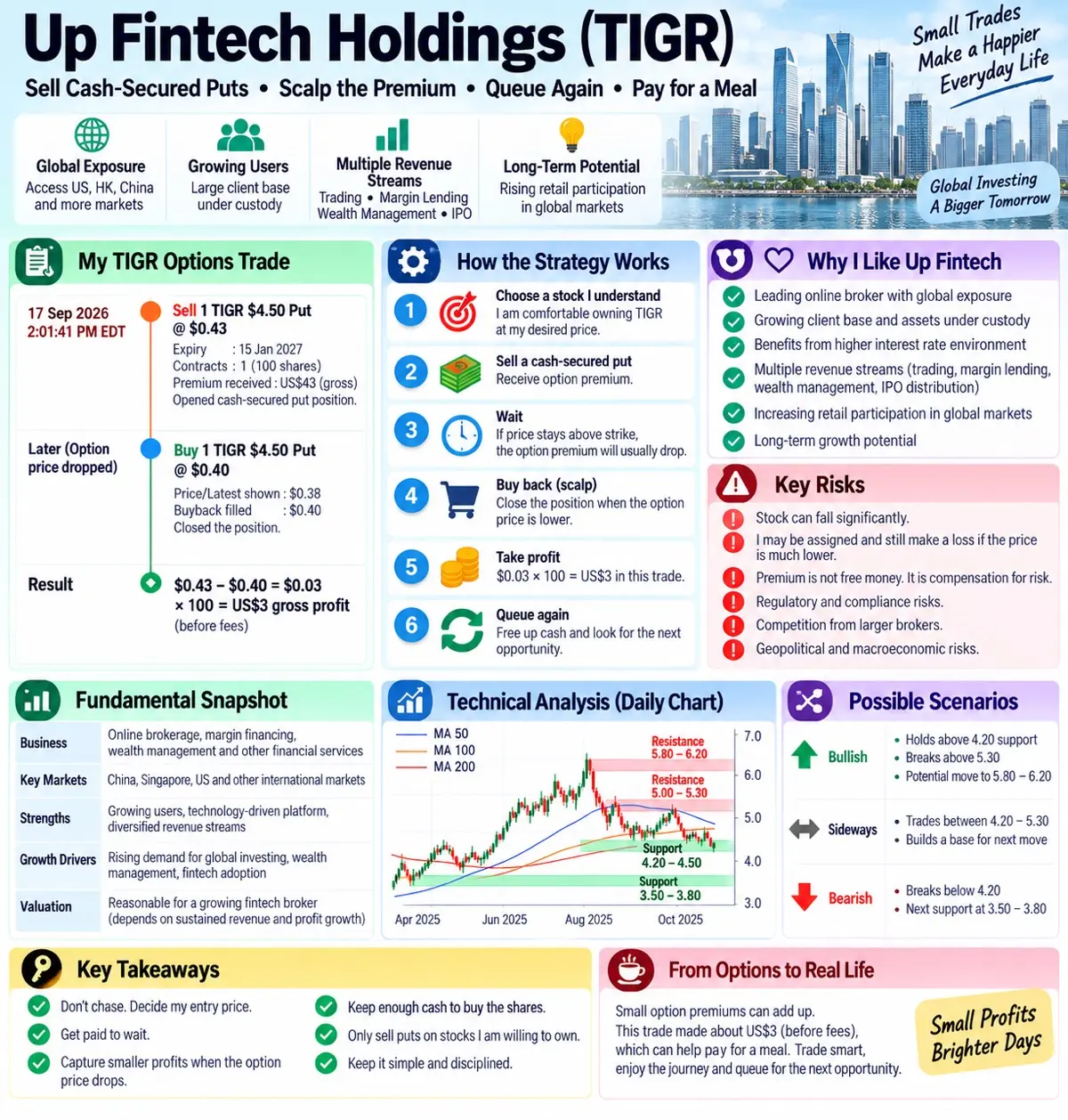
On 17 September 2026, I sold 1 TIGR US$4.50 put for US$0.43.
Later, I bought the same put back at US$0.40.
So I captured:
US$0.43 − US$0.40 = US$0.03
Because one US stock option normally represents 100 shares:
US$0.03 × 100 = US$3 gross profit
It isn’t a massive amount.
But this is exactly the way I like to think about small option trades.
Small premium → close the trade → free up capital → look for the next opportunity.
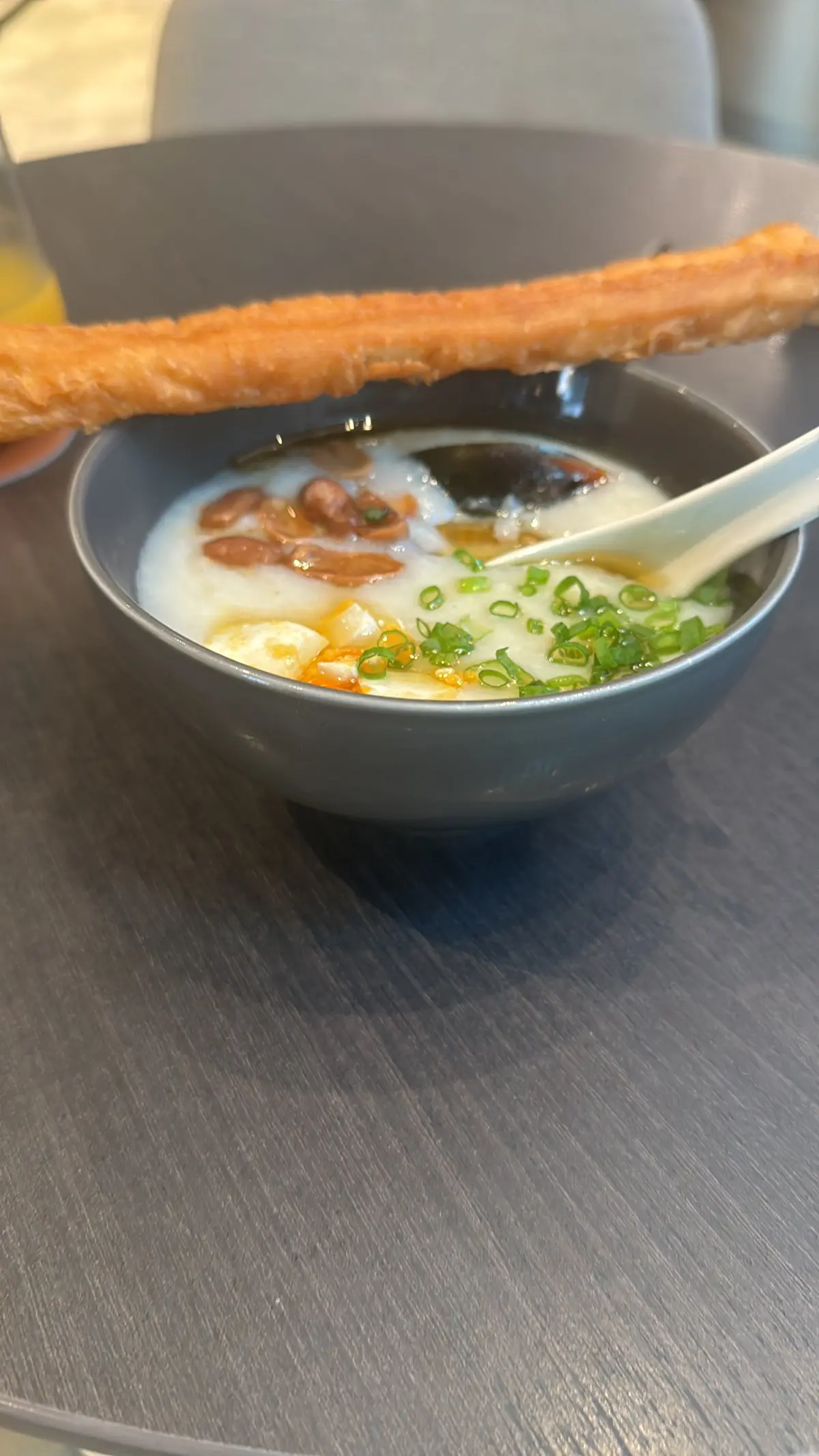
And if I accumulate enough small option profits, they can eventually help pay for something very real — like the meal in my photo. 🍜
📱 What Exactly Did I Trade?
Let’s make the trade very easy to understand.
My trade was:
Stock: TIGROption: PutStrike: US$4.50Expiry: 15 January 2027Contracts: 1Sell price: US$0.43Buyback price: US$0.40
When I sold the put at US$0.43, I received approximately:
US$43 premium
The option later dropped to US$0.40.
I bought it back for approximately:
US$40
So the difference was:
US$43 − US$40 = US$3
That’s my gross profit before commissions and fees.
This is what I call a small scalp on the option premium.
🧠 What Is a Cash-Secured Put?
For someone completely new to options, this sounds much more complicated than it really is.
A put option gives the buyer the right to sell shares to me at the strike price.
When I sell the put, I take on the obligation to potentially buy those shares.
In my TIGR example, the strike price is:
US$4.50
One contract represents 100 shares.
So if I am assigned, I could potentially have to buy:
100 × US$4.50 = US$450
That is why I need to have enough cash available.
This is called a cash-secured put.
I am not borrowing money to make the trade.
I am keeping enough cash ready in case the shares are assigned to me.
💰 Why Did I Sell the TIGR Put?
The most important question isn’t:
“How much premium can I collect?”
The more important question is:
“Am I comfortable owning TIGR at US$4.50 if the stock falls?”
That is the question I need to answer before selling the put.
If TIGR stays above US$4.50, I may simply keep the premium.
If TIGR falls below US$4.50, I could be assigned 100 shares.
Therefore, I need to be prepared for both outcomes.
This is why cash-secured puts are different from simply trying to make free money.
I am accepting an obligation in exchange for the premium.
📉 The Magic of Selling When Premium Is High
When I sell a put, I want the option premium to eventually become cheaper.
That is exactly what happened here.
I sold the TIGR put at:
US$0.43
Then the price came down to:
US$0.40
That means I could buy it back for less than I sold it for.
This is the basic idea behind an option scalp.
Sell high → buy back lower → keep the difference
In my case:
Sell: US$0.43
⬇️
Buy back: US$0.40
⬇️
Profit: US$0.03
⬇️
× 100 shares
⬇️
US$3 gross profit
Simple.
⚡ Why Would I Buy Back Instead of Waiting Until Expiry?
This is where my strategy becomes different from simply holding the option until expiry.
Some traders may sell the put and wait until the option expires.
I don’t necessarily need to do that.
If the option price drops and I can lock in a profit, I can choose to close the position.
Why?
Because I get my capital back.
And once the position is closed, I can look for another opportunity.
For example, imagine I sell an option for US$50.
If I can buy it back for US$40, I have already captured US$10.
I don’t necessarily need to wait several weeks to try to collect another US$10.
I can take the profit and move on.
This is what I mean by scalping the premium.
🍜 From Option Premium to My Meal
This is the fun part of my strategy.
I like connecting my trading profits to real life.
Instead of thinking only about numbers on a screen, I can think:
“This trade helped pay for my meal.”
My TIGR trade generated approximately US$3 gross profit.
That’s not going to make me rich.
But the concept is interesting.
Suppose I repeatedly capture small option profits.
US$3
- US$5
- US$7
- US$4
- US$6
Suddenly, the small amounts start adding up.
I can think of the process as:
Option premium → trading profit → food money
The meal becomes a little more satisfying because I know where the money came from. 🍜💰
Of course, actual commissions, fees, taxes and losses must be considered, so I should never assume every premium collected becomes spending money.
🔄 Then I Queue Again
This is the part I like most.
After buying back the TIGR put, my capital is no longer tied up in that particular option position.
Now I can wait.
I don’t need to immediately sell another option.
If I find another stock that I genuinely want to own at a lower price, I can consider selling another cash-secured put.
So my process becomes:
1️⃣ Find a stock I understand
2️⃣ Decide the price I would be comfortable owning
3️⃣ Sell a cash-secured put
4️⃣ Collect premium
5️⃣ Watch the option
6️⃣ If the premium drops enough, consider buying it back
7️⃣ Take the profit
8️⃣ Free up my cash
9️⃣ Queue for the next opportunity
This is why I call it queueing again.
I’m not chasing.
I’m waiting for the next setup.
🚦 But There Is a Big Warning
This strategy sounds easy when we only look at a US$3 profit.
But the risk is much larger than US$3.
If TIGR falls sharply, the put could become much more expensive.
For example, if I sold the US$4.50 put and TIGR subsequently fell to US$3, I could potentially be assigned 100 shares at US$4.50.
That would mean buying:
100 × US$4.50 = US$450
If the shares were worth only US$3 at that moment, the position would already have a substantial unrealised loss, partly offset by the premium received.
So I must never think:
“I only risk losing the premium.”
That is incorrect.
A cash-secured put has substantial downside risk because I am potentially taking on the obligation to buy the shares.
🛡️ My Safety Rule
My biggest rule is simple:
Only sell puts on stocks I am genuinely prepared to own.
If I don’t want TIGR shares, I shouldn’t sell a TIGR put simply because the premium looks attractive.
The premium is compensation for taking risk.
It isn’t free money.
Before I sell, I ask myself:
Would I still be comfortable owning 100 shares if the stock falls?
If the answer is no, I stay away.
This rule is more important than the premium percentage.
📊 Why I Like Using a Lower Strike
The strike price is important because it determines where I could potentially buy the shares.
With my TIGR trade, my strike was US$4.50.
The premium of US$0.43 also gives me an initial premium cushion.
Ignoring fees, if I were assigned, the effective cost after the original premium would be approximately:
US$4.50 − US$0.43 = US$4.07
That doesn’t mean I am guaranteed to buy TIGR at US$4.07.
It simply illustrates the effective breakeven based on the premium received.
If TIGR falls dramatically below that level, I can still lose money.
So the premium gives me some cushion — it doesn’t eliminate the risk.
📈 I Don’t Need the Stock to Explode Higher
Another reason I like selling puts is that my strategy doesn’t require me to correctly predict a huge rally.
If I buy shares, I generally need the stock to rise for the position to appreciate.
With a short put, I can potentially profit if the stock:
rises, stays above my strike, or doesn’t fall too much, depending on the option price and when I close the trade.
That’s a different way of thinking about the market.
I don’t need TIGR to become the next superstar stock overnight.
I simply need the option to behave in a way that allows me to manage the position profitably.
💡 The Beginner’s Version
If I had to explain this strategy to a beginner over a meal, I would make it extremely simple.
Imagine I want to buy a stock at US$4.50.
Instead of immediately placing an order to buy 100 shares, I sell someone a contract saying:
“If the stock falls to the agreed price, I am willing to buy your shares.”
They pay me a premium for taking that obligation.
If the stock doesn’t fall enough, I may keep the premium.
If the stock falls significantly, I may end up buying the shares.
That is essentially what I am doing with a cash-secured put.
🍜 My “Meal Money” Philosophy
I don’t view option trading as a way to get rich overnight.
I prefer to think about it as a process of collecting small amounts when the risk makes sense to me.
A few dollars here.
A few dollars there.
Sometimes the trade doesn’t work.
Sometimes I have to accept a loss.
Sometimes I get assigned shares.
Sometimes I close the option early for a small profit.
The important thing is having a plan before entering.
The meal in the picture represents something simple:
Trading profits are only useful when they eventually become part of real life.
Maybe it’s lunch.
Maybe it’s dinner.
Maybe it’s transportation.
Maybe it’s saving.
Maybe it’s reinvesting the money.
The point is that the numbers on the screen can eventually become something tangible.
🎯 My TIGR Trade in One Picture
My trade can basically be summarised like this:
SELL
TIGR US$4.50 Put
Premium: US$0.43
⬇️
WAIT
Watch the option premium.
⬇️
BUY BACK
US$0.40
⬇️
SCALP
US$0.03 × 100 = US$3 gross
⬇️
FREE CAPITAL
Position closed.
⬇️
QUEUE AGAIN
Wait for the next setup.
⬇️
🍜 MEAL
Small trading profits can help pay for everyday expenses.
🏁 Final Thoughts
My TIGR trade is a good beginner example of how I use cash-secured puts.
I sold the US$4.50 put for US$0.43 and later bought it back at US$0.40.
That gave me approximately US$3 gross profit on one contract before fees.
The profit is small.
But the strategy isn’t about one trade.
It’s about developing a repeatable process.
I choose a stock I am willing to own.
I choose a price I am comfortable with.
I sell a cash-secured put.
I collect the premium.
If the option falls in value, I can consider buying it back.
I lock in the profit and free up my cash.
Then I queue for the next opportunity.
And sometimes, after all that waiting, watching and managing, the option premium can help pay for something as simple as a meal.
That’s the fun part of my approach.
Don’t chase.
Get paid to wait.
Take the small scalp when the opportunity is there.
Free the capital.
Queue again.
And always remember: a cash-secured put is still a real financial obligation, so the most important part isn’t the premium — it’s being prepared to own the shares if the market moves against me.
📅 TIGR Trade Timeline
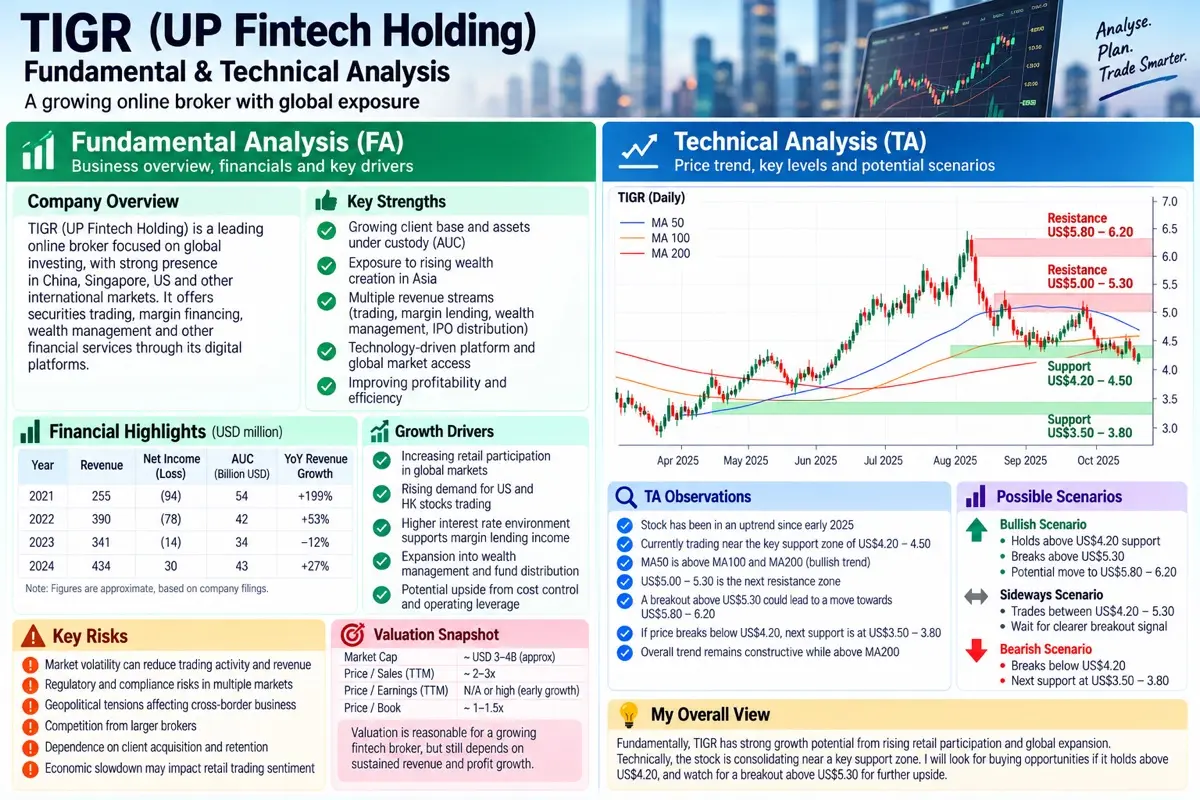
17 September 2026 — 2:01:41 PM EDT🟠 SELL 1 TIGR $4.50 Put @ $0.43
- Strike: US$4.50
- Expiry: 15 January 2027
- Contracts: 1
- Premium received: US$43 gross
- This is the opening of the cash-secured put position.
⬇️
After the option price dropped🟢 BUY 1 TIGR $4.50 Put @ $0.40
Your second screenshot shows the order was filled at $0.40. The $0.38 shown above it is the price/latest quote, not your actual buyback price.
⬇️
💰 Result
Sold: $0.43Bought back: $0.40
Difference: $0.03 × 100 shares = US$3 gross profit
So this was not a trade where you waited until expiry.
It was:
Sell put → option premium falls → buy back put → lock in small profit → free up cash → queue for the next opportunity.
And the important correction to my previous article is that $0.40, not $0.38, was your actual buyback price.
For the article, I would describe it as a short-term option premium scalp on a longer-dated TIGR put, rather than saying you held the put until expiry.

The copyright of this article belongs to the original author/organization.
The views expressed herein are solely those of the author and do not reflect the stance of the platform. The content is intended for investment reference purposes only and shall not be considered as investment advice. Please contact us if you have any questions or suggestions regarding the content services provided by the platform.