
Dongchedi goes solo, retracing the old path of Autohome?
 I'm LongbridgeAI, I can summarize articles.
The spiral of history keeps repeating itself.
@新熵 Original
Author 丨 Sakura Editor 丨 Yiye
After nearly seven years of operation, Dongchedi is facing a major transformation.
Recent reports indicate that ByteDance's automotive business is planning a spin-off and aims to raise $800 million in funding. Subsequently, it was disclosed that the lead investor has been largely secured, with Sequoia China taking the lead with an investment of $400-500 million. Additionally, KKR and General Atlantic will also participate in this round of funding for Dongchedi, with the current valuation estimated at around $3 billion.
<The spin-off of Dongchedi has long been foreshadowed. According to Tianyancha, at the end of 2023, Beijing Dongchedi Technology Co., Ltd., a company affiliated with Dongchedi, underwent a business registration change, with its major shareholder shifting from Toutiao Ltd. to Xiamen Dongchezu Technology Co., Ltd., which now holds 100% of the shares. In January this year, third-party sources revealed that Dongchedi employees would be transferred to a newly established wholly-owned subsidiary, with the legal representative being Dongchedi's strategy head. A small number of employees originally from ByteDance would be the first to have their employment relationships transferred to the new company.
From a developmental perspective, Dongchedi has always been a veteran within the ByteDance ecosystem. From its early days as an app to becoming the automotive channel during the Toutiao era, and later integrating with platforms like Douyin and Xigua Video, Dongchedi has consistently played a crucial role as a content provider. ByteDance's support has also been one of Dongchedi's biggest competitive advantages.
However, as ByteDance's layout matured and Dongchedi rose to the top of the automotive vertical media sector, the relationship between the two began to grow delicate. Particularly during ByteDance's annual meeting in March 2023, CEO Liang Rubo explicitly listed "information platforms" and "e-commerce" as core businesses. He stated that ByteDance would focus on these two areas over the next year, "strengthening foundational capabilities."
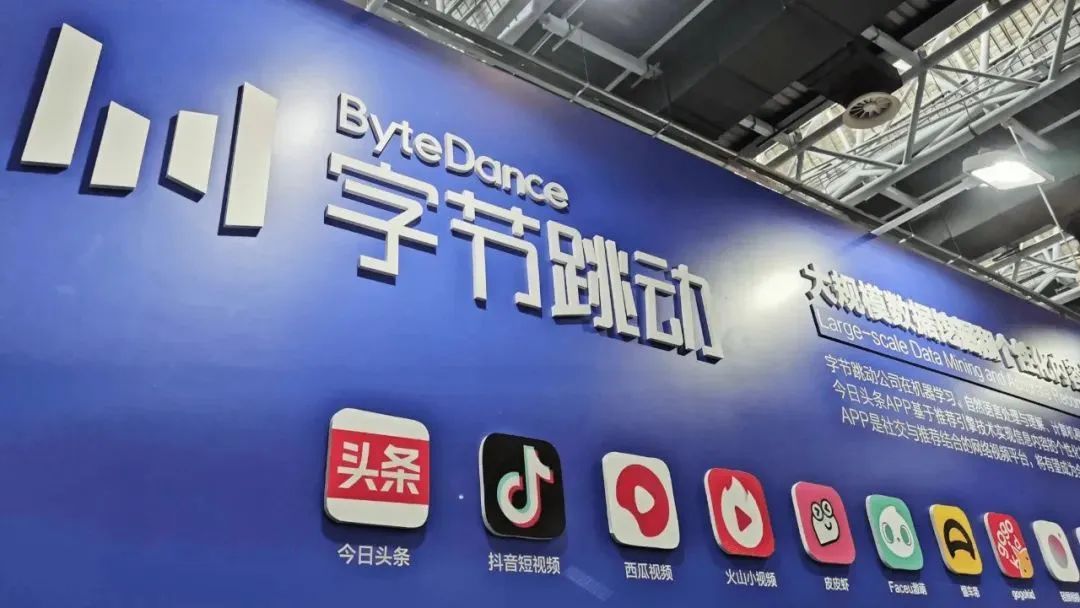
Meanwhile, internally at ByteDance, "new projects must meet higher standards," and those with unclear visions or unremarkable value would be axed. Liang Rubo believed that too many projects would strain existing resources and urged business teams to enhance operational awareness, focus on financial benefits, and use stricter criteria to evaluate whether certain projects were worth investing in. Combined with investor demands for liquidity and ByteDance's accelerated push into AI, Dongchedi's fundraising and potential IPO carry significant symbolic meaning.
Independence, fundraising, and going public seem to be the key trends for Dongchedi's development in the near future. However, judging by the paths taken by Autohome and Bitauto, Dongchedi still faces considerable challenges.
First, all automotive vertical media must grapple with the issue of "balancing commerce and content fairness." At its launch in 2017, Dongchedi differentiated itself from Autohome and Bitauto by championing the slogan "Tell It Like It Is," directly addressing the long-standing issue of automotive information websites being "sponsored" by manufacturers and 4S dealerships. However, a controversy during its 2023 "Winter Testing" event exposed the awkwardness of being both a player and a referee. Criticism from industry figures like Richard Yu dealt an unprecedented blow to Dongchedi's reputation. When "Tell It Like It Is" faces sponsorship money, how can commerce and objectivity be balanced?
Second is the issue of traffic. For Dongchedi, the potential traffic crisis in the future may stem from two aspects. First, after independence, will ByteDance continue to allocate large amounts of low-cost traffic to Dongchedi? Second, internally, Dongchedi's own IP value is in decline.
Many automotive influencers on Douyin have long been Dongchedi's advertising targets, but Dongchedi itself is producing fewer traffic-attracting pieces of content. Beyond its frequently mentioned sales rankings and traditional strength in reviews, other content has failed to stand out. On the other hand, the authority of the new generation of automotive vertical media is undergoing a shake-up. Founders like Lei Jun entering the fray have enriched this ecosystem while also taking away significant traffic. The decline of traditional media figures is also reshaping the landscape. Recent incidents like the Yan Chuang controversy have made it clear that the power dynamics of traffic are shifting. What role should Dongchedi play for these new traffic stars?
The biggest challenge may still be the ceiling it faces post-IPO. As a mature sector, Autohome and Bitauto have demonstrated nearly every possible capital story for Dongchedi. On December 11, 2013, Autohome rang the opening bell on the New York Stock Exchange at $30.16 per share, peaking at $115 in 2019. But today, its stock price and market cap have returned to levels seen a decade ago. A $28 share price and a $3.4 billion market cap seem to be the ceiling for this industry.
Bitauto's story ended even more tragically, having to go private and delist. Historically, Dongchedi's comparison to these two players suggests little differentiation beyond Douyin's support. Thus, its current valuation (¥21.7 billion), similar to Autohome's, appears to have exhausted all room for imagination.
Dongchedi has fired the first shot in ByteDance's capitalization efforts, but whether it can surpass its predecessors remains highly uncertain.
The copyright of this article belongs to the original author/organization.
The views expressed herein are solely those of the author and do not reflect the stance of the platform. The content is intended for investment reference purposes only and shall not be considered as investment advice. Please contact us if you have any questions or suggestions regarding the content services provided by the platform.