
D
Jul 22 at 06:54 AM
Kimi's K3 Moment: A Shift in the US-China AI Narrative?
 I'm LongbridgeAI, I can summarize articles.
Global markets plunged last week, leaving investors stunned and triggering a wave of rumors. Beyond liquidity deleveraging caused by South Korea's rate hike and geopolitical tensions, the release of the K3 model has become a central point of debate. This event has once again revived the familiar 'U.S.-China tech rivalry' narrative as a primary driver for the market sell-off.
The K3 model represents a significant leap for Chinese LLMs, visibly narrowing the gap with cutting-edge global peers. Leveraging cost advantages in architecture, talent, and power, alongside open-source strengths, it provides end-users with a high-quality alternative to established models.
Dolphin Research believes K3's impact on leading closed-source models will be limited in the short term due to compute supply constraints, which hinder its price-to-performance ratio and output speed. However, the fact that an open-source model has substantially closed the technical gap with top-tier closed-source rivals is a major milestone. This marks a marginal turning point where the business model for pure LLMs begins to deteriorate, potentially delaying the breakeven point for independent AI Labs.
This does not, however, invalidate the AI industry's business model. In the short term, technical breakthroughs in open-source models boost the confidence of well-funded challengers and SMEs to invest in large-parameter local deployments. In the long run, open-source models lower entry barriers and accelerate the commoditization of AI. This will drive higher AI penetration across industries, fast-tracking the growth of midstream CSPs and downstream C-end applications to expand the overall AI market pie.
I. Competition Spreads to the Top Tier
In 1H26, top-tier AI Labs intensified their release schedules for frontier models. In North America, Anthropic and OpenAI remain the primary innovators, followed closely by xAI, Meta, and Google. While Chinese models still trail slightly, their ecosystem is flourishing with diverse players.
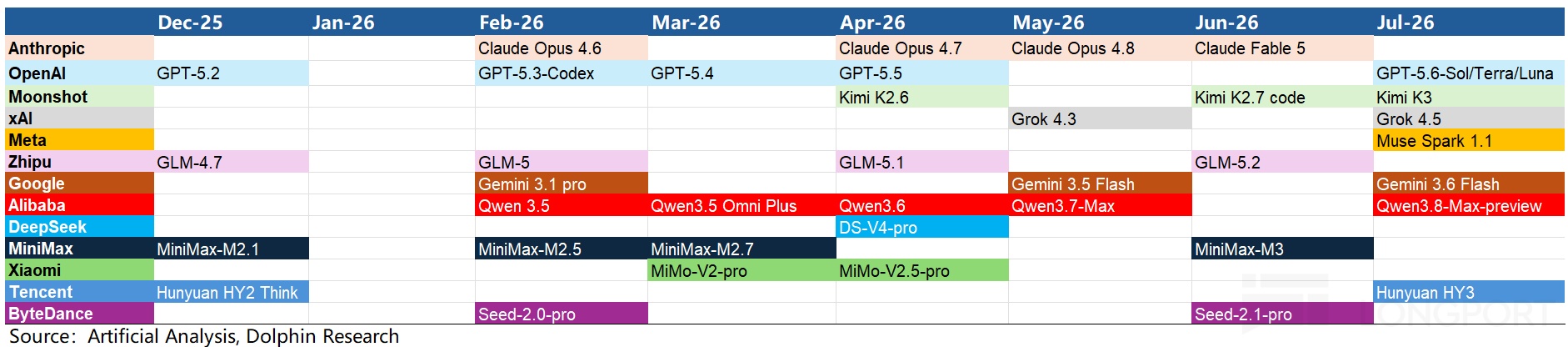
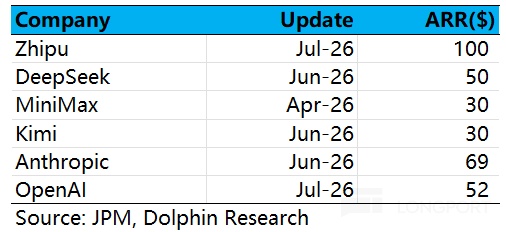
Enterprise clients prioritize model quality, allowing Anthropic to dominate in ARR performance. After releasing the highly acclaimed Opus 4.6 in Feb, its ARR growth surged. Monthly growth accelerated from an avg. of 9% MoM in Q425 to 25% MoM in Jan-Feb 2026.
Subsequent versions like Opus 4.7 and 4.8, though less disruptive than 4.6, showed steady performance gains. Since OpenAI did not launch a comparable GPT-5.5 until April, Anthropic enjoyed a 'golden window,' maintaining MoM ARR growth above 30% from March to June.
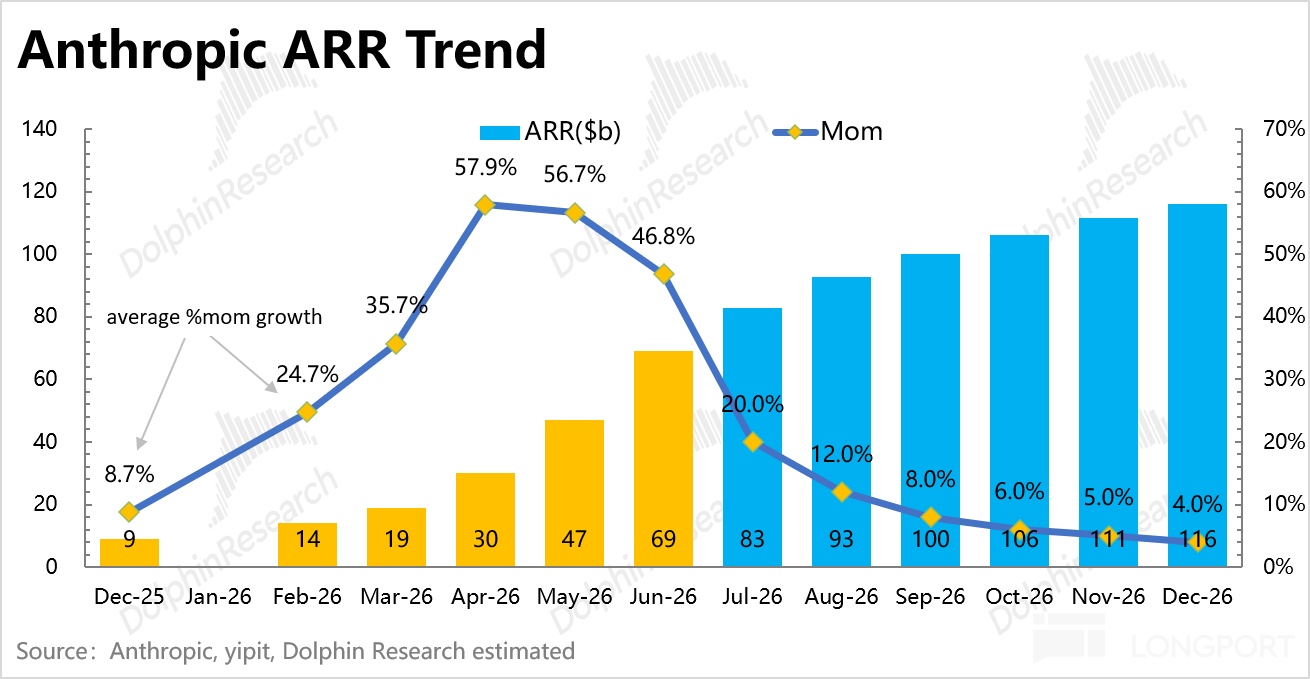
For independent C-end users, price is the primary concern. Chinese models have gained significant ground on OpenRouter (favored by individuals and SMEs) through superior cost-performance and open-source availability. Their share of token usage officially surpassed U.S. models in June, leading to a structural decline in overall token unit prices starting in 2026.
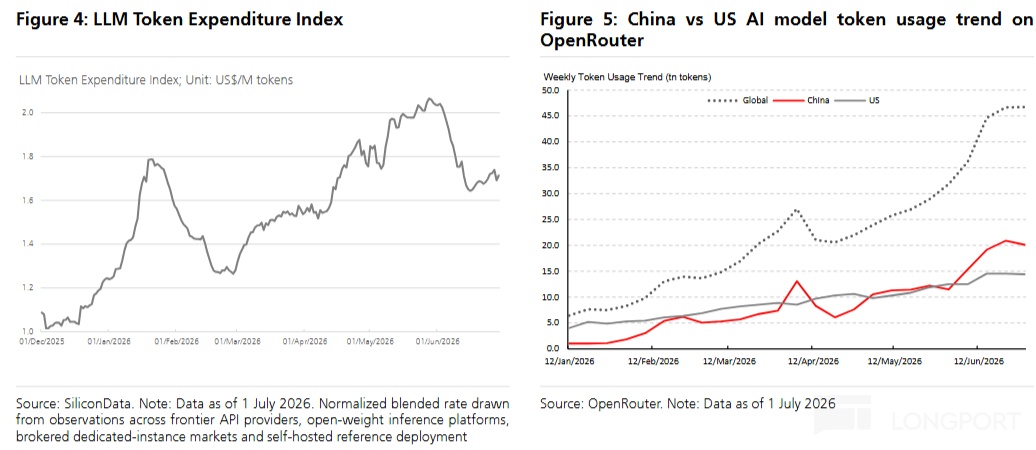
Initially, the two camps occupied distinct niches. Anthropic dominated high-end enterprise needs, while some demand shifted to OpenAI and Zhipu. On the consumer side, users either utilized free services like Tencent's HY3.0 or opted for cost-effective solutions from DeepSeek, Xiaomi, and Minimax.
However, the coding market—the most viable AI business scenario—was previously monopolized by Anthropic. We are now seeing strategic shifts from OpenAI, Google, Zhipu, and Kimi, all of whom are concentrating compute resources to enhance their coding capabilities.
The battle intensified in July:
(1) Internal competition in North America heated up as OpenAI launched GPT 5.6-Sol, which quickly matched Fable 5's performance. Data from Artificial Analysis and Arena voting shows the gap between the two has become negligible.
Crucially, Sol's unit price is only 30% of Fable 5's. In terms of cost-per-task, Sol represents only 38% of the cost of Fable 5.
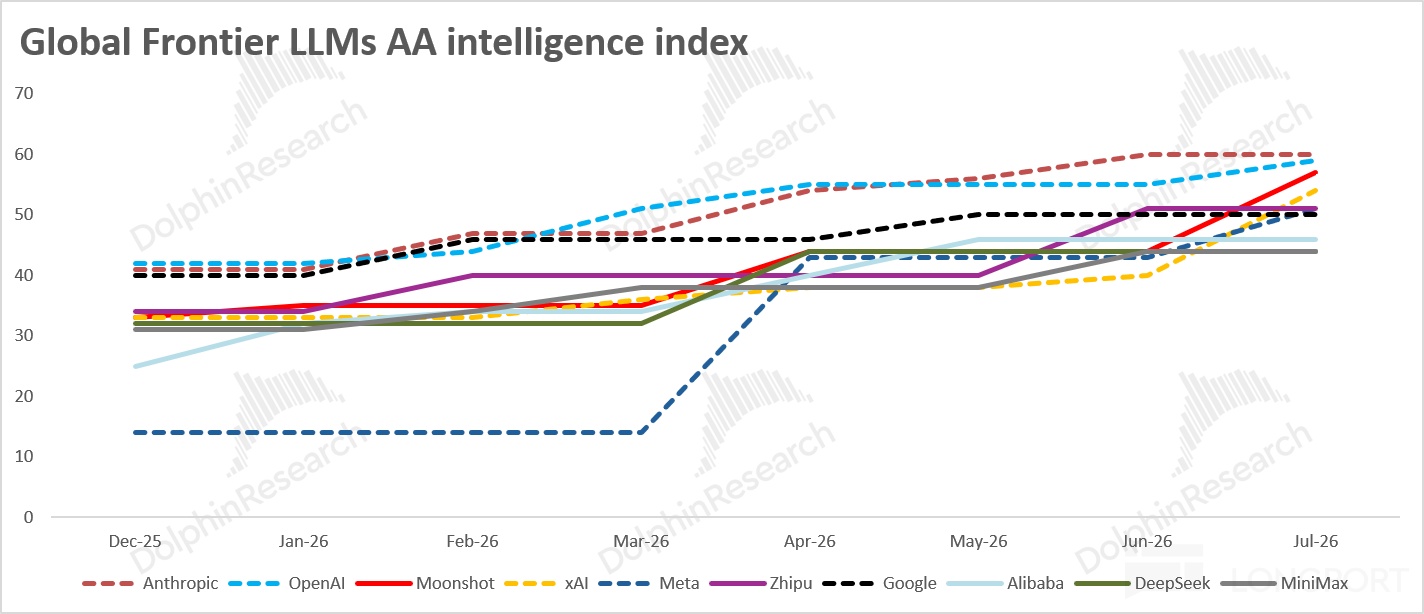
(2) Chinese contenders are also making moves. Last week, Kimi introduced K3, a base model with top-tier intelligence, breaking into the core territory of Anthropic and OpenAI. K3's intelligence score ranks just behind Fable and Sol, and it even secured the #1 spot on the Arena leaderboard due to its 'Agent' advantages in long-cycle tasks.
The chart below shows intelligence scores for frontier models. Dotted lines represent North American firms, while solid lines represent Chinese firms. While U.S. players still hold an overall lead, Zhipu and Kimi entered the Top 5 in Q2, narrowing the R&D gap with Anthropic from 6-12 months to just 3 months.
II. K3: Limited Short-Term Impact, Major Strategic Significance
As the second 'Chinese pride' model after DeepSeek to impress the global stage, is Kimi K3 truly competitive? How does it stack up against first-tier peers in terms of strengths and weaknesses?
1. Bigger is Still Better
Kimi K3 is a large-scale open-weights model. Except for the core code and training database, it will be open-sourced on July 27. It ranks highly on third-party benchmarks, even taking the top spot in front-end code categories on Arena.
K3 excels in front-end development and AI Agents, offering superior UI aesthetics and high completion rates for web page generation. It is particularly effective at handling long-cycle, multi-engineering tasks.
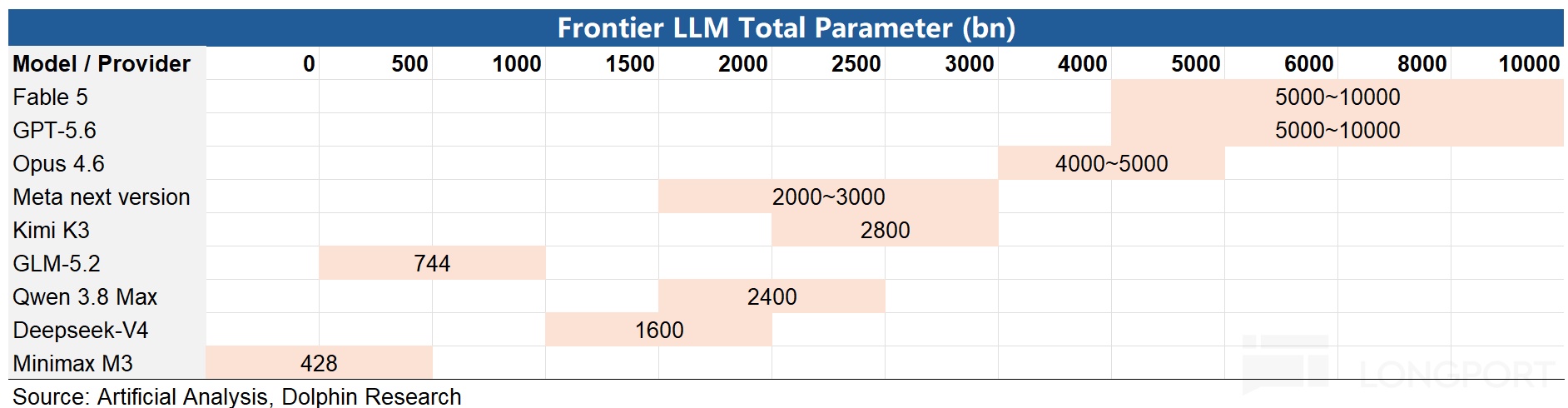
These improvements stem from a massive increase in parameters. K3 features 2.8 trillion parameters, surpassing DeepSeek V4’s 1.6 trillion to set a new record for Chinese models. However, this still trails the 5-10 trillion range of GPT 5.6 and Fable 5, confirming that the industry still follows the 'Scaling Law' for frontier model iterations.
2. High Actual Costs
Following K3's release, Anthropic made Fable 5 permanently available to Max and Team subscribers. However, Kimi K3’s actual cost-performance remains underwhelming, especially compared to GPT-5.6-Sol.
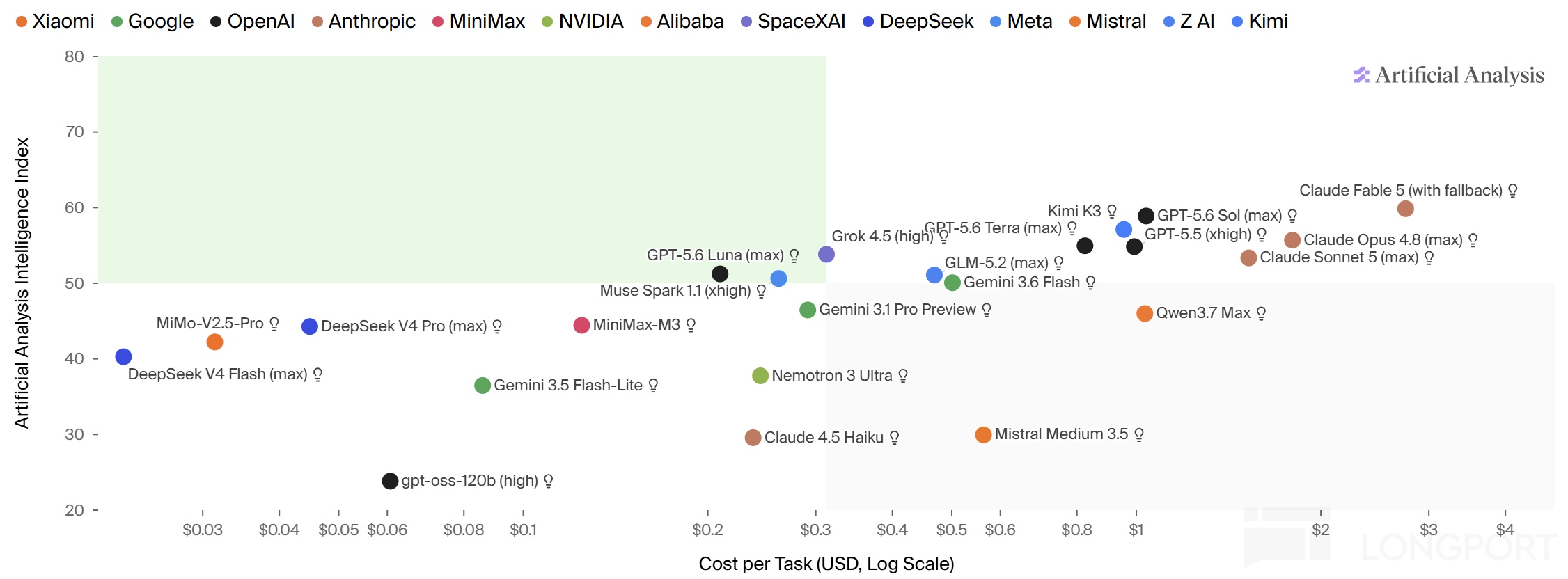
Despite a lower unit price, K3 suffers from lower token efficiency and slower inference speeds. From a task execution standpoint, K3 is only about 10% cheaper than GPT-5.6-Sol (0.95/1.04 = 91%).

In the 'Intelligence vs. Cost-per-Task' chart, K3 does not yet fall into the 'green' zone of comprehensive competitive advantage.
While Kimi lacks a clear price advantage, it is focused on improving training efficiency. Two core technical innovations have reportedly delivered a 2.5x scaling efficiency boost compared to K2. Chinese AI Labs often face constraints in high-end chip supply and capital, unlike their U.S. counterparts.
Anthropic, for instance, primarily uses a **Dense architecture**, where every parameter is involved in every token calculation. In contrast, Chinese open-source firms favor the **MoE (Mixture of Experts) architecture**, which activates only a fraction of parameters per run—a path OpenAI also took starting with GPT-4.
DeepSeek’s engineering optimizations for MoE in early 2024 significantly improved efficiency and costs, marking a milestone for the industry. Kimi's K3 further increases sparsity, reducing idle compute consumption with an activation rate of less than 2% (activating 16 out of 896 experts per run).
This breaks the previous 3% record set by DeepSeek V4 Pro. For comparison, GLM-5.2 has a 5% activation rate, while most North American peers are around 10%. Lower activation rates reduce redundant calculations, significantly optimizing training results and operational efficiency.
K3 also benefits from two proprietary technologies: **KDA (Kimi Delta Attention)** and an **Attention Residual Mechanism**. The latter addresses information transmission issues in deep models, reducing loss as model layers expand.
Both technologies tackle the drawbacks of traditional Transformers in 'long-context' scenarios. These drawbacks include high compute consumption during training and excessive KV Cache usage during inference. With frontier models now targeting 1 million+ tokens, solving context-related compute bottlenecks is critical for the industry.
Kimi utilizes a hybrid of full and linear attention, which avoids storing full KV values for every historical token. Instead, it only writes error supplements when the current memory state cannot explain new information. Kimi claims KDA can reduce KV Cache by 75%.
3. High Deployment Barriers
While large parameter counts improve performance, they also raise the bar for hardware deployment. Despite the 75% reduction in KV Cache, K3’s total parameters are nearing the 3T mark.
Even though only 16 experts (50bn parameters) are used per inference, all expert weights must reside in the VRAM. The storage requirement for model weights—including quantization factors and shared layers—exceeds 1.5TB.
This exceeds the 1.4TB HBM capacity of a standard NV DGC B200 8-GPU node. As a result, K3 requires high-bandwidth supernodes like the GB300 NVL72 or Huawei Ascend 950 Superpod (64 GPUs) for optimal performance.
Even for a minimum-scale local K3 inference cluster, at least 8 NV A100 GPUs are required, with hardware costs exceeding RMB 4mn. **The 'storage panic' triggered by K3’s KV Cache reduction was a misunderstanding. KDA reduces storage per token, but it does not lower the overall hardware requirements for the entire inference process.**
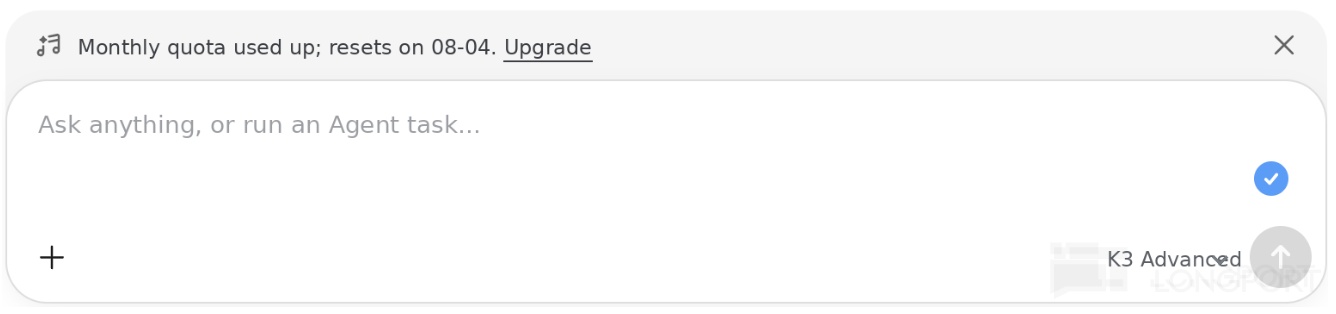
Practical tests show K3 is already facing a compute shortage. The RMB 199/month 'Allegretto' plan only offers 10+ hours of K3 usage. Even on the RMB 49/month 'Andante' plan, low-frequency use over three days can trigger a downgrade to the K2.6 model due to capacity limits.
Kimi has officially suspended new subscriptions to protect the user experience for existing customers.
III. The Real Threat is to Anthropic, Not the Industry
Pessimists argue that the marginal gains from model iterations at Anthropic and OpenAI are shrinking. Meanwhile, the rapid catch-up by Chinese firms could intensify competition and slow Anthropic’s ARR growth, challenging its business model.
The commercial success of AI leaders dictates the industry's 'arms race' expectations. While tech giants cannot afford to leave the field, the trend in AI ROI determines their pace of investment. Given current high market expectations, even a slight slowdown in Capex growth could trigger a market sell-off.
Anthropic’s ARR lead stems from its focus on AI Coding, a highly practical application. Market expectations suggest it could achieve operating profitability this year, potentially proving its business model ahead of the more consumer-heavy OpenAI.
Anthropic saw a significant ARR acceleration from March to June. While July data is not yet public, assuming a 20% MoM growth rate, ARR could reach 118bn by year-end, making its 100bn target achievable.
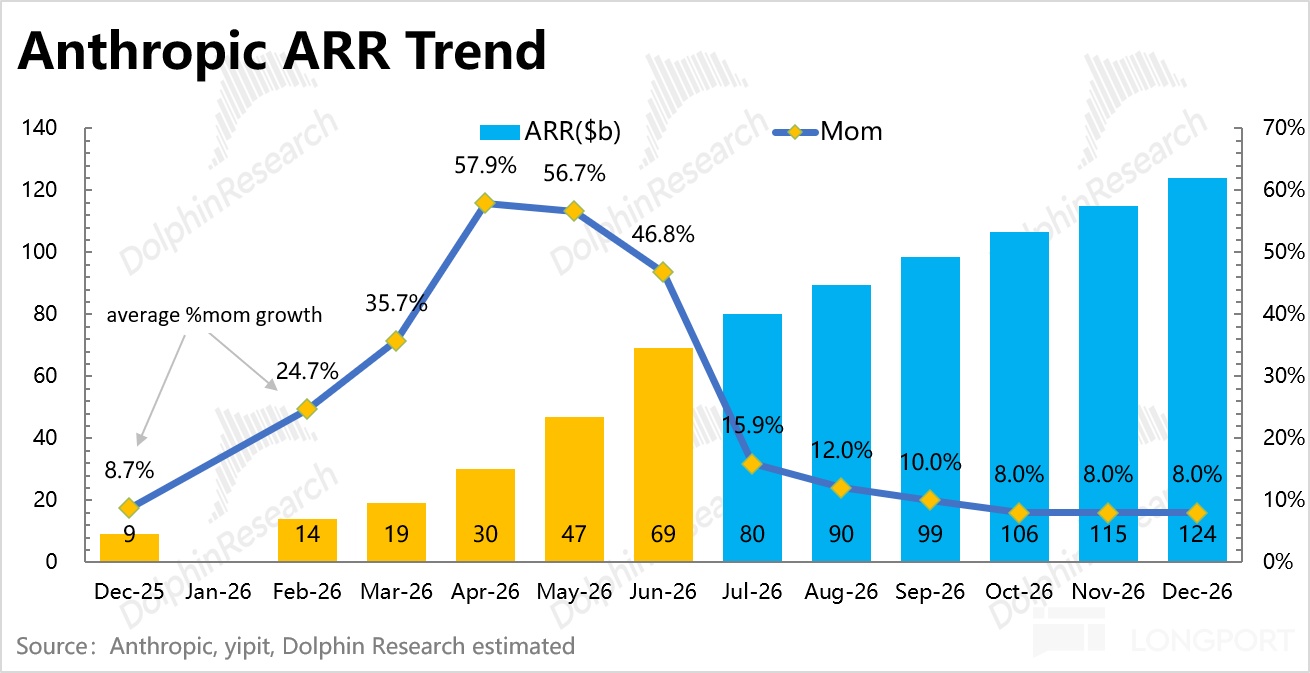
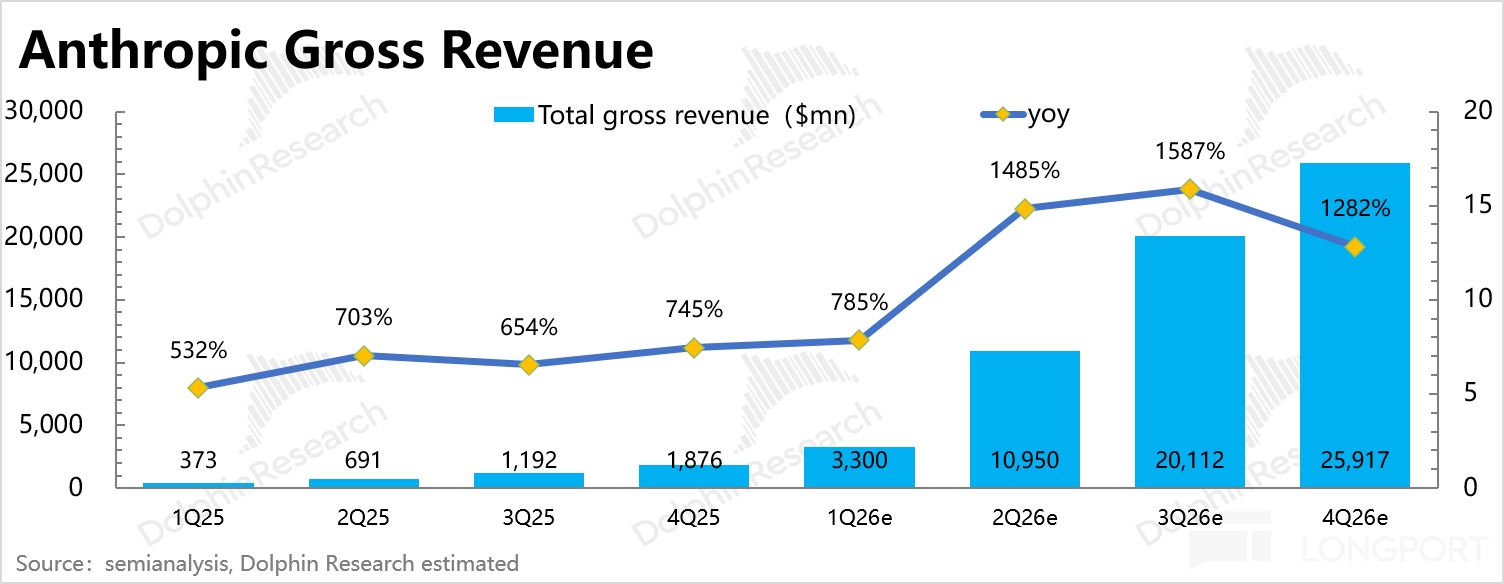
However, exceeding targets is already priced in. If MoM growth slows to 5% by year-end, the implied 70% annualized growth might dampen Anthropic’s valuation elasticity post-IPO. We remain cautiously optimistic about Anthropic’s resilience against Kimi K3, given K3’s lack of price advantage and potential U.S. policy restrictions on Chinese AI.
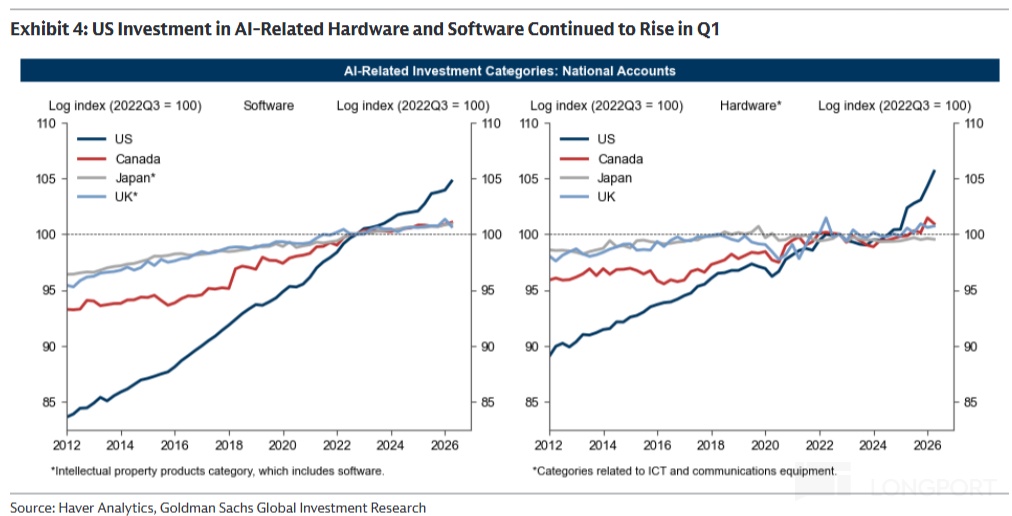
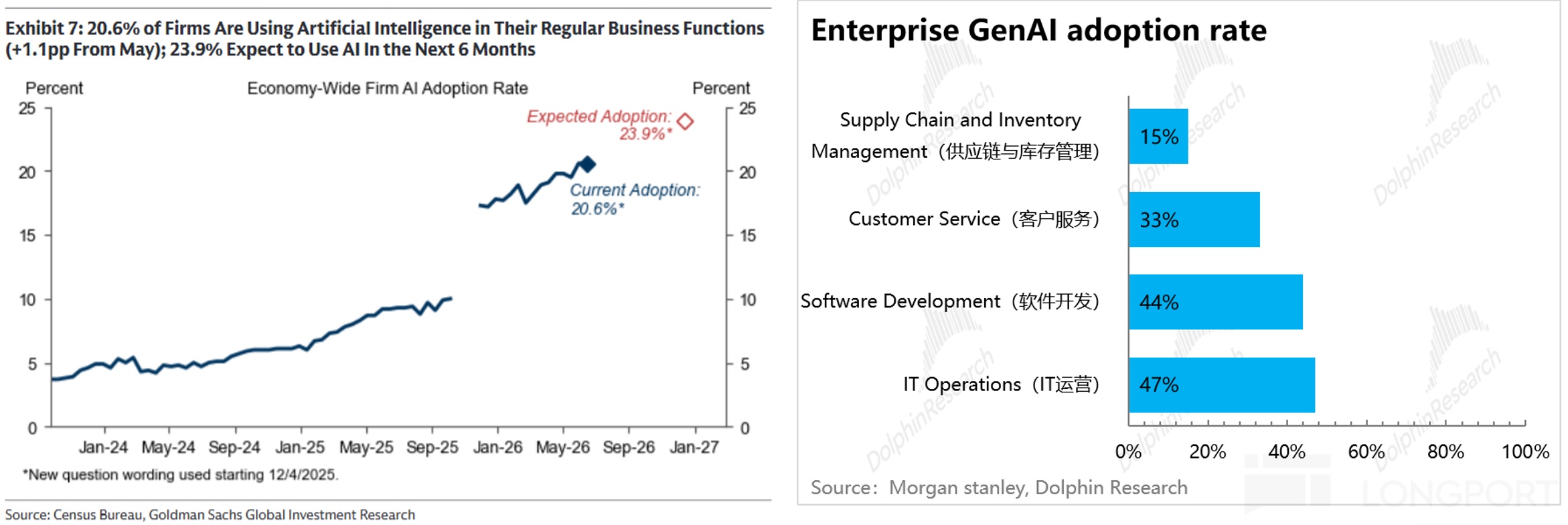
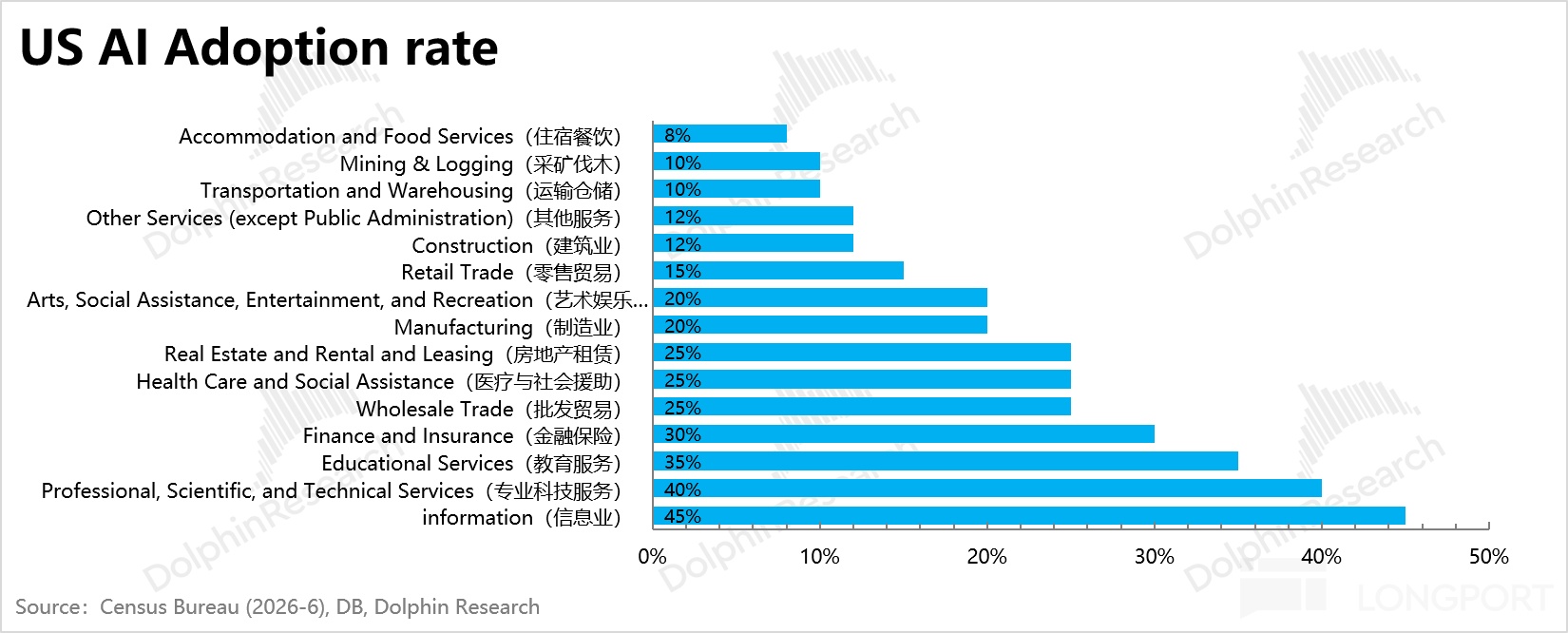
Furthermore, a potential slowdown for Anthropic does not spell doom for the entire industry. North America remains the largest AI market, with roughly 20% of enterprises already adopting AI. This penetration is expected to rise by 3ppt this year.
Coding has the highest penetration due to its seamless integration with AI. Future growth lies in other corporate roles and B2C edge AI, which require specialized product designs and significant investment. Lowering compute barriers is the key to accelerating AI adoption beyond coding.
IV. Thoughts on the Escalating LLM War
Kimi K3 has shaken faith in Anthropic’s technical moat while emboldening well-funded challengers like Big Tech firms with established ecosystems. However, the brutal reality of the LLM industry is now exposed. For independent AI Labs, the premium window for a multi-billion dollar investment has shrunk from 12 months to just 3 months.
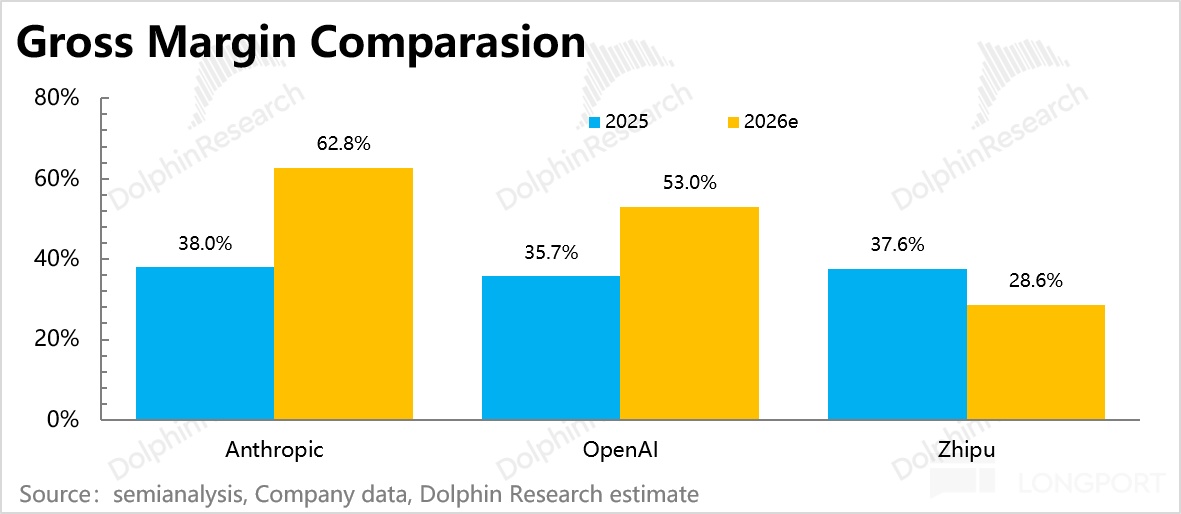
While hardware costs are global, Chinese models derive their 'cost-performance' from lower talent and power costs. However, much of this is also driven by subsidies from investors and local governments. For instance, while OpenAI and Anthropic have GPMs around 60%, Zhipu’s GPM is expected to drop below 30% in 2026.
When factoring in training costs, the operating loss gap widens. A significant shift in the profit structure may only occur with the mass production of high-end domestic chips in the second half of the year.
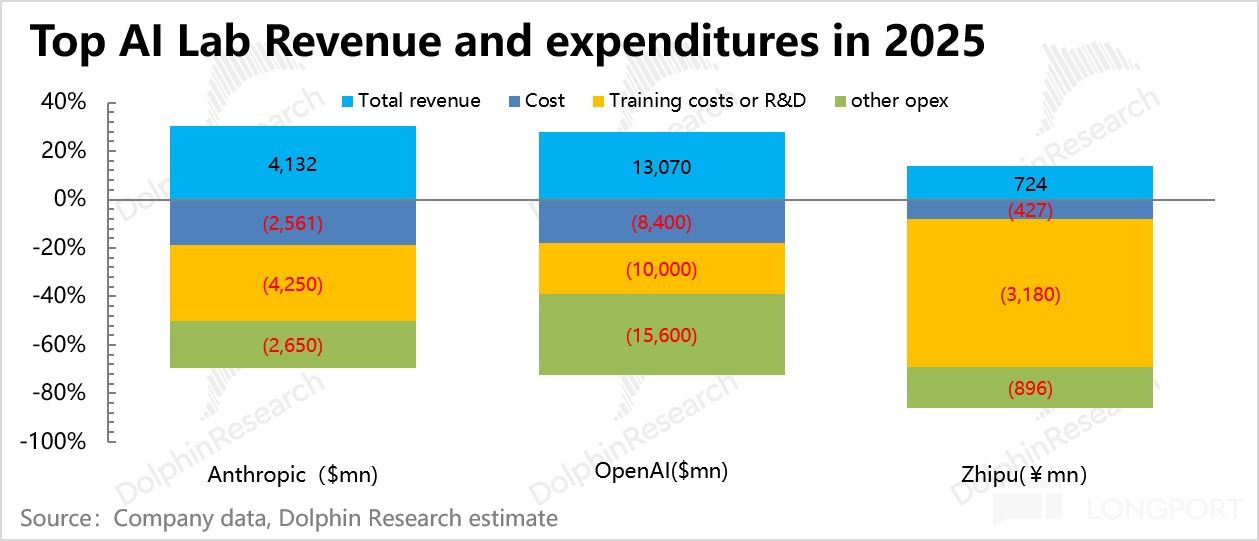
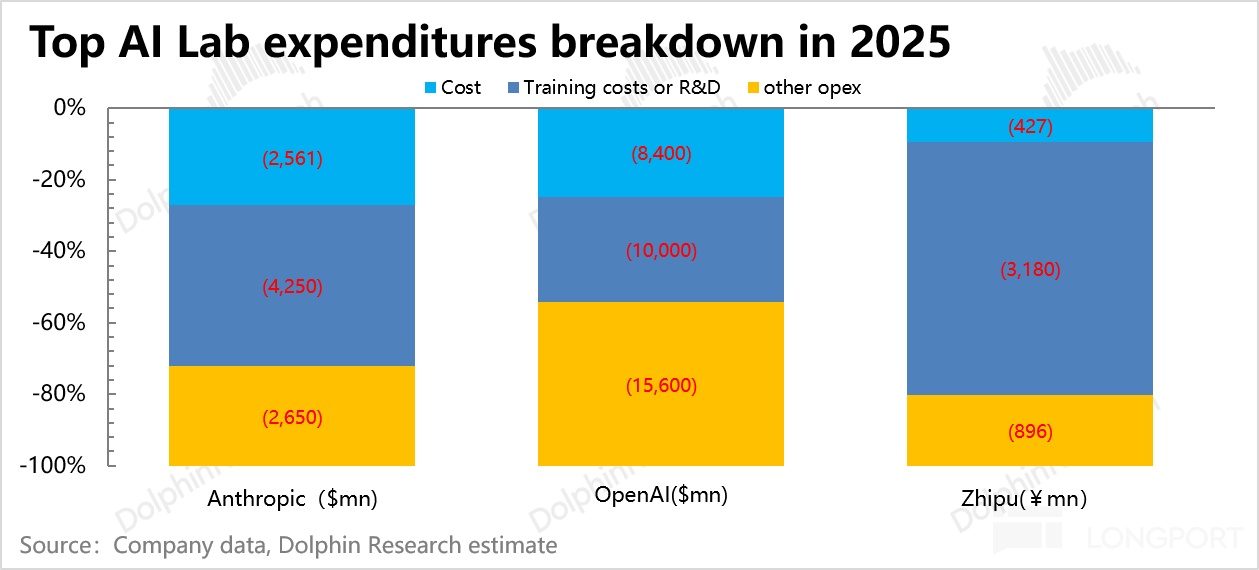
As long as Scaling Laws hold, the competition will not stop. LLM companies have become 'capital sinks,' turning the business model into a race for continuous financing. We expect a wave of IPOs from Anthropic, OpenAI, DeepSeek, and Kimi as they seek the next level of funding.
AI sovereignty may split the global market into several battlefields. Geopolitical constraints on upstream resources will drive up costs, while the flow of talent ensures that all sides remain technically competitive, leading to a war of attrition.
In this environment, CSPs with established enterprise ecosystems and distribution channels are best positioned. As open-source models close the gap with closed-source ones, these providers can move beyond low-margin compute sales and reclaim bargaining power from model developers.




The copyright of this article belongs to the original author/organization.
The views expressed herein are solely those of the author and do not reflect the stance of the platform. The content is intended for investment reference purposes only and shall not be considered as investment advice. Please contact us if you have any questions or suggestions regarding the content services provided by the platform.