
"First Stock of Wire-Controlled Chassis" Nasen Technology surged up to 90% on its first listing, with its total market capitalization briefly breaking through HK$10 billion
 I'm LongbridgeAI, I can summarize articles.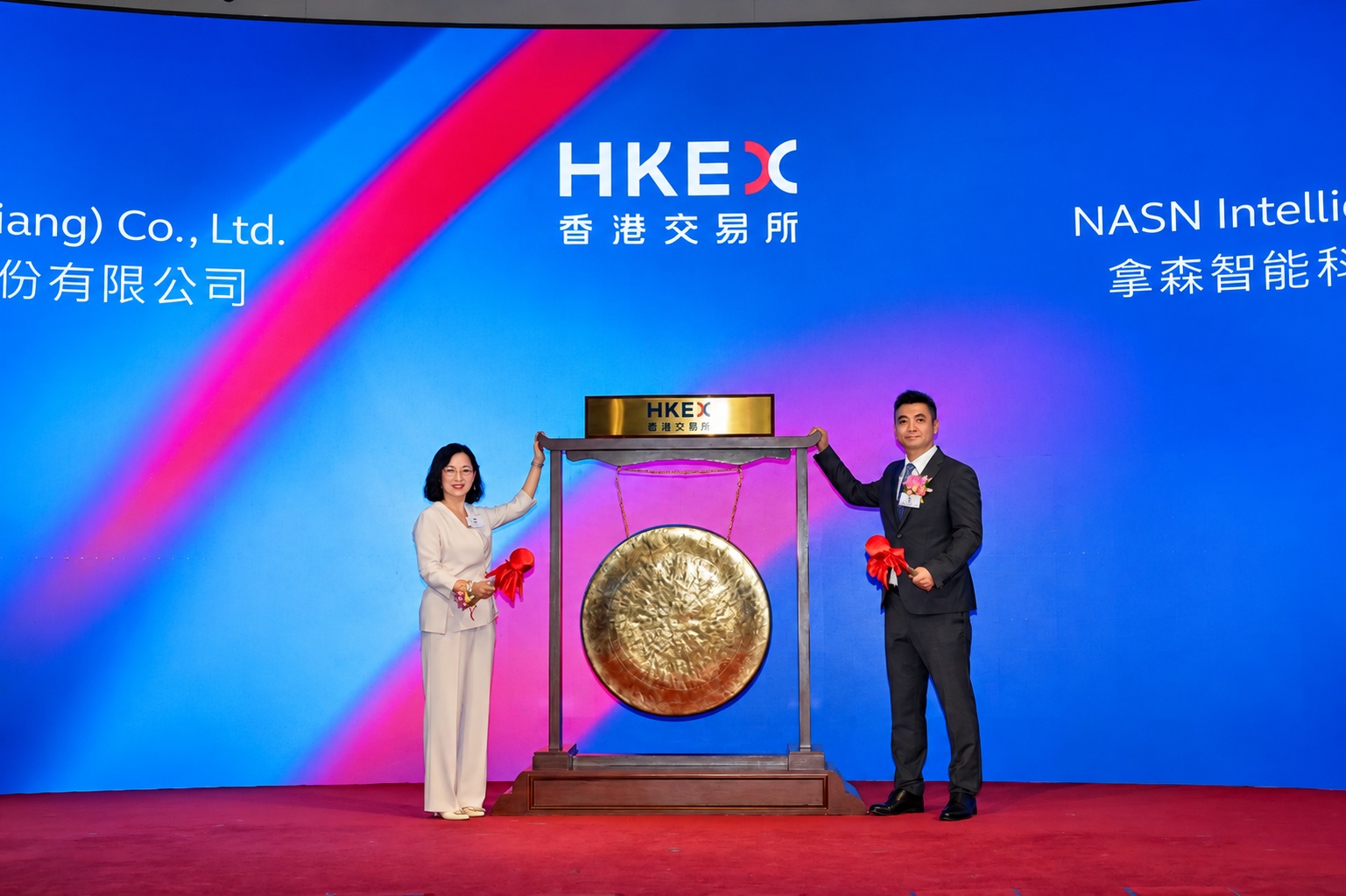
On August 7, Nasen Technology (02261.HK) officially listed on the Main Board of the Hong Kong Stock Exchange, co-sponsored by Haitong International and BOC International.
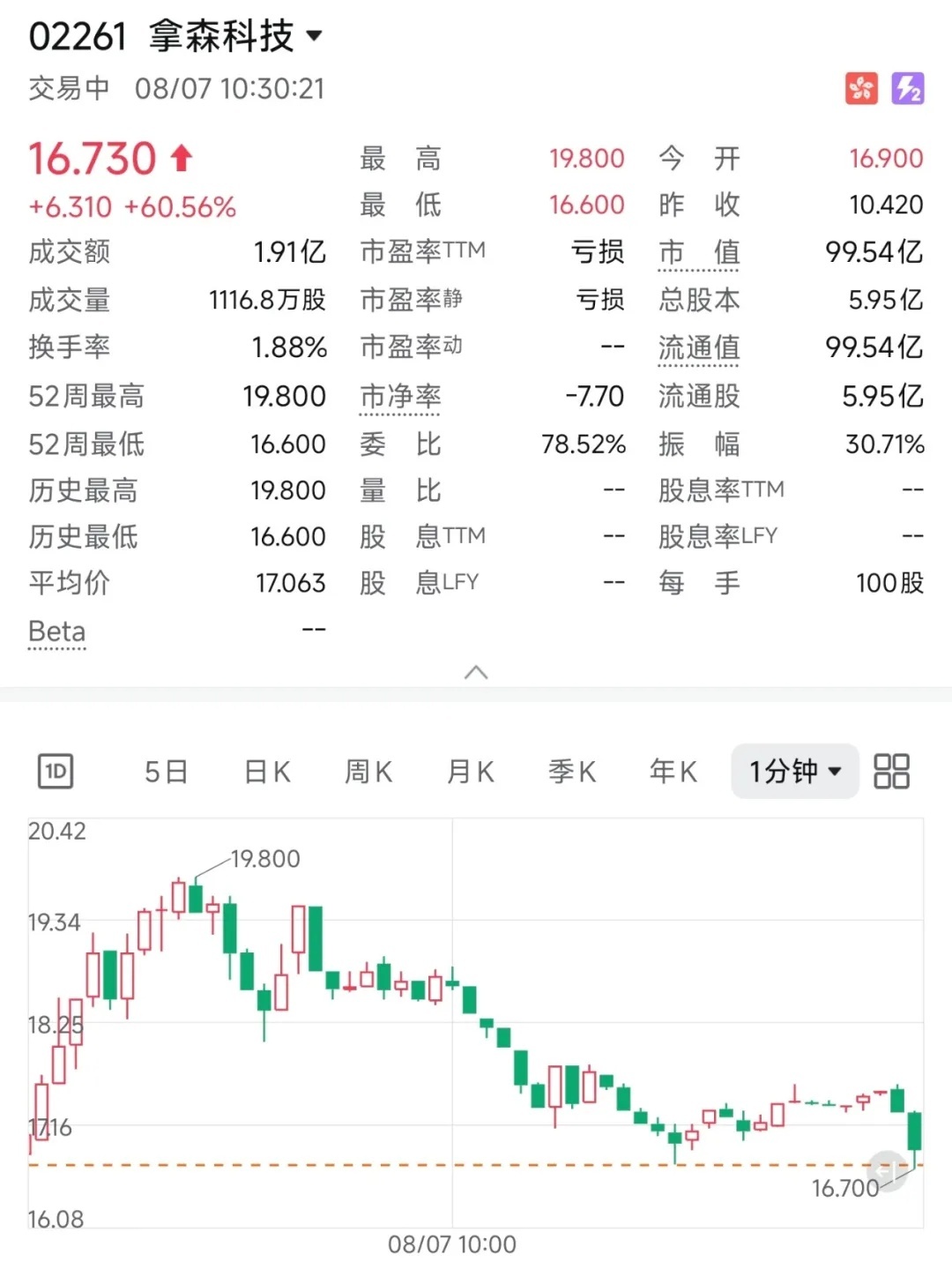
The issue price was set at HKD 10.42 (at the lower end of the pricing range). The gray market closed up 60.27% yesterday at HKD 16.70, yielding a profit of HKD 628 per lot (excluding handling fees).
According to the offering results, Nasen Technology's public allocation and state allocation received subscription multiples of 2513.54x and 2.12x, respectively.
The stock opened with a high gain of 90.02% today at HKD 19.80. As of the time of writing, it has risen 60.56% to HKD 16.73, with a total market capitalization of HKD 9.954 billion.
Founded in March 2016 by Tao Zhe, Nasen Technology has completed nine rounds of financing since its inception, raising a cumulative amount of approximately RMB 1.334 billion. Investors include CATL, Hillhouse Capital, Qiming Venture Partners, Matrix Partners China, SDIC Capital, BOC Investment, Advanced Manufacturing Fund, Changan Automobile, among others. Following the D+ round financing completed in September 2025, the company's post-money valuation reached RMB 4.05 billion, which is 50 times the initial post-money valuation.
Main Business
IPO FOCUS
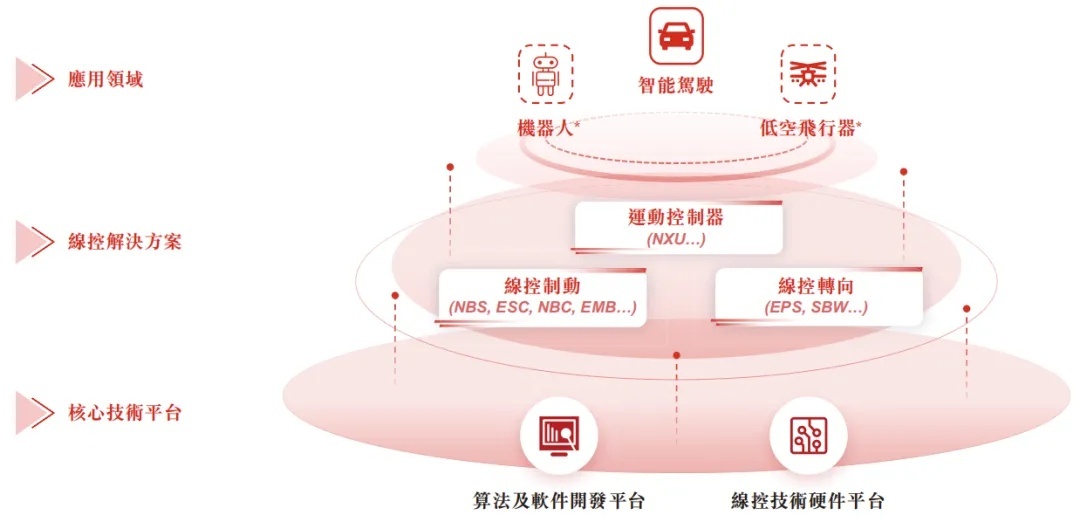
Nasen Technology is a Chinese leader in intelligent driving motion control focusing on wire-controlled technology. It focuses on the highest safety level and strongest technical barriers in the field of automotive intelligent driving: wire-controlled solutions. With full-stack self-developed control algorithms and software/hardware, it is known as the "cerebellum" of intelligent driving cars, responsible for precisely converting commands from the "brain" (intelligent driving system) into vehicle motion control.
The company's core products consist of three major series of wire-controlled braking systems: NBS (electronic brake booster, mass-produced in 2018, China's first large-scale mass-production solution), ESC (Electronic Stability Control, mass-produced in 2020, launched an upgraded version with integrated redundant EPB function in early 2024), and NBC (Integrated Intelligent Braking, also known as Onebox, launched in 2023 and mass-produced in August 2024).
It is simultaneously advancing RBC (expected to have large-scale mass production capability by the end of 2027), new EMB wire-controlled braking products (the first fully dry-type EMB expected to have large-scale mass production capability in 2027), as well as EPS and SBW wire-controlled steering solutions and the NXU motion controller (all expected to be mass-produced around 2027), expanding deeply into wire-controlled steering and motion controllers.
Source: Prospectus ▲
The company is the first in China to apply the NBS solution to L4-level autonomous driving commercial operations, and also the earliest Chinese enterprise to supply its proprietary NBS solution to leading domestic electric vehicle OEMs. In 2024, it became the world's first supplier to mass-produce an ESC solution with redundant EPB functionality, having won the First Prize of the China Society of Automotive Engineers Science and Technology Invention Award.
According to Frost & Sullivan, based on the sales volume of wire-controlled braking solutions in 2025, the company ranks second among domestic independent third-party wire-controlled braking solution suppliers in China, and third among all domestic suppliers (also ranking third by revenue), with a market share of 10.1%. The sales volume of wire-controlled braking solutions reached 736,200 units in 2025, ranking sixth among all domestic and overseas suppliers.
As of March 31, 2026, the customer base has achieved 100% coverage of the top five OEMs (ranked by passenger car sales in 2025). The number of designated projects increased from 51 in 2023 to 117 in 2025, and further rose to 131 as of March 31, 2026. Major customers include Changan Automobile, Geely, BYD, SAIC, GAC, and other leading independent and joint-venture brands.
The product structure is accelerating migration towards the higher-integration NBC (Onebox) solution, which has become the company's largest source of revenue. The company has entered the Southeast Asian and South American markets through the overseas expansion channels of its OEM customers and is actively engaging with overseas OEMs for automotive-grade validation.
The company operates two major production bases in Xiaoshan and Haiyan, Zhejiang Province. The Haiyan base was completed and put into production in 2025. As of the latest practicable date, the company has obtained 203 registered patents in China (103 invention patents, 95 utility models, 5 design patents), along with holding 54 software copyrights and 54 registered trademarks. It has passed the ISO 26262 ASIL-D process certification, and both ESC and NBC have obtained EU E-Mark certification. As of March 31, 2026, the R&D team accounted for 41.8% of the total number of employees.
Industry Outlook
IPO FOCUS
Wire-controlled solutions are core components of vehicle motion control that replace traditional mechanical or hydraulic controls with electronic systems. They serve as the key carrier for the "execution" phase in the "sensing-decision-execution" closed loop of high-level autonomous driving.
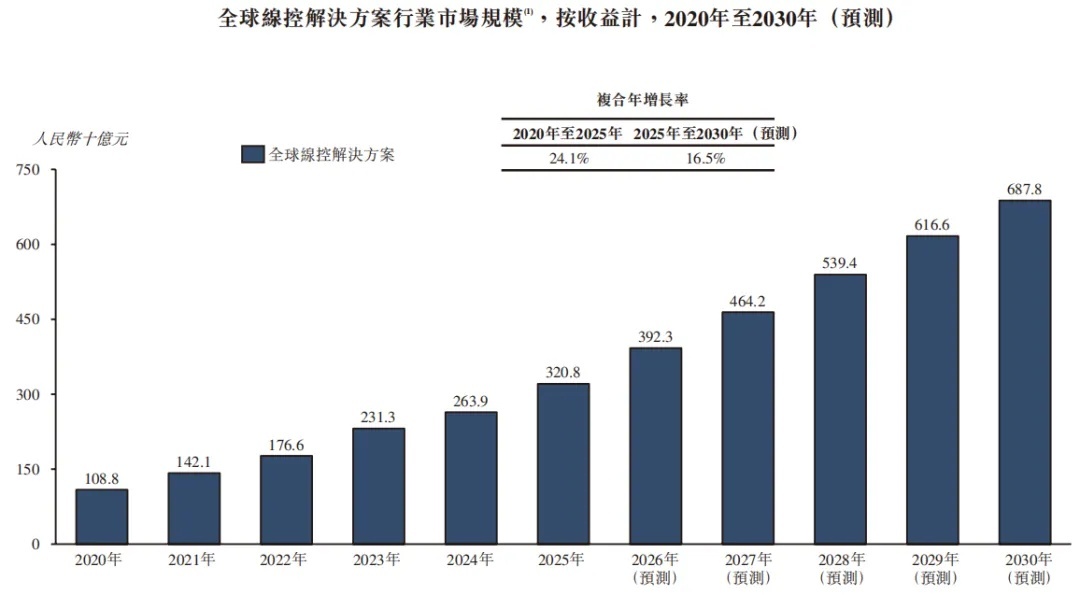
Global Wire-Controlled Solution Market: The market size grew from RMB 108.8 billion in 2020 to RMB 320.8 billion in 2025, with a CAGR of 24.1%, and is projected to reach RMB 687.8 billion by 2030.
Source: Prospectus ▲
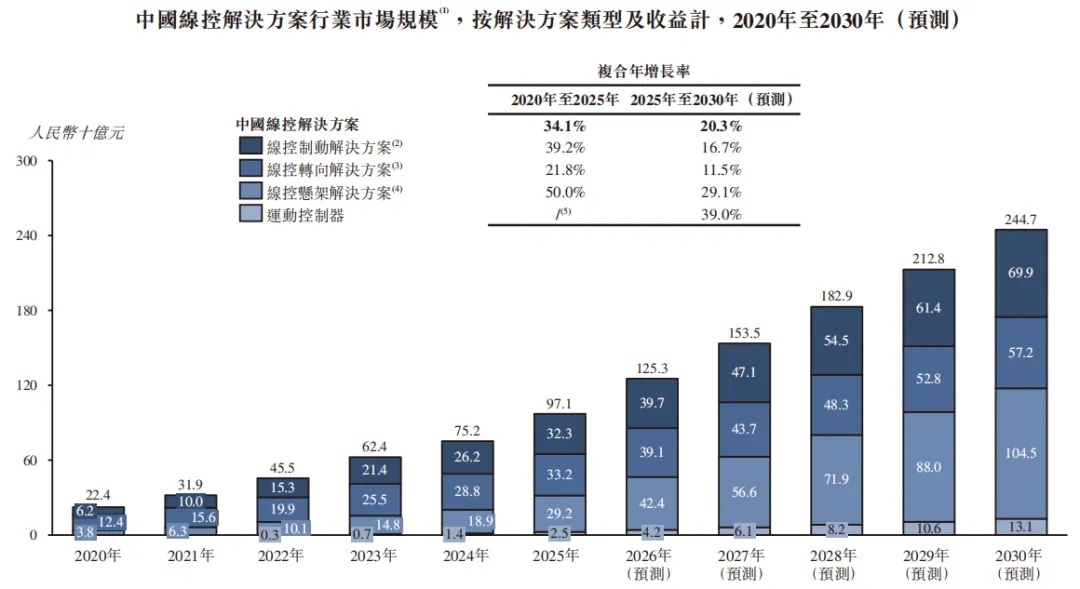
China Wire-Controlled Solution Market: The market size grew from RMB 22.4 billion in 2020 to RMB 97.1 billion in 2025, with a CAGR of 34.1%, and is projected to reach RMB 244.7 billion by 2030.
Source: Prospectus ▲
Wire-Controlled Braking Track: The China market size grew from RMB 6.2 billion in 2020 to RMB 32.3 billion in 2025, with a CAGR of 39.2%, and is projected to reach RMB 6.99 billion by 2030. Among them, the Onebox solution saw the most rapid growth, increasing from RMB 1.1 billion in 2020 to RMB 22.0 billion in 2025, with a CAGR of 81.3%, and is expected to increase to RMB 4.7 billion by 2030.
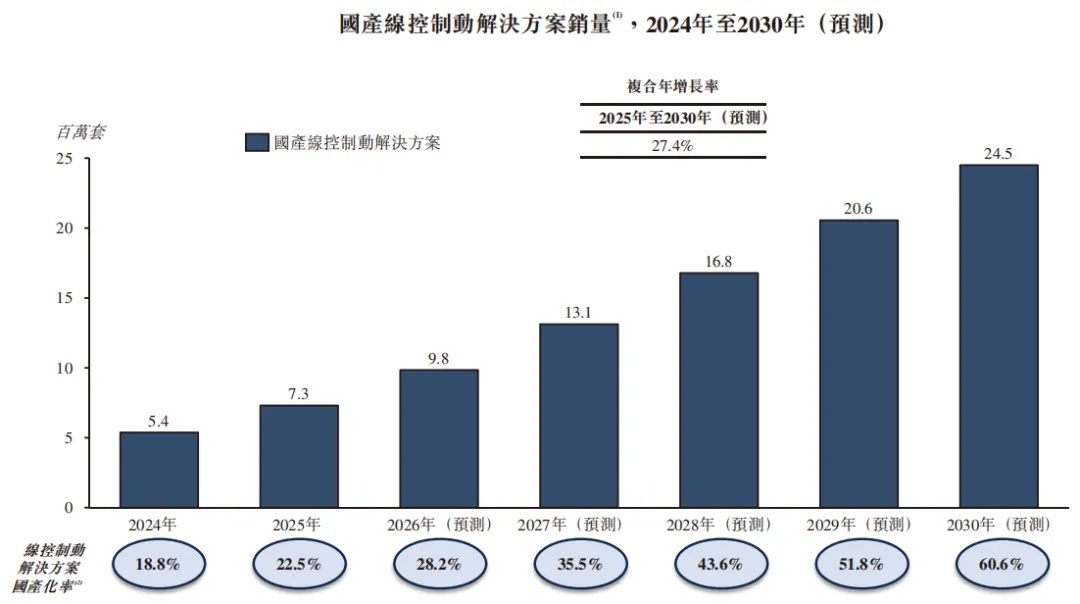
In 2025, the total sales volume of wire-controlled braking solutions in China reached 32.5 million sets, with a localization rate of 22.5% (domestic brand sales of 7.3 million sets). The localization rate is expected to increase to 60.6% by 2030.
Source: Prospectus ▲
Equity Structure
IPO FOCUS
The controlling shareholder of the company is founder Tao Zhe. Together with his spouse Ms. Liu and the employee shareholding platform "Nasen Limited Partnership", they constitute the single largest shareholder group, holding approximately 22.58% in aggregate. Other major shareholders are as follows:
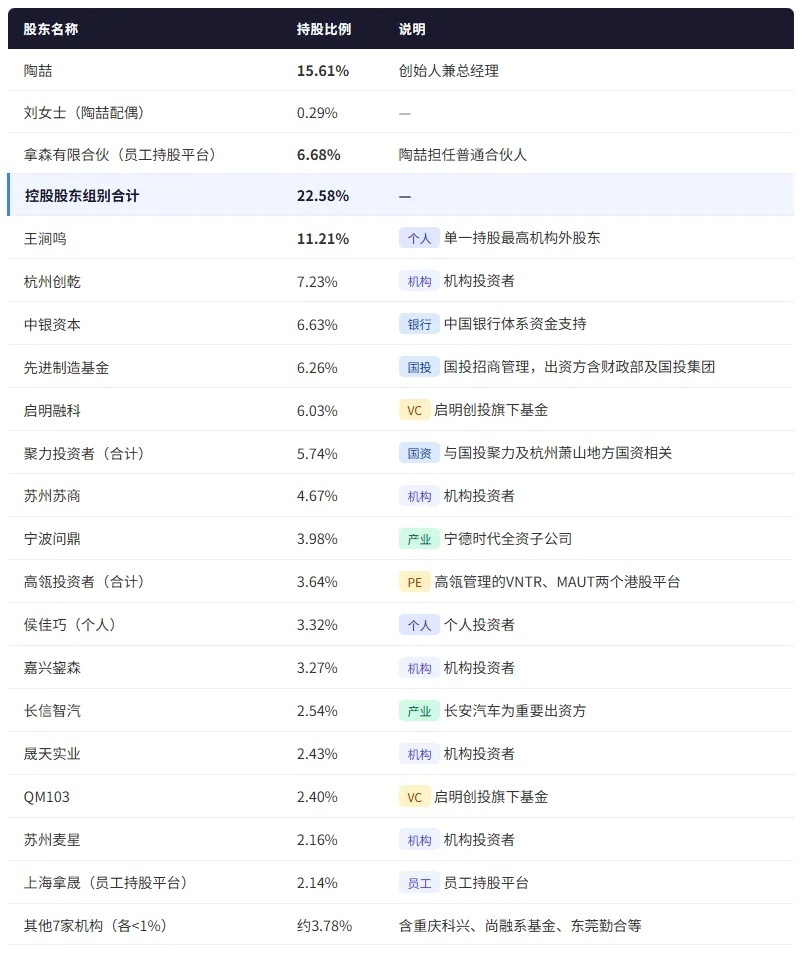
Chart: IPO Focus ▲
Financial Data
IPO FOCUS
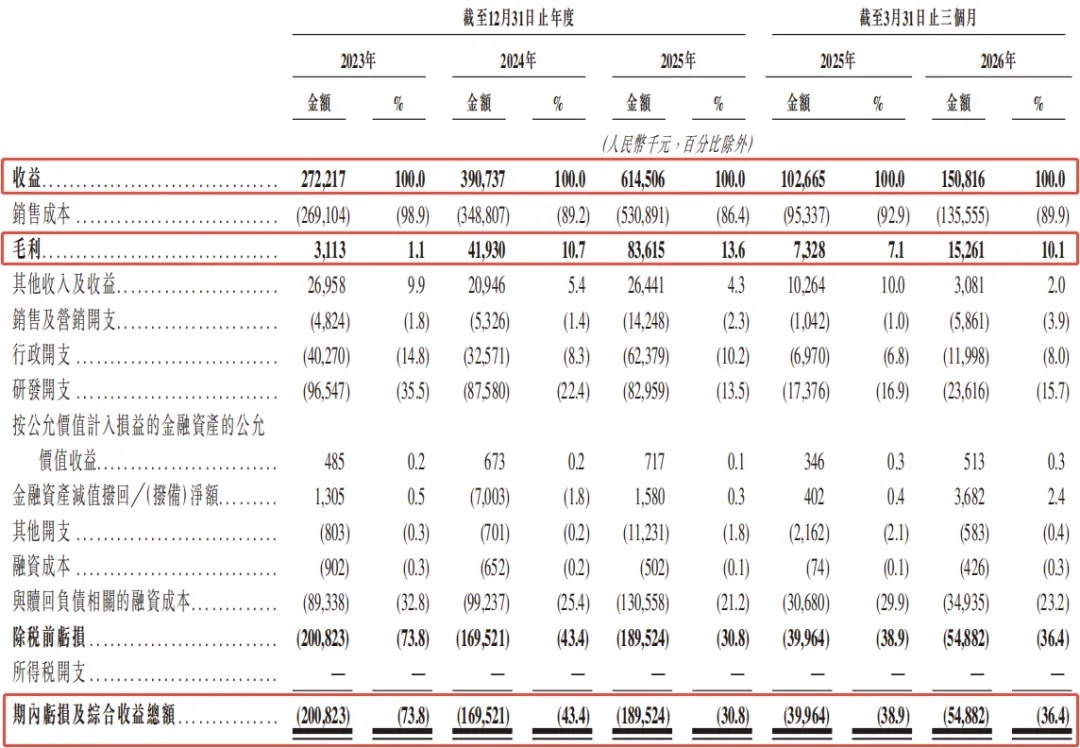
Regarding revenue, it increased from RMB 272 million in 2023 to RMB 391 million in 2024, and further to RMB 615 million in 2025, with a CAGR of 50.2% from 2023 to 2025. As of Q1 2026, revenue reached RMB 151 million, a year-on-year increase of 46.9% (RMB 103 million in the same period of 2025).
Regarding gross profit, it increased from RMB 3.113 million to RMB 83.615 million in 2025, with a CAGR of 418.3%; gross margin improved from 1.1% to 10.7% in 2024 and 13.6% in 2025. The main reasons for the improvement in gross margin were the release of economies of scale and the increased proportion of high-margin NBC products. As of Q1 2026, gross profit was RMB 15 million (gross margin 10.1%), a significant improvement compared to RMB 7 million (gross margin 7.1%) in the same period of 2025.
Regarding net profit, the company remains in a loss-making state: annual net losses narrowed from RMB 200 million in 2023 to RMB 170 million in 2024, but rose back to RMB 190 million in 2025 due to increased financing costs related to redemption liabilities. As of Q1 2026, net loss was RMB 55 million (RMB 40 million in the same period of 2025), mainly due to decreases in other income and gains and increases in R&D and administrative expenses.
Source: Prospectus ▲
Adjusted Net Loss (non-IFRS) continued to narrow, decreasing from RMB 110 million in 2023 to RMB 60.76 million in 2024 and RMB 29.286 million in 2025. Core operating losses continued to improve with the release of economies of scale.
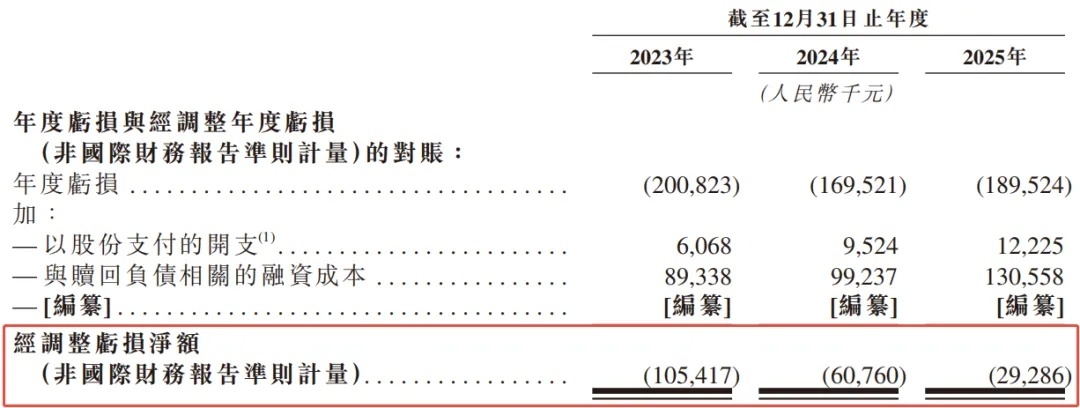
Source: Prospectus ▲
In terms of revenue structure, the proportion of NBS revenue decreased from 68.6% in 2023 to 19.4% in 2025, while the proportion of NBC rose from nearly zero to 49.1%, becoming the largest source of revenue, reflecting industry demand shifting towards Onebox solutions. The revenue concentration from the top five customers decreased from 97.9% to 94.4%, and the proportion from the single largest customer decreased from 59.2% to 47.2%. Although concentration remains high, it is continuously declining.
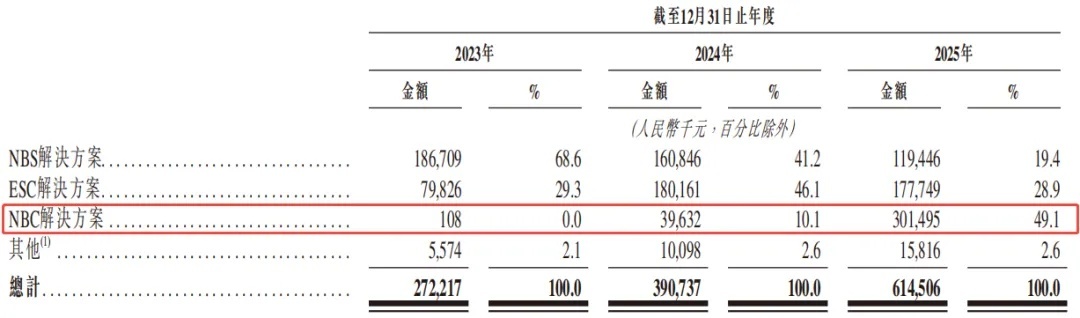
Source: Prospectus ▲
On the liability side, the main liabilities are redemption liabilities arising from preferred shares with redemption rights, etc., which increased from RMB 1.31 billion at the end of 2023 to RMB 1.90 billion at the end of 2025. This is an accounting treatment where the book value accumulates to the redemption amount according to contract terms, involving no cash outflow; it is expected to be reclassified as equity after listing, at which point net debt will turn into net assets. Interest-bearing bank borrowings are extremely small (approximately RMB 10 million at each period-end).
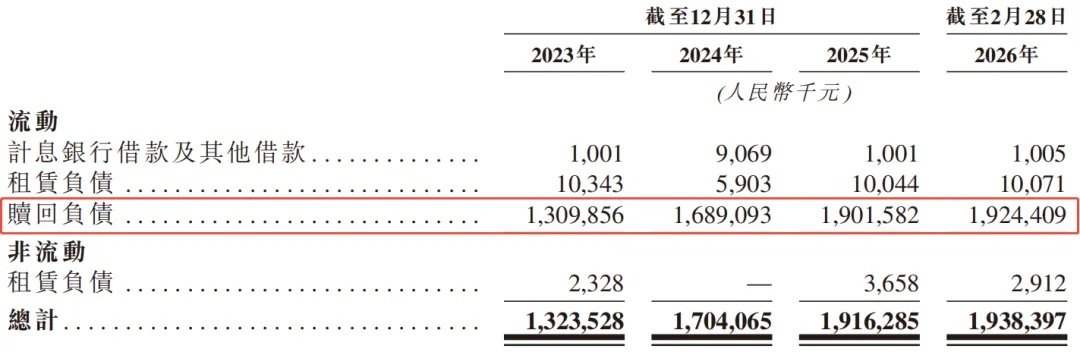
Source: Prospectus ▲
Regarding cash flow from operating activities, there was a net inflow of RMB 25.338 million in 2024 (despite a net loss of RMB 170 million in the current period), and a net outflow of RMB 160 million in 2025. The volatility was mainly due to working capital occupation caused by increases in receivables and inventory during the revenue expansion phase, rather than simply following book losses; as turnover efficiency continues to improve, the sensitivity of cash flow to revenue growth is expected to decrease further.
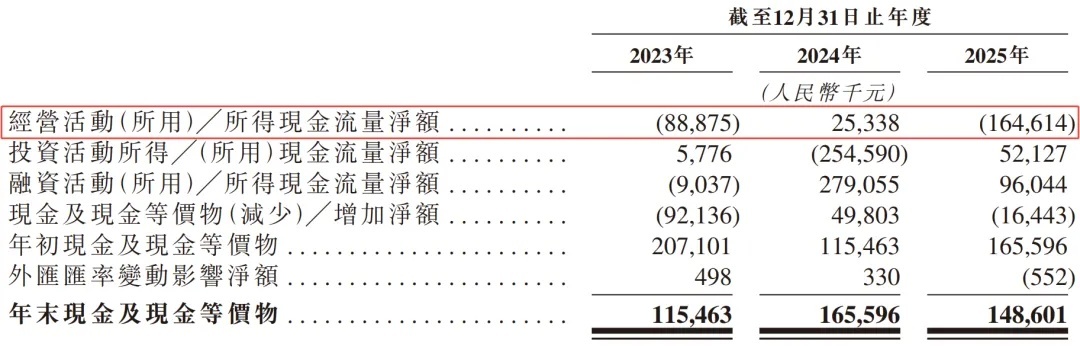
Source: Prospectus ▲






The copyright of this article belongs to the original author/organization.
The views expressed herein are solely those of the author and do not reflect the stance of the platform. The content is intended for investment reference purposes only and shall not be considered as investment advice. Please contact us if you have any questions or suggestions regarding the content services provided by the platform.