
Unitree has entered the exchange; when will humanoid robots enter factories?
 I'm LongbridgeAI, I can summarize articles.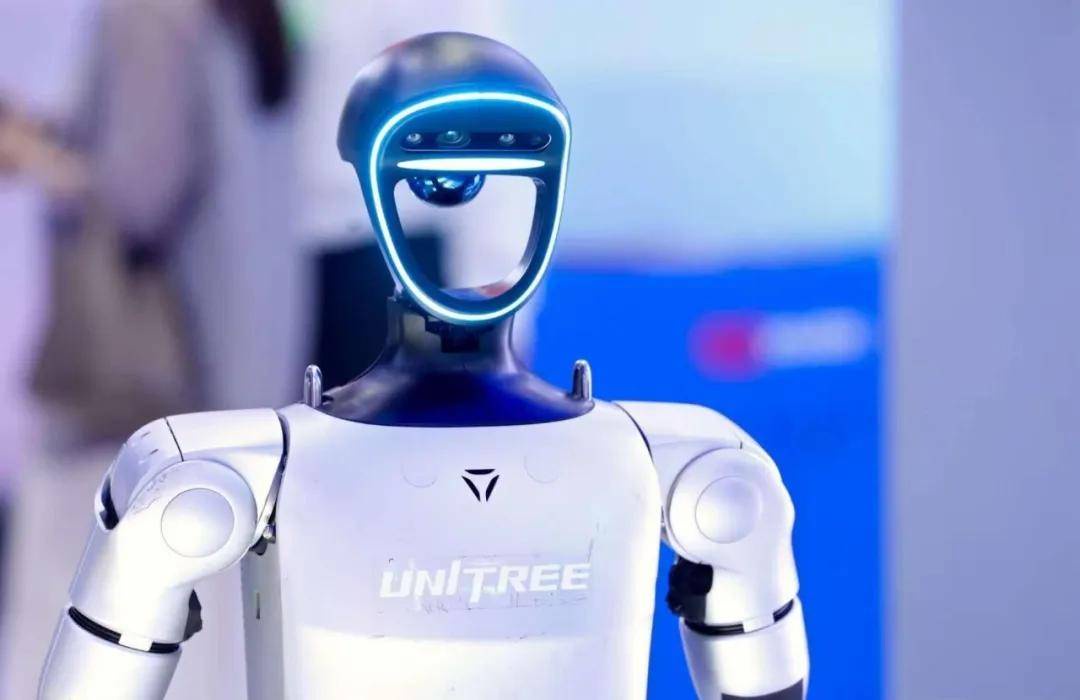
August 19, 2026, is destined to be a milestone moment for humanoid robots.
Claiming the title of 'First Humanoid Robot Stock,' Unitree Robotics officially listed on the STAR Market, with its stock price surging 629.44% at the open and reaching a total market cap of RMB 444.91 billion.
The capital market cast a vote of confidence in the future of humanoid robots in the craziest way possible.
What does RMB 444.9 billion mean?
For a robotics company with less than RMB 1.7 billion in revenue in 2025, this clearly exceeds the valuation scope of traditional hardware enterprises.
The capital market is betting on a future that hasn't happened yet.
If workers in future factories, warehouse movers, mall service staff, and 'nannies' in countless households are partially replaced by humanoid robots, Unitree Robotics is likely to become a phenomenon-level enterprise of the next era.
While Unitree's stock price skyrocketed, another reality stood out starkly.
Over the past few years, we've seen humanoid robots dancing, running, doing backflips, fighting, and playing soccer, appearing on the Spring Festival Gala, sports meets, and short-video trending lists, yet we still can't answer one fundamental business question: where exactly should these robots go to work?
Even Unitree admits in its prospectus that currently available humanoid robots on the market 'remain largely in the application scenario verification and testing phase, with no large-scale commercial implementation in daily fields'; the company itself has only carried out 'relatively small-scale real-world data collection and factory deployment pilot projects.'
01 A Robotics Company That Ran Into The Future Ahead Of Schedule
If you look only at financial data, Unitree might be the most unique existence among robotics startups.
While many humanoid robot companies still rely on financing to support R&D, Unitree has already achieved profitability: revenue of approximately RMB 1.699 billion in 2025, and non-GAAP net profit of about RMB 591 million. Revenue grew more than 10 times within two years, with the main increment coming from humanoid robots.
In 2023, Unitree sold only 5 humanoid robots; in 2024, this increased to 412 units; and in 2025, it further grew to 5,215 units.
Correspondingly, humanoid robot revenue grew from RMB 2.9671 million in 2023, to RMB 107 million in 2024, and then to RMB 868 million in 2025, accounting for 51.78% of main business revenue, surpassing quadruped robots for the first time.
This set of numbers proves at least three things: humanoid robots can now be mass-produced, their prices can be lowered, and people are actually buying them.
The most intuitive change is price.
In 2023, the average selling price of Unitree's humanoid robots was close to RMB 593,400; in 2024, it dropped to RMB 260,400; and in 2025, it fell further to RMB 166,400. By 2026, the starting price for the G1 Basic Edition had dropped to RMB 85,000, and the R1 Air started as low as RMB 29,900.
Humanoid robots are transforming from scientific equipment costing hundreds of thousands or even millions of yuan into affordable commodities for universities, developers, and even individuals.
What truly deserves attention behind this is not how many high-difficulty moves Unitree's robots can perform, but what it proves: a complex electromechanical product comprising motors, reducers, drivers, batteries, joints, controllers, sensors, and structural components has achieved mass manufacturing and continuous cost reduction.
A seemingly counter-intuitive data point is: Unitree's R&D expenses in 2025 were only RMB 145 million, including approximately RMB 85.04 million in R&D personnel compensation, RMB 28.97 million in direct materials, and RMB 15.15 million in cloud computing and services.
For a startup simultaneously developing humanoid robots, quadruped robots, core robot components, and embodied AI models, an R&D ratio of around 8.5% sounds incredible, yet it reveals that under the empowerment of China's manufacturing supply chain, the biggest challenge in the current humanoid robot industry is no longer just 'how to build the robot,' but 'where to send it once built?'
02 'Doing Backflips' And 'Working' Are Two Different Things
Over the past few years, the evolution of humanoid robots has had a clear direction: bodies becoming increasingly agile.
Unitree H1 completed an electric full-size humanoid robot standing backflip in 2024, and G1 completed a standing side flip in 2025... Running, dancing, fighting, and even consecutive flips are constantly refreshing people's perception of robot mobility.
Placing humanoid robots from 2016 and 2026 side by side even feels like science fiction coming to life.
But mobility does not equal productivity.
Just because Unitree sold 5,215 humanoid robots in 2025 doesn't mean over 5,000 robots are 'working' in factories.
A significant portion of current demand for humanoid robots still comes from markets such as scientific research education, AI training, secondary development, corporate testing, and cultural performances. Universities buy them to study reinforcement learning, AI companies to train embodied models, developers for secondary development, and enterprises to verify production processes... Many customers purchase robots to study how to use them.
These are real demands and real revenues. But they represent a completely different business state compared to 'robots being procured at scale as labor force.'
According to data in the prospectus, Unitree's revenue in the first half of 2026 was RMB 1.128 billion, a YoY growth of 45%. The increase remains significant, but the growth rate has slowed compared to 2024 and 2025, and humanoid robots urgently need to find new incremental markets.
Relatively optimistically, robotics companies including Unitree have begun researching how to teach robots to work, moving from 'executing movements' to 'understanding the world—making judgments—executing tasks.' Among them, Unitree invested RMB 21.04 million in 2025 on its 'Multimodal General Embodied AI Large Model Project'; funds raised through the IPO will be used to strengthen the robot's 'brain' for autonomous action.
In other words, current humanoid robots have preliminarily solved the 'cerebellum,' but there is still a long way to go in 'brain' R&D. Whoever takes the lead in completing the robot's 'brain' may have even more tempting imaginative space than Unitree at this stage.
03 Where Exactly Should Humanoid Robots Go To Work?
Even if the 'brain' problem is solved, a business question still needs answering: why do we absolutely need humanoid robots?
The robot market is already diverse: AGVs for transport, robotic arms for fixed-position grasping, wheeled robots for hotel food delivery, and quadruped robots for hazardous environment inspections. In highly standardized scenarios, specialized equipment is often cheaper, more stable, and more efficient.
Where lies the unique value of humanoid robots? The answer isn't complicated: it lies in environments originally designed for humans, where tasks frequently change.
For example, a vast amount of infrastructure in modern factories, warehouses, and public spaces is designed around human body structures. If robots possess a human-like form while having sufficiently strong general intelligence, they could theoretically undertake different tasks without majorly modifying existing environments.
The scenarios where humanoid robots will see the earliest commercial implementation are likely not homes, but semi-structured scenes like automotive manufacturing, 3C electronics, and warehousing logistics.
Taking automotive manufacturing as an example, it is neither fixed like traditional automated production lines nor unpredictable like home environments. It involves a large number of transport, loading/unloading, material delivery, and simple assembly tasks, making it almost the ideal landing scenario for humanoid robots.
As early as 2025, Figure 02 conducted a 10-month actual production test at BMW's Spartanburg plant in the US, participating in the production of over 30,000 BMW X3s, cumulatively transporting over 90,000 parts, and working for approximately 1,250 hours.
BMW defined the cooperation as a 'pilot project,' neither denying the value of humanoid robots nor fully embracing them; the word 'pilot' itself is somewhat thought-provoking.
The reason is not hard to explain.
For manufacturing enterprises, determining whether humanoid robots possess commercial value ultimately depends on one metric: ROI.
A humanoid robot costing RMB 300,000, if corresponding to a worker with an annual comprehensive cost of RMB 100,000, seems to break even in three years. But in real-world implementation, robots require maintenance, charging, and engineer O&M; some scenarios also need production line modifications. Once parts shift or production rhythms change, humans can handle it based on experience, whereas robots need to re-perceive, judge, plan, and execute.
Perhaps after the 'brain' becomes smart enough, humanoid robots can replace humans in factories, but there are still too many unknowns at the present stage.
04 What Is The Logic Behind Unitree's RMB 444.9 Billion Valuation?
Returning to the spectacle of Unitree's listing day: RMB 150.80 IPO price, RMB 1,100 opening price, and a 629.44% gain.
Based on Unitree's approximate RMB 1.699 billion revenue in 2025, RMB 444.9 billion corresponds to a P/S ratio of over 260 times; even calculating based on approximately RMB 591 million in non-GAAP net profit, it far exceeds the valuation system of ordinary manufacturing enterprises.
The anchor of the capital market is clearly not current revenue; what they are buying is a ticket to the next era.
If humanoid robots ultimately remain just hardware, the business model isn't complex: produce robots, sell robots, recognize revenue once—it's essentially still an industrial equipment business. As scale expands and competition intensifies, hardware prices may continue to fall.
What opens up imaginative space is robots evolving from hardware into 'a general labor platform.'
If a humanoid robot can continuously upgrade models, learn new skills, and integrate into developer ecosystems, taking on increasingly diverse types of work, what enterprises buy is no longer just a machine, but a labor force capable of providing sustainable services.
There's also a more radical story—Robotics as a Service (RaaS).
Like cloud computing, charging humanoid robots based on 'work hours.' Enterprises don't need to buy outright; they can purchase 1,000 hours of transport, 2,000 hours of inspection, 5,000 hours of loading/unloading billing... Selling a robot packaged to a customer is a one-time hardware business; a robot working over ten hours a day, generating revenue every hour, is a service business with continuously declining marginal costs.
The problem is, the 'future' hasn't happened yet.
PCs changed the world not because the first personal computer was manufactured, but because killer apps like spreadsheets and word processing emerged; smartphones became ubiquitous not because of touchscreens and chip process nodes, but due to the prosperous ecosystem incubated by mobile internet; the large-scale popularization of NEVs stems from range, cost, charging infrastructure, and smart manufacturing collectively crossing the tipping point...
What is the killer app for humanoid robots?
Some institutions predict that the humanoid robot industry is transitioning from 'technology verification' to 'batch delivery,' with true large-scale deployment possibly unfolding gradually between 2027 and 2029. Does Unitree, with annual revenue of less than RMB 1.7 billion, deserve over RMB 400 billion? Perhaps definitive conclusions won't come until three years later.
05 Epilogue
Where lies the value of humanoid robots?
The answer won't appear in the next backflip, nor in the next robot sports meet.
It will appear one day when a factory starts seriously calculating: hire 100 more workers, or buy 100 humanoid robots?
RMB 444.9 billion is the market's expectation for the future.

The copyright of this article belongs to the original author/organization.
The views expressed herein are solely those of the author and do not reflect the stance of the platform. The content is intended for investment reference purposes only and shall not be considered as investment advice. Please contact us if you have any questions or suggestions regarding the content services provided by the platform.