
Surged over 5%! 2026 China Literature Creation Conference: AI unlocks IP value-add potential, with major announcements on AI premium animation, OPC support, and the IP Committee!
 I'm LongbridgeAI, I can summarize articles.
On the morning of October 16, China Literature's stock rose over 5% to HK$23.32, hitting a four-month high. Meanwhile, the 2026 China Literature Creation Conference was grandly held in Hangzhou. The conference clearly signaled that short dramas and AI comic dramas are taking on an even more prominent role in the company's business. Notably, the DramaBuddy assistant has been upgraded into an all-in-one OPC platform, with its first batch of premium AI animated projects making a stunning debut. Additionally, China Literature's full-chain IP operations are expanding into more games and interactive content.
China Literature is now deeply integrating AI applications into the specific workflows of IP development, aiming to simultaneously boost speed, coverage, and operational depth. Every stage, from story selection to production and distribution, directly impacts the commercial value of the IP content reservoir.
The conference outlined a more comprehensive strategy for this evolution.
I. Comprehensive Upgrade of DramaBuddy: Empowering OPC Creators and Streamlining the Full IP-to-Commercialization Chain
DramaBuddy's upgrade to an all-in-one OPC platform stands out as one of the most critical moves at the conference. Targeted at individual creators and small studios, it offers a complete pipeline from IP sourcing to AI production and global distribution. Going forward, DramaBuddy will serve as the unified gateway for creators entering China Literature's comic drama ecosystem.
According to Enion's 2026 report, AI now covers the entire production process of comic dramas, from scriptwriting to post-production editing, significantly boosting efficiency and shortening production cycles by one-third.
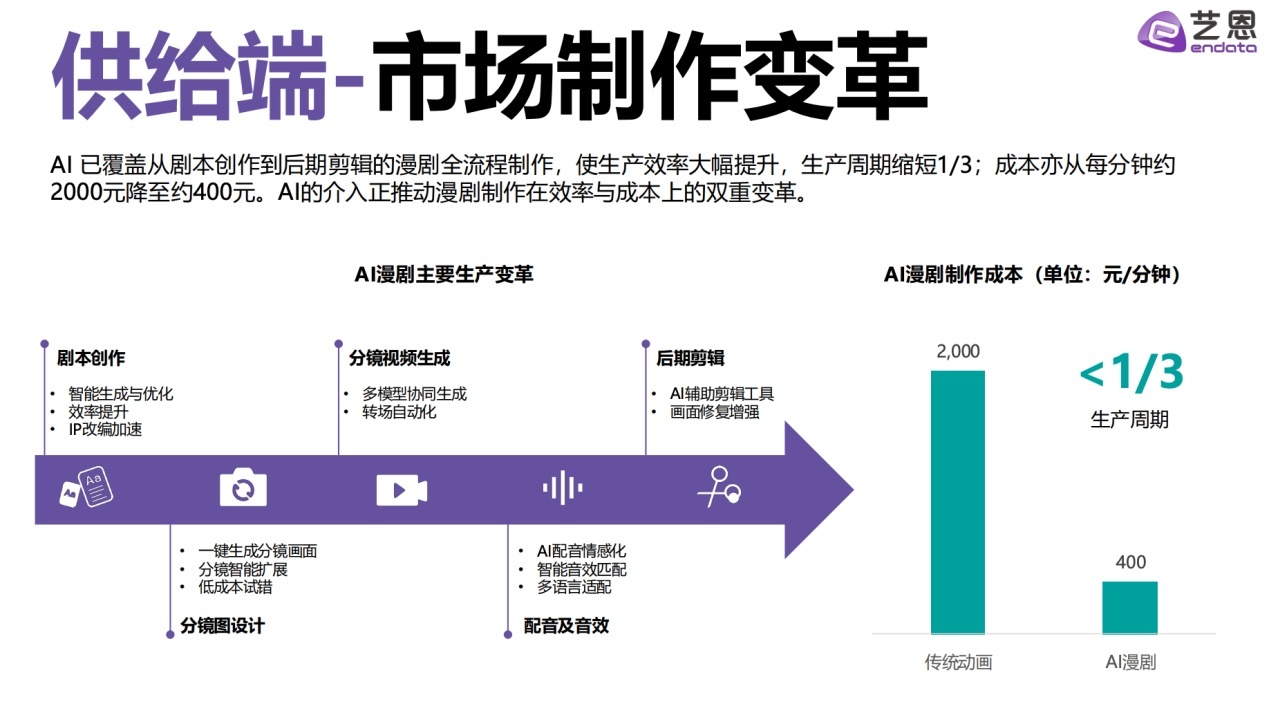
However, knowing how to use AI tools is distinct from sustaining a viable content business. Small teams still face hurdles such as finding compliant stories suitable for adaptation, novel-to-script conversion, character/storyboard/final video creation, and securing distribution channels. Managing these steps individually would be time-consuming and costly.
China Literature's upgrade focuses heavily on the content source. DramaBuddy will tap into an IP library confirmed open by authors, connecting IPs, scripts, and orders via an "ecosystem marketplace." Leveraging China Literature's extensive catalog of over 200 content genres, creators gain richer 选题 options, reducing the limitation of repeatedly producing similar popular themes.
On the production side, the platform provides end-to-end capabilities from script, storyboard, and character design to final video, supporting the localization of Chinese comic dramas into ten languages and enabling the production of native overseas comic dramas via scripts.
For distribution, it connects directly to domestic Qidian-affiliated comic drama channels and the overseas platform ToonScroll, covering both Tencent's ecosystem and third-party channels. Once completed, works can access broader markets.
Additionally, creator incentives were announced at the conference. China Literature will establish an A-to-S creator rating system; higher tiers receive greater financial support and access to a wider IP library. Outstanding works will earn extra incentives, including rebates, while innovative new pieces will receive boosted traffic and creative grants. Currently, the company has signed over 5,000 individual creators and studios. The top ten OPC creators each earn over RMB 1 million annually, with leading studios exceeding RMB 6 million.
By establishing DramaBuddy as a unified partnership entry point, China Literature aims to accelerate the aggregation of dispersed creative talent. For creators, finding suitable stories and orders becomes easier; for China Literature, it allows better matching of IPs with capable production forces.
China Literature's competitive edge is evolving from merely holding IP reserves to organizing content production and commercialization capabilities. On the path of IP industrialization, only when production, distribution, and returns operate continuously can efficiency gains from tools translate into business scale.
II. Entering the Premium Era of AI Video: AI Animation and Mid-to-Long Dramas Unlock New Development Space
Beyond building complete pipelines, delivering premium content is key. Complex, long-cycle animations serve as the best validation of this full-chain capability.
The conference unveiled the first batch of premium AI animated projects, including *Cyber Hero Legend*, *Unscientific Beast Taming*, *Judgment*, and *Demon Suppression Museum*, covering sci-fi, beast-taming, Western fantasy, and folklore suspense. Previously, a 24-minute AI teaser for *Cyber Hero Legend* went viral online. Now, development is expanding into long-form animation, alongside "live-action + AI" short dramas and AI mid-to-long dramas.
As production efficiency improves, the importance of original storytelling and professional expression becomes even more pronounced. Key to AI video premiumization is the stable collaboration between web novel IPs, AI technology, and professional animation teams.
Hou Xiaonan, CEO and President of China Literature, stated, "Literary adaptation can use AI; but literature itself cannot be AI." IPs provide characters and stories, AI assists in production, and professional animation teams handle narrative, aesthetics, and quality control. These three capabilities, complemented by the individual creator platform, will jointly boost China Literature's premium content output.
Commercially, premium animation means more than just increasing video duration for China Literature.
The complex worldviews and long-term character growth behind IPs are major draws for many web novels. Serialized animations offer fuller expression space for such content and help cultivate habitual viewing, giving previously constrained stories development opportunities.
As characters become more familiar to audiences, IPs form lasting user relationships. Beyond visual content undergoing multi-round serialization, this facilitates expansion into games, derivatives, and offline developments.
III. Continued Investment in Comic Dramas: Revenue Structure May Shift Further
China Literature has been ramping up investment in comic dramas over the past two years, becoming a core growth driver.
Looking at H1 2026 financials, revenue from short dramas and AI comic dramas exceeded RMB 430 million, a YoY surge of 230%, accounting for 27% of pure IP operation revenue and 12.2% of group revenue.
Total revenue for H1 reached RMB 3.531 billion, up 10.7% YoY. Rough calculations based on the RMB 430 million figure and 230% growth indicate a net income increase of approximately RMB 300 million year-on-year, representing nearly 90% of the group's total net revenue growth during the period. This highlights the significant 支撑 provided by new businesses like short dramas and AI comic dramas.
China Literature is now accelerating comic drama development, transforming works that primarily contributed reading revenue into assets generating new copyright income. The conference revealed that over 1,500 authors who previously received no copyright fees have earned their first copyright income through AI comic dramas, confirming expanded development scope from the author side.
Another notable trend is the continuous improvement in gross margin indicators since the company intensified comic drama development in H2 last year.
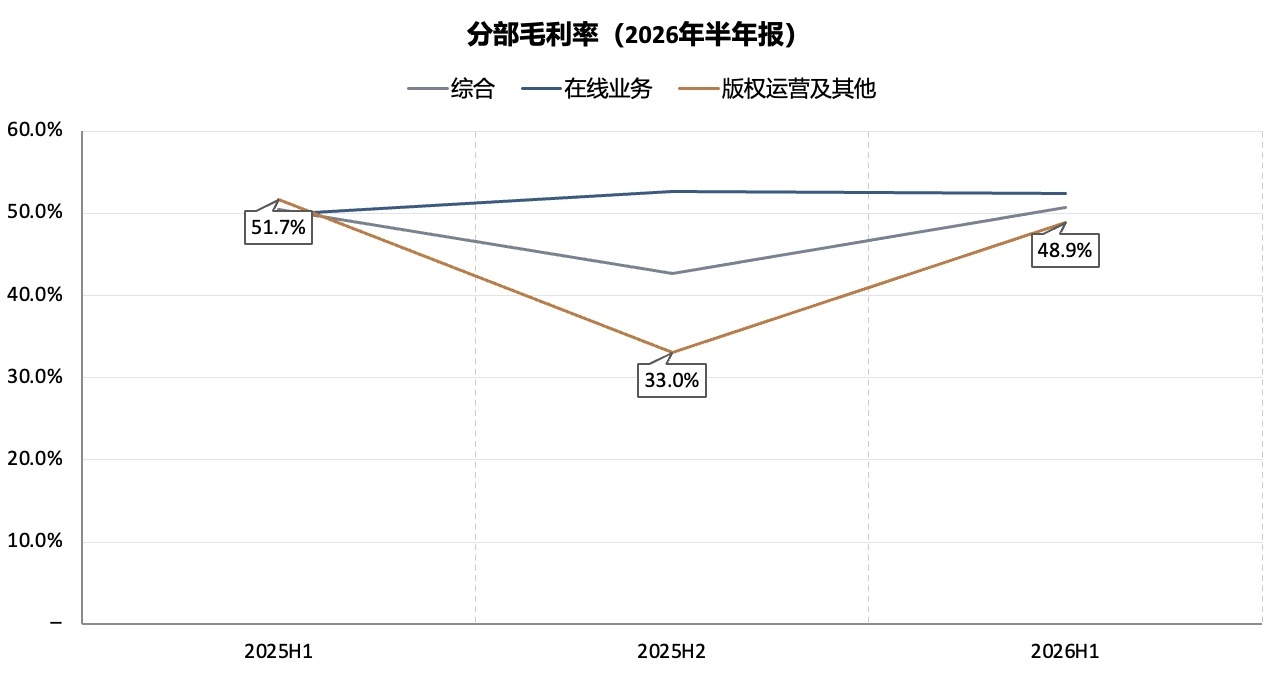
Gross profit from the Copyright Operation and Other segment rose from RMB 623 million to RMB 827 million in H1, with the gross margin rate increasing from 33% in H2 2025 to 48.9% in H1 2026. Although the semi-annual report did not separately list the gross margin for AI comic dramas, improvements in production efficiency are evident.
With the official announcement of the DramaBuddy platform upgrade at the conference, tools, assets, partner teams, and distribution experience are expected to be reused across more projects. This could reduce reliance on repetitive investments for future revenue growth, paving the way for profit release.
IV. Industry Content Continues to Premiumize: Value of IP Pool Becomes Increasingly Critical
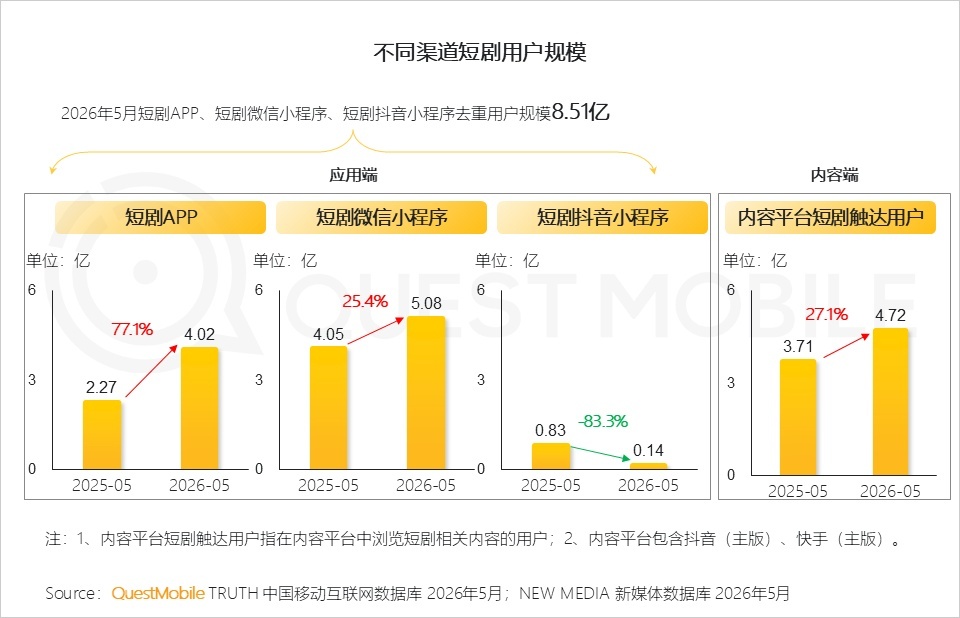
Industry demand now has a substantial base. QuestMobile data from May shows the unique user base for short dramas reached 851 million. Visual short content reaches audiences far beyond the original paid reading demographic.
Supply-side competition is also intensifying. DataEye statistics show that in H1 2026, there were approximately 221,900 new AI and comic drama titles on Douyin, with 1,055 videos exceeding 100 million views, representing only about 0.48%.
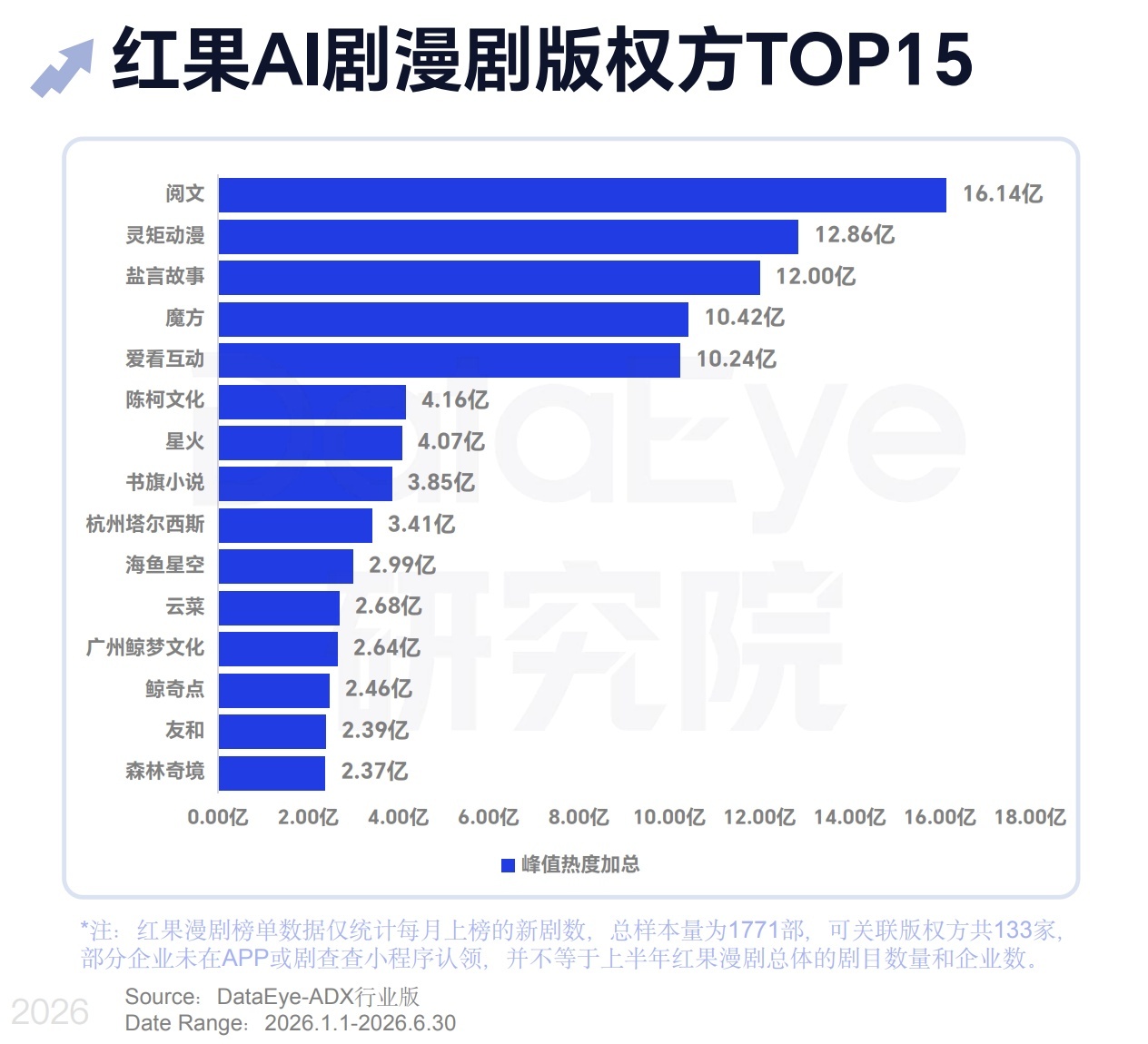
China Literature topped the ranking of AI comic drama copyright holders on the Hongguo platform by peak heat, reaching 1.614 billion.
China Literature possesses a content pool that continuously generates new stories and accumulates reader feedback. Production teams can select projects based on characters, plots, and reading performance before visual adaptation. A richer content reservoir enables the search for works suited to different genres and production methods.
At the conference, China Literature proposed shifting comic drama development from the completion phase to the serialization phase, moving from single seasons to series spanning dozens of seasons. *Three Thousand Sanctuaries*, for instance, has updated to season 35 with sustained popularity, accumulating over 4 billion plays network-wide and driving the original work into the top five of the Qidian bestseller list. This demonstrates the long-term vitality of comic dramas and the mutual promotion between comic adaptations and web novel reading.
Receiving audience feedback earlier helps the company judge which IPs warrant continued investment. Multi-season operations can further extend the revenue cycle of validated projects.
Gaming is also an important extension of this path. For example, the game *Lord of the Mysteries* topped the iOS free chart for consecutive days after launch. At the conference, China Literature announced plans to release over 20 IP-adapted games in the next three years. *Under One Person* is scheduled for December launch, with over 33 million pre-registrations.
*Star Card Collection* attempts to place IPs like *Douluo Continent*, *Swallowed Star*, and *Fox Spirit Matchmaker* into a single electronic trading card game, planned for a 2027 launch. Fans of different works can enter the same product, allowing for continuous IP content expansion.
China Literature is simultaneously broadening the forms and audiences of IP development. The same story can find consumption entry points through reading, watching, and interaction.
V. Revaluation of China Literature's "IP Goldmine": Continuous Development Capabilities Rising
The business logic of mature IP companies relies on the continuous resonance of content, scenarios, and consumption. IP value depends not only on the content itself but also on user lifecycle length and the number of products through which commercialization is achieved. For China Literature, holding leading domestic web novel IP reserves, the key to future value enhancement lies in improving IP development rates and sustaining user operations.
Referencing the development paths of overseas mature IP companies, Sanrio serves as an example. In Q1 FY2027 (ending March 2027), Sanrio's revenue reached JPY 52.035 billion with an operating profit margin of 43.1%. From a revenue composition perspective, the ability of mature IPs to enter diverse products and markets is a crucial foundation of their business model.
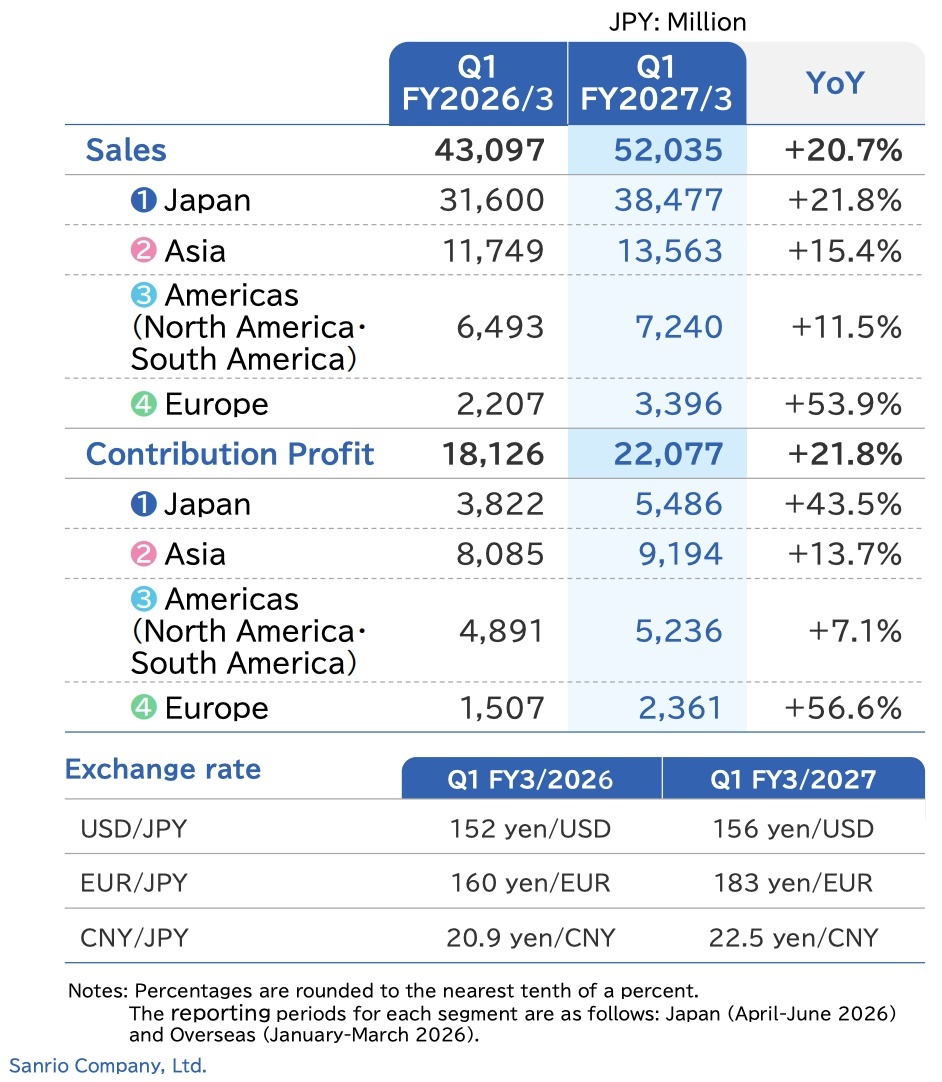
Chart: Sanrio Revenue by Region for Q1 FY2027 Reporting Period
Kadokawa's cooperation with Sony aligns more closely with China Literature's model. In late 2024, Sony invested approx. JPY 50 billion strategically in Kadokawa, collaborating on animation, film/TV, gaming, and global distribution. In March 2026, they established Animec, an animation film distribution company, further streamlining the IP development and commercialization chain.
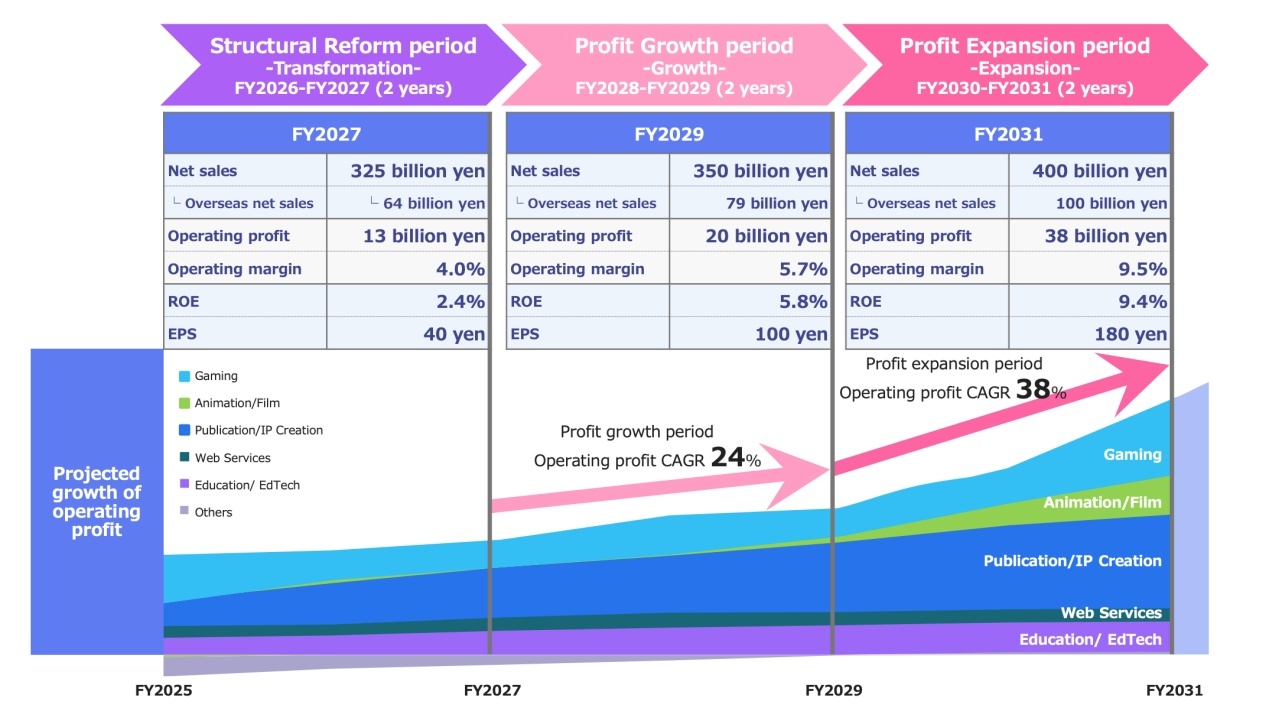
Chart: Kadokawa's New Medium-Term Profit Targets
Continuous capital and industry resource investment underscores the long-term value of high-quality text IPs in cross-media development.
Returning to China Literature, several actions at this conference correspond precisely to key links in releasing IP value: the DramaBuddy upgrade to an all-in-one OPC platform improves development efficiency for mid-tier IPs; premium AI animations push IPs toward higher-value content forms; and particularly the IP Committee model, led by *Defend Nanshan Park*, promotes long-term IP management through unified decision-making, consistent tone, and full-chain synergy.
The revaluation potential of China Literature's "IP Goldmine" hinges on three variables: increased IP development rates, extended single-IP lifecycles, and revenue/profit growth driven by multi-format development.
As AI lowers production barriers, more mid-tier works can enter development. The same IP may achieve multiple monetization rounds through comic dramas, long animations, games, and derivatives, potentially diversifying China Literature's revenue structure.
China Literature is transitioning from possessing numerous high-quality IPs to managing them more efficiently and systematically. These changes are expected to continuously translate into revenue, profit, and cash flow. Consequently, market valuation of China Literature will shift further from a traditional content platform model to a long-term IP asset logic.
Reprinted with permission
$CHINA LIT(00772.HK)


The copyright of this article belongs to the original author/organization.
The views expressed herein are solely those of the author and do not reflect the stance of the platform. The content is intended for investment reference purposes only and shall not be considered as investment advice. Please contact us if you have any questions or suggestions regarding the content services provided by the platform.