
 I'm LongbridgeAI, I can summarize articles.
OPEC+ has significantly increased production for two consecutive months, and on Monday, international oil prices plummeted by more than 4%. OPEC+ has undergone a key strategic shift, prioritizing production discipline over price stability. The message from the market is clear: long-term low oil prices are not a prediction, but a plan
OPEC+ has unexpectedly increased production significantly for two consecutive months, causing international oil prices to plummet over 4%.
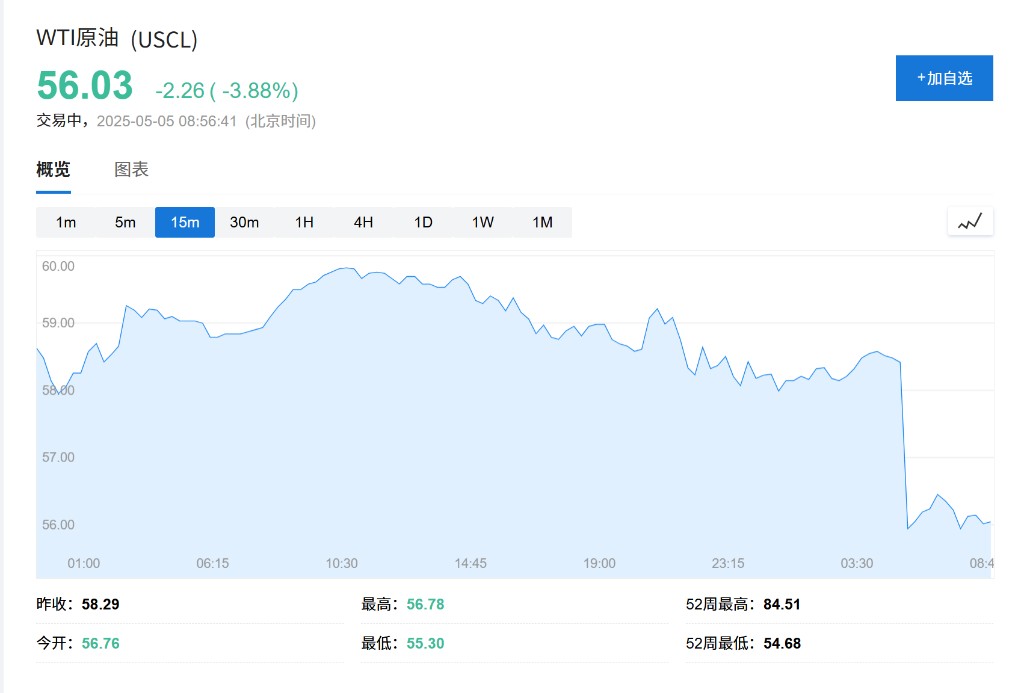
On Monday, U.S. crude oil futures fell 4.27%, down $2.49 to $56.30 per barrel.
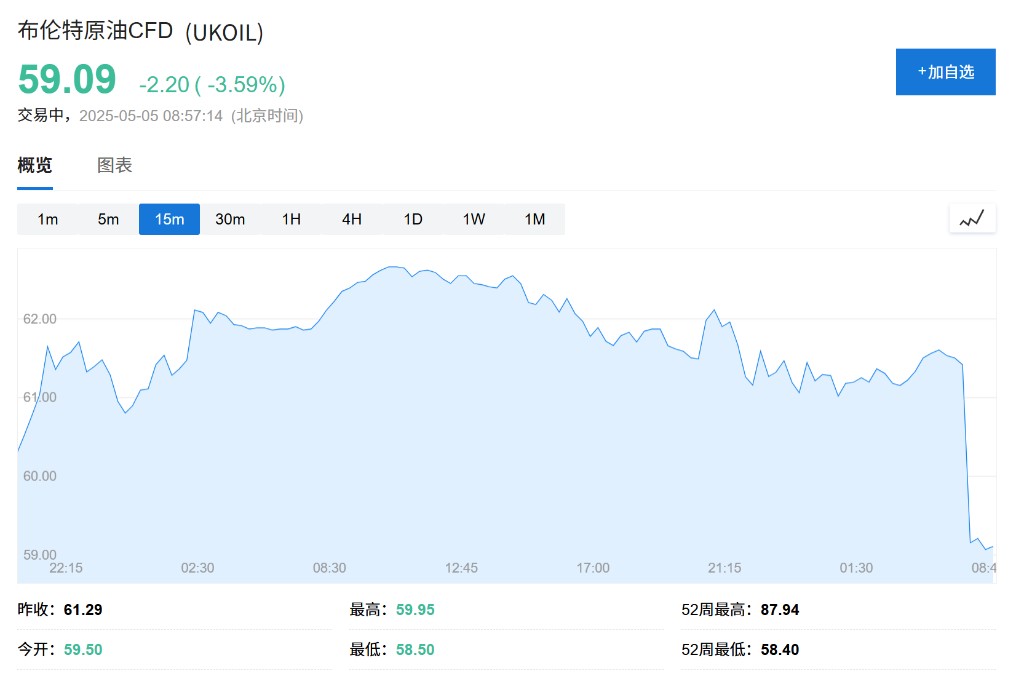
The global benchmark Brent crude oil also dropped sharply by 3.9%, down $2.39 to $59.09 per barrel. Since the beginning of this year, oil prices have cumulatively fallen over 20%.
The OPEC+ group of eight producers, led by Saudi Arabia, reached an agreement on Saturday to increase production by 411,000 barrels per day in June. This increase is nearly three times Goldman Sachs' original forecast of 140,000 barrels per day. OPEC+ will add over 800,000 barrels per day of additional supply to the market over two months, a supply level that poses a serious shock to an already fragile market.
This decision marks a key shift in OPEC+'s strategy, prioritizing production discipline over price stability. The message to the market is clear: long-term low oil prices are not a forecast, but a plan.
Supply Surge Far Exceeds Expectations, Analysts Downgrade Forecasts
The decision to increase production caught the market off guard, as just a month ago, OPEC+ had announced the same increase for May, putting pressure on the market with consecutive months of production increases.
The direct reason for this increase is the non-compliance of major member countries, particularly Iraq and Kazakhstan. Several OPEC+ representatives revealed, unless countries agree to a production cut agreement, Saudi Arabia is considering gradually canceling its previously committed voluntary production cut of 2.2 million barrels per day at a similar pace.
In April, oil prices recorded the largest monthly decline since 2021. U.S. President Trump's tariff policies raised concerns about an economic recession, which could lead to a slowdown in oil demand, while OPEC+ is rapidly increasing supply, exacerbating the supply-demand contradiction and increasing downward pressure on the market.
Beneath the surface, OPEC+ faces survival challenges. The fiscal breakeven points of member countries vary greatly: Russia's budget breakeven point is $62 per barrel, while Saudi Arabia needs $81. This disparity has created a high-stakes "chicken game." Member countries like Saudi Arabia, which require higher prices, may find it difficult to maintain discipline if they continue to disregard the agreement. In addition, the long-term threat to the alliance—U.S. shale oil recovery and global energy transition—is becoming evident. If U.S. shale oil producers respond to falling oil prices by increasing production, OPEC+'s decision to prioritize compliance over price stability may backfire, further exacerbating the supply surplus.
Bearish Outlook Strong—But Risks Remain
Goldman Sachs previously predicted that the average prices for U.S. crude oil and Brent crude oil this year would be $59 and $63 per barrel, respectively, but under the current market conditions, this forecast may face downward revision.
In a weak oil price environment, oilfield service companies like Baker Hughes and SLB expect exploration and production investments to decrease this year. Baker Hughes CEO Lorenzo Simonelli stated during the first-quarter earnings call on April 25: "The outlook for oversupply in the oil market, rising tariffs, uncertainty in Mexico, and weak activity in Saudi Arabia are all factors that collectively limit international upstream spending levels."
Analysts believe that investors must weigh two factors:
- Geopolitical volatility: Trade tensions and sanctions on Russian oil may affect supply.
- Demand resilience: If the global economy avoids recession, demand may absorb the surplus supply faster than expected.
Currently, the data is severely bearish. OPEC+'s strategy of punishing non-compliance and aligning with U.S. inflation targets prioritizes short-term supply over price stability. The decline in oil prices may intensify before compliance improves or geopolitical risks subside.
In this new era of OPEC+ discipline, the message from the market is clear: long-term low oil prices are not a forecast, but a plan.