
MLCC Concept Stocks Surge Collectively: Taiyo Yuden Rises Nearly 23%, Ibiden Rises Over 19%, Murata Manufacturing Rises More Than 17%
 I'm LongbridgeAI, I can summarize articles.
On June 15, Japanese MLCC concept stocks surged collectively, with Taiyo Yuden rising nearly 23%, Ibiden over 19%, and Murata Manufacturing more than 17%. This rally was driven by a broad market recovery following US-Iran peace talks and surging demand for AI infrastructure components. Key factors included price hikes by Taiyo Yuden and Murata, capacity constraints in high-end MLCCs, and Ibiden's strong performance in AI chip packaging substrates.
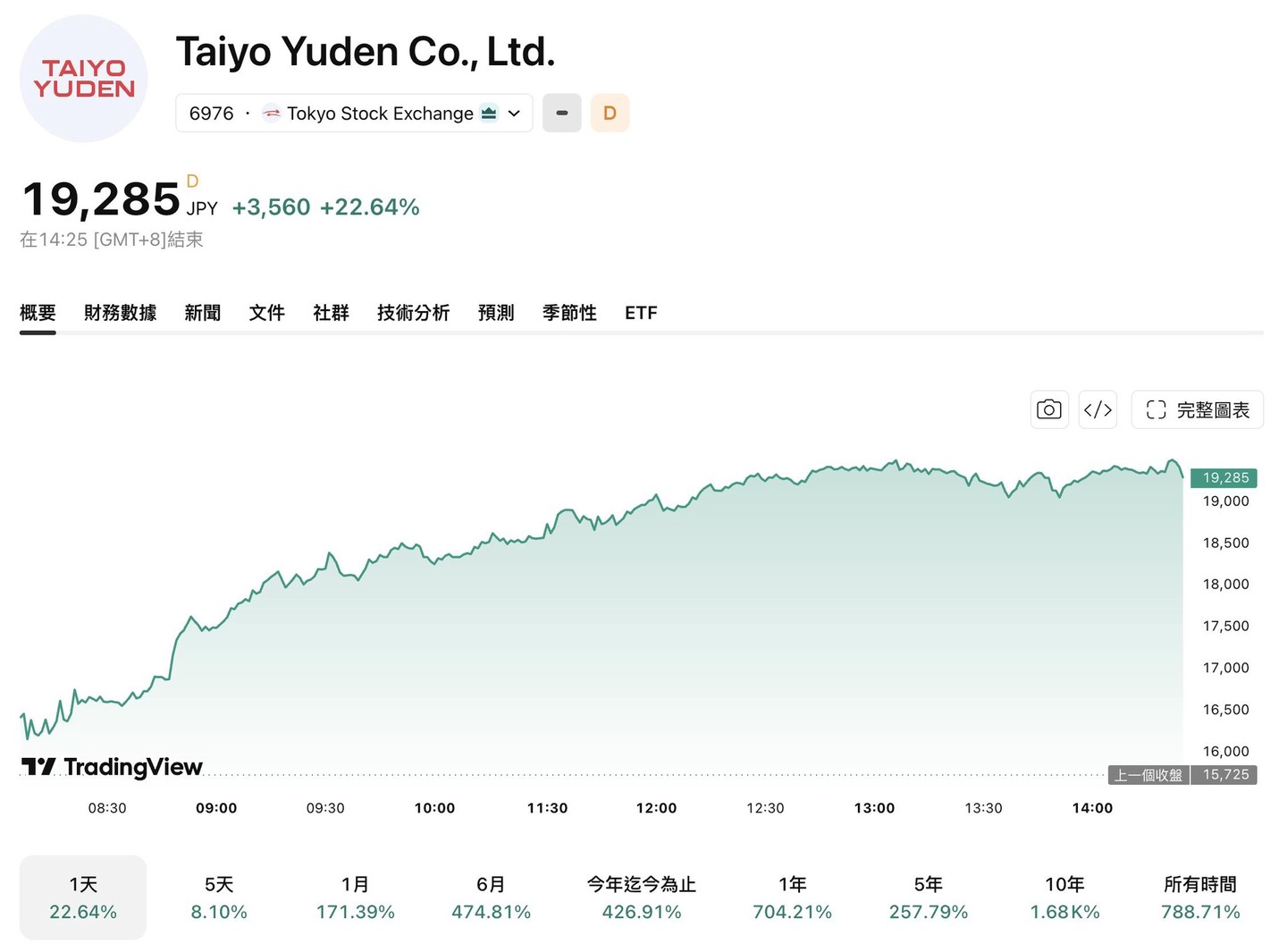
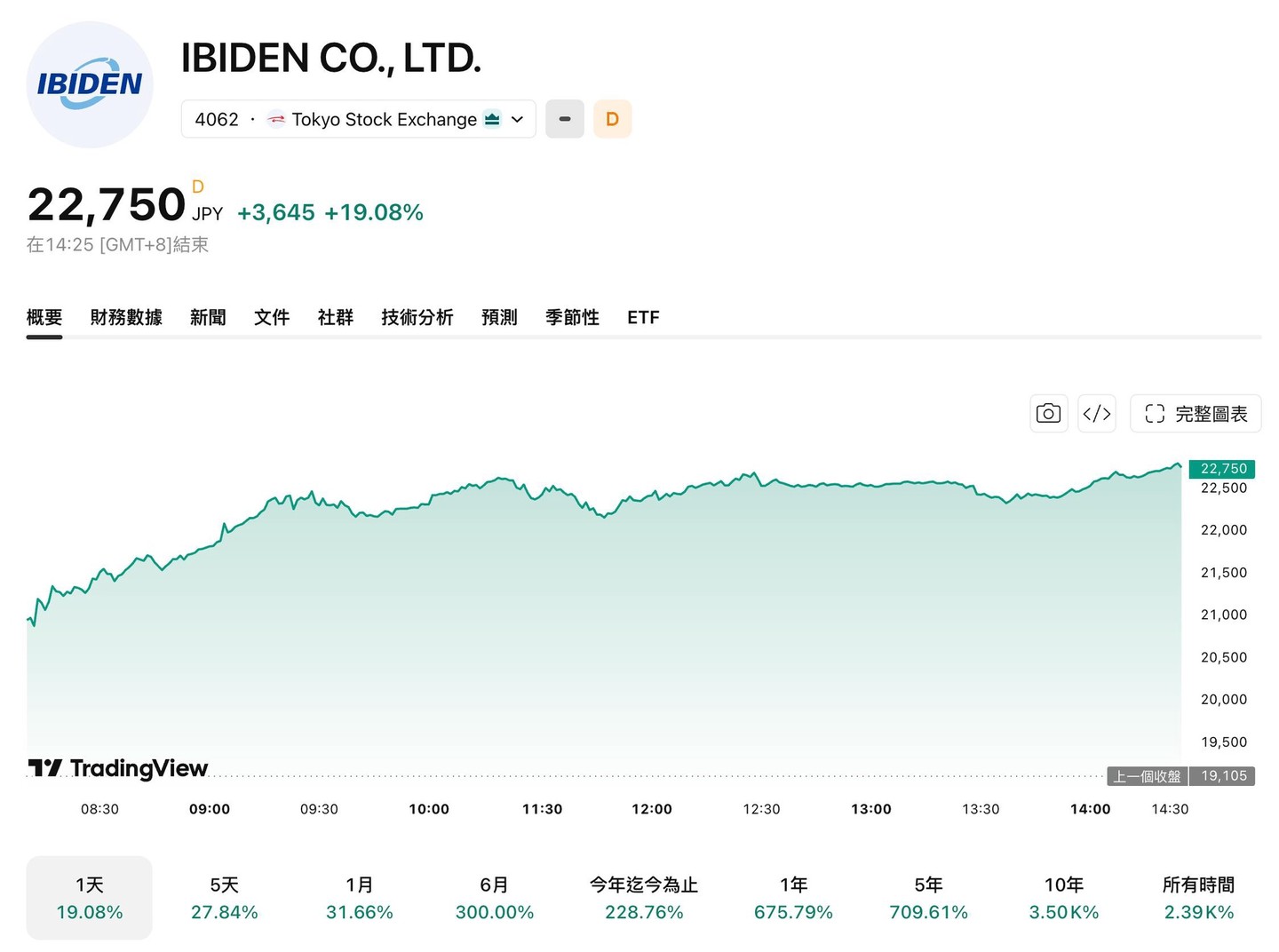
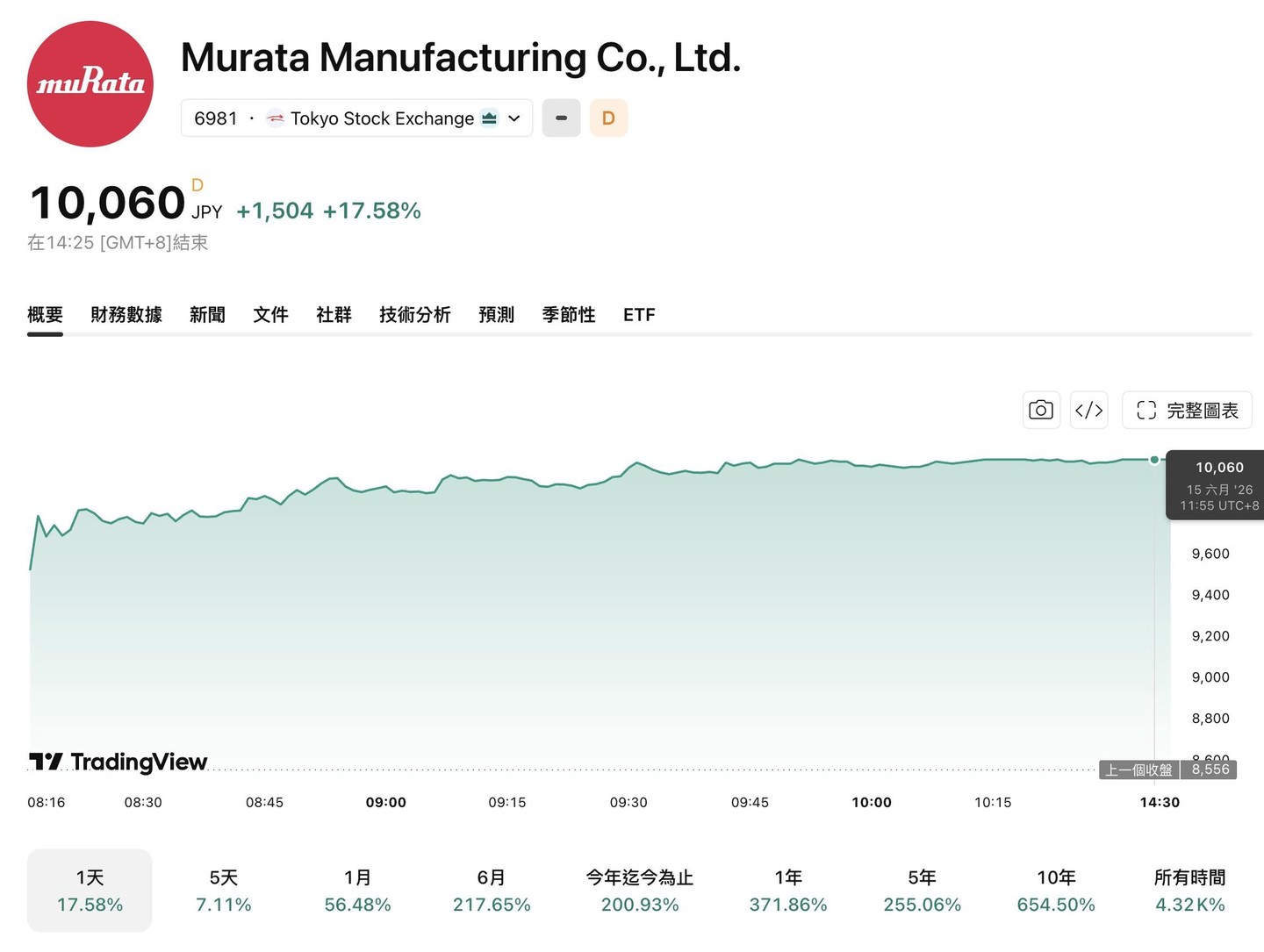
TradingKey - During the Asian trading session on June 15, the Nikkei 225 Index closed sharply higher by 4.99% at 69,317.50, surpassing the 69,000 milestone for the first time. Amid a broad market rally, MLCC concept stocks delivered particularly strong performances: Taiyo Yuden surged over 23%, Ibiden rose more than 19%, and Murata Manufacturing gained over 17%, collectively serving as the primary drivers of the day's advance in Japanese equities.
Taiyo Yuden: Dual Drivers of Price Hikes and Capacity Expansion
[Source: TradingView]
Taiyo Yuden led the electronic components sector with a gain of nearly 23%. The company announced in May a 6% to 13% price increase across its entire line of low-to-medium capacitance consumer and automotive-grade MLCCs. Currently, demand for high-end MLCCs from AI servers and new energy vehicles is surging, while the long construction cycle for high-end production lines prevents capacity from being released quickly in the short term, resulting in a significant supply-demand gap. To meet the climbing demand for AI servers, Taiyo Yuden is accelerating the expansion of high-end MLCC capacity, leading to a significant upward revision in market expectations for the company's earnings outlook.
Ibiden: Core Beneficiary of AI Chip Packaging Substrates
[Source: TradingView]
Ibiden shares surged more than 19%, hitting a record high during intraday trading. The company is a leading global supplier of IC packaging substrates, providing AI chip giants such as Nvidia ( NVDA ), Intel ( INTC ), and AMD ( AMD) and other AI chip giants with advanced packaging substrates. For fiscal year 2025, operating profit in its electronics division skyrocketed 68.5% year-on-year, as demand from major clients continued to surge. In its latest annual report, the company set an ambitious goal to quintuple its operating profit over the next five years. As the demand for AI computing power continues to expand, advanced packaging substrates—a critical link in the AI chip supply chain—are directly benefiting from the global acceleration of AI infrastructure development.
Murata Manufacturing: MLCC Super Cycle Begins
[Source: TradingView]
Murata Manufacturing surged over 17%. As the world's largest MLCC supplier with a market share of over 40%, the company has officially issued a price hike notice, initiating comprehensive price increases for AI server and high-end automotive-grade MLCC products starting July 1, with hikes ranging from 10% to 40%.
According to SemiAnalysis data, the MLCC value per rack has increased from approximately $3,000 on the H100 platform to about $12,000 on the GB200 platform, with corresponding MLCC usage rising from around 15,000 units to over 90,000 units. Goldman Sachs ( GS) noted that MLCCs have become the third-largest cost component in AI servers, trailing only GPUs and memory chips, and the AI-driven MLCC supercycle is just beginning.
The rally in the electronic components sector was primarily driven by the peace agreement between the U.S. and Iran, which significantly cooled geopolitical risks in the Middle East and led to a full return of market risk appetite, with both the Nikkei 225 and South Korea's KOSPI indices rising about 5%. Simultaneously, the acceleration of AI infrastructure development is driving continued demand for upstream components such as MLCCs and IC substrates.
Analysts believe that the temporary stabilization of geopolitical risks has provided a more stable external environment for growth stocks, while the transmission of industry prosperity across the AI hardware supply chain—from chips to passive components—continues to deepen, and related Japanese listed companies are poised to continue benefiting.
Find out more