
Meta enters the AI code large model track, chasing Anthropic and OpenAI
 Complete. Here is the key summary
Meta launched a major update of its AI code large model Muse Spark 1.1, aiming to compete with OpenAI and Anthropic. This model has the strongest performance in the fields of intelligent autonomous agents and code generation, with the API now open for public trial and pricing plans announced. The head of Meta AI stated that it is highly competitive. This move adds a monetization channel to Meta's diversified business, and developers will need to pay to access it
Key Points
- Meta launches a major update for the Muse Spark large model and announces its pricing plan;
- Meta's head of artificial intelligence stated that the pricing is highly competitive and attractive compared to similar products from Anthropic and OpenAI;
- Meta's diversified business layout adds new monetization channels, and developers will need to pay to access this new AI model.
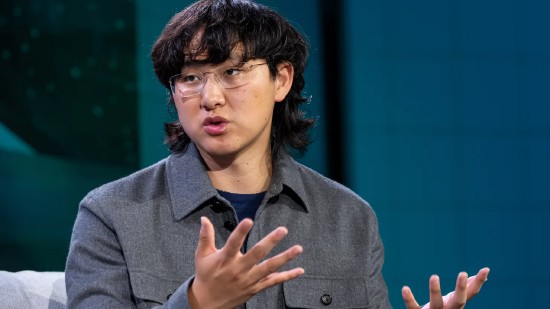 On June 4, 2026, in San Francisco, California, at the Bloomberg Technology Summit, Meta's Chief AI Officer Alexander Wang attended the event.
Three months after the launch of its first self-developed large model led by AI head Alexander Wang, Meta has released a significant version update, aiming to compete directly with OpenAI and Anthropic in the core industry track.
Wang stated in an interview that the Muse Spark 1.1, officially released on Thursday, is Meta's "strongest model to date in the field of intelligent autonomous agents and code generation." In early April, the original Muse Spark was only available for private API preview access to "selected partner companies."
The application programming interface (API) for the new model is now open for public trial on the developer platform, where developers can register and review the integration deployment guide. A Meta spokesperson stated that some early partners already have access to the interface; new users can join a waiting list, and access will be opened in batches. Meta stated that at this stage, only its own products are allowed to access the interface, and it will not be launched on third-party trading platforms like OpenRouter.
Wang mentioned, "This model will provide services based on our self-built computing infrastructure."
This is the second major product in the Muse series released by Meta this week. On Tuesday, Meta launched the image generation model Muse Image (internal code name Mango) to attract creators and advertisers to use its AI products.
Wall Street continues to pressure Meta to prove that its massive investments in AI infrastructure development can yield returns. Although Meta's computing investment scale matches that of major cloud giants, the company has yet to establish a mature cloud business (despite having layout plans); at the same time, it remains behind OpenAI, Anthropic, and Google in terms of blockbuster large models and AI application implementation.
Video Highlights: Zuckerberg states that the organizational restructuring of Meta has yet to yield results
Wang stated that compared to similar products from Anthropic and OpenAI, the updated Muse Spark pricing strategy is "strong and highly attractive." All newly registered API accounts will receive a $20 free usage credit; the billing standard is: $1.25 per million tokens for input and $4.25 per million tokens for output "The core purpose of this pricing strategy is to create a high-cost-performance solution suitable for large-scale, high-consumption scenarios."
He stated that Muse Spark 1.1 outperforms competitors in integrating various third-party code tools and automating interactive tasks.
The Meta Super Intelligence Laboratory (MSL), led by Alexander Wang, specializes in enhancing the model's coding capabilities, with the core goal of upgrading AI agents: these agents can autonomously complete complex multi-chain tasks like a group of intern employees.
"To build a complete autonomous intelligent agent system, coding generation capability is an essential foundational support."
In the first half of 2026, the AI agent sector will experience an industry boom, with the explosive popularity of OpenClaw being a significant driving force, allowing developers to build high-performance digital assistant foundational models using this tool. Wang introduced that Muse Spark 1.1 is compatible with current mainstream development frameworks; to maximize product adoption, the team believes this is the optimal research and development route.
Meta's previous AI strategy focused on open-sourcing the Llama series models, but now the focus has shifted to paid access for closed-source commercial models.
Wang stated that Meta has not abandoned the open-source route, and the laboratory is developing a derivative version of Muse Spark, which is planned to be open-sourced later, although the launch date has not been disclosed.
Wang revealed that he has been long-term testing the new version of Muse Spark and is optimistic about its potential in the personal health field: online retrieval, studying academic papers, and accessing personal health data to assist in health management.
Regarding his own AI health testing, he stated, "Such scenarios perfectly reflect the core value of the agent system."
Wang also disclosed that Meta is training a more powerful large model, internally codenamed "Watermelon," with no launch date announced yet; the initial Muse Spark was internally codenamed "Avocado."