
Extreme Weather Ravages Crops! US Corn Condition Rating Posts Largest Three-Year Drop, Overcast of Bulk Agricultural Product Inflation Returns
 Complete. Here is the key summary
High temperatures and drought in US corn-growing regions have pushed the crop condition rating down to 63%, marking the largest weekly decline in three years. This has driven up corn futures prices, raising market concerns about a resurgence of food inflation. Although weather conditions are expected to improve, limiting percentage gains, the tightening supply situation is becoming prominent, with the Bloomberg Agriculture Spot Index hitting a three-year high
US corn-growing regions are facing the dual impact of high temperatures and drought, leading to a sharp deterioration in crop conditions. This has pushed corn futures prices higher and intensified market concerns about a renewed rise in food inflation.
According to the latest data from the US Department of Agriculture (USDA) cited by Bloomberg, the proportion of US corn rated as "good" or "excellent" has dropped to 63%, a 4 percentage point decrease from a week ago, marking the largest single-week decline in nearly three years and falling below previous market expectations. Affected by this, the main corn contract rose by 0.9% at one point during trading.
This deterioration in crop conditions occurred at a time of heightened market sensitivity. Less than a week before the report was released, an options trader placed a $20 million bet, expecting corn futures prices to rise to their highest level since 2023. Meanwhile, the Bloomberg Agriculture Spot Index has recently hit a three-year high, further highlighting the tightening supply situation in global major agricultural product markets.
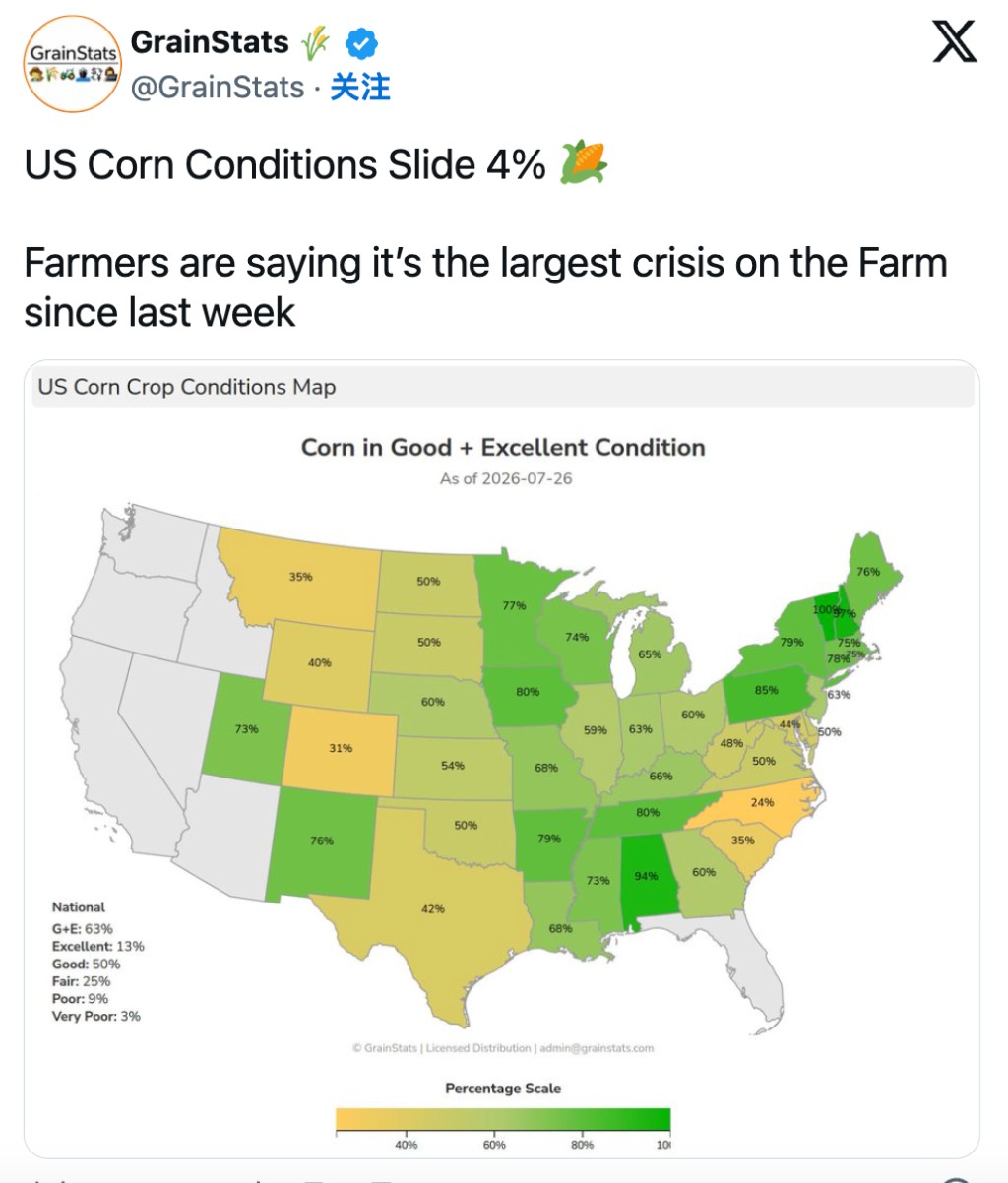
High Temperatures and Drought Severely Impact Core Production Areas
The main reason for the decline in corn crop ratings is the impact of persistent high temperatures and drought on core US agricultural regions. Parts of Illinois and Missouri are currently under heat warnings, and both states are located in the core of the US Corn Belt.
However, weather forecasts indicate that climate conditions in the Corn Belt are expected to improve later this week, which has alleviated some further market concerns and limited the continued surge in futures prices.
Before the USDA report was released, market funds had already positioned themselves. According to Bloomberg, an options trader invested $20 million last week to buy 105,000 November-expiring call spread options with strike prices of $5.50/$6.00, corresponding to a notional size of over 500 million bushels of corn.
The bet behind this trade reflects multiple factors tightening supply, including a decrease in US planting area, record-high export demand, and the potential impact of high temperatures on yield. The release of this USDA report partially confirmed the market's previous judgment on supply-side pressures.
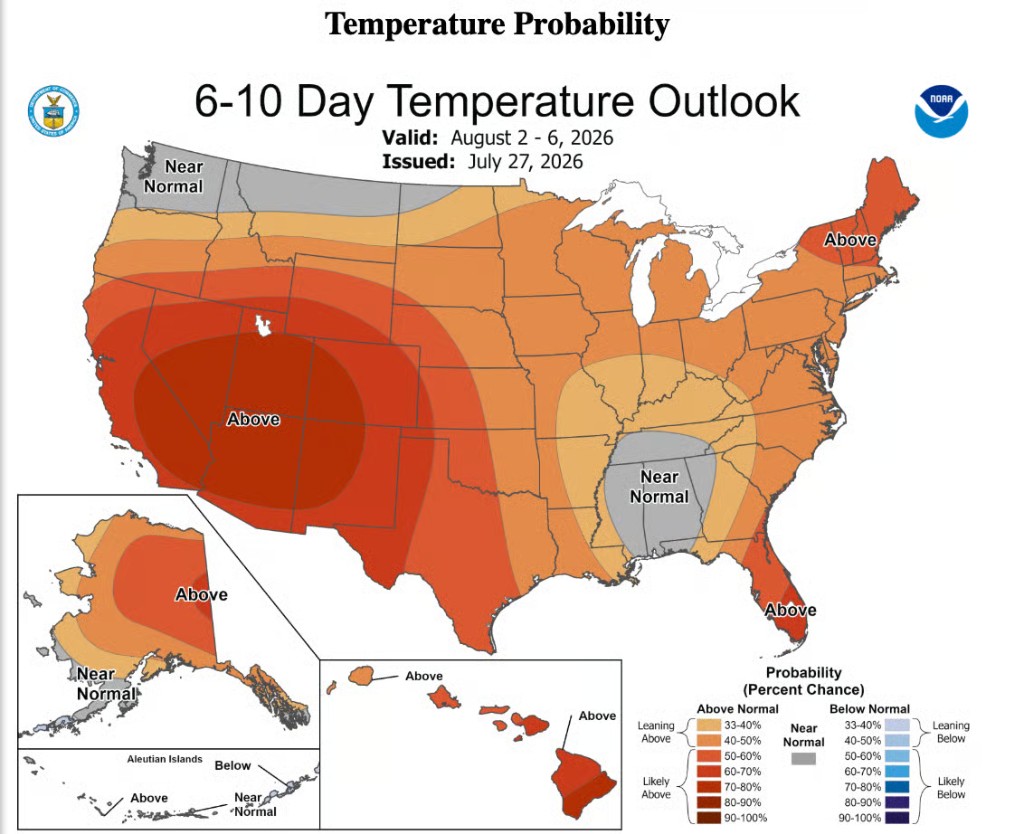
Alarm Bells Ring for Rising Grain Prices, Food Inflation Pressure Returns
Volatility in the corn market is not an isolated phenomenon. The Bloomberg Agriculture Spot Index (BCOMAGSP) has recently risen to a three-year high. This index, denominated in US dollars, tracks futures contracts for 10 major agricultural products, including Chicago and Kansas City wheat, corn, soybeans, soybean meal, soybean oil, coffee, cocoa, sugar, and cotton.
Currently, traders are closely monitoring the combined impact of multiple risk factors, including disruptions to key shipping lanes, El Niño risks, and persistent extreme high temperatures in major agricultural production areas in the US and Europe.
Bank of America has also issued warnings about the risk of another round of grocery inflation. As agricultural product prices continue to rise, cost pressures are gradually being transmitted to the end consumer market, and the risk of a rebound in food inflation is once again gaining market attention.
Risk Warning and Disclaimer
Investing involves risks; please proceed with caution. This article does not constitute personal investment advice, nor does it take into account the specific investment objectives, financial status, or needs of individual users. Users should consider whether any opinions, views, or conclusions in this article align with their specific circumstances. Investment decisions made based on this content are the sole responsibility of the investor.