
The Market Doesn't Believe in 'Myths': Did the 'AI Stock God' Die from Leverage?
 Complete. Here is the key summary
Leopold Aschenbrenner, a former OpenAI researcher hailed as a "wunderkind" by Silicon Valley and Wall Street, heavily bet on AI infrastructure, shorted software stocks, and used 4x leverage to amplify returns, creating a staggering 439% return in the first half of the year. However, when market sentiment reversed, this strategy quickly spiraled into a death spiral, causing a fund worth tens of billions of dollars to collapse instantly. This century-scale liquidation once again proves that on Wall Street, it is often not mistakes but leverage that kills you
In the brutal financial markets, being the smartest person in the room does not prevent you from being torn to shreds by the meat grinder. Often, supreme intelligence and extreme confidence become catalysts that accelerate destruction.
A century-scale liquidation that shocked Wall Street has just come to an end. This Thursday, Citadel, the hedge fund giant under Ken Griffin, swallowed the entire public market equity portfolio of the star hedge fund "Situational Awareness" through an epic block trade.
The fund, helmed by 24-year-old former OpenAI researcher Leopold Aschenbrenner, was forced to hand over its life's work at a steep discount after facing devastating margin calls.
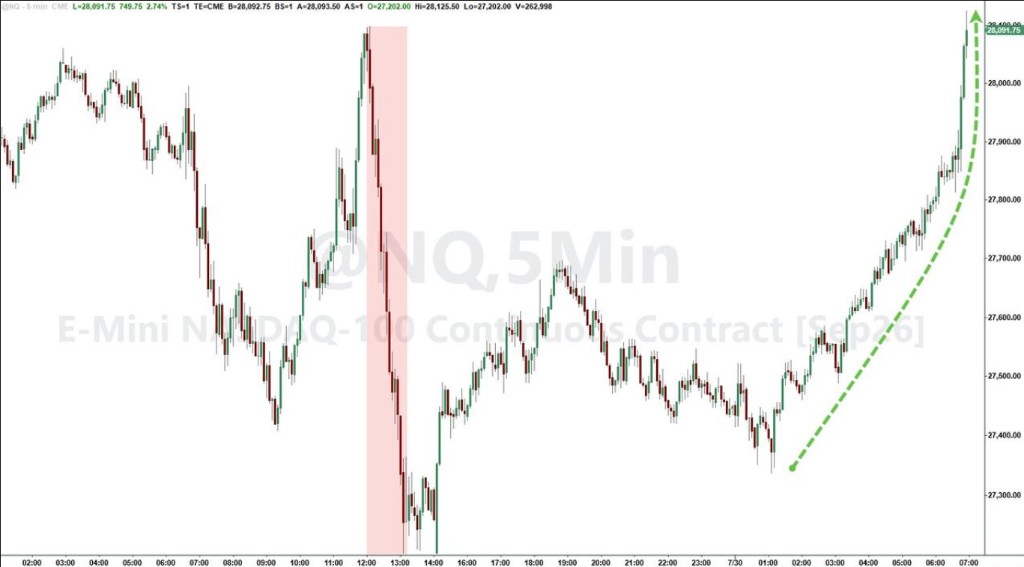
This asset transfer quickly triggered a violent reaction in the secondary market. As news spread that Citadel had taken over the positions, the market realized that the largest selling pressure might have been absorbed. AI concept stocks such as Sandisk and Nebius, which had previously suffered consecutive heavy losses, quickly staged a revenge rally, soaring 15% to 25% in a single day. A liquidity crisis caused by high leverage ended with the most violent form of shakeout.
From a staggering net return of 439% in the first half of this year to the evaporation of tens of billions of dollars in just a few weeks, Aschenbrenner's fall from grace is not just a personal tragedy. At an extremely expensive price, he once again proved to the market an ancient and bloody truth: in the face of leverage's backlash, no matter how forward-looking your vision or how correct your judgment, it is worthless.
Fatal Leverage and Violent Liquidation
Just a month ago, Aschenbrenner was the "wunderkind" jointly pursued by Silicon Valley and Wall Street. The fund, established in 2024, saw its assets under management swell to a staggering $45 billion by early July. But the seeds of destruction were already sown in an extremely aggressive portfolio construction.
The "Situational Awareness" fund adopted a highly concentrated strategy: going long on AI infrastructure (such as hardware and storage chips) while shorting software companies, and applying up to 4x leverage on top of this.
When market sentiment shifted abruptly in July, disaster struck. The sell-off in Korean memory chip stocks triggered the first round of margin calls, which then evolved into a stampede-like vicious cycle. In just a few weeks, the AI hardware stocks held heavily by the fund (such as Nebius, which fell 48%, and Sandisk, which plummeted 56%) were halved, while the software stocks they had shorted surged significantly.
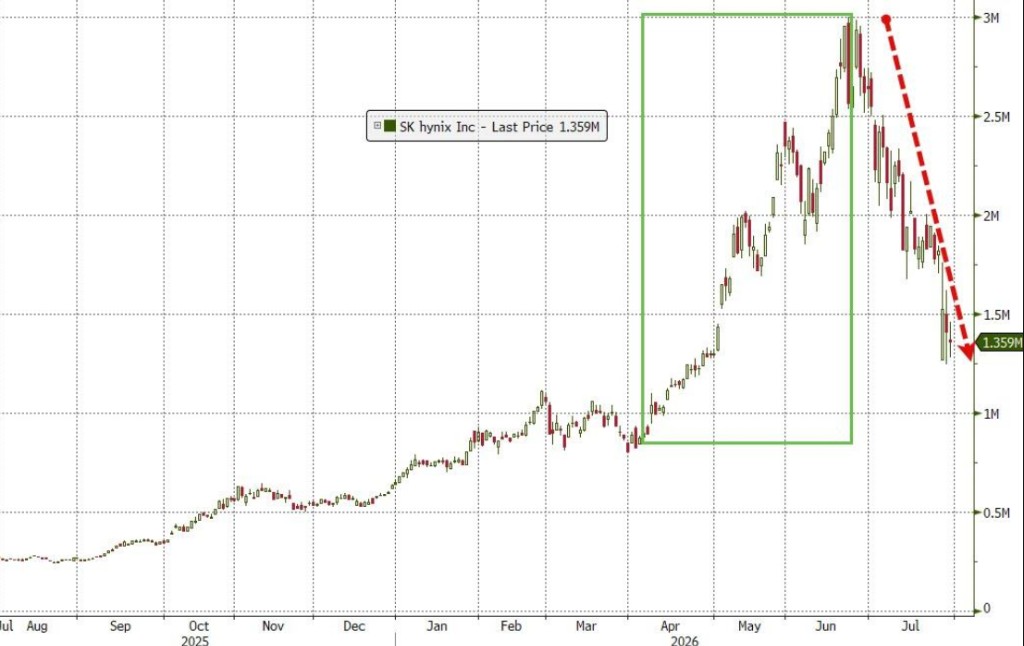
Getting hit on both sides combined with 4x leverage sent the fund instantly into a death spiral. On July 24, Aschenbrenner admitted to "significant losses" in a letter to investors and attempted to raise new capital. But on Wall Street, exposing wounds only attracts bloodthirsty sharks. Other hedge funds moved in, frantically shorting the fund's heavy holdings, forcing further liquidations. Ultimately, prime brokers such as Goldman Sachs and JPMorgan Chase intervened forcibly, packaging and selling the fund's public market long and short positions to Citadel.
Today, the beast that once reached $45 billion has shrunk to less than $10 billion, leaving only private equity holdings that are not easily liquidated (such as investments in large model company Anthropic). For Aschenbrenner, this will be a weekend full of contrasts. Just as his career suffers a major setback, he is set to marry Anthropic's Chief of Staff this weekend.
Wall Street Does Not Believe in Geniuses
The most lamentable aspect of this liquidation is that Aschenbrenner's fundamental judgment on the AI industry was actually completely correct.
As a former OpenAI researcher, he accurately predicted in his 165-page essay "Situational Awareness" published in 2024 that AI computing power would see trillion-dollar level investments, the rise of giant data centers, and the intervention of government forces.
His fund was built precisely on this deep industrial cognition. Recent earnings reports from tech giants perfectly validated his logic: Microsoft Azure cloud computing achieved a staggering 43% growth in the first quarter, NVIDIA CEO Jensen Huang clearly stated that capacity remains severely in short supply, and AMD significantly raised its total market size expectation for AI chips in 2030 from $120 billion to $220 billion.
The fundamentals were incredibly strong, yet Aschenbrenner fell just before dawn. If he had not used crazy 400% leverage, even with moderate financing, he would still be among the top 1% of fund managers on Wall Street this year. However, the cruelty of the financial market lies in the fact that it never cares how high your IQ is, nor does it care how grand your vision is. When liquidity dries up, traders must sell forcibly according to the market's prescribed timetable.
Aschenbrenner was forced to sell the assets he believed in most, and these stocks immediately surged after he was "cleared out." With his own real money, he contributed a perfect "precise bottom-fishing" opportunity for Ken Griffin, who took over the positions.
Ghost Reappears: Total Return Swaps and Wall Street's Greed
The collapse of "Situational Awareness" was not an isolated incident; it was virtually a perfect reenactment of the century-scale liquidation of Bill Hwang's Archegos in 2021.
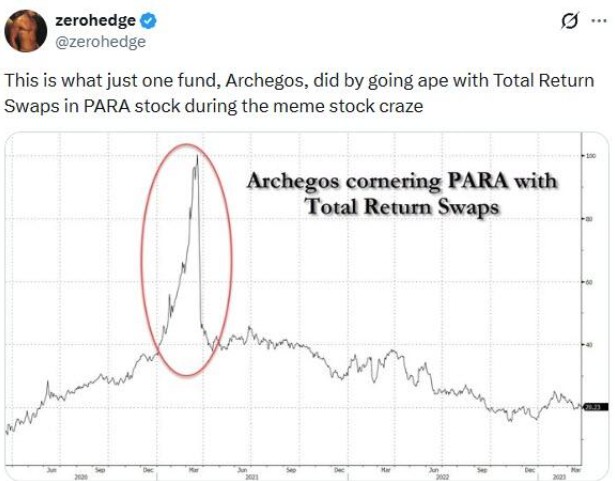
In both tragedies, a financial derivative known as "Total Return Swaps" (TRS) played a core role. Through TRS, funds could obtain extremely high hidden leverage and economic exposure from investment banks without actually holding the stocks. Investment banks (such as Goldman Sachs and Morgan Stanley) earned substantial interest, while the funds enjoyed the rapid gains brought by leverage.
Amidst the frenzy of the AI bubble and continuous momentum pushing, Wall Street investment banks evidently once again threw risk management to the wind, providing Aschenbrenner with fatal leverage limits.
When the underlying assets (such as AI hardware stocks) began to correct, high financing costs and huge margin gaps instantly crushed the fund's cash flow. To protect themselves, investment banks could only ruthlessly sell off the underlying stocks, turning what was originally a correction into a collapse-style "waterfall kill."
Echoes of Wall Street History: Being Correct Is Not Equivalent to Success
Wall Street's history is full of precedents of those who were directionally correct and firmly convinced but fell because they could not withstand short-term volatility. The ordeal of Situational Awareness is a reenactment of classic lessons in the hedge fund industry.
Long-Term Capital Management (LTCM) is the most famous footnote to this rule. This hedge fund, managed with the participation of Nobel Laureates in Economics, established complex arbitrage models based on rigorous logic. However, the 1998 Russian debt default broke the model's expectations, and LTCM collapsed rapidly due to excessive borrowing. As losses mounted, other traders realized the fund would be forced to sell and began trading against it, ultimately forcing the Federal Reserve to organize a rescue. The market did not care whether LTCM's models were smart; it only cared about who had to sell first.
Peter Thiel's Clarium Capital experienced a similar story. In the mid-2000s, the fund established huge positions based on an accurate long-term prediction of a significant rise in oil prices. But a short-term reversal in the energy market led to huge losses for Thiel, and the fund's scale shrank dramatically.
History repeatedly proves that powerful investment ideas do not equate to successful trading. When the market reverses before your expectations are realized, if excessive leverage is added, a fund manager's firm conviction turns from an advantage into a fatal liability. From LTCM to Clarium, and now to Situational Awareness, the market continues to filter participants in the cruelest way: it ultimately judges not how smart your ideas are, but your ability to survive.