
Renowned Tech Blogger Dwarkesh Patel: As AI Models Become Smarter, Compute Becomes More Valuable, and Ordinary Users Face "Price Crowding Out"
 Complete. Here is the key summary
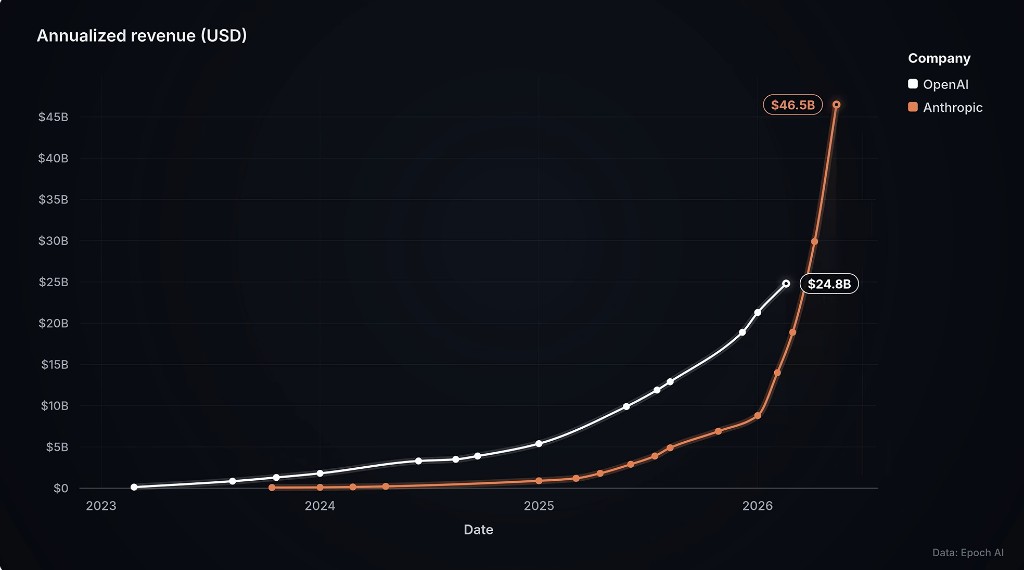
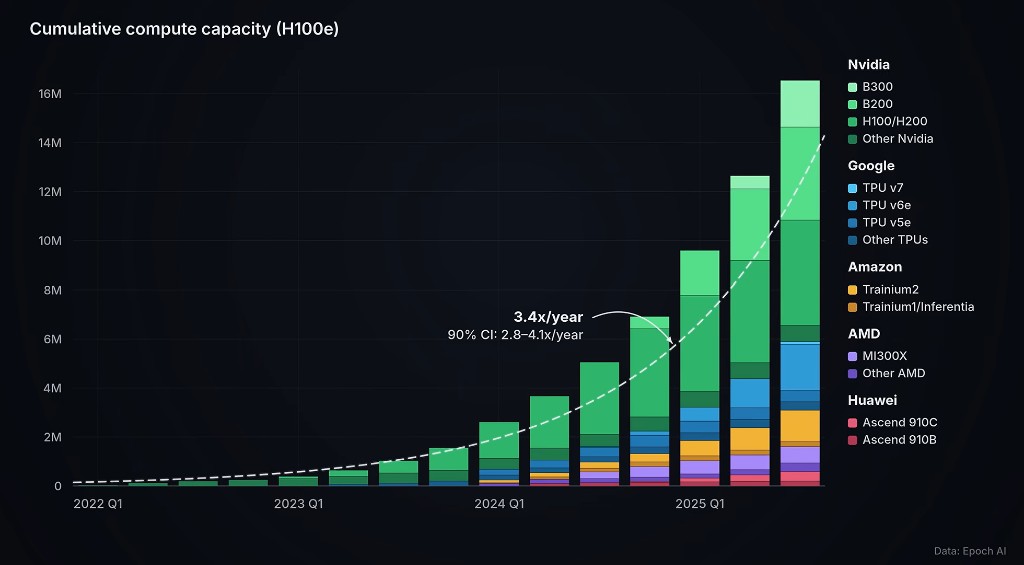
Patel stated that as AI models become more intelligent, their ability to monetize compute power strengthens, leading to soaring compute prices. Currently, top-tier labs are seeing a tenfold annual increase in revenue while compute capacity grows only threefold. Extremely low supply chain elasticity is causing severe compute shortages. High costs will trigger the Crowding Out Effect, potentially marginalizing ordinary users and low-end applications
As the capabilities of artificial intelligence models achieve exponential leaps, the value of underlying compute power is being redefined.
Tech podcaster and blogger Dwarkesh Patel recently stated in a video that the smarter the AI model, the stronger its ability to monetize compute power, which will inevitably push up compute prices, ultimately leading to the risk of ordinary AI applications and users being "priced out."
Under this trend, top-tier AI labs are facing extreme supply-demand imbalances. Patel calculated that leading companies like Anthropic are experiencing explosive revenue growth of ten times per year, but the industry's overall compute scale can only expand by three times annually. To fill this huge gap, spot prices for compute have surged by over 40% since their low point in February this year. Giants are locking in resources at high premiums; Google pays SpaceX $900 million monthly to lease 110,000 GPUs, with unit prices reaching twice the spot market rate.
The extreme lack of compute supply cannot be effectively alleviated by market mechanisms in the short term. Constrained by delivery cycles for chip manufacturing equipment and the physical limits of foundry capacity, the compute supply chain exhibits extremely low elasticity. Before reaching the technological singularity, the entire AI industry will enter a new cycle characterized by extreme resource scarcity and highly concentrated power.

Compute Growth Lags Behind Revenue, Driving Up Hardware and Inference Costs
The disconnect between excess returns in the AI industry and hardware bottlenecks is triggering a chain reaction. If top labs are to maintain a tenfold annual revenue growth while compute grows only threefold, the market must seek balance by increasing lab profit margins, raising compute prices, or increasing the proportion of compute used for inference. Patel pointed out that all three phenomena are currently occurring simultaneously.
In terms of profit margins, Anthropic's inference profit margin has soared from 40% in mid-last year to over 80% currently. Regarding compute allocation, data from Epoch shows that OpenAI used only a quarter of its compute for inference in early 2024, whereas this proportion may now be close to or even exceed 50%.
However, increasing the share of compute for inference is the last thing top labs want. For labs dedicated to developing Artificial General Intelligence (AGI), the core purpose of inference business is merely to demonstrate commercial value to investors, thereby securing more funding to train the next generation of more powerful models. Converting large amounts of compute into cloud computing services would signal a stagnation in technical progress. Therefore, most compute must remain locked into model training, making sustained price increases the only pressure valve to resolve supply-demand contradictions.
Giants Compete for Scarce Resources, Hardware Premiums Continue to Expand
The upward trend in compute prices is reflected even more aggressively in the procurement strategies of top labs. Frontier labs cannot simply rely on scattered spot instances; they need to build massive clusters to ensure the efficiency and flexibility of model training, as well as the security architecture required to protect weight files and customer data.
This forces tech giants to pay high premiums for scaled compute. Taking Google's lease of SpaceX's mixed GB200 and GB300 compute cluster as an example, the hourly rent paid is double the current spot price. This lavish purchasing behavior directly raises the baseline cost for the entire industry. As top labs become increasingly proficient at monetizing compute and costs continue to rise, other competitors will find it difficult to compete with them in resource bidding.

Economic Effects Emerge, Ordinary Users Face "Price Crowding Out"
The surge in compute value is directly linked to the intelligence level of AI models. Patel proposed a core deduction: When AI models reach the level of human software engineers, if an equivalent H100 chip were rented out based on current engineer salary levels, its annual rent would exceed $250,000, which is more than 15 times the current spot price of an H100. Based on standard economic theory, technological innovation and specialization will greatly enhance the value of labor, meaning the marginal value of compute will remain at astonishingly high levels.
These high costs will trigger the Alchian-Allen effect in economics. If the cost of leasing an H100 reaches $20 per hour, running inefficient, weak models on expensive compute would be an absurd waste of resources. Only optimal models that can achieve the same results with less compute can generate the highest premium profits.
The direct consequence is that many currently popular mass-market AI applications will be deprived of survival space. Once AI breaks through capability thresholds, giants like Google, Anthropic, or OpenAI will prefer to sell or apply limited compute to high-value automated AI research rather than cheaply providing it to ordinary users for generating meaningless "AI nonsense." Low-margin everyday consumer demand will be completely crowded out of the market by high underlying costs.
Supply Chain Bottlenecks Remain Unresolved, Industry Moves Toward High Concentration
Addressing the optimistic market expectation that "price signals will eventually solve scarcity issues," Patel cited the famous Simon-Ehrlich wager as a counterexample. Unlike Paul Ehrlich's incorrectly pessimistic prediction about commodity shortages back then, the current compute market lacks supply elasticity and cannot absorb huge demand shocks in the short term through substitutes or price stimuli, unlike metal mining.

The underlying pillars supporting a threefold annual growth in compute are shaky. The 1.4x growth contributed by Moore's Law is approaching physical limits, and maintaining it in the coming years would be miraculous. The 1.2x growth contributed by new fabs is severely constrained by the capacity of ASML EUV lithography machines. As Dylan previously stated, this bottleneck will last at least until 2030.
Furthermore, wafer quotas shifted from smartphones and PCs to AI (contributing 1.8x growth) are nearing their peak. By the end of next year, AI's share of capacity on TSMC's most advanced N3 node will skyrocket from 60% to 86%. Once all frontier wafer capacity is completely consumed by AI, the industry will face a hard landing with no wafers available.
Before the "singularity" arrives, where robots can directly convert silica sand and copper ore into chips, the industry will remain in a state of resource constraint for a long time. The strong economies of scale presented in intelligence training, while avoiding the inefficiency of retraining human labor from scratch, will inevitably lead to a worrying extreme concentration of market power.