
Jeff Dean's 27-Year Google Career Comes to an End; He Leaves with Three Top Scientists to Start a Venture, Kavukcuoglu Takes Over Gemini 4
 Complete. Here is the key summary
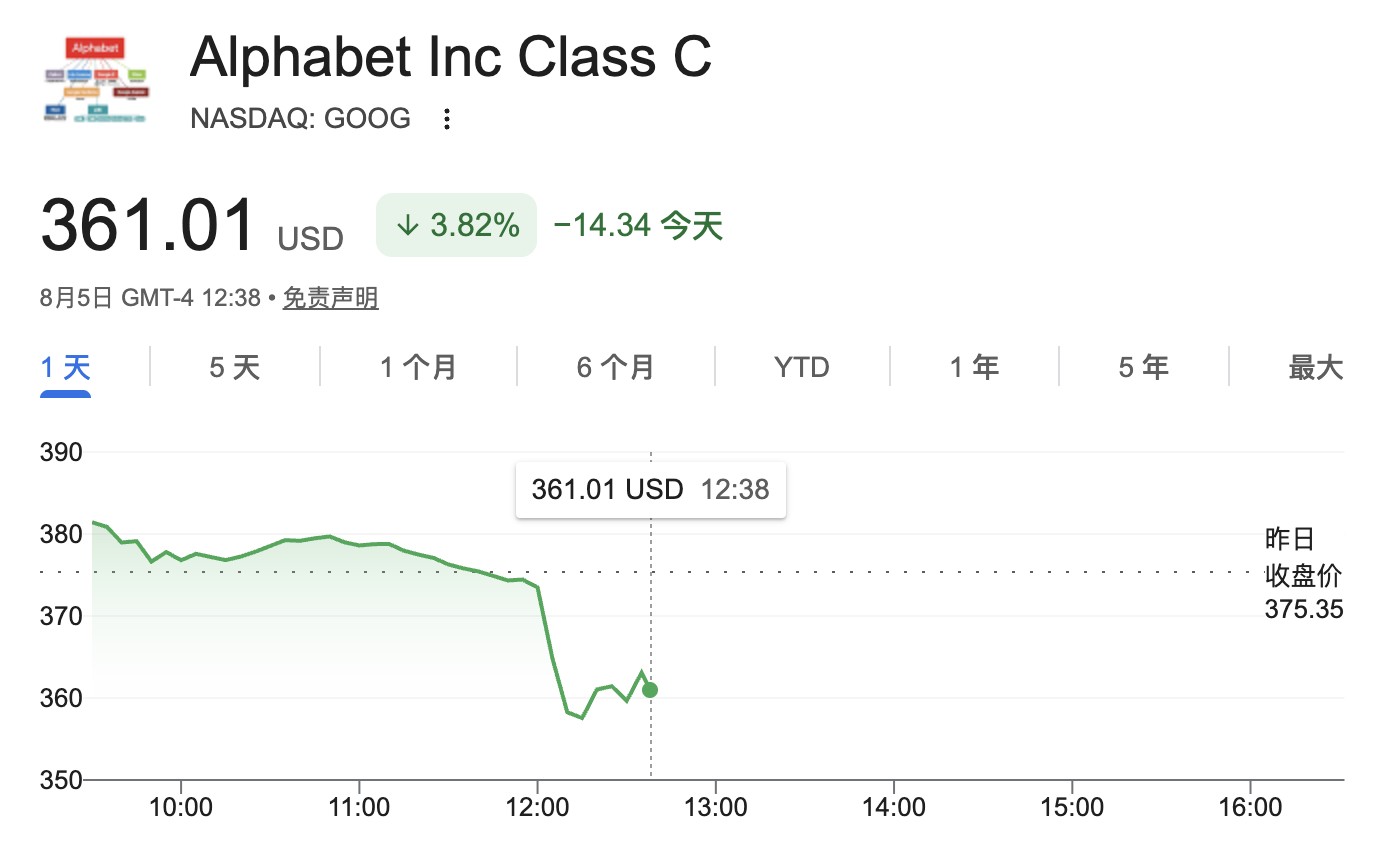
Google's Chief AI Scientist Jeff Dean has announced his departure, ending a 27-year tenure to found an AI startup named Discovery Loop, focused on automating scientific research processes. Joining him are three senior Google scientists, all of whom have achieved milestone accomplishments in AI and computer science. Following the announcement, Google's stock price dropped by 5% during intraday trading
Google is facing a wave of top AI talent loss that cannot be ignored.
Google Chief Scientist Jeff Dean has announced his departure, ending a 27-year tenure to found an AI startup named Discovery Loop, focused on automating scientific research processes.
Joining him are three senior Google scientists: Oriol Vinyals, Quoc Le, and Sanjay Ghemawat. All four have achieved milestone accomplishments in the fields of AI and computer science. Alphabet will provide cloud computing resources to the new company and participate in its investment, while Radical Ventures and Khosla Ventures co-led the seed funding round.
Demis Hassabis, head of Google DeepMind, will transition to the role of Chair of the AI Laboratory. Koray Kavukcuoglu, Google's Chief AI Architect and Hassabis's long-time deputy, will take over most of Hassabis's responsibilities.
This personnel change occurs against the backdrop of continued pressure on Google's competitive landscape in AI. Google briefly took the lead in the race for frontier models last autumn with the new version of Gemini, but has since been overtaken by OpenAI and Anthropic, while its latest flagship model, Gemini 3.5 Pro, has yet to be released.
Following the announcement, Google's stock price skidded by 5% during intraday trading.
Four Google Veterans Depart Together
Dean joined Google in 1999 as its 30th employee and subsequently drove several key technological transformations.
He co-founded Google Brain in 2011, the foundational team for Google's deep learning research; he also led the development of the Tensor Processing Unit (TPU)—a chip that now provides computing power for Google's large language models and is sold to external enterprises.
The three scientists departing with him have equally distinguished backgrounds.
Vinyals was a key contributor to AlphaFold, the protein structure prediction AI program that won the Nobel Prize in 2024; Le co-authored and helped guide Google's AI system, which achieved gold-medal-level performance in the International Mathematical Olympiad; Ghemawat, another early Google employee, built the foundation of Google's distributed system architecture alongside Dean in the early 2000s and received joint recognition from the Association for Computing Machinery (ACM) in 2012.
Google CEO Sundar Pichai stated that Dean and Ghemawat drove several of the company's most important technological transformations during their 27 years of service and extended his best wishes to both.
Power Restructuring in AI Division: Hassabis Becomes Chief Scientist, Kavukcuoglu Takes Over Gemini 4
Jeff Dean's departure is not an isolated case. Google is currently facing a series of AI talent departures and has experienced delays in launching top-tier large models compared to competitors like Anthropic and OpenAI. In this context, Pichai simultaneously announced a major restructuring of the AI division.
Demis Hassabis will hand over daily operational responsibilities to assume the role of Chairman of DeepMind and serve as Alphabet's Chief Scientist. In a post on the X platform, he stated:
"I have dedicated my life to the pursuit of Artificial General Intelligence (AGI). As we enter this critical phase, I will focus on long-term strategy to accelerate scientific breakthroughs."
He added that he would work with Pichai on "strategic and global" matters related to AI in the future.
Hassabis's upward move hands the baton of technical execution to Koray Kavukcuoglu. As the Technical Lead at DeepMind, Kavukcuoglu will report directly to Pichai and bear the primary responsibility for the research and development of Gemini 4.
With the generational gap between the Gemini series and competing products yet to be bridged, the mid-stream change in leadership injects new uncertainty into the project's progress.
Automating Scientific Experiment Loops, Targeting Drug Discovery and Clean Energy
Discovery Loop is positioned as a public-benefit corporation, with a core vision to accelerate the discovery process by using machine learning models to automate complex, multi-step research processes in science and engineering.
"The scientific process involves proposing experimental ideas, setting up and running experiments, and then evaluating the results," Dean said in an interview. "In many fields, you can completely computerize this entire loop." This is also the origin of the company's name.
Discovery Loop plans to initially focus on using its proprietary technology stack to automate machine learning research and engineering, gradually expanding into areas addressing global challenges such as hardware design, drug discovery, and clean energy.
Regarding the reason for leaving Google, Ghemawat stated that Google's existing infrastructure is well-suited for large-scale consumer applications, advertising systems, and search businesses, but the requirements for the infrastructure they wish to build for the research field are "entirely different."
Dean added that he began seriously considering this entrepreneurial direction about five weeks ago and subsequently quickly contacted his three partners.
Talent Loss Tests Google's AI Competitiveness
This is not an isolated incident for Google recently. It is reported that Noam Shazeer, co-author of the transformer architecture paper and co-founder of Character.AI, recently left Google to join OpenAI; John Jumper, a co-recipient of the Nobel Prize for AlphaFold, has already moved to Anthropic.
The continuous exodus of high-end AI research talent, combined with the slow progress of Google's frontier models, has deepened external doubts about its AI competitiveness.
The release schedule for Gemini 3.5 Pro remains unclear, while some new models from Meta have already surpassed Gemini in several benchmark tests, further compressing Google's lead.