
Gemini Collapses, Meta Overtakes to Become the "Third AI Giant"? Will Google Be This Year's Meta?
 Complete. Here is the key summary
Over $180 billion in market cap wiped out in a single day! The delay of Gemini triggers a major earthquake in Google's AI leadership: top talent departs en masse, and Hassabis steps down. Pragmatists take full control. Google completely abandons its "research institute" fantasy, turning instead to the brutal industrial implementation of AI. Can this belated realist reshuffle save its AI hegemony?
Google is undergoing its most profound AI leadership restructuring in nearly 30 years since its founding. The continued lagging of its flagship Gemini model and the collective exodus of top talent have forced Google to make a long-overdue choice between being a "great research institution" and a "brutal model product company"—a choice that is fundamentally reshaping the company's AI strategic logic.
On August 5, 2026, Google announced that Demis Hassabis would step down as CEO of Google DeepMind, transitioning to Chief Scientist at Alphabet and Chairman of Google DeepMind. Just minutes before the announcement, Jeff Dean, who had worked at Google for 27 years, jointly announced his departure along with Oriol Vinyals, Sanjay Ghemawat, and Quoc Le to found the AI research company Discovery Loop. Meanwhile, Koray Kavukcuoglu took over the daily operations of Google DeepMind, assuming full control over model development, frontier research, Gemini applications, and the developer ecosystem, reporting directly to CEO Sundar Pichai. Following the news, the stock price of Google's parent company, Alphabet, lost over $180 billion in market value in a single day.
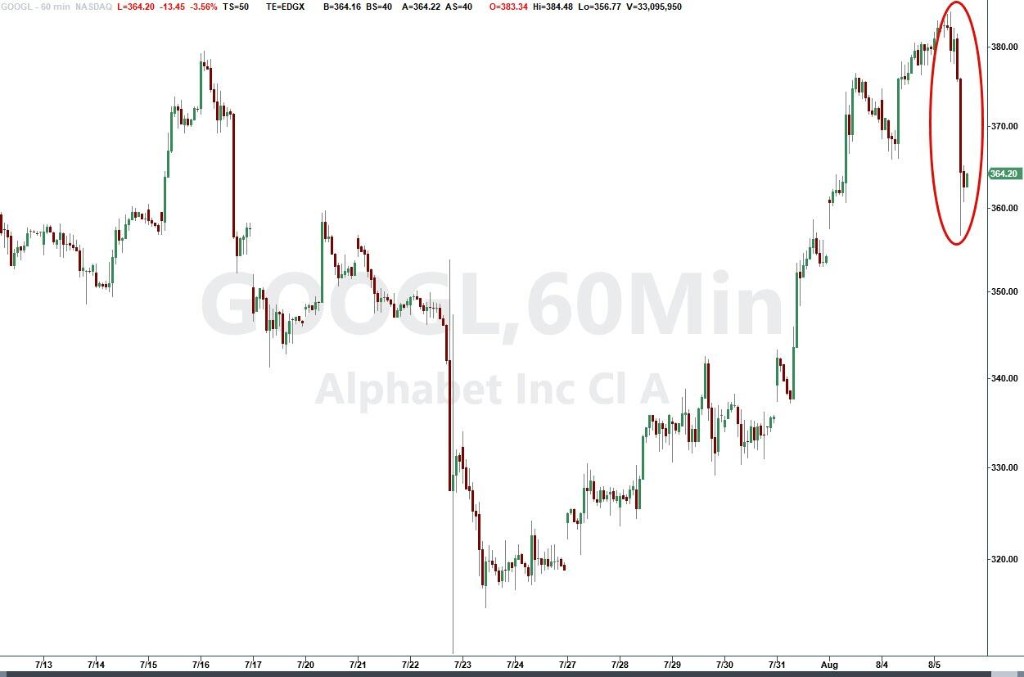
This was the final institutionalization of a power transfer that had been brewing for some time, rather than a sudden personnel earthquake. The release of Gemini 3.5 Pro, originally scheduled for summer 2026, was delayed, while OpenAI and Anthropic continued to lead in key tracks such as coding agents and long-task execution. Less than two months ago, Noam Shazeer, who participated in designing the technical architecture of Gemini, had already moved to OpenAI, and John Jumper, who shared the Nobel Prize with Hassabis, joined Anthropic. The collective withdrawal of Google's AI golden generation marks the end of an era.
Flagship Model Delayed, Talent Drain Accelerates
The delay in the release of Gemini 3.5 Pro was the most direct trigger for this management change. According to reports, the model was originally planned for launch this summer, but as of late July, it was still in the partner testing phase, with Google stating only that it would be widely released when "ready." Meanwhile, internal teams have already started training Gemini 4.
Talent loss has intensified simultaneously. Oriol Vinyals, who left alongside Jeff Dean, was one of the core generals in Google's fight against Anthropic and OpenAI. Earlier, Noam Shazeer joined OpenAI, and John Jumper moved to Anthropic. Jeremy Nixon, who previously conducted research at Google Brain, described Jeff Dean's departure as "almost unimaginable" and warned: "This may be the first true moment of crisis for Google in a long time. No one can match the speed of Google's talent drain."
In July, Google released several small AI models, including one focused on cybersecurity, which performed reasonably well in programming and financial task benchmarks but failed to surpass competitors. Meanwhile, Google maintained massive capital investment—the company expects its spending on data centers and AI infrastructure this year to reach $195 billion to $205 billion, more than double last year's $85 billion.
The Total Eruption of Three Years of Organizational Contradictions
The root of this adjustment can be traced back to Google's decision in April 2023 to merge Google Brain with DeepMind. At the time of the merger, the outside world generally interpreted it as a strategic move to concentrate top AI talent and accelerate R&D. However, Google confused two distinctly different issues during the merger: whether talent could be concentrated, and what should be done after concentration, are two separate matters.
Since its inception, Google Brain has been deeply integrated with Google's search, advertising, and infrastructure systems, naturally possessing an engineering delivery attribute. DeepMind, on the other hand, has always positioned itself as an endeavor close to the "Apollo Program"—first solving intelligence itself, and then using intelligence to solve all problems. Hassabis's core interest was never to boost token sales for the next quarter, but rather AGI, world models, and scientific discovery; the Nobel-level achievement of AlphaFold also gave undeniable legitimacy to this long-termism.
Over the past three years, Google has demanded that DeepMind serve the commercial product needs of billions of users, while simultaneously unwilling to give up DeepMind's halo as a top-tier research sanctuary.
According to industry insiders with frequent contact with Google's AI leadership, during the sprint for Gemini 2.5, teams responsible for core tasks such as data pipelines and RLHF were working overnight at a startup pace, while parts of DeepMind, maintaining their research institute style, continued to operate in a relaxed inertia of "exploring how two directions might combine."
Hassabis nominally led the overall organization, but his actual focus remained on AGI and scientific missions; Jeff Dean retained the title of Chief Scientist, but the Google Brain route gradually lost organizational dominance after the merger; Koray Kavukcuoglu was quietly endowed with increasing responsibility for product integration, and the power structure had already subtly changed, although titles still retained the shell of the old order.
Power Transfer Completed a Year Ago
In fact, this personnel adjustment merely institutionalized the power shifts that had already occurred over the past year.
In June 2025, Google created the position of Chief AI Architect specifically for Kavukcuoglu, promoted him to Senior Vice President, and adjusted his reporting line to report directly to Pichai. In an internal memo, Pichai stated that Kavukcuoglu's new mission was to get Google's most advanced models into products faster, achieving smoother integration, faster iteration, and higher efficiency.
Google's official positioning of Kavukcuoglu also quietly shifted at that time—he was no longer just the technical head of DeepMind, but explicitly tasked with leading the development of Gemini generative AI models and their scaled integration into Google products. As an early member of DeepMind, he participated in building the DQN deep reinforcement learning system, studied under AI pioneer Yann LeCun, and has a solid research background; unlike Hassabis, he always ultimately returns to specific product implementation and user needs when discussing technical routes.
In Kavukcuoglu's view, the value of native multimodality lies not in benchmark scores, but in enabling models to complete tasks that were previously impossible. This pragmatic orientation is exactly what Google needs at its current stage. Google did not only decide today that Kavukcuoglu is better suited to lead Gemini; it was simply unwilling to publicly negate Hassabis's leadership arrangement.
Google's "TBD Strategy" and the Era of Industrialized AI
What Google has pursued over the past three years is essentially a "To Be Determined (TBD) strategy"—always unwilling to make a clear choice between being a "great research institution" and a "brutal model product company," hoping to have the best of both worlds, but failing to excel at either.
This logic held up in the early stages of AI development—when a single breakthrough in underlying technology could still create a generational gap, and genius moments were worth waiting for. But entering the current phase, model competition relies increasingly on high-density experimentation, data engineering, inference optimization, cost control, and continuous delivery, rather than waiting for the next AlphaGo moment. Not falling behind every three months has become a more urgent survival proposition than "changing science in the next decade."
After this adjustment, Google has formed a new division of labor: Kavukcuoglu leads high-intensity training and iteration; Pichai is responsible for embedding models into every business under Google; Hassabis turns to AGI, scientific discovery, and AI drug research at Isomorphic Labs; and Jeff Dean joins forces with his old partners to start a new venture, with Google providing investment and cloud service support, awaiting future technical achievements to be incorporated into the ecosystem.
This is a realistic arrangement and a clear admission of failure. The Google that convinced the outside world that large companies could have their AI direction determined by a group of genius scientists is becoming history. As for whether Google can rebuild its competitiveness under Kavukcuoglu's industrial execution logic, or whether it will fall into a deeper vortex of talent centrifugal force, the market is looking for answers—and when Gemini 3.5 Pro makes its debut will be the earliest touchstone.