
Concerns Over Memory Chip Peak Intensify; Multiple South Korean Brokerages Cut Price Targets for Samsung and SK Hynix, with Deepest Cuts Exceeding 30%
 I'm LongbridgeAI, I can summarize articles.
Kiwoom Securities lowered the price targets for Samsung Electronics and SK Hynix to KRW 350,000 and KRW 2.1 million respectively, while maintaining "Buy" ratings. This move stems from cautious end-user procurement due to high prices of commodity memory chips, coupled with supply pressure from capacity expansion in 2027, intensifying market concerns that the industry cycle has peaked. Previously, multiple institutions had successively lowered their price targets, with some cuts exceeding 30%. Brokerages remain optimistic about the mid-to-long-term growth potential of the HBM business, believing that the pace of HBM volume ramp-up will be a key variable for valuation recovery
Concerns that the memory chip industry cycle has peaked are intensifying, leading South Korean brokerages to aggressively lower price targets for Samsung Electronics and SK Hynix. However, they remain optimistic about the mid-to-long-term growth prospects of both companies.
According to a report by the Chinese edition of Korea's JoongAng Ilbo on August 11, Kiwoom Securities lowered its price target for Samsung Electronics from KRW 390,000 to KRW 350,000, and reduced the target for SK Hynix from KRW 2.2 million to KRW 2.1 million, while maintaining "Buy" ratings for both. Previously, institutions such as Mirae Asset Securities, Shinhan Investment & Securities, and Samsung Securities had successively lowered their price targets for the two companies, with some cuts reaching over 30%.
This round of valuation adjustments is primarily driven by two factors: first, commodity memory chip prices remain at high levels, causing end-device manufacturers to become more cautious in procurement, which has intensified market concerns about the industry cycle peaking; second, large-scale capacity expansion is expected to release more supply in 2027, further pressuring the industry's supply-demand balance.
Meanwhile, brokerages have not turned bearish on the two companies. HBM is still regarded as the core business supporting mid-to-long-term performance and valuation.
Brokerages Intensively Lower Price Targets
The wave of price target cuts accelerated starting in late July.
Mirae Asset Securities lowered its price target for Samsung Electronics from KRW 550,000 to KRW 370,000, and for SK Hynix from KRW 4.2 million to KRW 2.8 million, representing a 33% cut for both. The firm believes that while the market had already priced in expectations for declining NAND contract prices, the further compounding of industry cycle concerns necessitated additional downward revisions to price targets.
Shinhan Investment & Securities lowered its price target for Samsung Electronics from KRW 590,000 to KRW 450,000, and for SK Hynix from KRW 4.2 million to KRW 2.7 million. Samsung Securities lowered its targets to KRW 400,000 and KRW 3 million, respectively.
Recent fluctuations in earnings expectations for SK Hynix have further amplified market concerns regarding the memory cycle. On July 13, Korea Investment & Securities (KIS) projected SK Hynix's Q2 operating profit at KRW 60.4 trillion. Although this represents a 556% year-on-year increase, it was approximately 8% lower than the market consensus expectation of KRW 65 trillion. KIS explained that this was mainly due to reincorporating price assumptions for Long-Term Agreements (LTA) into its calculations, rather than a deterioration in fundamentals.
The latest adjustment by Kiwoom Securities was relatively limited in magnitude but still reflects the market's cautious stance on the short-term memory cycle.
Commodity Memory Faces Supply-Demand Pressure
Park Yu-yue (phonetic translation), an analyst at Kiwoom Securities, stated that high memory chip prices are making smartphone manufacturers more cautious in their procurement, and memory demand in the laptop and PC markets may also be weaker than previously expected.
More noteworthy is the supply side. The firm expects that large-scale capacity expansion driven by long-term supply contracts will bring more new production capacity in 2027, potentially putting pressure on the prosperity of the commodity memory chip industry.
KIS predicts that the average selling prices (ASP) of DRAM and NAND in Q2 will still rise by approximately 30% and 50% quarter-on-quarter, respectively. However, since HBM pricing relies more on LTAs, its price increases are relatively limited, thereby reducing the elasticity of SK Hynix's overall ASP. This means that the current market concern is not a sudden deterioration in demand, but rather whether rising memory prices can continue to translate into profit growth.
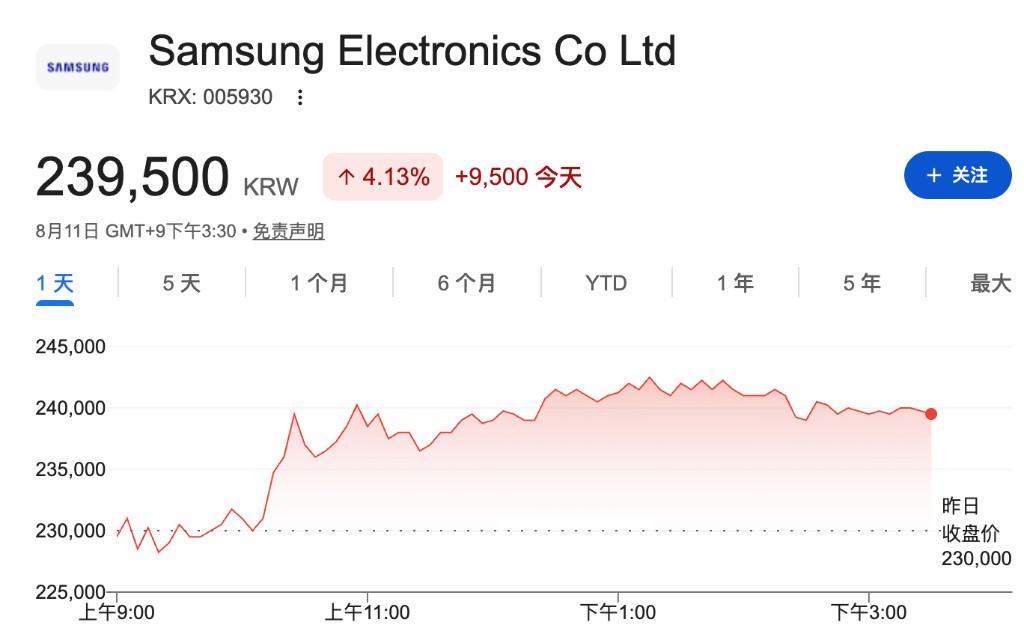
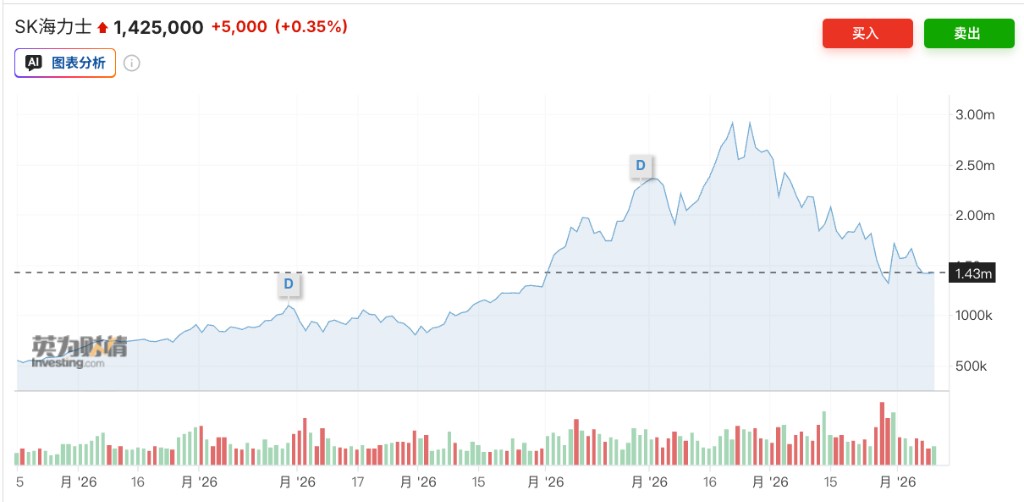
Against this backdrop, the profitability and valuation space for traditional DRAM and NAND businesses are being reassessed, and the stock prices of Samsung Electronics and SK Hynix have fallen significantly from their highs. As of the close on the 11th, Samsung Electronics closed at KRW 239,500, and SK Hynix at KRW 1.425 million, both marking substantial declines from their historical highs of KRW 374,500 and KRW 2.987 million reached in June, respectively.
HBM Remains Key to Valuation Recovery
Despite lowering price targets, South Korean brokerages generally maintain "Buy" ratings for both companies, primarily due to the growth potential of their HBM businesses.
Kiwoom Securities expects that Samsung Electronics' HBM shipments in 2027 will increase by 109% year-on-year, with its Blended ASP rising by 81%, potentially allowing it to reclaim the top spot in HBM market share.
For SK Hynix, HBM is also a crucial support for short-term stock price recovery and mid-to-long-term earnings growth. KIS expects that as HBM4 begins large-scale shipments in Q3, the rebound in market average prices is likely to drive an improvement in SK Hynix's overall ASP. It maintains a price target of KRW 3.8 million and an "Overweight" rating.
Therefore, this round of price target cuts largely reflects brokerages' repricing of the commodity memory cycle and short-term supply-demand dynamics, rather than a comprehensive bearish turn on the fundamentals of the two companies. Whether valuations can recover in the future will depend more on the speed of HBM volume ramp-up and the ability to realize profits.