
Fully in Line with Expectations! US July CPI Year-on-Year Growth Narrows to 3.4%, Core CPI Slows to 2.5%
 I'm LongbridgeAI, I can summarize articles.
Traders maintain their bet on a 45% probability of a Fed rate hike in September
The latest US inflation data was generally mild, alleviating short-term market concerns about an unexpected rebound in prices. However, it remains some distance from providing the sustained cooling signals required for a shift in Federal Reserve policy.
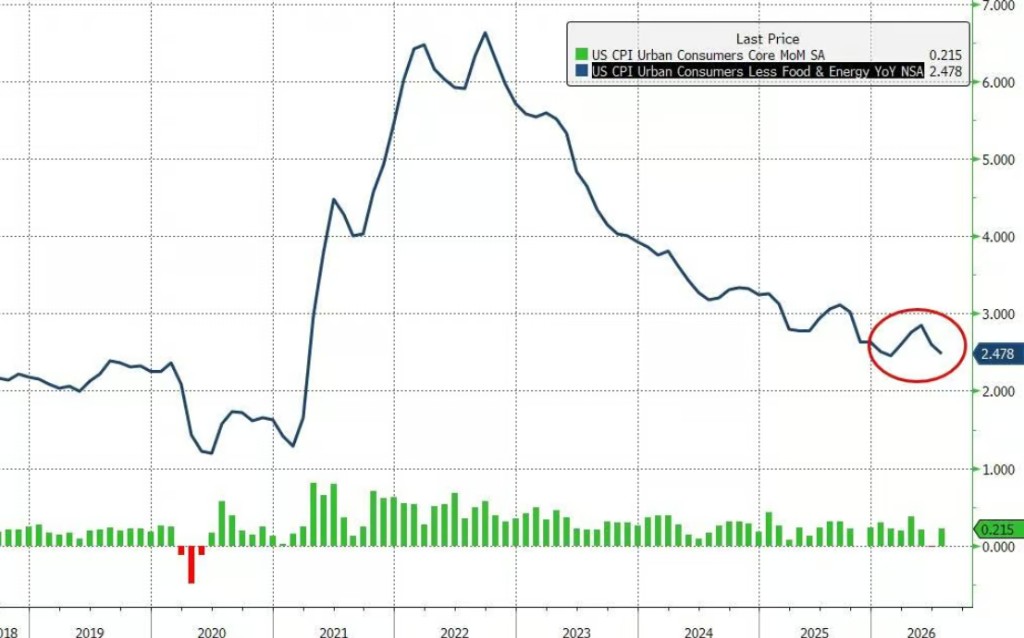
Data released by the US Bureau of Labor Statistics on Wednesday showed that the July CPI rose 3.4% year-on-year, a slight decline from June's 3.5%, marking the lowest level since March. The year-on-year growth rate of core CPI narrowed from 2.6% to 2.5%, with both figures aligning with market expectations.
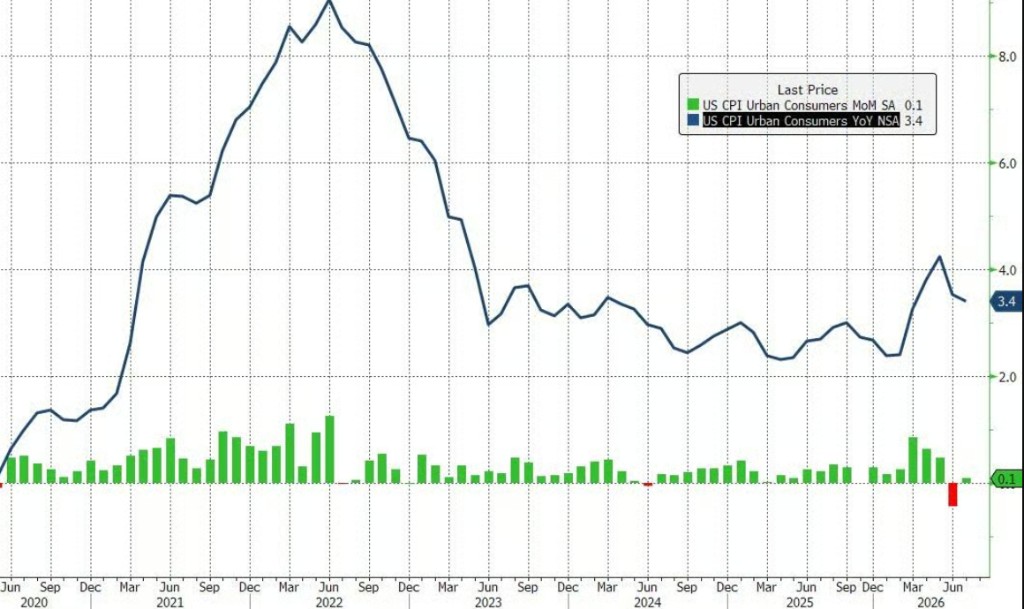
On a month-on-month basis, the headline CPI rose 0.1%, also the lowest level since March, while core CPI increased by 0.2%, likewise falling within the expected range.
Following the data release, traders maintained their bet on a 45% probability of a Fed rate hike in September, with no significant changes observed in market pricing dynamics.
Market reaction was generally restrained after the data release. The US Dollar Index rose briefly in the short term, while US stock futures and spot gold edged lower. The yield on the 10-year US Treasury note remained near 4.66%, and the Bloomberg Dollar Spot Index softened simultaneously. The Treasury market briefly gave up some of its earlier gains for the day, as some traders had previously bet that the data would be milder than expected.
Housing Costs Remain the Primary Support for Inflation
Housing costs continued to be the core driver of inflation this month.
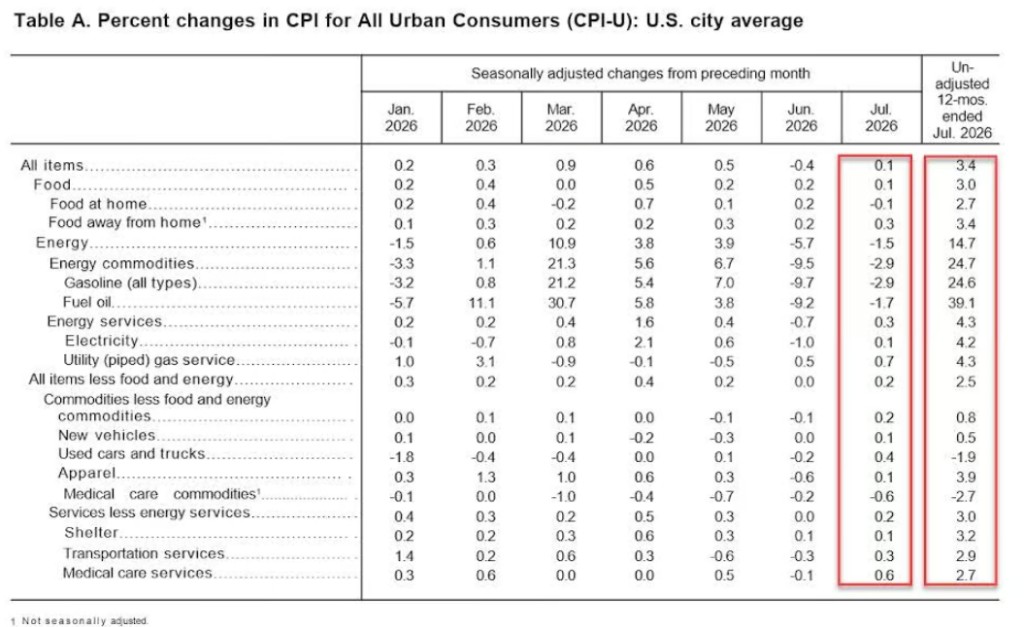
Data showed that the shelter component rose 0.1% month-on-month, accounting for approximately two-thirds of the monthly increase in the headline CPI. Within this category, owners' equivalent rent and rent both rose 0.3% month-on-month, while the index for lodging away from home fell 2.8%.
The energy component constituted the primary deflationary drag this month, with the overall energy index declining 1.5% month-on-month, including a 2.9% month-on-month drop in gasoline prices. The food index rose 0.1% month-on-month, a narrower increase compared to June's 0.2%, while the food-at-home index dipped slightly by 0.1%.
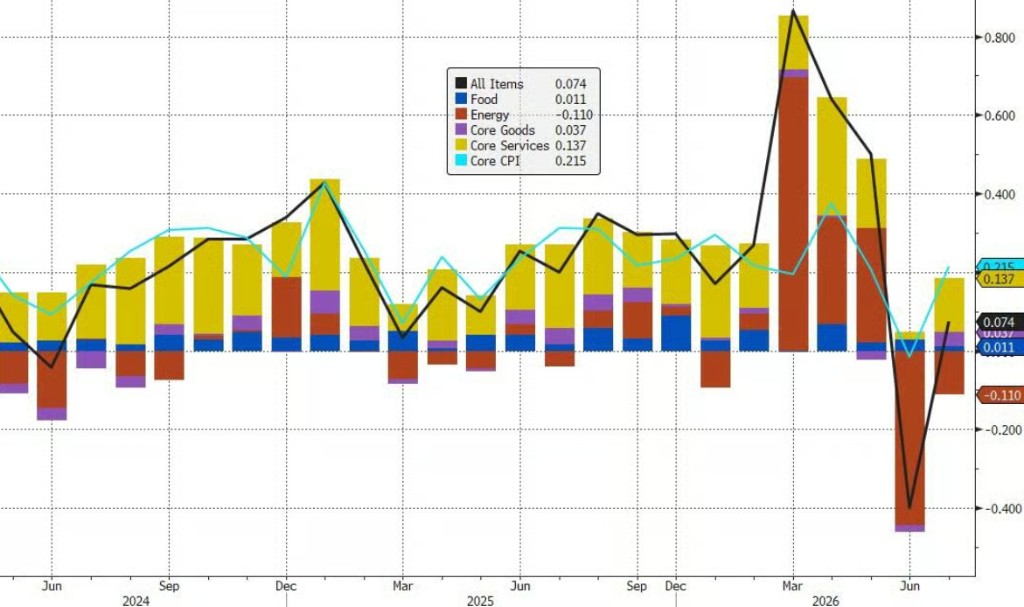
Among core components, airfare prices surged 2.2% month-on-month. The communications and education indices rose 0.6% and 0.5% respectively, while the medical care index increased 0.4% month-on-month, with hospital services rising by 0.5%. Prices for used cars and trucks rose 0.4% month-on-month.
In contrast, the motor vehicle insurance index fell 0.3% month-on-month, continuing the 2.0% decline seen in June. This emerged as the most notable declining component this month. Given the substantial increases in this category in recent years, this consecutive decline warrants attention.
Data Meets Expectations, Short-Term Alarm Eased
Structurally, this month's data did not send warning signals of runaway inflation.
Goods inflation remained flat year-on-year at 0.8%, while services inflation slowed to 3.0% year-on-year. The year-on-year growth rate of core CPI stood at 2.48%, the lowest level since February this year. The overall direction of the data broadly aligns with the Federal Reserve's long-term inflation target of 2%.
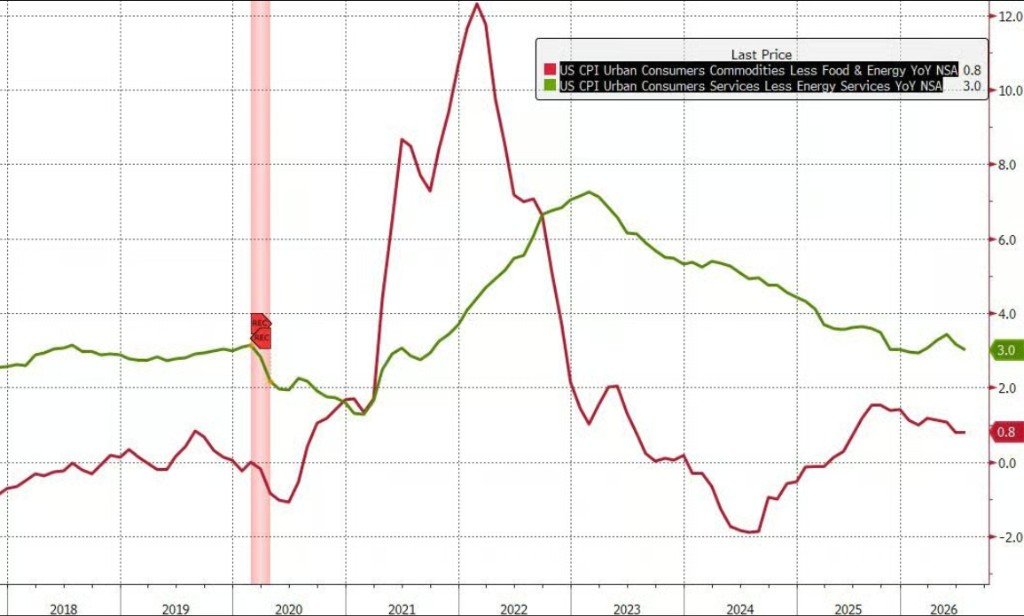
Federal Reserve Chair Powell may breathe a sigh of relief for now, but analysts point out that what he truly needs is for August's inflation data to replicate this same mild performance, a result that remains quite uncertain.
Policy Path Still Awaits Validation from Future Data
A single month's data is insufficient to lay the foundation for a policy pivot.
The current year-on-year increase of 3.4% remains significantly above the Federal Reserve's long-term target of 2%, and core inflation is still at the 2.5% level, leaving the monetary policy path unclear.
The trajectory of energy prices also introduces additional variables. The decline in oil prices in July supported this month's CPI data. However, as oil prices rebounded from late July to early August, it remains to be seen whether the energy component can continue its current deflationary contribution in August.
Whether the Federal Reserve raises rates at its September meeting will depend heavily on the evolution of subsequent data. The market's current maintenance of a 45% probability bet on a rate hike implies that the policy direction remains highly open. Investors need to closely track signals from August's inflation and employment data.