
July Inflation Data Came in as Expected, Lowering the Odds of a Fed Hike in September Yet Again
 I'm LongbridgeAI, I can summarize articles.
July CPI rose 0.1% monthly and 3.4% annually, aligning with expectations. Core CPI increased 0.2% monthly and 2.5% yearly. Combined with a weak July jobs report showing a decline in nonfarm payrolls, market odds of a Federal Reserve rate hike in September dropped to roughly 38%, favoring a hold. Analysts suggest the Fed is unlikely to raise rates unless data changes significantly before the next FOMC meeting.
With an important Federal Open Market Committee (FOMC) just about a month away, all eyes were on the recently released July inflation report.
The Consumer Price Index (CPI) rose 0.1% in July and was up 3.4% year over year, in line with economists’ estimates. Core CPI, which strips out more volatile food and energy prices, rose 0.2% in July, coming in 2.5% higher year over year. The core numbers were also in line with estimates.
While the numbers are higher than the June inflation report, they are toward the lower end when looking back at inflation through the year. Food prices rose 0.1% during July; energy rose 0.3%; and shelter rose 0.1%.
Given the modest increase in inflation and other signs of slowing inflation, the market now sees an even lower chance than before the report that the Fed will raise interest rates at its September meeting.

Image source: Getty Images.
Odds of a Fed hike decline
According to the CME Group’s FedWatch tool, there is nearly a 62% chance the Fed holds rates within its current 3.50%-3.75% range in September, as of 11:32 a.m. ET on Aug. 12. That’s up from a nearly 52% chance just one day prior.
Meanwhile, the odds of a hike have declined from over 48% to roughly 38%. Looking ahead to the Fed’s December meeting, there is still roughly a 45% likelihood that interest rates will increase by a quarter point.
In addition to the in-line inflation report, the July jobs report suggested potential weakness in the labor market, with nonfarm payrolls declining by 23,000, well below estimates.
Continued weakness in the labor market also bolsters the case for the Fed to hold rates steady, as labor market conditions can influence inflation, and the Fed won’t want to see it deteriorate too much.
“In-line inflation will keep the ‘no need to hike rates’ narrative that took hold after last week’s jobs report intact,” Morgan Stanley Wealth Management’s Chief Economist Ellen Zentner said, according to CNBC.
Unless the data changes, no need for the Fed to hike
While the FOMC was divided at its July meeting, with three members dissenting in favor of a rate hike, I think it would be very difficult for the Fed to move forward with a hike in September unless the data changes significantly.
Monthly core CPI, which is the more important number right now, given how much energy prices are fluctuating due to the Iran war, is right around its one-year average.
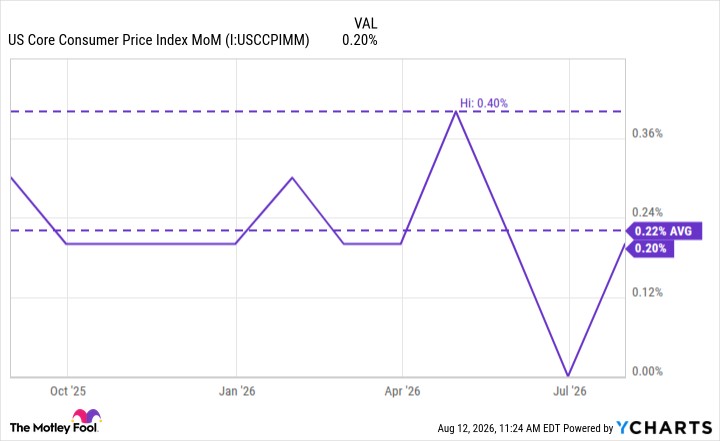
US Core Consumer Price Index MoM data by YCharts
Even though core CPI excludes energy prices, higher gas prices still make everything more expensive by raising the cost of doing business, which can lead to higher prices for consumers.
So, given the modest increase in core inflation and the potential factors affecting it, it would seem like a rushed decision for the Fed to move forward with a hike at its next meeting.
However, before that meeting, the market will see the July Personal Consumption Expenditures (PCE) Price Index report, August jobs numbers, and August CPI, so a lot could still change between now and the FOMC’s September meeting.