
Meta's California lawsuit reaches a critical juncture, potentially facing "astronomical" legal consequences
 I'm LongbridgeAI, I can summarize articles.
Meta is facing a major lawsuit led by the California Attorney General, accusing its products of fostering youth addiction and violating COPPA. The case was initiated by a coalition of 29 states, with opening statements set to begin soon. Given that Meta previously lost a case in New Mexico and paid nearly $1 billion in damages, if it loses this case, it may face harsher penalties and a restructuring of its core algorithms, which is seen by the industry as the "Big Tobacco moment" for the social media sector
Key Points
- Less than two weeks after losing in New Mexico, Meta faces a significant legal challenge led by the California Attorney General.
- The lawsuit against Meta by California Attorney General Rob Bonta will begin opening statements on Tuesday, with multiple state governments pressuring the social media company to modify its product design.
- New Mexico Attorney General Raúl Torrez, who recently won a case against Meta in his state, stated in an interview: "You might wake up one day to see a judgment result that is astronomical."
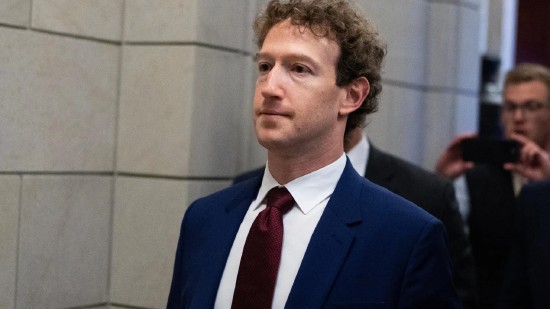
If the New Mexico case sets a precedent for suing Meta, the California lawsuit could determine whether Facebook and Instagram's core products are forced to undergo significant changes, thereby affecting the company's fate.
The collective lawsuit led by California Attorney General Rob Bonta accuses Meta's products of fostering addictive behaviors among teenagers and children, with opening statements set to begin on Tuesday. A jury was selected last week in federal court in Oakland.
This case was initiated in 2023 by a coalition of 29 state attorneys general, with representatives from California, Colorado, New Jersey, and Kentucky appearing to argue the case. The risks are extremely high: officials from state governments across the U.S. are demanding that Meta be held legally accountable for allegedly violating the Children's Online Privacy Protection Act (COPPA) and multiple consumer protection laws.
Industry experts describe this as the "Big Tobacco moment" for the social media industry, with Meta at the center of the storm. In the 1990s, tobacco companies were fined billions of dollars for concealing the dangers of their products from the public, leading to a significant decline in their power and influence.
Earlier this month, Meta lost in New Mexico and was ordered to modify certain product services and pay nearly $1 billion in damages. However, with Meta's headquarters in California, a loss here could result in much harsher penalties, potentially forcing a large-scale reconstruction of its core algorithms.
"In the U.S., California's jurisdiction is uniquely significant," said Julia Powles, executive director of the UCLA Institute for Technology, Law & Policy. "Here, Meta faces the most stringent legal constraints, and the world is watching the outcome of this case."
New Mexico Attorney General Torrez, who just won the lawsuit, stated that the consequences for the company, which derives 98% of its revenue from online advertising, could be "astronomical." Meta CEO Mark Zuckerberg is relying on the massive cash flow from advertising to bet on large-scale AI investments, with related expenditures potentially reaching $145 billion this year.
In the second phase of the case, involving allegations of child sexual exploitation, a New Mexico judge ordered Meta to pay $567 million to a special governance fund. In the first phase of the case, a jury ruled in March that Meta violated the state's Fair Business Practices Act, resulting in a $375 million payout Meta stated that it disagrees with the ruling and plans to appeal.
Torres described the ruling as "considerably significant," but immediately emphasized that compared to potential rulings in California, this is just a minor issue.
"The population of New Mexico is only about 2 million," Torres said. "If this legal logic is applied to California, Florida, Texas, and New York, the scale of the ruling could shake the entire market."
Bypassing Section 230 of the Communications Decency Act
The details of the lawsuits vary by state, but the core issue points to harmful product designs in apps like Facebook and Instagram.
The New Mexico ruling requires Meta to enhance its "age verification models and tools" using AI, developing a predictive model specifically to identify users under the age of 13 within two years; at the same time, it simplifies the reporting process for underage accounts and collaborates with schools or child safety organizations to establish reporting channels, making it easier for schools to flag suspected accounts of users under 13 on major social media platforms.
Torres stated that the plaintiffs focus on product design flaws and false statements regarding safety, "providing a template for other states to hold Meta accountable." This litigation approach can bypass Section 230 of the Communications Decency Act — which originally protects tech companies from legal liability for third-party user content on their platforms.
In March of this year, a Los Angeles jury found that Meta and YouTube, owned by Google, were negligent for failing to warn users about the risks of using their platforms, resulting in losses for both companies.
California Attorney General Bonta was appointed by Governor Newsom in 2021. In a statement last Monday, he said that one of his most important responsibilities is to "protect children from harm."
"Meta has designed dangerous products aimed at teenagers, knowing that these products are harmful, yet concealing their dangers from children, families, and society," Bonta stated. "We will hold Meta accountable for exacerbating the mental health crisis among American children and await the court hearing."
Meta responded that the accusations from the coalition of state attorneys general "lack factual basis, and the compensation claims are severely unbalanced."
"The states cannot provide evidence that their residents were misled, distorting ordinary features like multiple accounts on Instagram as sources of harm, and are attempting to punish Meta for industry-wide challenges like age verification," Meta stated.
Meta's lawyers previously indicated that the compensation cap for the joint lawsuits from the states could reach up to $1.4 trillion; however, state attorneys told presiding judge Yvonne Gonzalez Rogers last week that $200 billion would be a more realistic amount for the ruling.
"As I said, one day you wake up, and an astronomical ruling could be made public," Torres said.
Michael Coffey, founding partner of Coffey Modica law firm in New York and defense attorney, stated that such cases could become milestones in the careers of state attorneys general, but the actual compensation received by the victimized groups may be minimal.
"Most of the compensation goes to the government, which then distributes it, and the plaintiff's legal team will also take a cut from it," Coffey said Laura Marks-Garrett, a lawyer at the Social Media Victims Law Center, believes that aside from the fines, the product changes that Meta would be forced to make if it loses in California would be even more damaging.
"The state government has the ability that ordinary private plaintiffs do not have: to compel companies to change their business models, product designs, etc., through the courts," Marks-Garrett said at a media briefing last Friday, having just participated in a related case in Los Angeles.
The state attorneys general have filed court documents seeking a national permanent injunction to restrain Meta's illegal actions in violation of the Children's Online Privacy Protection Act. Once it is determined that Meta has violated federal law, the state demands that Meta delete all personal data of children under 13 years old, as well as the algorithms and models trained using that data.
Regarding violations of state consumer protection laws, the state is seeking to compel Meta to remove certain addictive features: infinite scrolling, autoplay, self-destructing content, beauty filters, and recommendation algorithms driven by interaction volume.
Torres admitted that the ruling in New Mexico did not achieve all its demands, such as completely eliminating infinite scrolling or rewriting the recommendation algorithm. The judge ruled that some changes would conflict with Section 230 and the First Amendment of the Constitution; moreover, competitors like TikTok and YouTube still retain similar features, making it unfair to unilaterally force Meta to change.
Torres stated that he will push for legislation to introduce a social media bill and update consumer protection laws, "covering various common business practices in the digital economy."
Meta also faces multiple other lawsuits across the U.S., with an important federal trial set to begin next year in Northern California, initiated by several school districts. Originally, multiple school districts were scheduled for a joint trial this summer, but Meta, YouTube, TikTok, and Snap all reached settlements.
Torres believes Wall Street has underestimated the impact of a potential loss for Meta in California, viewing the ruling in New Mexico in isolation. Meta's stock price has already fallen 11% this year, but analysts' concerns have mostly focused on the massive capital expenditures for AI infrastructure, rather than the impact on advertising business.
"Analysts are not adequately pricing this risk right now," Torres said. "The ruling in California alone could be massive, directly affecting the company's ability to finance and conduct business in the future."